Updated October 2026
Ant control in Tampa starts with naming the ant, because the common house ants here nest in different places and take different baits. Ghost and white-footed ants nest in walls and landscaping and are cleared with baits, not sprays. Big-headed ants push sand up along slabs, and carpenter ants live in damp wood and dead limbs. Fire ants in the lawn are a separate service.
Why spraying an ant trail often makes it worse
Several common ants in Tampa homes live in colonies with many queens. Hit them with a repellent spray and the colony can split into smaller ones that move somewhere new, so a trail sprayed last week shows up in two rooms this week.
We identify the species, follow the trail back toward the nest, and place a bait the workers will carry home: sweet liquids for sugar feeders, protein or oil baits for others. Outside, we treat the foundation with a non-repellent product the ants cannot detect, so they carry it back to the colony instead of turning around.
Ant control prices in Tampa
- Species
Multi-queen ants like white-footed ants take longer to clear than a single colony. - Where the nest is
Wall voids and attics take more work than a nest in a flower bed. - Trails inside
Ants in several rooms need more bait than one trail by the sink. - Landscaping
Palms, shrubs and mulch touching the house add outdoor time. - Follow-up
Some species need a second visit to rebait once the first round is taken.
Ants on the counter right now? Call and describe them.
Call (813) 471-5363Baits or sprays for house ants?
| Question | Baits | Repellent sprays |
|---|---|---|
| What it kills | The colony, as workers carry bait to the queens | Only the ants it touches |
| Effect on the colony | Slowly shrinks it | Can split multi-queen colonies into new nests |
| How fast you see results | A few days to a couple of weeks | Right away, then the ants return |
| When we use it | Most indoor ant work | Rarely, and never on the trail we are baiting |
Fire ant mounds in the lawn are handled differently. See fire ant control.
Ghost ants in kitchens and bathrooms
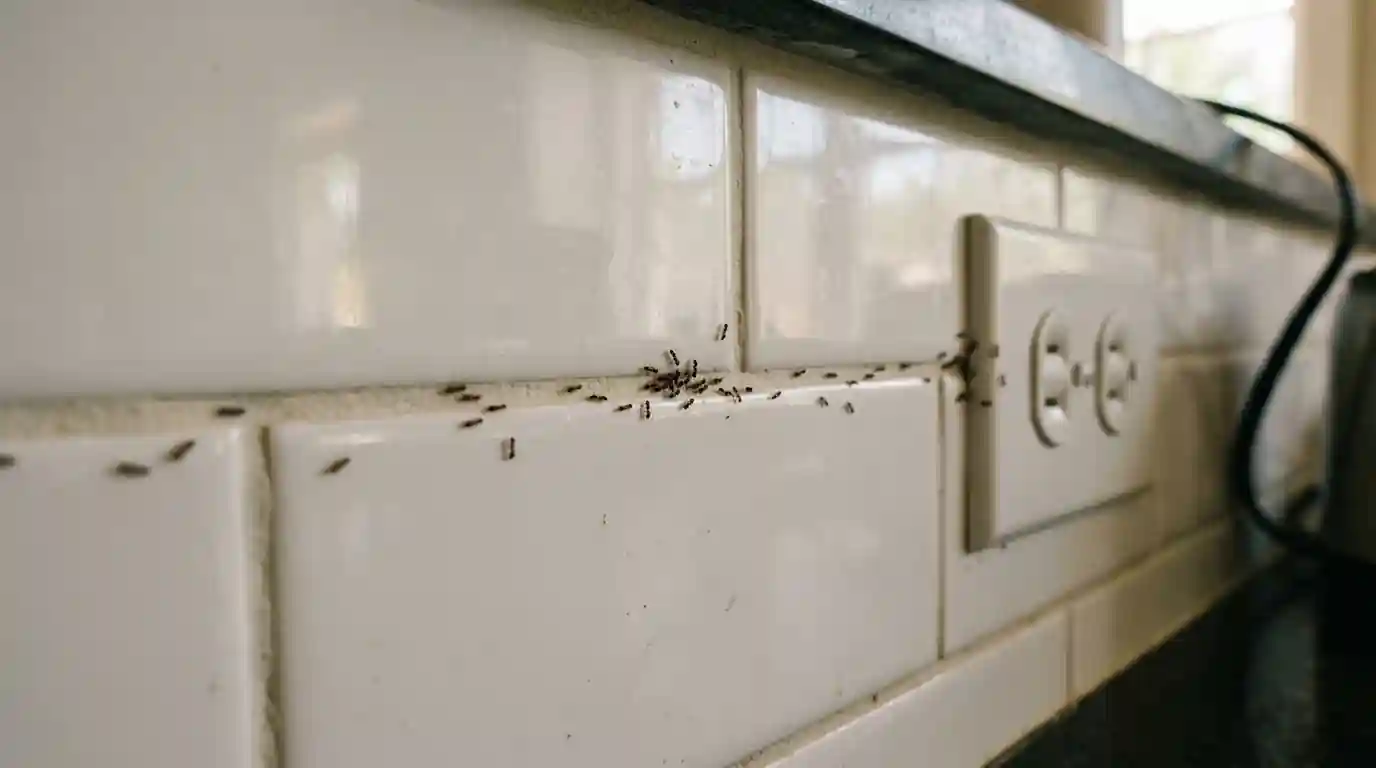
Ghost ants have a dark front half and a pale, nearly clear abdomen and legs, so on a white counter they seem to disappear. Florida counts them among its most troublesome indoor ants, and they go straight for sugar. Indoors they nest behind cabinets and baseboards, in wall cavities and in houseplant soil.
Bait is the tool that reaches a colony living inside the wall. We place a sweet gel or liquid bait on the trail and at the gaps they use, check houseplants for nests, and treat outside entry points. Let them feed for a few days instead of wiping the trail.
White-footed ants that come in on wires
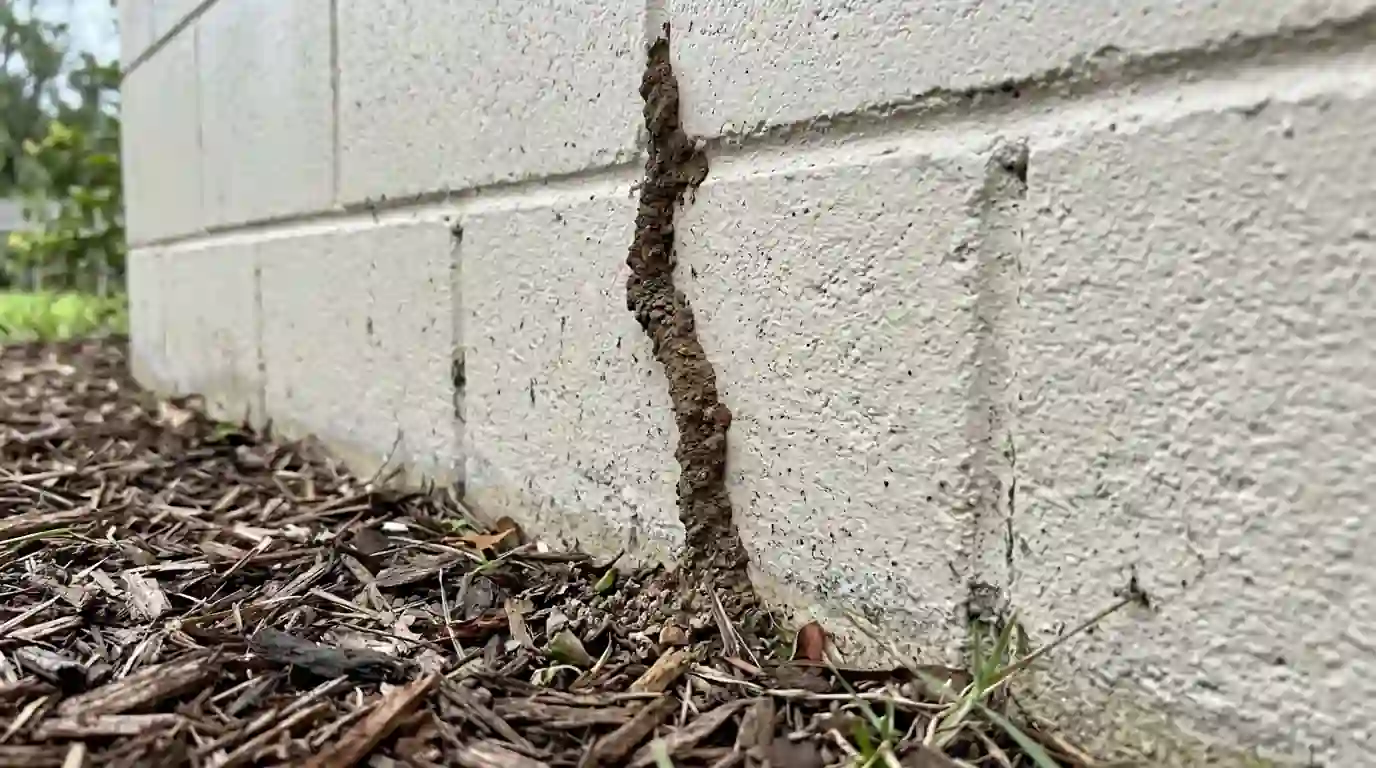
White-footed ants are small and black to dark brown, with yellowish-white feet. Counts per colony range from 8,000 up to 3 million, split among many nests: in trees, palm fronds, mulch beds, wall cavities and attic space. They tend to travel indoors along electrical and cable runs and pop out onto kitchen and bathroom counters.
They do not sting, yet they are stubborn, and bait is the one method shown to control them. We bait the trails inside and outside, check where utility lines enter the wall, and look at palms and shrubs touching the roof. Trimming branches back from the house cuts off a major route.
Big-headed ants and sand piles along the slab
Big-headed ants leave piles of loose sand where the lawn meets the driveway, sidewalk or patio, and along the foundation. The large-headed soldiers give them their name. They nest under slabs and along the edge of the house, and in parts of Florida pest professionals rank them as the nuisance ant they run into most.
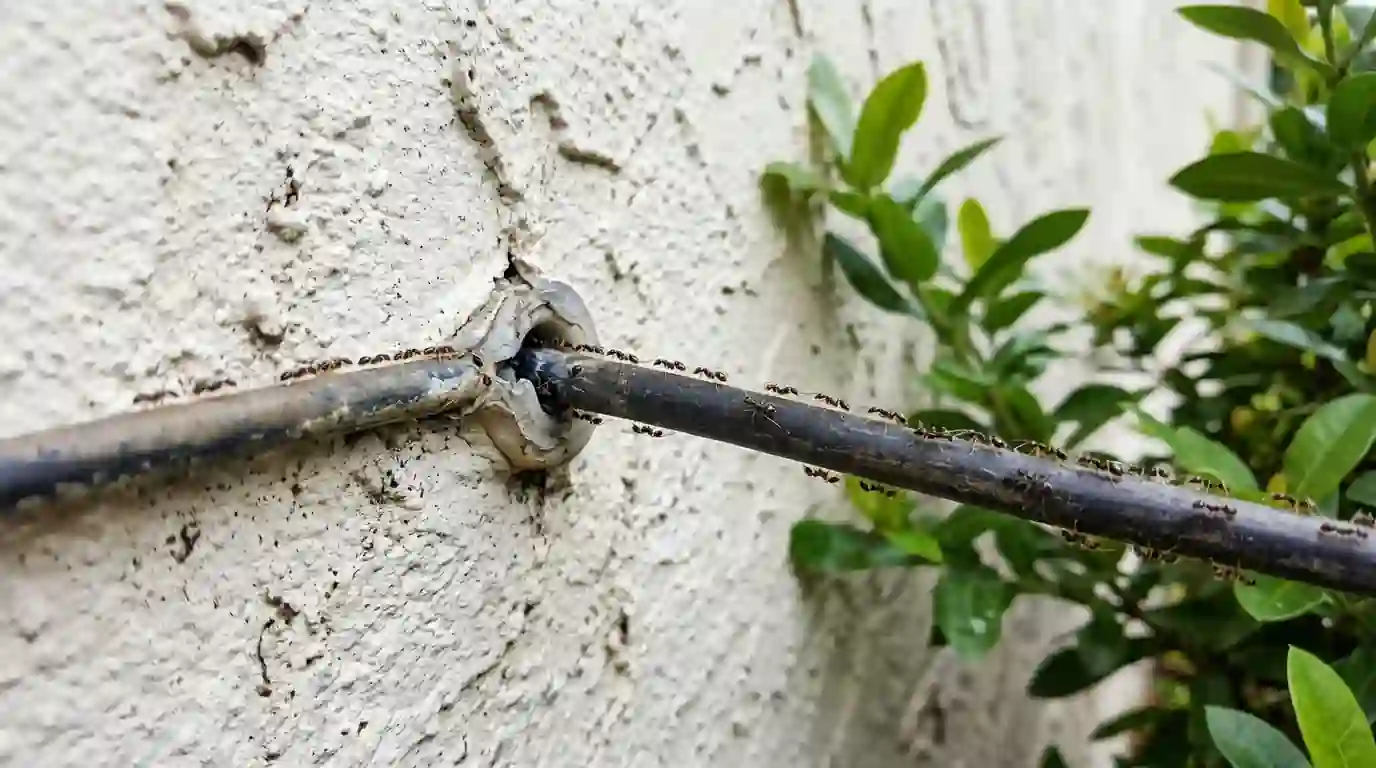
Their thin debris tubes on foundation walls can pass for termite mud tubes, so we check. Treatment is bait along the edges where they forage plus a non-repellent band at the foundation.
Florida carpenter ants in frames and attics
Florida carpenter ants are larger, often reddish-orange with a darker abdomen, and forage mostly from just before sunset until two hours after. They nest in dead limbs, window frames and humid attics, and they use branches touching the house as bridges.
Unlike the black carpenter ant found farther north, Florida carpenter ants generally do not damage sound structural wood. Their nests usually mean wood that is already damp or rotting. We find and treat the nest and trail, and point out the moisture or branch to fix.
White-footed ants around Tampa Bay
Specimens of white-footed ants have turned up in Hillsborough, Pinellas and Pasco counties, which covers most of the area we serve. Their colonies sit in palm fronds, mulch beds and attics as easily as in wall voids, so a house with palms close to the roof and cable lines running up the stucco gives them an easy road inside. That is why we look at the yard and the utility entries, not just the kitchen.
How we clear an ant problem
- 1
Identify the ant
We look at the ants and their trails, since species decides the bait.
- 2
Trace the trail
We follow them toward the nest, inside the walls or out in the landscaping.
- 3
Bait the colony
Bait goes where the workers feed, so they carry it back to the queens.
- 4
Treat the perimeter
A non-repellent band goes along the foundation and entry points.
- 5
Check and rebait
We come back if needed, rebait and close the routes they used.
Crumbs, branches and store bait: your part with ants
| Task | Doing it yourself | When to call us |
|---|---|---|
| Food and crumbs | Wipe counters, seal sweets and rinse recycling | Ants keep trailing to a clean counter |
| Branches and palms | Trim limbs and fronds back from the roof and walls | Ants come down from the attic or the soffits |
| Store-bought bait | Place it on a single trail and leave it alone | Bait has not helped after a week or two |
| Sprays | Avoid spraying the trail you are baiting | The trail spread to new rooms after spraying |
Tell us what you already used, since some sprays leave a residue ants avoid.
Signs of an ant colony nearby
A line of ants along a counter, baseboard or window frame means a colony is feeding regularly.
Loose sand along the driveway or foundation edge points to big-headed ants.
Ants coming out of outlets or pipe gaps usually mean a nest in the wall.
Winged ants inside can mean a mature colony in the house, or termite swarmers, so check which.
Ants busy in the soil of houseplants may be nesting right in the pot.
Product names you may hear on this job
- Advion
- Alpine
- Demand CS
- Vendetta
- Maxforce
- Gentrol
- Suspend
- Temprid
- Phantom