Updated October 2026
Rat and mouse control in Tampa starts with knowing which rodent you have, because each one gets in differently. Roof rats climb from palms and citrus trees into attics, Norway rats burrow under slabs, and mice slip through smaller gaps than either. Rats fit through half-inch cracks, so trapping only lasts when those gaps are sealed as well.
Signs a rodent is living in the house, not passing through
Scratching, running or gnawing in the ceiling or walls at night points to rats, since squirrels move about by day.
Rats leave droppings on wall plates and beside the attic hatch, while mice scatter smaller ones in drawers and cabinets.
Dark, oily smudges around a hole at the soffit or behind the stove mark a route used every night.
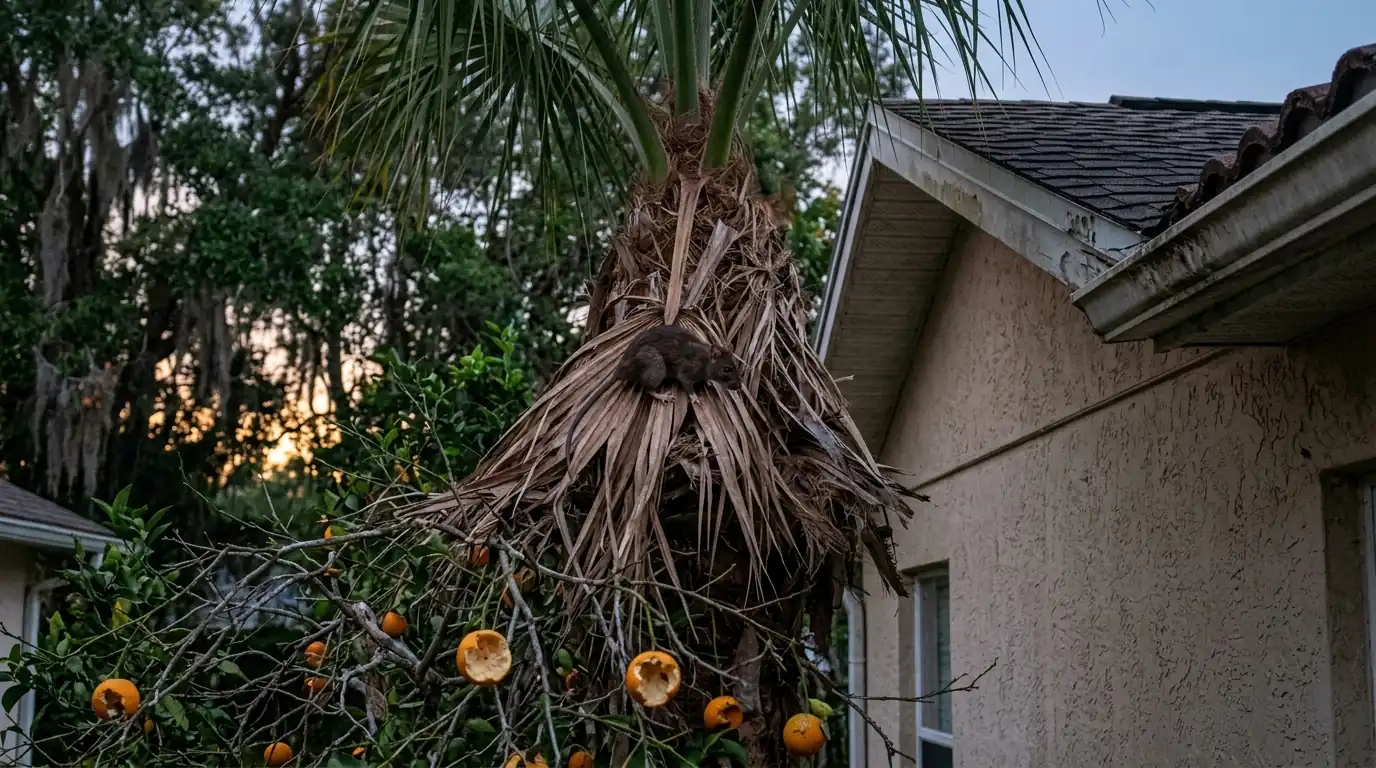
Oranges or grapefruit eaten out while still hanging on the tree show roof rats are feeding in the yard.
Gnawed wire jackets, shredded duct insulation and tunnels through attic insulation mean rats are nesting, not visiting.
Why trapping alone rarely ends a Tampa rat problem
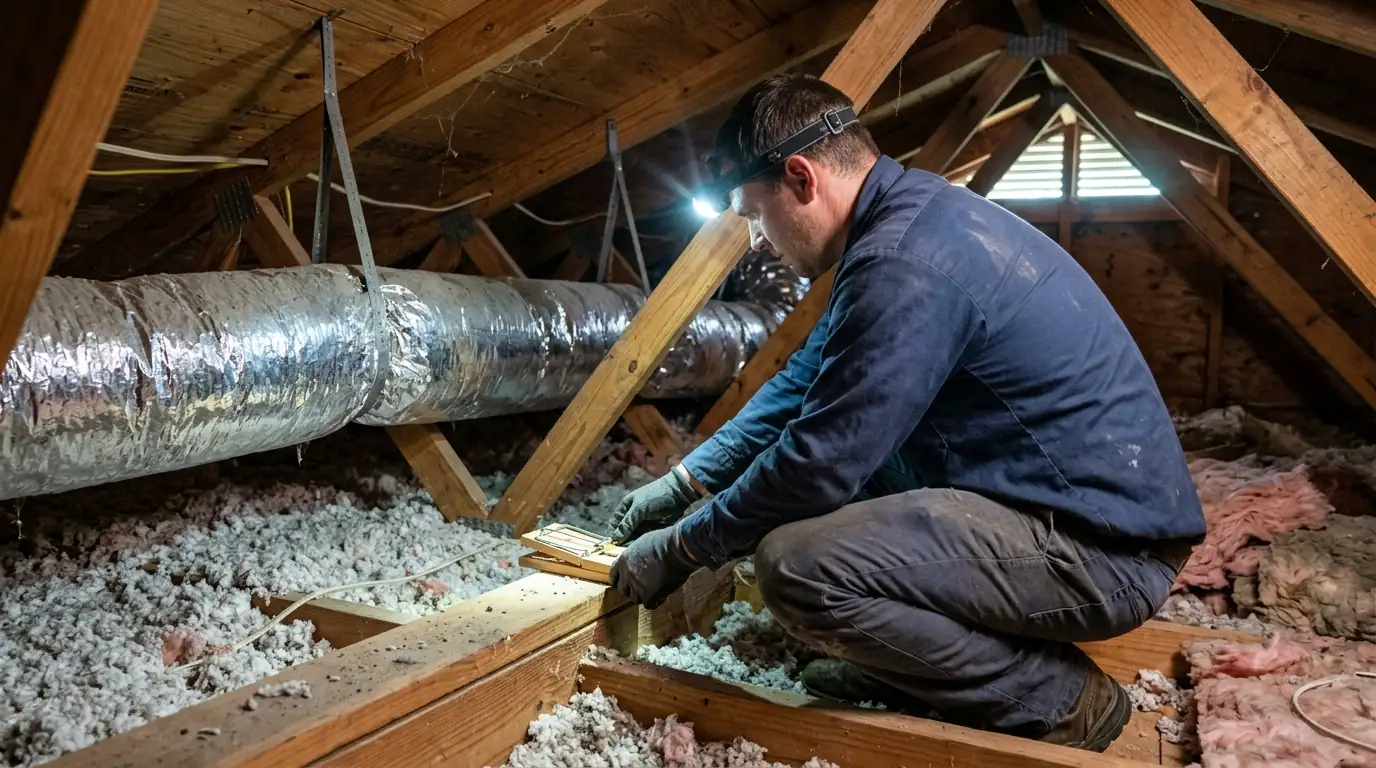
Trapping removes the rats that are inside today. It does nothing about the gap at the soffit or the pipe chase they came through. In a yard full of palms, oaks and fruit trees, more rats are always looking for a dry attic. That is why a house can go quiet for a month and then start again.
We treat the job as three overlapping parts. Trap what is inside, close every way in, and check back until the traps stay empty. Before anything starts, we show you the entry points we found and give you the price for each part.
Hearing it in the ceiling right now? Call, the phone is answered 24/7.
Call (813) 471-5363Roof rats in the attic and the trees beside it
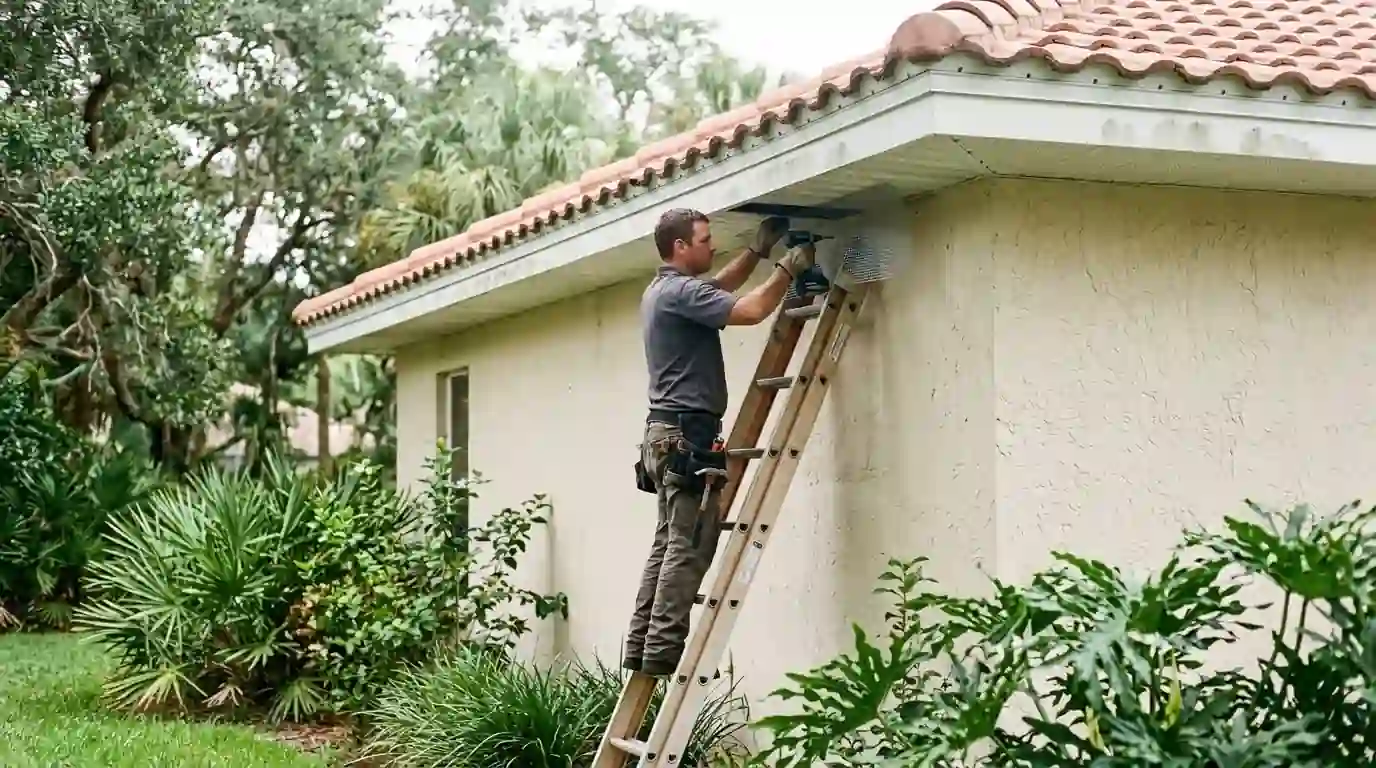
Roof rats are climbers. They nest off the ground in attics, palm skirts and thick shrubs. They also live in citrus trees, gnawing the fruit while it still hangs. A frond or an oak limb touching the eave gets them onto the roof, and a soffit gap gets them inside. Once in the attic they chew wiring, which makes them more than a noise problem.
For roof rats we set snap traps along the runways we find in the attic, usually on the wall plates and beside the ductwork. We also point out which branches and fronds need trimming back from the roofline, so the trees stop working as a ladder.
Norway rats burrowing under slabs and along canals
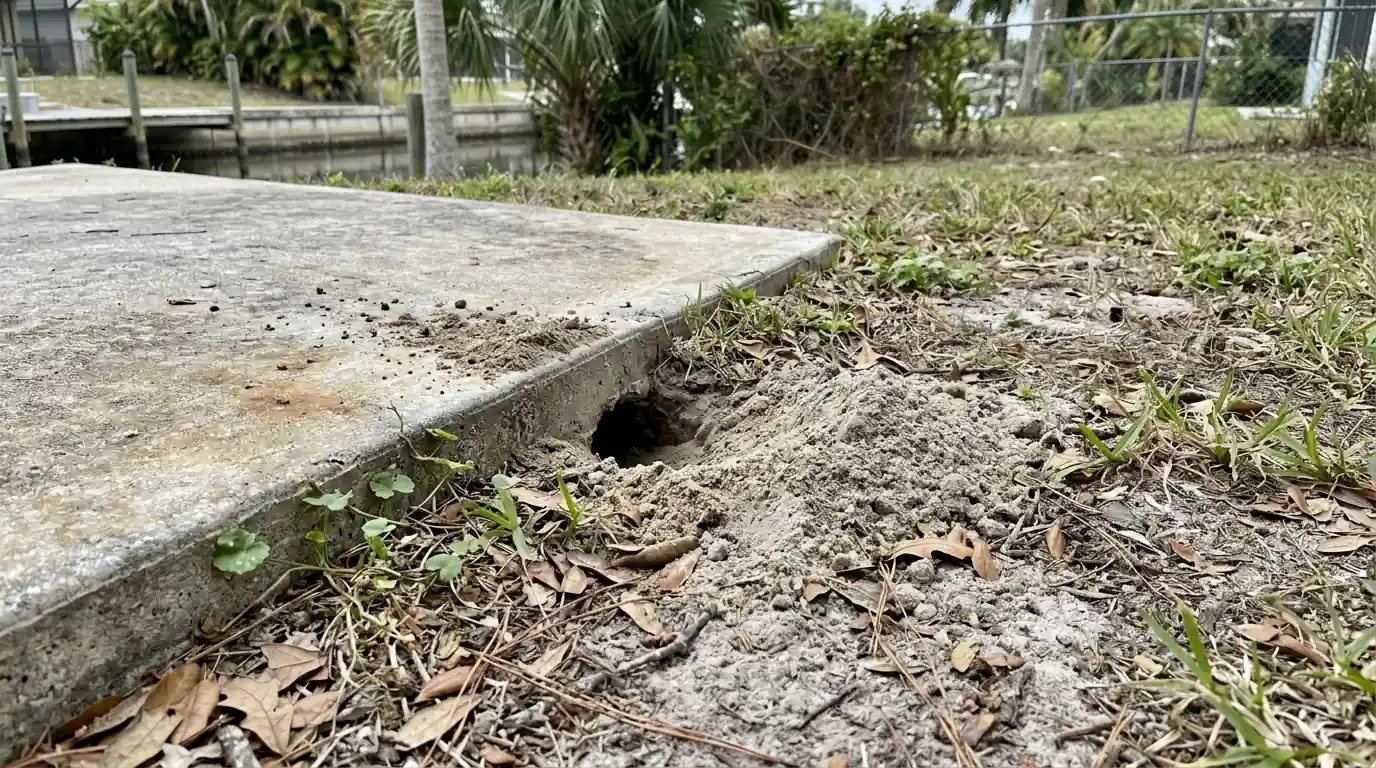
Norway rats are the heavier, ground-level rats. In Florida they dig burrows about 18 inches deep under slabs, and they are most common near coasts and canals. They come into a house low. A worn garage door seal, a gap around a plumbing line or a burrow beside the foundation is enough.
The work for Norway rats happens at ground level. We find the active burrows, trap along the walls they travel, and close the low openings with metal and hardware cloth rather than foam. Burrows under a slab or patio are filled and watched once the trapping slows down.
House mice in kitchens, cabinets and garages
House mice need far less room than rats, so a gap that looks too small to matter often is not. They nest close to food: at the back of a lower cabinet, under the dishwasher, in a stored box in the garage. They leave small droppings in drawers and along the pantry floor.
We place mouse traps where they actually travel: along walls, behind appliances and inside cabinet bases. Then we seal the gaps around plumbing under sinks and where lines enter the wall. We also check how food and pet food are stored, since an open bag in the garage keeps feeding them.
How a rat or mouse job runs
- 1
Inspection
We walk the attic, roofline, yard and slab edges to identify the rodent and every way in.
- 2
Price and plan
You hear the price for trapping, sealing and any cleanup before work starts.
- 3
Trapping
Traps go on the runways we found, and each visit we record what was caught and where.
- 4
Sealing
Entry points are closed with sheet metal or hardware cloth, with the last one left until catches stop.
- 5
Final check
Once the traps stay empty, we close the last opening and look over the seals again.
Roof rats across the Tampa area
The Tampa Bay Times has reported that roof rats are common across the Tampa area, and local yards explain why. Queen palms, live oaks over the roof and backyard orange and grapefruit trees give roof rats food, shelter and a ladder to the eaves. Norway rats turn up more near the water, since they favor coasts and canals for burrowing. We plan each job around which of the two a yard suits. Both the trees and the slab edges get checked before a single trap goes down.
What you can handle yourself, and when to call
| Task | Doing it yourself | When to call us |
|---|---|---|
| A single mouse in the garage | A couple of snap traps set along the wall usually catch it | Droppings keep turning up after the traps go quiet |
| Noise in the attic at night | Note the time and the spot, and keep children and pets out of the attic | The noise goes on night after night |
| Fruit trees near the house | Pick fruit as it ripens and clear dropped fruit from the ground | Fruit is hollowed out on the branch or rats are seen in the canopy |
| Gaps you can see | Note where they are and skip foam or steel wool, which rats chew through or which rusts | The gaps are at the roofline or need metal to close |
Skip dry sweeping or vacuuming droppings, which stirs up dust; gloves and a damp paper towel work better for a small amount. Our roof rat guide covers the attic signs in more detail.
What rat and mouse control costs in Tampa
- How many ways in
Each gap at the soffit, roof vent or pipe chase adds sealing time and material. - Roof height and pitch
A steep or two-story roof takes more ladder work than a low ranch roofline. - How long they have been there
A long-running problem usually means more trapping visits and more attic damage. - Which rodent
Norway rat burrows and roof rat attics are worked differently, and some homes have both. - Cleanup after
Soiled insulation and droppings are priced as a separate attic cleanup.