Updated October 2026
Lawn disease in Tampa usually traces back to moisture: long leaf wetness, heavy rain on poorly drained sand, or evening watering. Large patch forms brown rings in cooler weather, gray leaf spot marks St. Augustine blades in hot, humid months, and take-all root rot thins the lawn from the roots. Each needs a different fungicide and a different fix in watering or feeding.
Why lawn disease needs a diagnosis before a fungicide
Fungicides are specific. A product that controls large patch may do little against take-all root rot. None of them fix the conditions that let the fungus in. Spraying a general product on every brown area wastes money and can leave the real problem untouched.
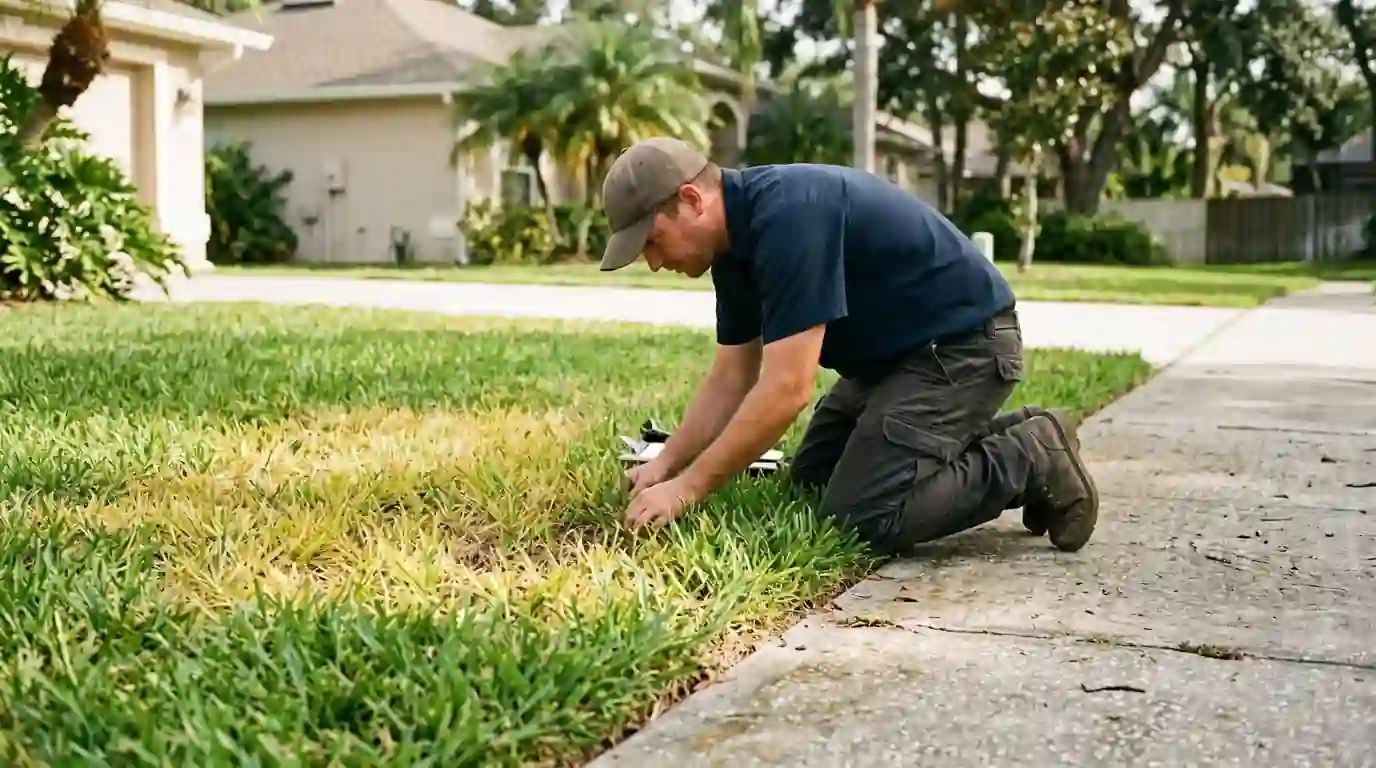
So we look closely. We check the edge of the damage, pull a few blades and runners, and look at the roots. Leaf lesions, rotted sheaths and dark, short roots each point to a different disease. Once we know which one it is, we treat it. Then we walk you through the watering, mowing or feeding change that keeps it from coming back.
What lawn disease treatment costs in Tampa
- Lawn size
Fungicide is applied by area, so larger lawns cost more per visit. - Which disease
Some diseases clear with one application while others need a series. - How far it has spread
Treating a few patches costs less than treating the whole lawn. - Underlying cause
Drainage or irrigation fixes are separate from the treatment itself. - Plan or one-time
Lawns with repeat disease often do better on a seasonal schedule.
Brown rings spreading after the rain? Call and we will diagnose it.
Call (813) 471-5363Fungus or insects?
| What you notice | Lawn fungus | Lawn insects |
|---|---|---|
| Shape of the damage | Rings, blotches or spots on the blades | Spreading patches from sunny edges, or ragged chewed blades |
| Where it starts | Shaded, wet or poorly drained areas | Hot, dry edges for chinch bugs; anywhere for caterpillars |
| What you see up close | Lesions on blades, rotted stems or dark roots | Bugs at the soil line or caterpillars in a soap flush |
| What makes it worse | Evening watering, long leaf wetness, extra nitrogen | Drought stress for chinch bugs, heavy late-summer feeding for armyworms |
If the damage started at the sunny edge by the driveway, check our chinch bug control page too.
Large patch in St. Augustine and zoysia
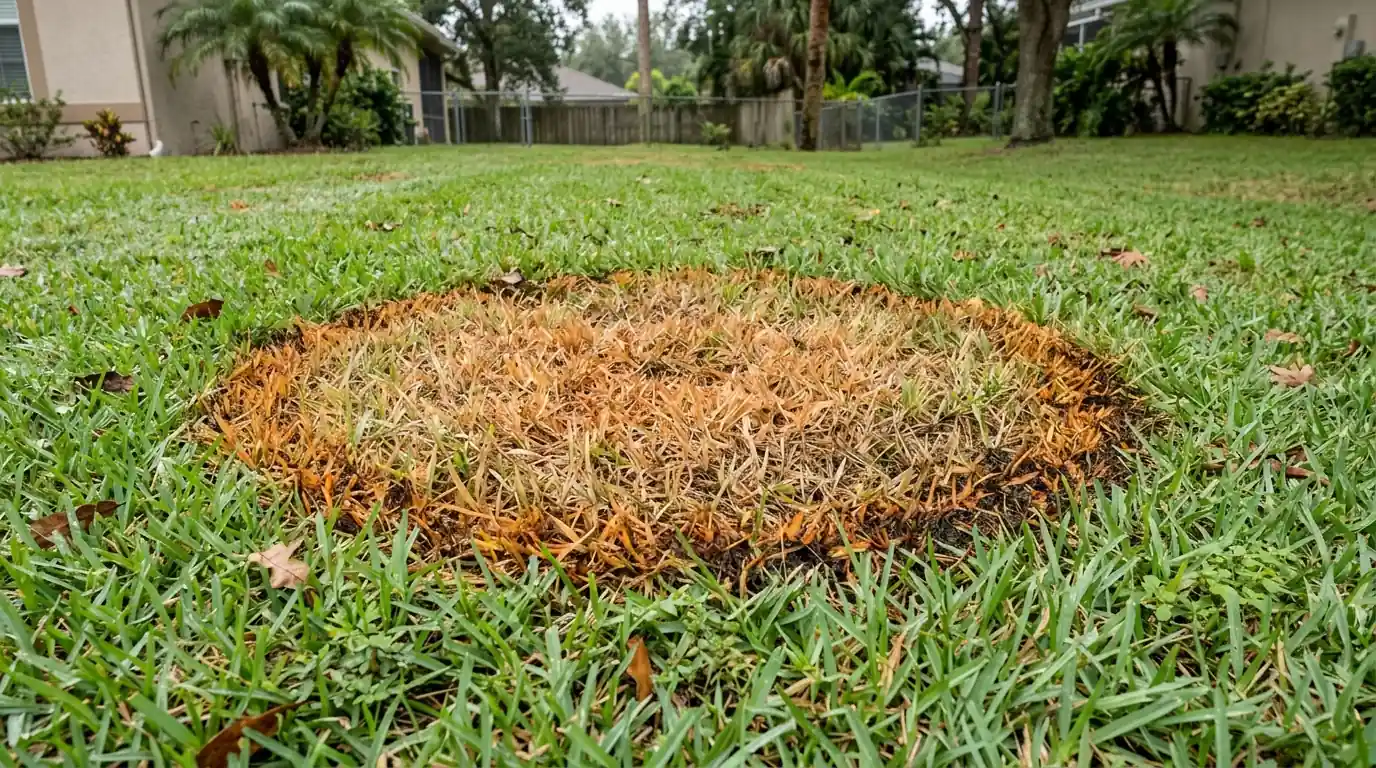
Large patch shows up as roughly circular areas of yellow, orange or brown grass several feet across. A darker, active ring often marks the outer edge. It favors the cooler, damp months, so it appears in fall and spring more than midsummer.
Pull a blade from the active edge and the leaf sheath often slips off, rotted at the base. We treat the patch and a band around it. Watering early in the morning keeps the grass from staying wet overnight. Extra nitrogen in cool weather makes large patch worse.
Gray leaf spot on St. Augustine blades
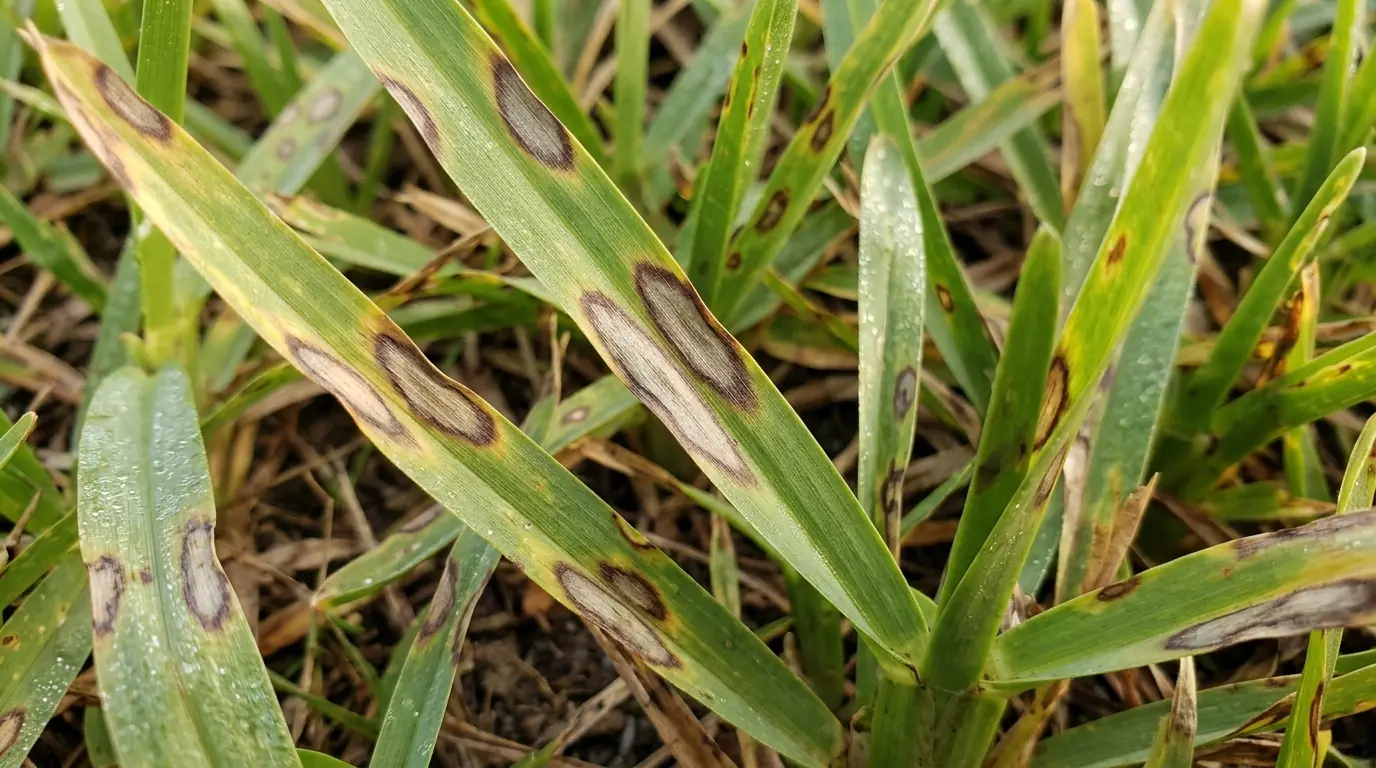
Gray leaf spot is a hot-weather disease of St. Augustine. It starts as small brown spots on the blades that grow into oval, gray-centered lesions with dark borders. When it spreads, the lawn looks scorched and thin, as if it were burned.
It thrives in heat and humidity, especially on newly laid sod and lawns that got a quick-release nitrogen boost. We treat with a fungicide suited to it and suggest morning watering. Go easy on feeding, since lush, soft growth is what the fungus targets.
Take-all root rot thinning the lawn from below
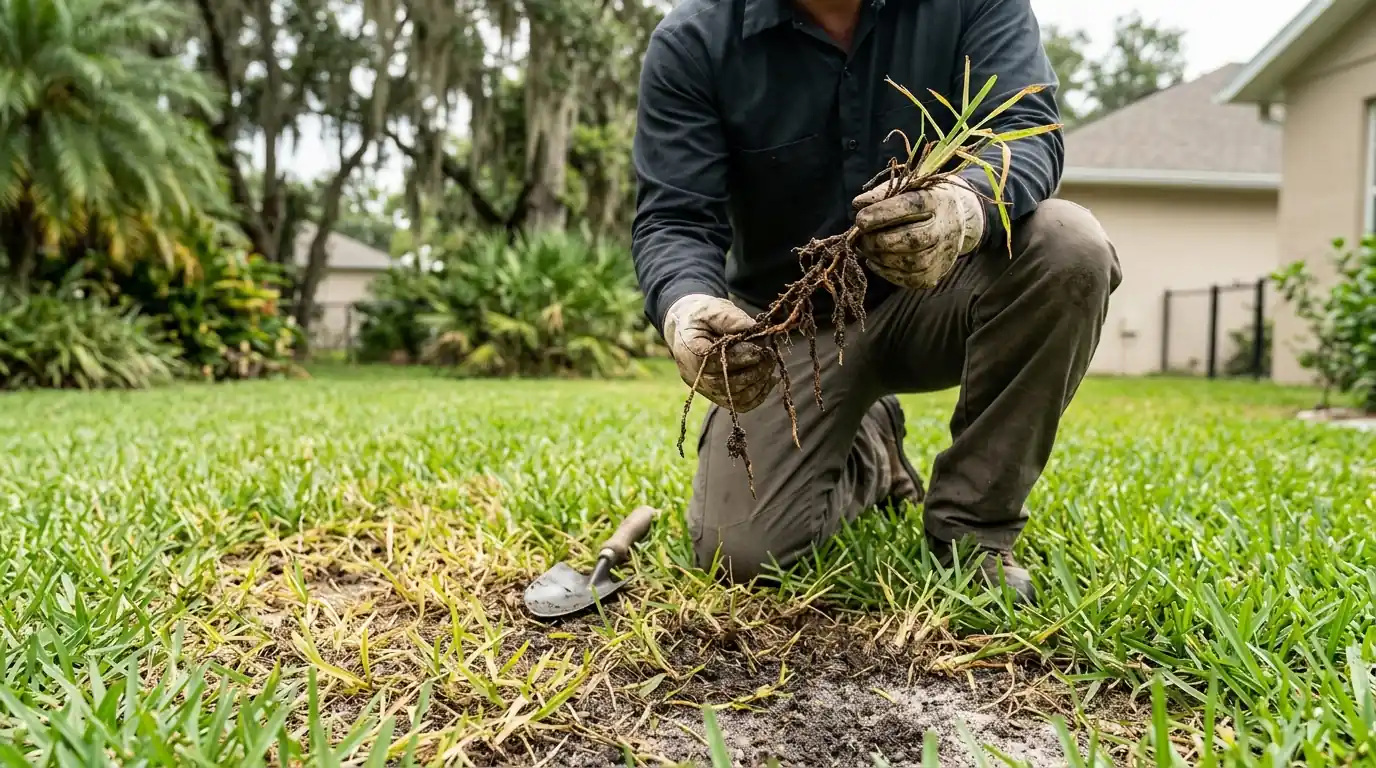
Take-all root rot attacks the roots and runners, so the first sign is often a lawn that thins and yellows without an obvious cause. Pull up a runner and the roots are short, dark and rotted, and the grass lifts out easily.
It tends to show up after long wet stretches, when roots sit in saturated soil. Fungicides help slow it, but recovery depends on fixing the conditions. That means a better watering schedule, relieved compaction and proper feeding when the season allows. We set expectations up front, because root rot recovery takes time.
Why Tampa lawns get fungus in the wet months
Tampa's rainy season runs from late May through October, with afternoon storms most days and average humidity peaking near 78% in August. Much of the area's soil is Myakka fine sand, poorly drained over a high water table. It stays wet through the June to September rains. That combination keeps grass blades and roots wet for long stretches, which is when gray leaf spot and root rot do the most damage. Watering in the morning helps more than anything else.
How a lawn disease treatment runs
- 1
Close inspection
We look at blades, stems and roots at the edge of the damage.
- 2
Diagnosis and price
You hear which disease it is, what is feeding it and the price, before we treat.
- 3
Fungicide application
We treat the affected areas and a buffer band around them.
- 4
Care changes
We go over watering times, mowing height and feeding that will help recovery.
- 5
Check back
We look again to confirm the disease has stopped spreading and the grass is filling in.
Signs your lawn has a fungus, not a bug
Circular patches with a darker, active ring at the margin point to large patch.
Oval, gray-centered lesions with dark borders mean gray leaf spot.
Leaf sheaths that pull loose and look rotted at the base suggest a patch disease.
Runners with blackened, short roots that lift easily point to root rot.
Damage spreads after rainy stretches or in areas watered in the evening.
Product names you may hear on this job
- Acelepryn
- Talstar
- Arena
- Celsius
- Headway
- Heritage
- Dylox
- Merit
- TopChoice
- Advion Fire Ant