Updated October 2026
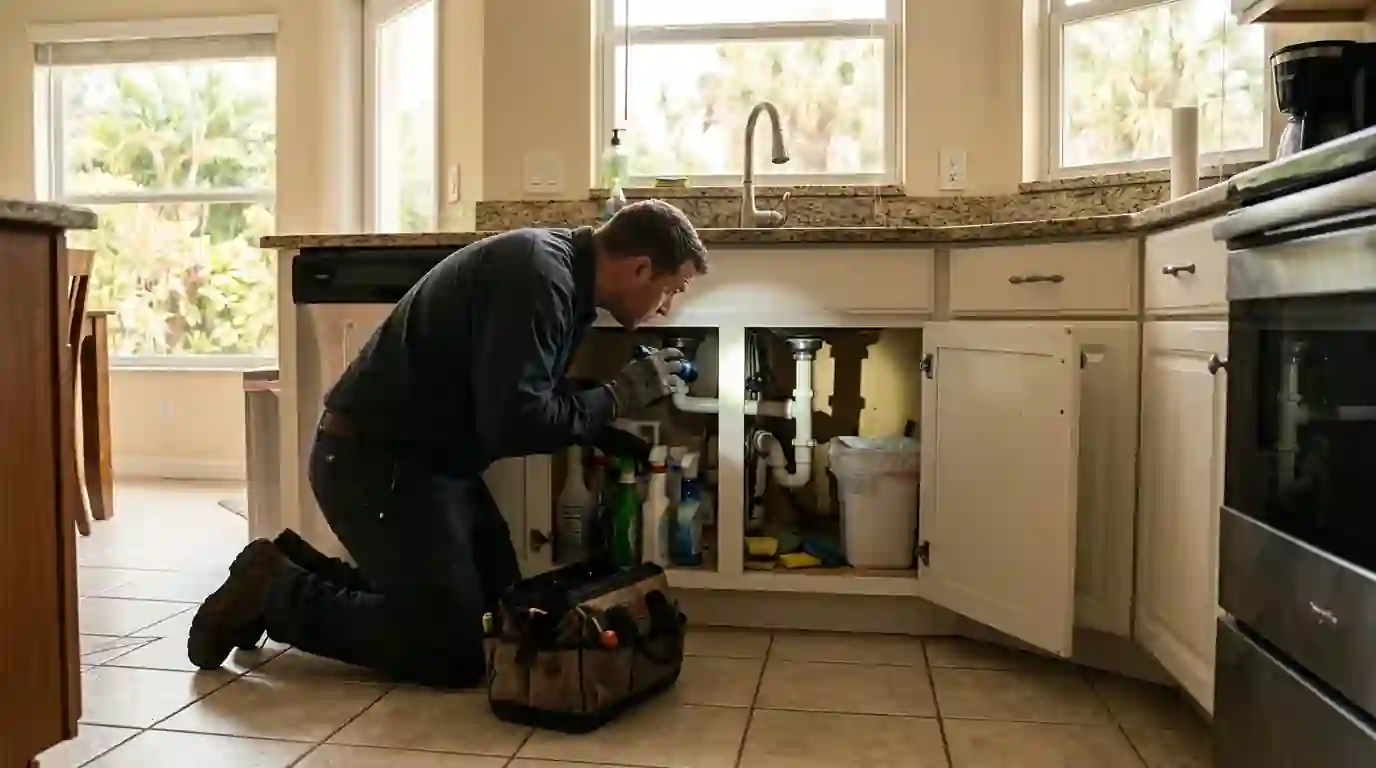
Spider control in Tampa removes webs and egg sacs, treats the eaves, garage and lanai where spiders shelter, and reduces the insects they eat. That last part matters most, because spiders follow their food. Brown widows under outdoor furniture and orb weavers on the eaves are the usual calls. Most house spiders are a nuisance, and a few deserve care with gloves.
Why webs come back the night after you sweep them
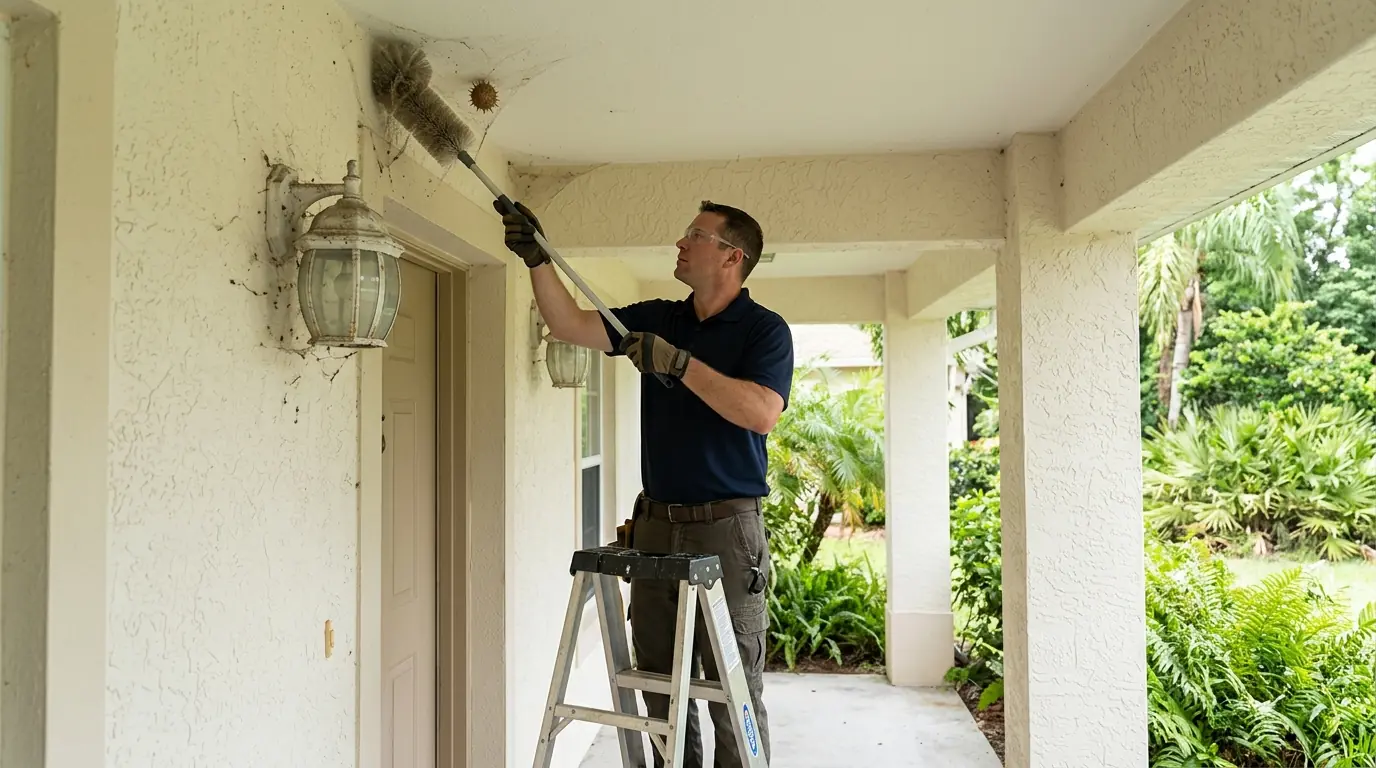
Many outdoor spiders rebuild their webs every evening, so knocking them down with a broom is a short-lived fix. They settle where insects gather: under porch lights, along the soffit, in the corners of a screened lanai, and around the garage door where moths and gnats collect after dark.
We work on both the spiders and their food. Webs and egg sacs come down with a long web brush, cracks and corners where spiders hide get a targeted treatment, and the perimeter is treated for the insects that draw them in. Spiders are harder to hit with residual products than crawling insects, so removing webs and shelter matters as much as anything we apply.
Brown widows under furniture and railings
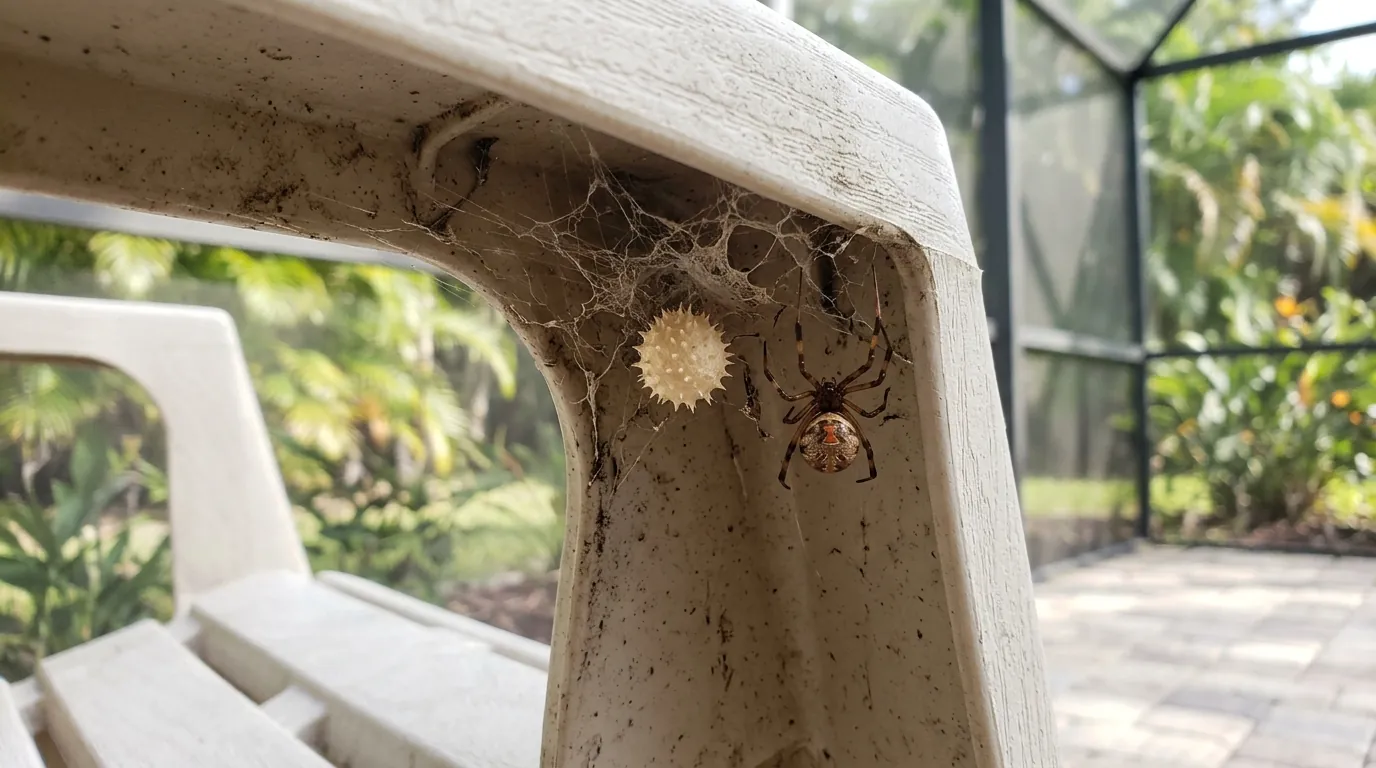
Brown widows are common around Florida homes. They are tan to dark brown with an orange hourglass under the belly, and their egg sacs are easy to spot: round, cream-colored and covered in small spikes. They tuck their messy webs under patio chairs, the lip of a mailbox, pool equipment covers, grill lids, stair railings and outdoor toys.
We check those spots on every visit, remove webs and egg sacs, and treat the protected corners where they hide. Wear gloves when you move outdoor furniture or pull a cover off the pool pump, and look underneath before you reach in.
Webs on every eave? Call and we will tell you what we see.
Call (813) 471-5363Orb weaver webs on the eaves and soffits
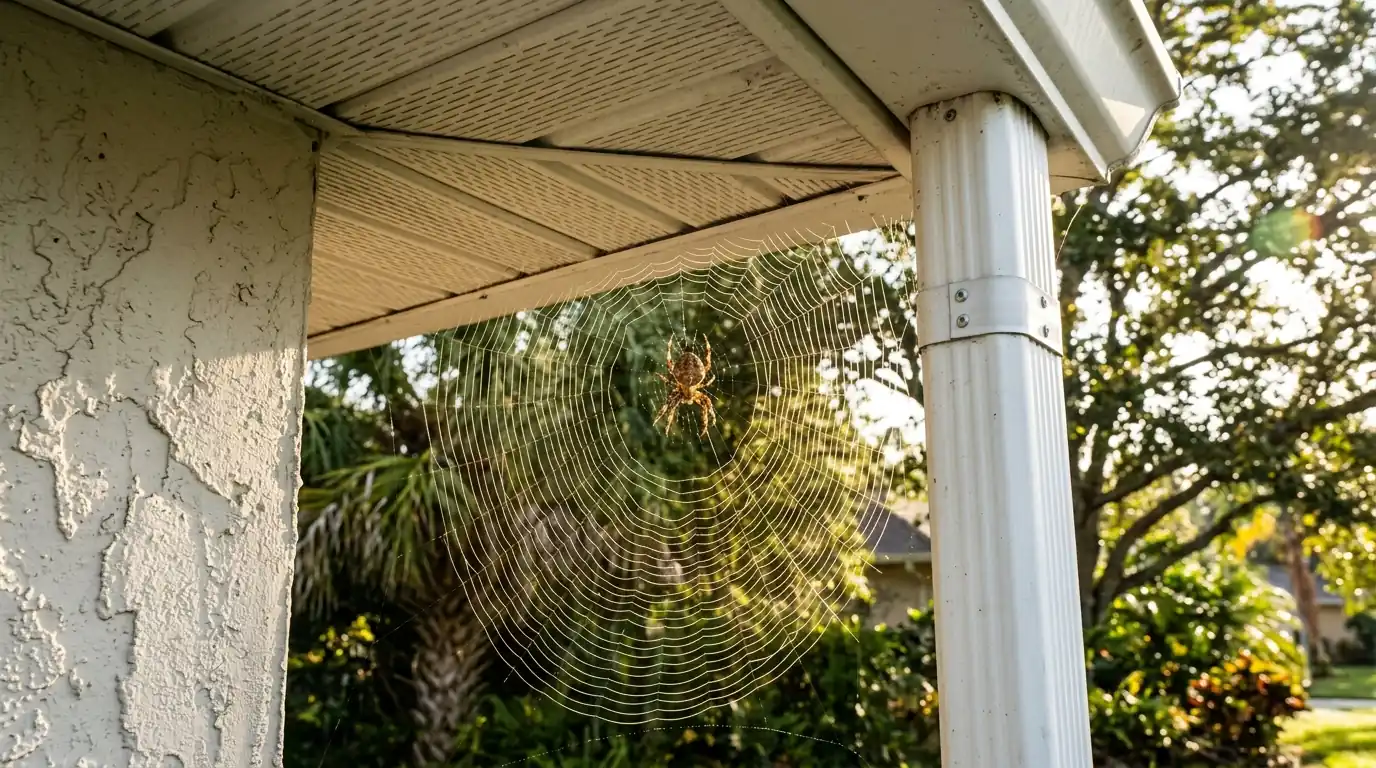
The big webs strung across eaves, porches and shrubs are usually orb weavers: spiny-backed orb weavers with their small, hard, crab-like bodies, and golden silk orb weavers with their long legs and yellow-tinted silk. They are not aggressive, but their webs across a doorway or a pool cage door are a daily annoyance.
We sweep the eaves, soffits and gutters with an extension brush, treat the soffit corners and light fixtures, and point out lights that pull insects toward the house. A warm yellow bulb by the door attracts fewer insects than bright white light, which means fewer spiders setting up next to it.
House and cellar spiders inside
Indoors, the usual suspects are cellar spiders with long thin legs, common house spiders with tangled webs in upper corners, and southern house spiders that build flat, fuzzy webs around cracks in block walls and window frames. Male southern house spiders are long-legged and brown, and they are often mistaken for brown recluses, which are rarely found in Florida.
Inside, we vacuum or brush webs, treat cracks and corners in closets and the garage, and set sticky monitors where you see them. Fewer boxes on the garage floor means fewer places to hide.
Tampa summers and spider season
From late May until October, Tampa gets an afternoon thunderstorm on most days, and average humidity tops out near 78% in August. That steady moisture feeds the gnats, moths and small flies that swarm porch lights and lanai screens after dark, and spiders build right where that food lands. It is the same reason webs on the eaves seem to double by late summer. The drier months that follow slow spiders down without clearing them out.
Signs spiders have settled in
Webs back on the eaves every morning mean spiders are living close and feeding well.
Cream-colored sacs with small spikes under furniture or railings belong to brown widows.
Spiders clustered by porch and garage lights are following the insects there.
Upper corners of closets and garages with old webs point to house spiders.
Webs across the screen frame or the cage door mean the enclosure is full of prey.
What spider control costs in Tampa
- Eave height
Two-story eaves and high entryways take longer to sweep and treat than a single-story roofline. - Pool cage size
A big screened cage has more frame joints and screen corners where webs collect. - Widow activity
Brown widows in many outdoor items mean more hand checks and removal. - Garage clutter
Stored boxes and shelving add hiding spots that need to be checked. - One visit or a plan
Spiders return as insects do, so a recurring plan often costs less over a year.
How a spider visit goes
- 1
Walk the house
We look at eaves, lights, the lanai, the garage and outdoor furniture for webs and egg sacs.
- 2
Brush and remove
Webs and egg sacs come down from soffits, corners and frames.
- 3
Treat the shelter spots
Cracks, corners, light fixtures and soffit gaps get a targeted treatment.
- 4
Cut the food supply
The perimeter is treated for the insects that draw spiders to the house.
- 5
Advise on lights and clutter
We point out lights to change and clutter to clear so fewer spiders settle.
Brooms, bulbs and gloves: spider steps you can take
| Task | Doing it yourself | When to call us |
|---|---|---|
| Webs | Brush down webs you can reach with a long broom | Webs on high eaves or two-story soffits |
| Lights | Switch door lights to warm yellow bulbs | Spiders keep building by the lights anyway |
| Outdoor items | Wear gloves and check under covers and chairs | You find several spiky egg sacs |
| Garage | Use sealed bins and keep boxes off the floor | Spiders and webs fill the garage corners |
Store sprays rarely reach spiders hidden in cracks, and they do nothing about the insects drawing them in.