Updated October 2026
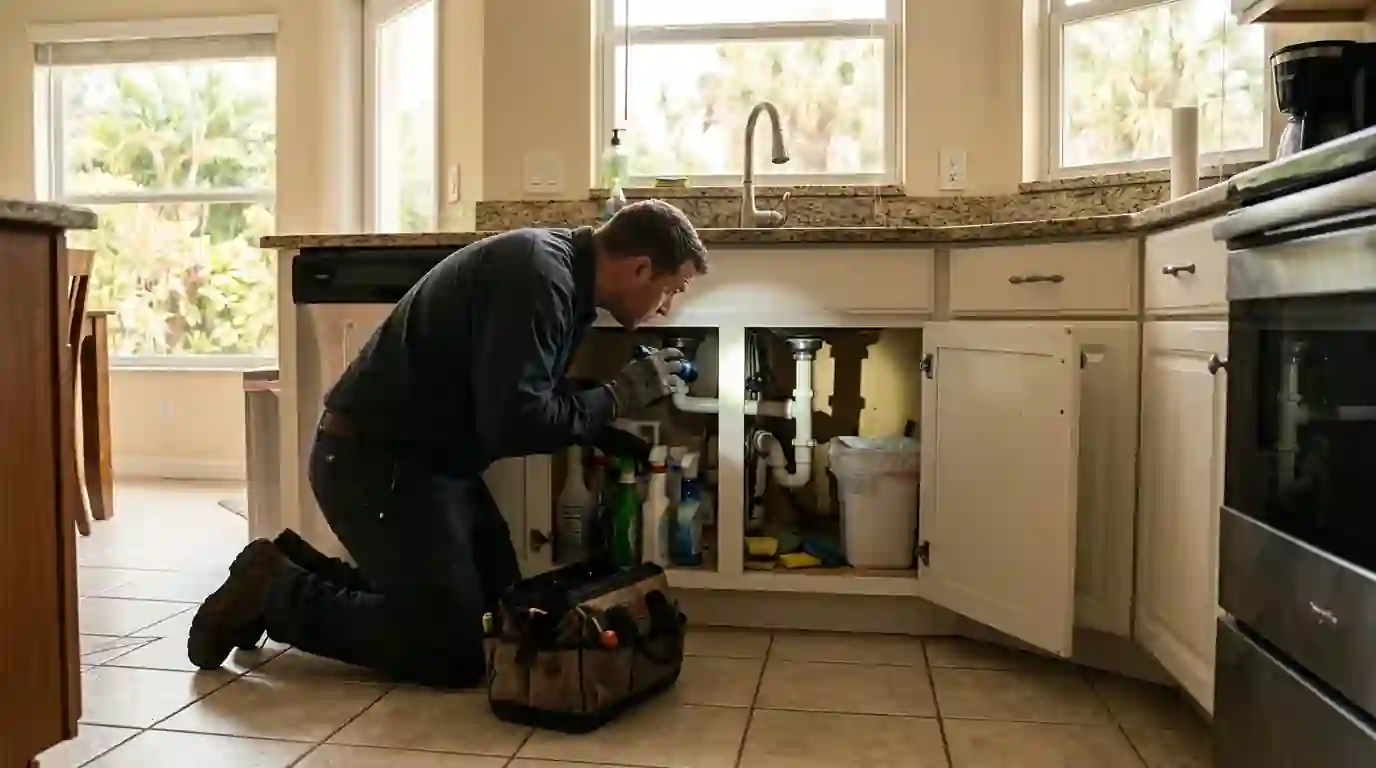
Restaurant pest control in Tampa is a monthly or more frequent program that targets German roaches in kitchen equipment, drain flies in floor drains, and rodents around the dumpster and back door. Visits run after close or before prep, so nothing is treated while food is out. Each visit is logged with findings and products, which is the record health inspectors and managers ask to see.
Why kitchens need a program, not a spray
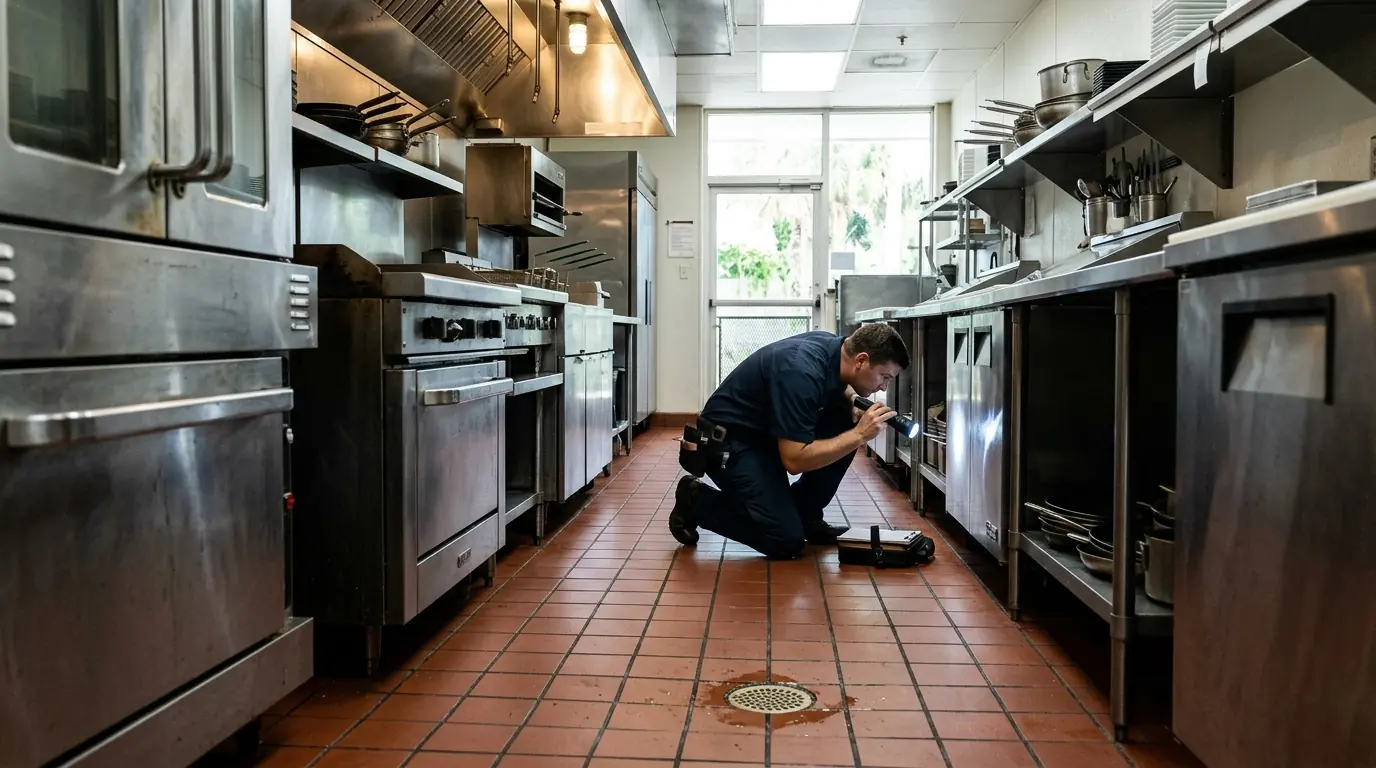
German roaches breed fast in the warm voids of kitchen equipment, drain flies come back from the film inside floor drains, and rodents return as long as the dumpster area feeds them. A one-time treatment knocks numbers down, but deliveries, staff traffic and the building itself keep bringing pests back.
We start with a full inspection of the kitchen line, dish area, dry storage, walk-in coolers, bar, restrooms and back of house, then set monitors and bait stations. Each visit, we read the monitors, bait where activity shows up and log it. The log also notes sanitation and structural issues, like a leaking prep sink or a gap under the back door, because those are often the reason a problem keeps returning.
What restaurant pest control costs
- Kitchen size
More equipment, more drains and more storage mean more monitoring points. - Service interval
Monthly is common, and heavy roach or rodent activity may need visits every two weeks. - Current activity
An active infestation needs an initial cleanout before regular service starts. - Rodent stations
The number of exterior stations and interior traps adds to the program. - Drain work
Drain fly treatment adds products and time at the floor drains.
Roaches in the kitchen tonight? Call and we will plan an after-close visit.
Call (813) 471-5363German roach control on the line and in the dish area
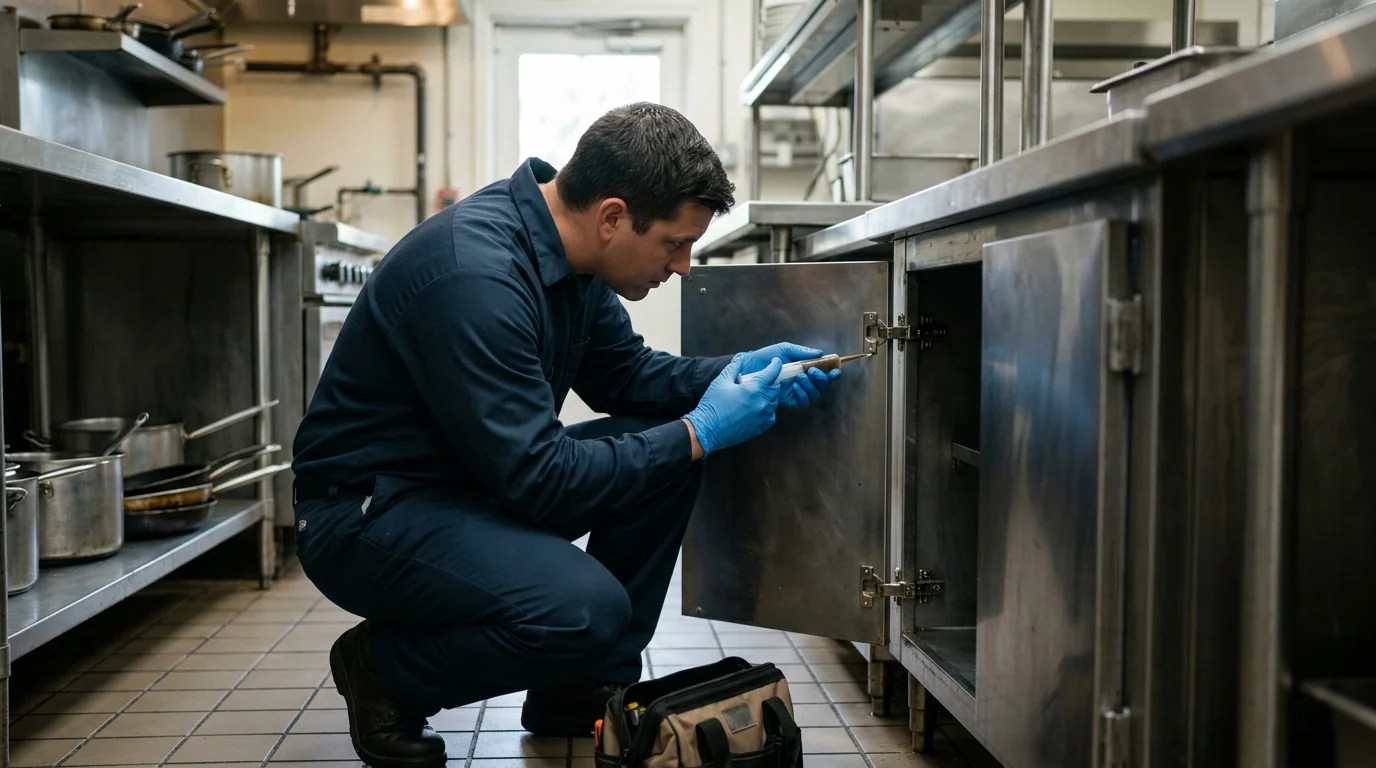
German roaches in restaurants hide in the motor housings of reach-in coolers, under the dish machine, inside wall-mounted shelving, behind the fryer and in the hollow legs of prep tables. Many populations resist common sprays and avoid baits they have seen too often.
We use gel baits in rotation, dust inaccessible voids, add an insect growth regulator, and place sticky monitors in numbered spots so the log shows where numbers are rising or falling. Delivery boxes are a common way new roaches arrive, so unpacking outside the kitchen and recycling cardboard quickly helps.
Drain flies and floor drains
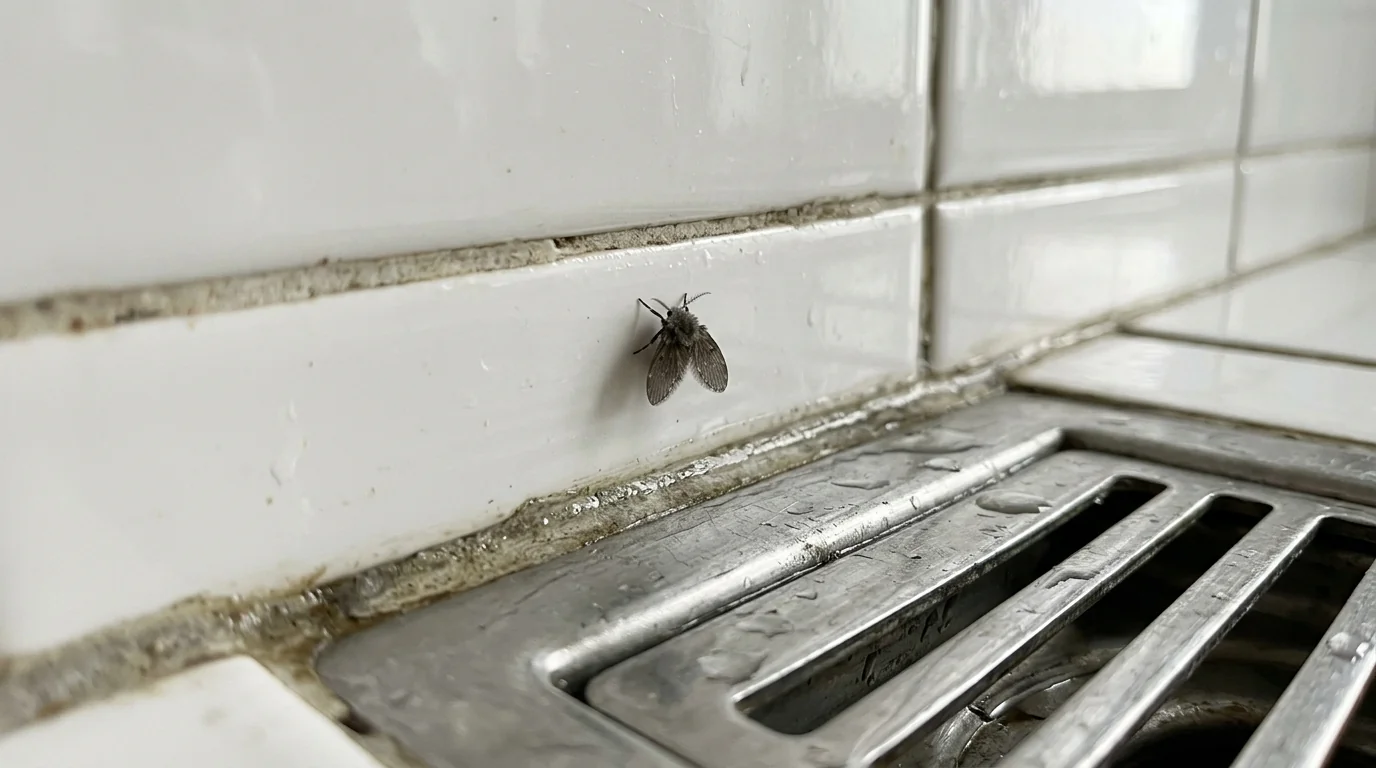
Drain flies are small, fuzzy, moth-like flies that rest on walls near floor drains, sinks and the dish area. Their larvae live in the organic film that builds up inside drains, floor sinks and under equipment where water collects, so spraying the adult flies does very little.
The fix is cleaning the breeding source. We find which drains are producing, treat them with a biological drain product that breaks down the film, and show staff how to scrub the drain with a stiff brush. Broken tiles and cracked grout that hold water under equipment are worth repairing, because larvae breed there too.
Rodent stations and the back door
Rodents come to restaurants for the dumpster, grease bins and food deliveries. Roof rats here live up high in trees and attics, Norway rats dig under slabs, and either one can get through a half-inch gap.
We set tamper-resistant bait stations outside along the building and traps inside along walls and in dry storage, all numbered and logged. We inspect the back door sweep, utility openings and drop ceilings for entry points, and note when the dumpster area or grease bin is drawing activity.
What a restaurant program includes
Each restaurant program covers the kitchen, the drains and the back door.
- A full kitchen and back-of-house inspection
- German roach baiting, dusting and growth regulators
- Drain fly source treatment and cleaning advice
- Numbered rodent stations and interior traps
- A written log after every visit
- Service after close or before prep starts
Tampa roaches and restaurant kitchens
Restaurant kitchens here face two roach problems. The German cockroach, the only common Florida species that lives and breeds indoors, hides in equipment, while large palmetto bugs that breed in mulch, sewers and garages walk in the back door. Roaches are no rarity in this city; a 2013 American Housing Survey ranking listed Tampa among the big US cities where people saw them most. We handle both: baiting inside, and a tight back door and perimeter outside.
How a restaurant program starts
- 1
Kitchen inspection
We go through the line, dish area, storage, coolers, bar, restrooms and back of house.
- 2
Program and price
The schedule, monitor map and cost are agreed before the first service.
- 3
Initial cleanout
If there is active activity, the first service focuses on knocking it down.
- 4
Regular service
After close, we read monitors, treat where needed and log the visit.
- 5
Notes for the manager
Each log flags sanitation and structural issues that are keeping pests around.
How long a visit takes, and how long to get control
A routine visit for a small or mid-sized kitchen usually fits within the time between close and when the last staff leave. We confirm the timing at the first walk-through so it does not hold up closing.
Getting control of an active German roach problem takes several visits over a few weeks, because eggs hatch after each treatment. Drain flies drop off once the drain film is cleaned out, and rodent activity falls as entry points are sealed and the dumpster area is cleaned up.
Product names you may hear on this job
- Advion
- Alpine
- Demand CS
- Vendetta
- Maxforce
- Gentrol
- Suspend
- Temprid
- Phantom