Updated October 2026
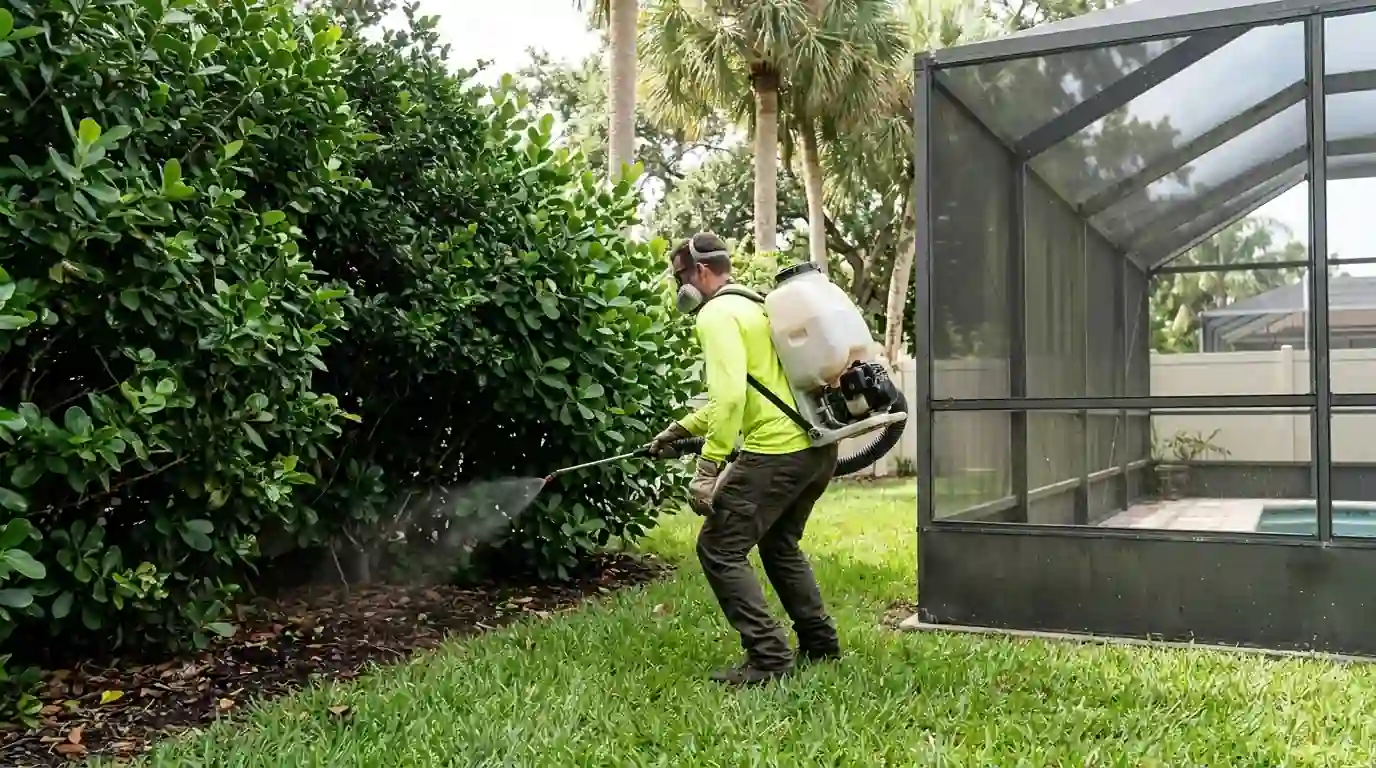
Wasp and hornet removal in Tampa means identifying the species, treating the nest while the colony is in it, and removing the nest afterward. Paper wasp nests under eaves are usually a quick job. Yellow jackets in the ground or inside a wall are more defensive and need more care, and plugging their entrance can push them indoors.
Signs a nest is close to the house
Repeated flights to the same eave corner, shutter or light fixture.
A steady line of yellow jackets in and out of a hole in the lawn or a wall gap.
An umbrella of open cells hanging from a soffit, gutter or lanai frame.
Clusters of mud cells or tubes in the garage, on the porch ceiling or under the eaves.
A faint crackle in a wall or ceiling where a colony is enlarging its nest.
Why the type of wasp decides how the nest comes down
Not every wasp is a threat. Paper wasps defend a small, open nest and mostly leave people alone unless it is bumped. Yellow jackets defend large hidden nests aggressively and will chase. Mud daubers are solitary and rarely sting at all. The same treatment does not fit all three, so the first step is a look at the insect and the nest.
We treat when the colony is settled, usually in the early morning or evening, so the foragers are home. Exposed nests are taken down and bagged afterward. Nests in the ground or inside a wall are treated through the entrance. The opening is left alone until activity stops, so trapped wasps do not chew their way into the house.
Nest over the front door? Call now and keep the door shut.
Call (813) 471-5363Paper wasps under eaves and lanai frames
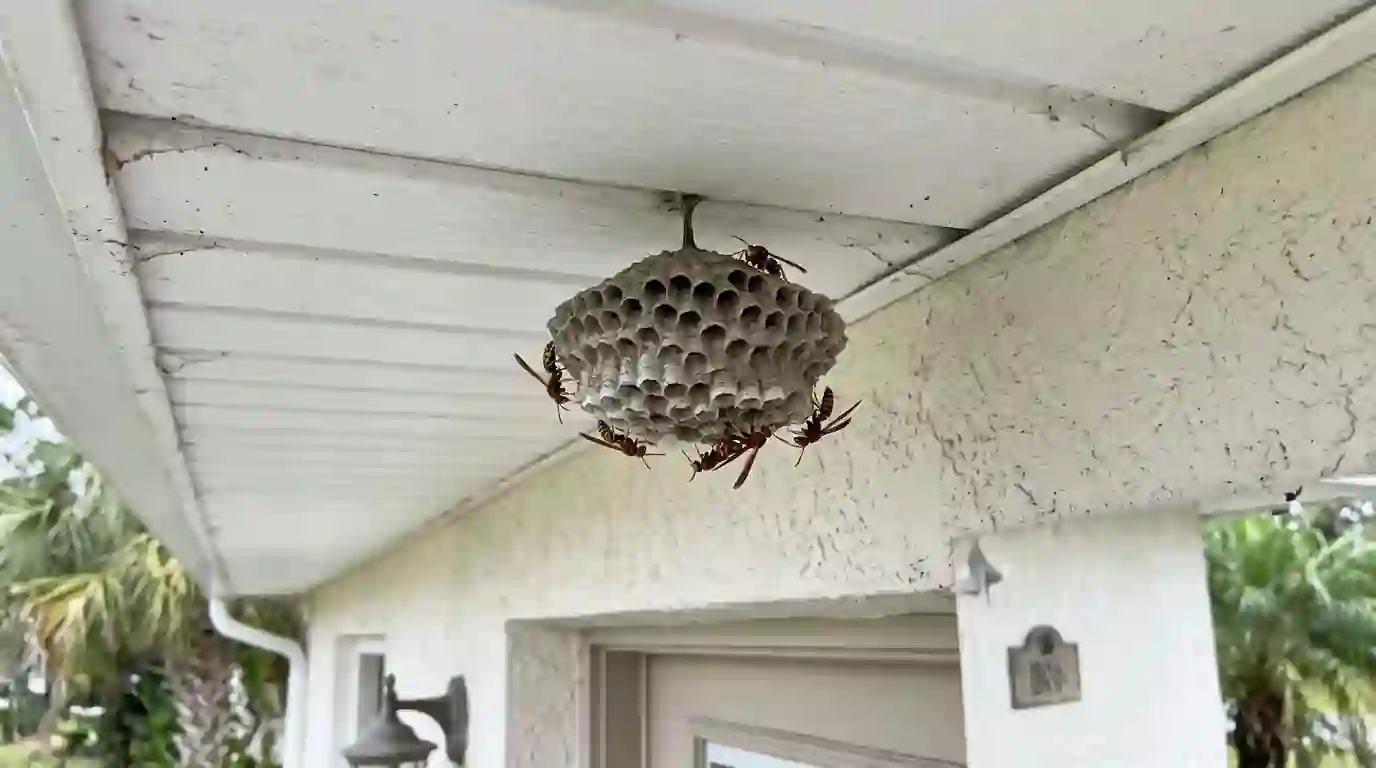
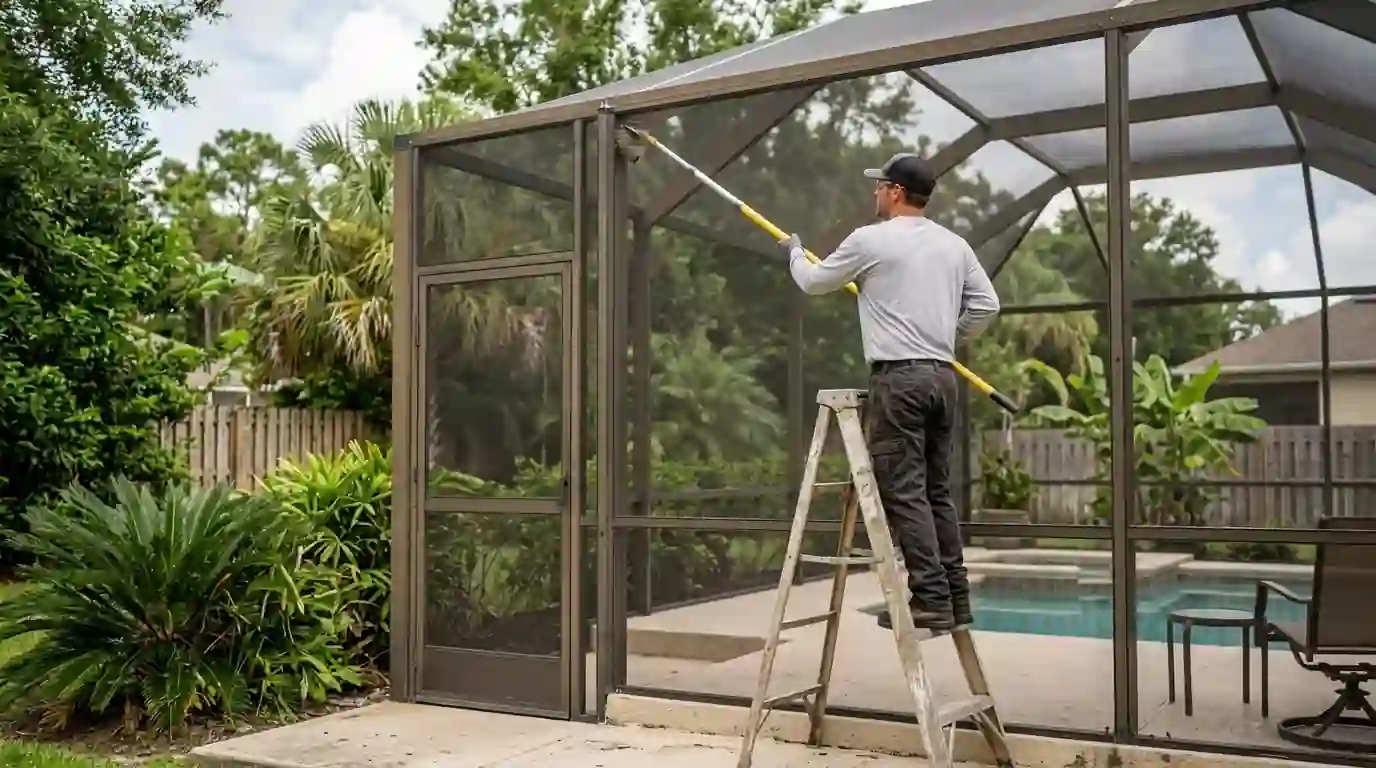
Paper wasps build the open, umbrella-shaped nests you see hanging from soffits, gutters, shutters, mailboxes, light fixtures and the top rails of screened pool cages. The cells face down and are visible, and a nest can start small in spring and grow to many cells by late summer.
They sting when the nest is disturbed, often by someone opening a door, trimming a hedge or cleaning a lanai. We treat the nest, wait for the colony to die off, then scrape it down and treat the spot to discourage a rebuild. Sheltered corners attract new queens year after year, so we point out the spots most likely to be used again.
Yellow jackets in the ground and in walls
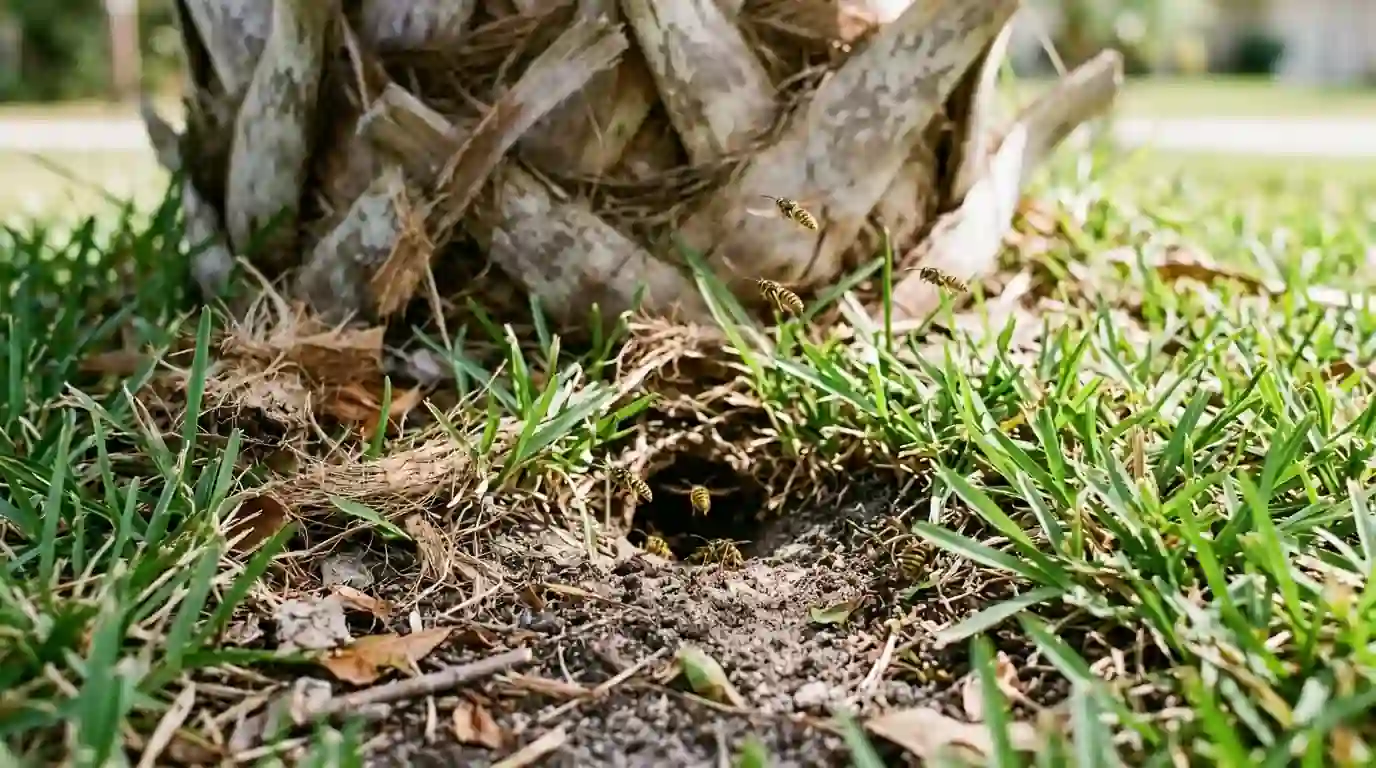
Yellow jackets nest in old rodent burrows, under shrubs, inside landscape timbers and in wall or attic voids. The nest is hidden, so the first sign is often a stream of wasps going in and out of a small hole, or a mower that ran over the entrance. They defend the nest hard and will chase.
In Florida's mild winters, some colonies keep going instead of dying back, and those nests can grow very large. Do not pour gasoline in the hole or plug a wall opening, since a blocked colony may chew into the house. We treat through the entrance and come back to remove the nest where it can be reached.
Mud daubers on walls and ceilings
Mud daubers build nests of mud cells, either as rows of tubes or as lumpy clusters, on garage walls, porch ceilings, under eaves and inside sheds. They are solitary wasps that rarely sting and spend their time hunting spiders to stock the cells for their young.
That last part is useful: lots of mud daubers usually means lots of spiders nearby. We scrape old and active nests, treat the surfaces they favor, and look at the spider activity that is feeding them. Their mud tubes are sometimes mistaken for termite tubes, and we show you the difference.
How a wasp nest visit runs
- 1
Identify
We look at the wasps and the nest to confirm the species and where the colony is.
- 2
Price and plan
You hear how we will treat it and the price before work starts.
- 3
Treat at the right time
The nest is treated when the foragers are home, usually early or late in the day.
- 4
Remove
Exposed nests are scraped down and bagged once the colony is gone.
- 5
Prevent a rebuild
The spot is treated, and you hear which corners are likely to be used again.
Why Tampa wasp nests keep growing into fall
Tampa's warm year gives wasps a long building season. The city's annual mean temperature is 74.5 degrees, and July and August highs average about 91. Colonies that would wind down early farther north keep adding cells deep into fall. Nests go up under shelter for a reason, too. The rainy season runs from late May through October, with afternoon thunderstorms almost every day, and soffits, shutters and lanai rails keep the paper dry. Those are the spots we check first on every visit.
What to handle yourself, and what to leave to us
| Task | Doing it yourself | When to call us |
|---|---|---|
| A tiny paper wasp nest | A nest of a few cells, away from doors, can be knocked down at dusk with care | It sits over a door or you react badly to stings |
| Yellow jackets in the lawn | Keep people, pets and mowers away from the hole | Any time; ground nests are defended hard |
| Wasps in a wall | Do not plug the gap or spray into it | You see traffic in and out of a wall or soffit |
| Mud dauber nests | Scrape old, empty cells off the wall | They keep coming back or spiders are thick |
Anyone with a known allergy to stings should stay well away from any nest and let us handle it.
What wasp nest removal costs in Tampa
- Species
Yellow jacket colonies take more care than an open paper wasp nest. - Nest size
A large nest takes more product and more time to remove. - Location
Second-story eaves, roof peaks and wall voids are harder to reach. - Number of nests
Several nests around one house are usually priced together. - Return visit
Hidden nests may need a second visit to confirm the colony is gone.