Updated October 2026
Subterranean termite treatment in Tampa targets colonies that nest in the soil and tunnel up into the house. The two main methods are a liquid termiticide placed in the soil around and under the foundation, and bait stations that workers carry back to the colony. Tampa has three species of concern, and Formosan and Asian colonies can also nest inside walls or trees.
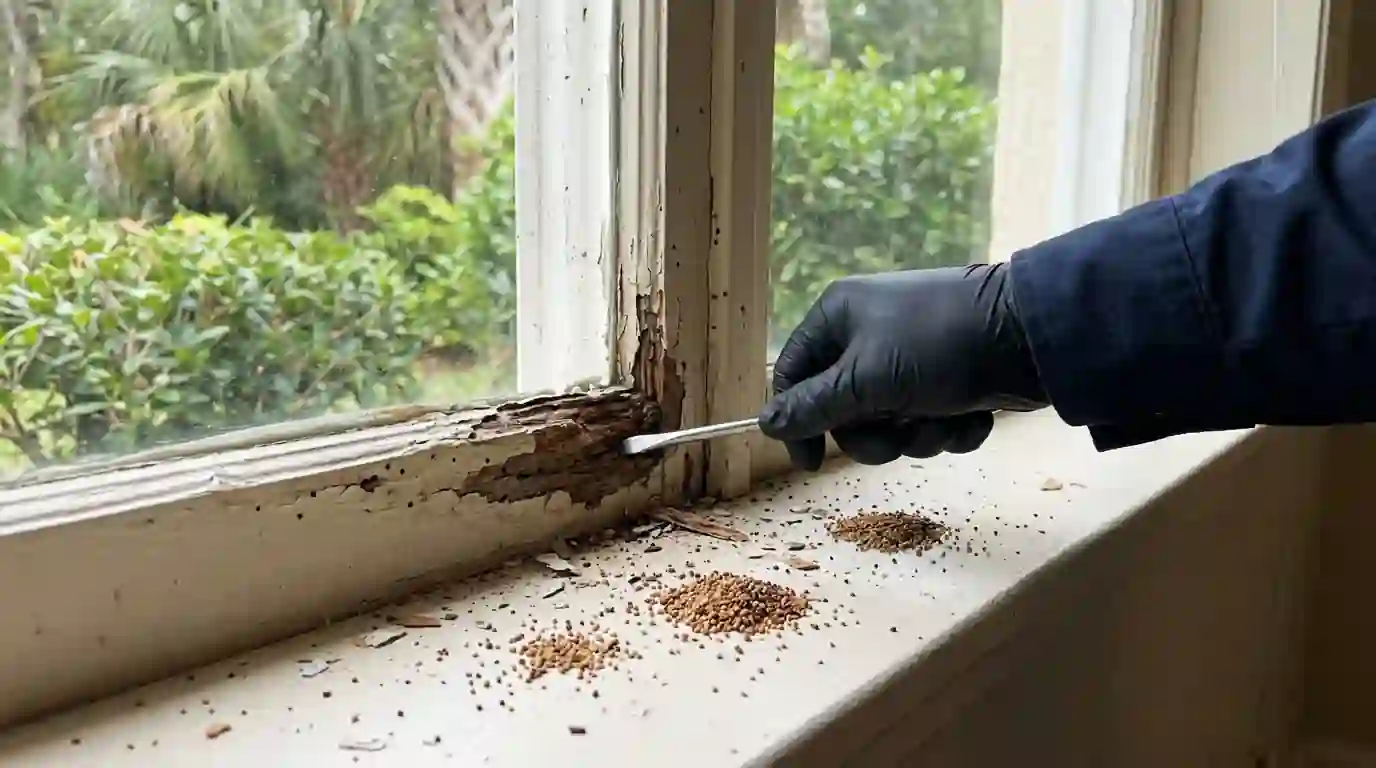
Signs subterranean termites are already inside
Hundreds of winged termites drawn to lights inside the house on a warm evening.
Pencil-width earthen tubes on the foundation, garage walls or plumbing chases.
Mud packed into drywall seams, outlet edges or cracks in the slab.
Trim that crumbles or dents and shows layered, mud-lined tunnels inside.
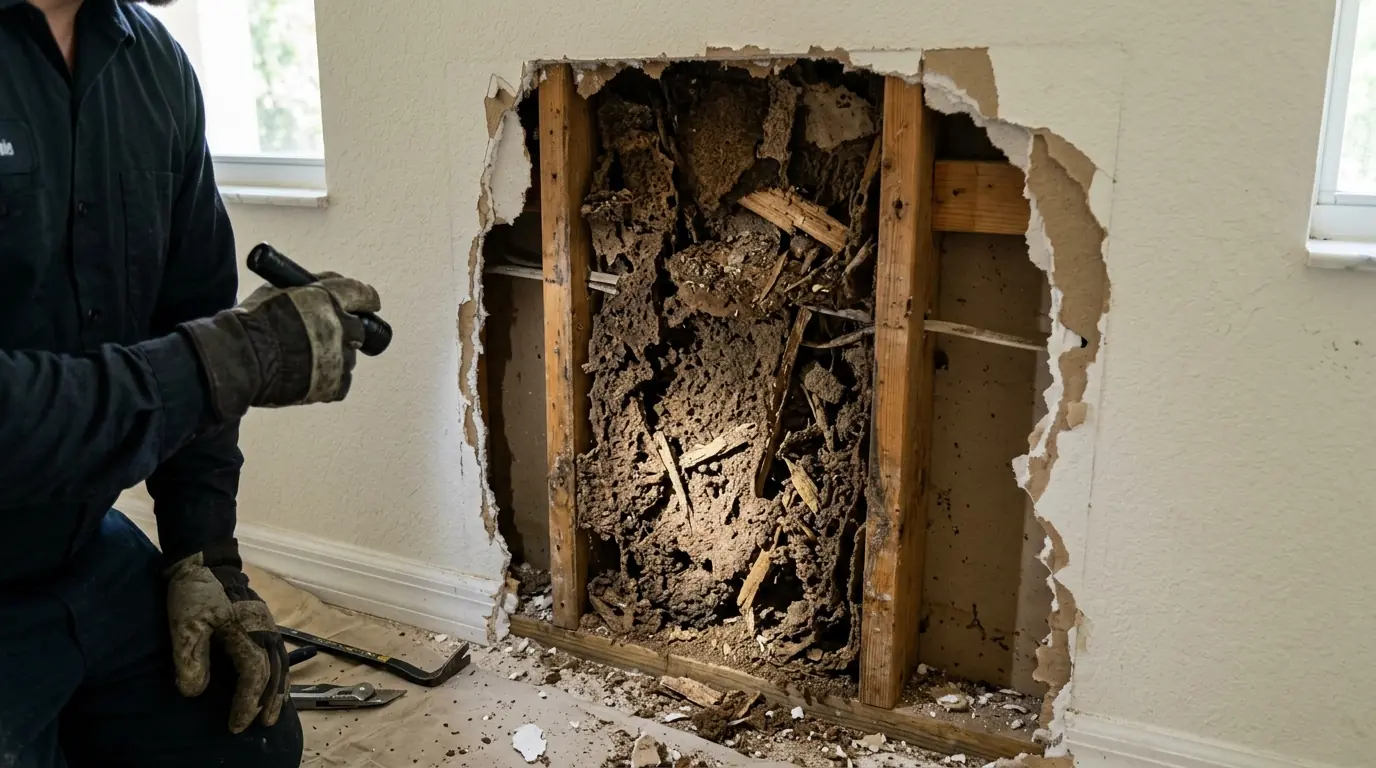
A spongy, dark mass of chewed wood and soil found when drywall is opened.
Why the soil is where subterranean treatment starts
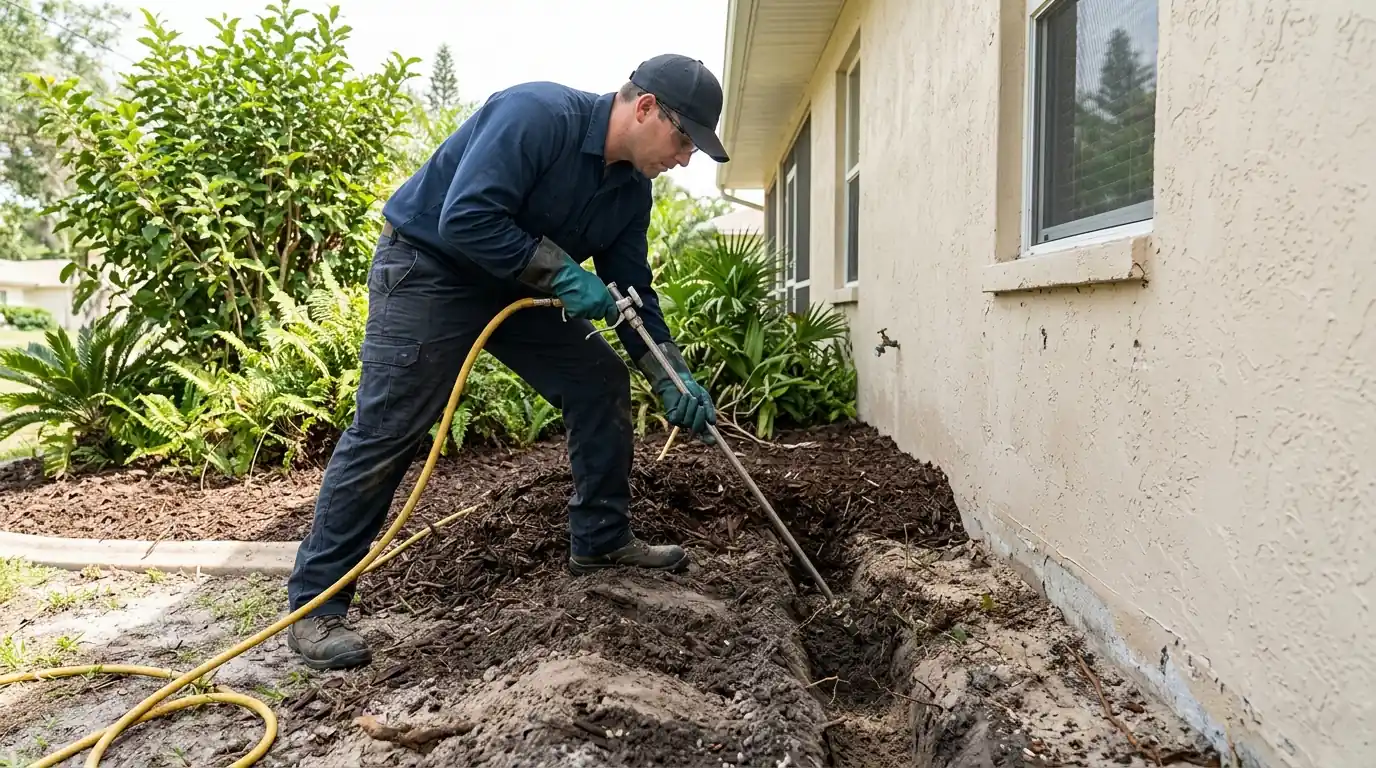
Every subterranean colony depends on moisture from the ground. Workers leave the nest, travel through soil and mud tubes, feed on wood in the house and return. Liquid treatments work by putting a termiticide in that path: a trench along the foundation, rodding beneath slabs, and drilling at plumbing penetrations, expansion joints and porches. With non-repellent products, workers that cross the treated soil pick up the product and pass it to their nestmates.
Bait stations take the opposite route, letting termites find and share a slow-acting bait until the colony declines. Some Tampa jobs use both. Before we treat, the inspection settles which species is involved and where the tubes and damage are. It also checks whether a colony may be nesting above ground in a wet wall or a tree.
Swarmers in the house tonight? Call, we answer around the clock.
Call (813) 471-5363Formosan subterranean termites
Formosans are the aggressive one. They are found across Florida, mostly in dense urban areas, and they swarm from early April to late June, peaking in May just after sunset. The winged adults head straight for lights, so a swarm inside a lit room or around a porch light is a common first sighting.
Their colonies build carton, a spongy nest of chewed wood and soil, inside wall voids, and they can hollow out living trees near the house. That means a soil treatment alone may not reach a colony already established above ground. We look for carton, moisture sources and nearby trees, then pair soil work or baits with treating the nest where we find one.
Asian subterranean termites
This tropical species was known in Florida only farther south until March 2023. That month, UF/IFAS confirmed it was established in part of Tampa, the northernmost known infestation in the state. The find came after Hillsborough pest control operators sent samples to the university termite ID service. Researchers believe it had been there for seven to ten years before anyone confirmed it.
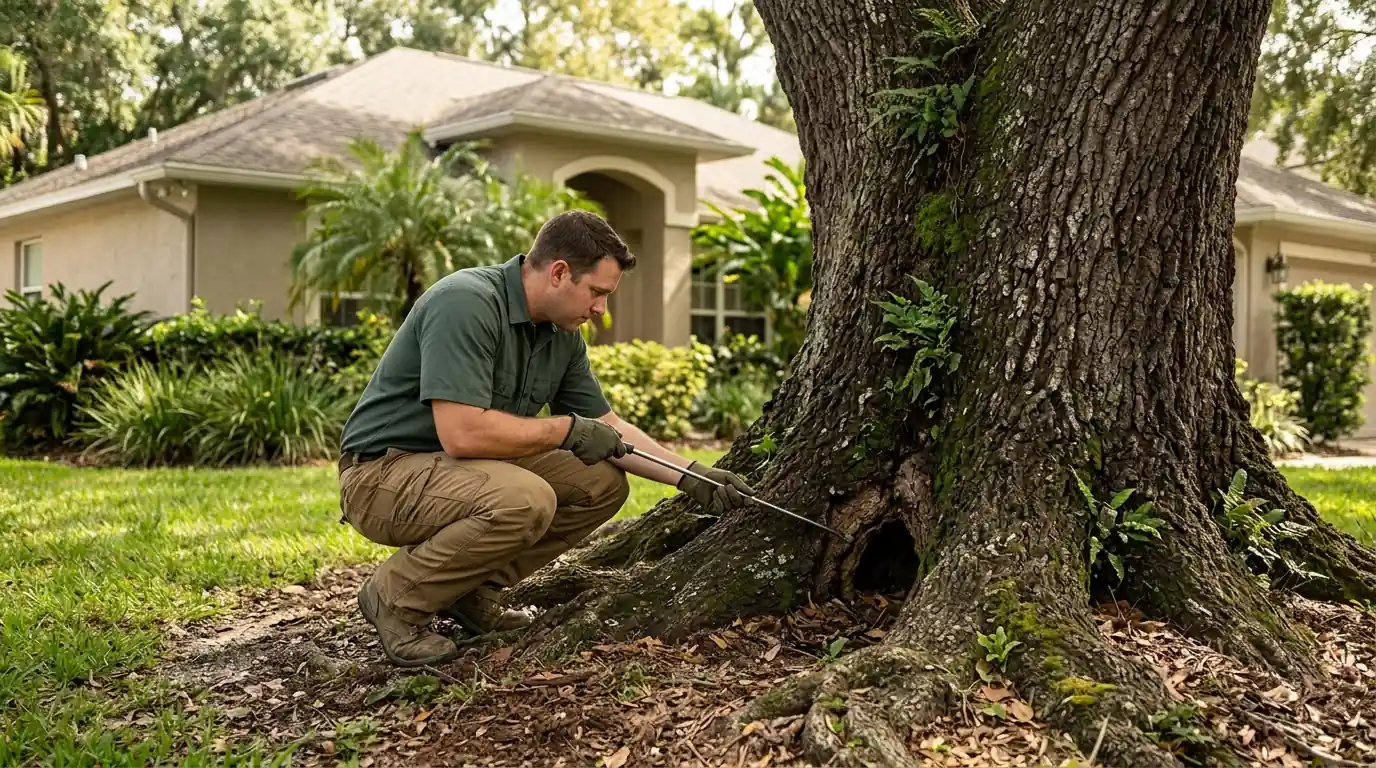
Asian subterranean swarmers fly in March around sunset on warm days, earlier than Formosans. Colonies can hollow out large, healthy trees, so we check oaks and other big trees near the house as well as the structure. Treatment follows the same soil and bait methods, with the species confirmed first.
Native eastern subterranean termites
The eastern subterranean termite is native and lives all over Florida. It flies earlier than the others, from early January into April, often on warm, sunny, calm early afternoons that follow rain. A swarm in February is usually this species.
Colonies run from about 100,000 to a million termites and forage up to 150 feet from the nest. The mud tube on your stem wall may lead back to a colony under a neighbor's yard. These termites stay tied to the soil and rarely nest above ground, so a well-placed liquid barrier or a ring of bait stations is the usual answer.
How a subterranean treatment job runs
- 1
Inspection
We find the tubes, damage and swarm evidence, and confirm which species is involved.
- 2
Treatment plan
You hear whether liquid, baits or both fit the house, and the price, before work starts.
- 3
Prep the perimeter
Mulch is pulled back, and we mark the drilling points at slabs, porches and pipe penetrations.
- 4
Treat
The soil is trenched and rodded, or stations are installed, and above-ground nests are treated where found.
- 5
Follow-up
We recheck the tubes and damaged areas and adjust the plan if activity continues.
How long until the termites stop
A liquid treatment starts working once workers cross the treated soil. Activity fades over a period of weeks rather than overnight, because the product spreads through the colony gradually. Baits are slower again and are measured in months.
Seeing a few termites in a tube shortly after treatment is normal. We break open the tubes and check the damaged areas on the follow-up visit, and new activity after that is a reason to call.
Tampa's newest subterranean termite
Three subterranean species matter in Tampa. The newest is the Asian subterranean termite, confirmed in South Tampa in March 2023 after local pest control operators sent samples to UF/IFAS. Researchers warn that its colonies hollow out large, healthy trees, which matters wherever big trees stand close to the house. If you live near the confirmed area and see swarmers in March around sunset, save a few in a bag so the species can be identified.
What subterranean termite treatment costs
- Foundation length
Liquid treatments are measured by the linear feet of perimeter that need trenching and rodding. - Slabs and porches
Patios, porches and garage slabs that must be drilled through add labor. - Species and nests
Formosan or Asian colonies nesting in a wall or a tree need extra work beyond the soil. - Method
A bait system adds station installation and an ongoing monitoring fee. - Damage found
Repairing damaged trim or framing is separate from the treatment.
Liquid soil treatment or bait stations?
| Question | Liquid soil treatment | Bait stations |
|---|---|---|
| How it works | Termiticide in the soil around and under the foundation | Workers feed on bait and share it with the colony |
| Speed | Activity fades over weeks | Colonies decline over months |
| Disruption | Trenching, plus drilling through slabs and porches | Stations set in the soil around the house |
| Ongoing care | Little after the job, aside from rechecks | Stations need regular monitoring visits |
Many jobs combine them. See termite bait stations for how monitoring works.
Product names you may hear on this job
- Termidor
- Altriset
- Sentricon
- Trelona
- Advance
- Vikane
- Bora-Care
- Premise
- Taurus SC
- Recruit