Updated October 2026
Powderpost beetle treatment in Tampa starts by confirming the holes and dust are fresh, since old exit holes can sit unchanged for years. Active larvae in unfinished wood are treated by applying a borate or residual product that soaks into the surface. Finished floors and furniture need the coating sanded or bypassed first, and severe structural cases may call for fumigation.
Powderpost beetles are not termites, and the treatment shows it
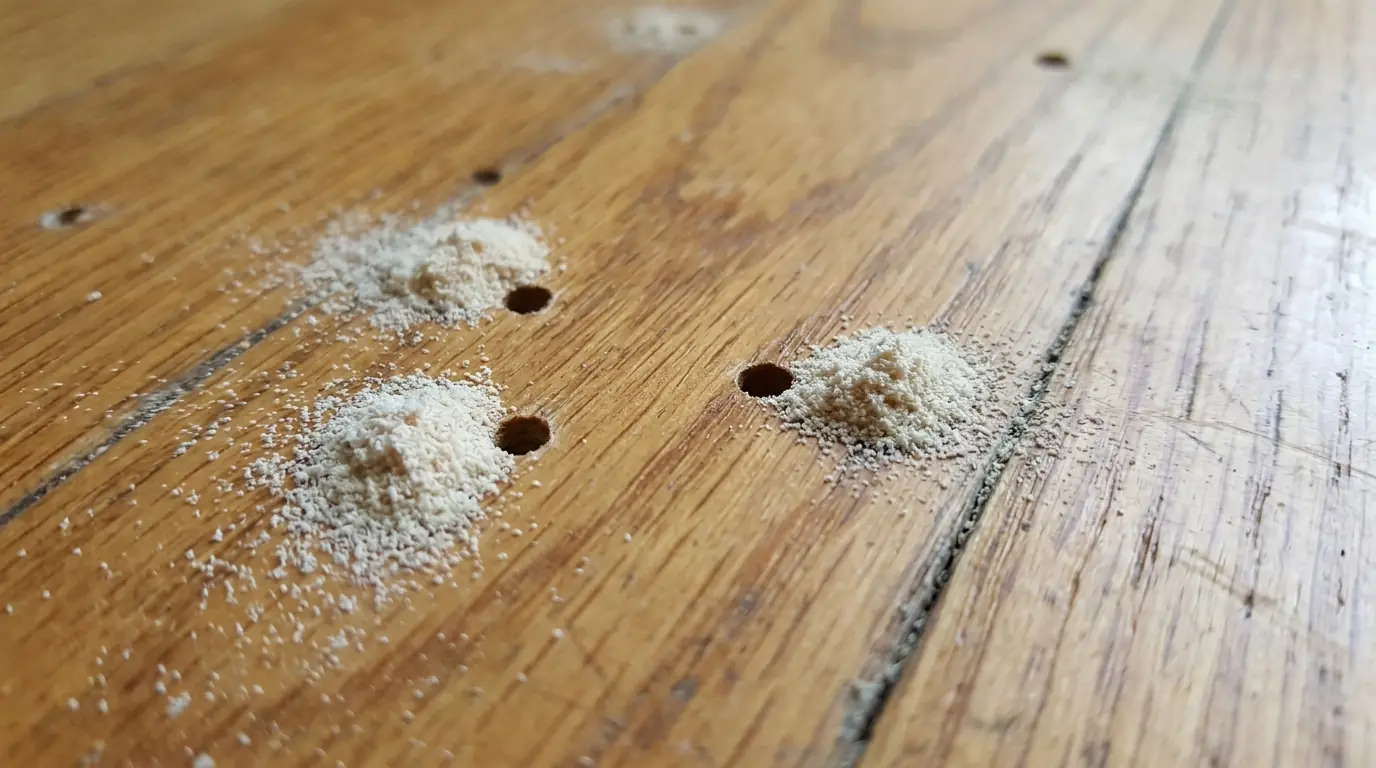
Powderpost beetles lay eggs in the pores or cracks of wood. The larvae tunnel through it, packing the galleries with fine powder, and emerge as adults through small round exit holes. The powder that sifts out is soft like flour or talc, which is how we tell it apart from the hard, six-sided pellets of drywood termites.
The question that matters is whether the infestation is still active. Holes from a problem that ended years ago look the same as fresh ones from a distance. We look for bright, clean edges on the holes and fresh dust that returns after cleaning. Old damage that needs no treatment gets called exactly that.
What powderpost beetle treatment costs
- Active or old
Confirmed old damage may need no treatment, only monitoring. - Wood finish
Finished wood may need sanding before treatment can soak in. - Amount of wood
One piece of furniture differs from a whole floor or crawl space. - Access
Tight crawl spaces and attics add labor to reach the wood. - Method
Spread through hidden framing can mean fumigation, which costs far more.
Fine dust under a floorboard or dresser? Call and describe it.
Call (813) 471-5363Holes in hardwood floors and trim
Unfinished hardwood is where the beetles lay eggs, so floors are most at risk from the underside, in a crawl space or where the planks were never sealed. Trim is vulnerable at raw edges and nail holes. Dust that keeps appearing along one board, or holes concentrated in one area, usually point to a single infested batch of wood.
Treatment soaks into raw wood, so on the visible side of a finished floor the coating blocks it. We treat exposed undersides from the crawl space where possible. Where the finish has to come off, we tell you before any sanding so you can plan the refinishing.
Furniture, antiques and wood pieces
Beetles often arrive inside an old dresser, a chair or a wooden carving, and a piece brought home from an estate sale can hold larvae that do not emerge for months. Fresh dust on the floor beneath a single piece of furniture is a common way the problem shows up.
A small loose piece can be isolated and treated on its own, while valuable antiques need more caution because many treatments do not penetrate finishes and some can mark them. We look at the piece, explain the choices, and tell you if replacing an inexpensive item is the simpler answer.
Beetles in framing, joists and attic wood
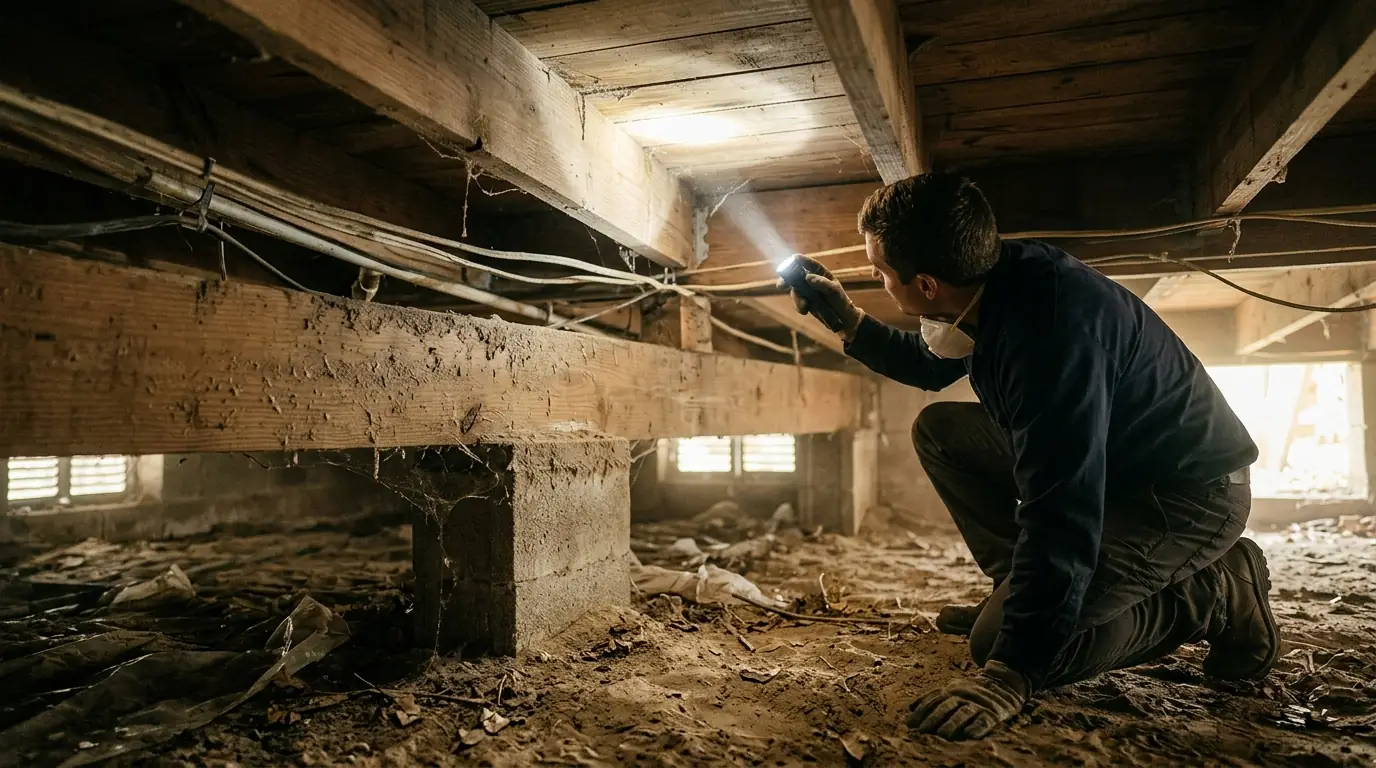
Structural wood is less often affected than floors and furniture, but it happens, especially in older houses with original lumber or wood stored in damp spaces. Holes and dust on joists in a crawl space, or on rafters in an attic, are what we check.
Exposed framing can be treated with a penetrating borate or residual product. Where activity runs through hidden wood across much of the structure, fumigation may be the only way to reach it, and we explain that option before anything is booked.
Beetles in older Tampa hardwood
Powderpost beetles favor seasoned hardwood, so older houses with original floors and trim are where we look hardest. Hyde Park grew from the 1880s, after Henry B. Plant bridged the Hillsborough River at Lafayette Street, and its streets are still full of historic homes and bungalows. In houses like those, floors, trim and crawl spaces get checked first. Powder post beetles are also one of the organisms on the Florida WDO report, so they can show up during a sale.
From fine dust to a finished treatment
- 1
Look at the dust
We confirm whether it is beetle powder, termite pellets or something else.
- 2
Check activity
Holes and dust are checked for signs of fresh activity.
- 3
Choose the method
You hear what will be treated, how, and the price before work starts.
- 4
Treat the wood
Raw wood is treated, or finished pieces are prepared, with pets and people kept clear.
- 5
Recheck
We come back to confirm new dust and holes have stopped.
What you can do, and when to call
| Task | Doing it yourself | When to call us |
|---|---|---|
| Checking if it is active | Vacuum the dust, mark the holes and check again in a few weeks | Fresh dust or new holes appear |
| A small piece of furniture | Keep it away from other wood and watch for new dust | The piece is valuable, or dust keeps coming |
| Sealing finished wood | A good finish discourages new egg-laying | Larvae are already inside the wood |
| Floors and framing | Keep crawl spaces dry and ventilated | Holes cluster on joists, subfloor or rafters |
Not sure if it is beetles or termites? A termite inspection sorts out pellets from dust.
How to tell an active beetle problem
Flour-like powder that comes back after you vacuum the spot.
Exit holes with sharp edges and light wood inside, rather than dark, dirty ones.
Clusters on unfinished undersides, raw edges or crawl space joists.
Powder appearing under a piece that came into the house recently.
Tiny reddish-brown beetles near windows or lights, usually in spring.