Updated October 2026
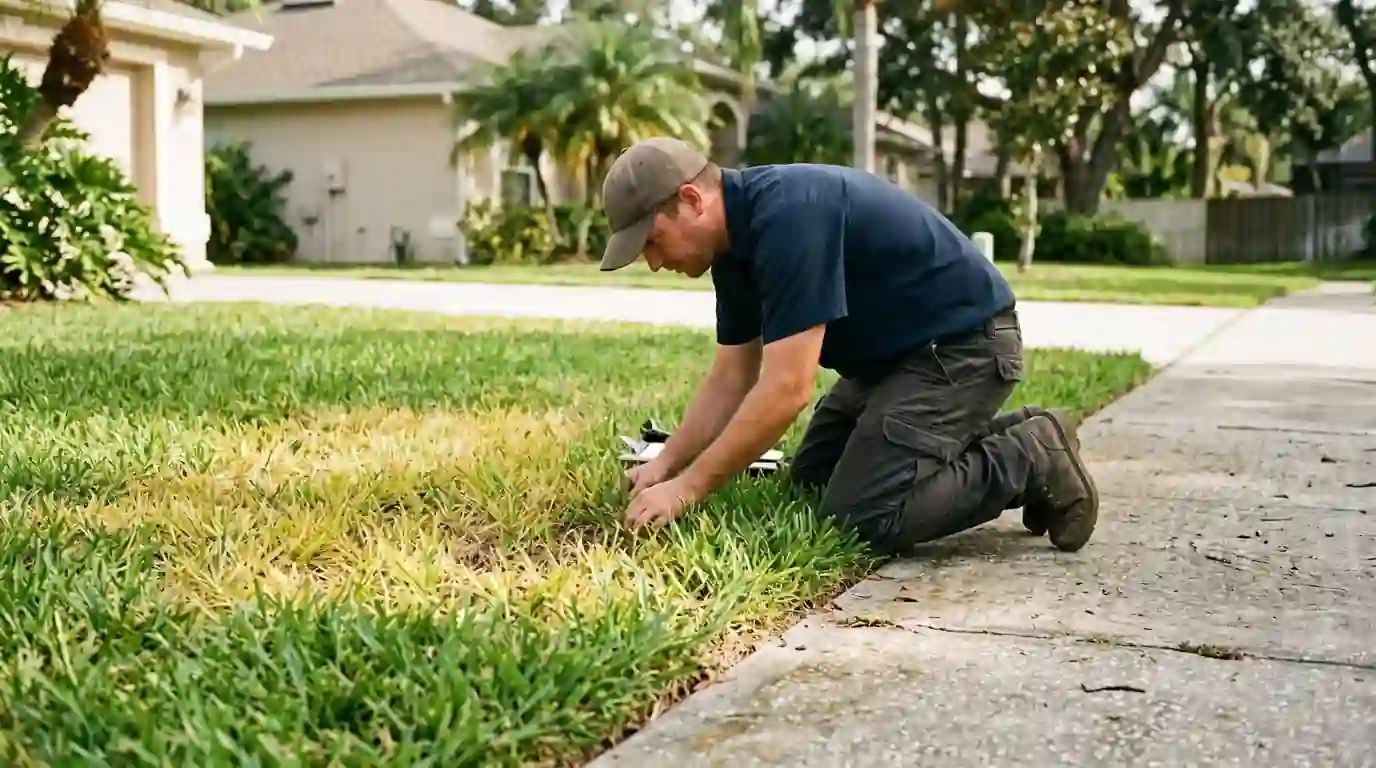
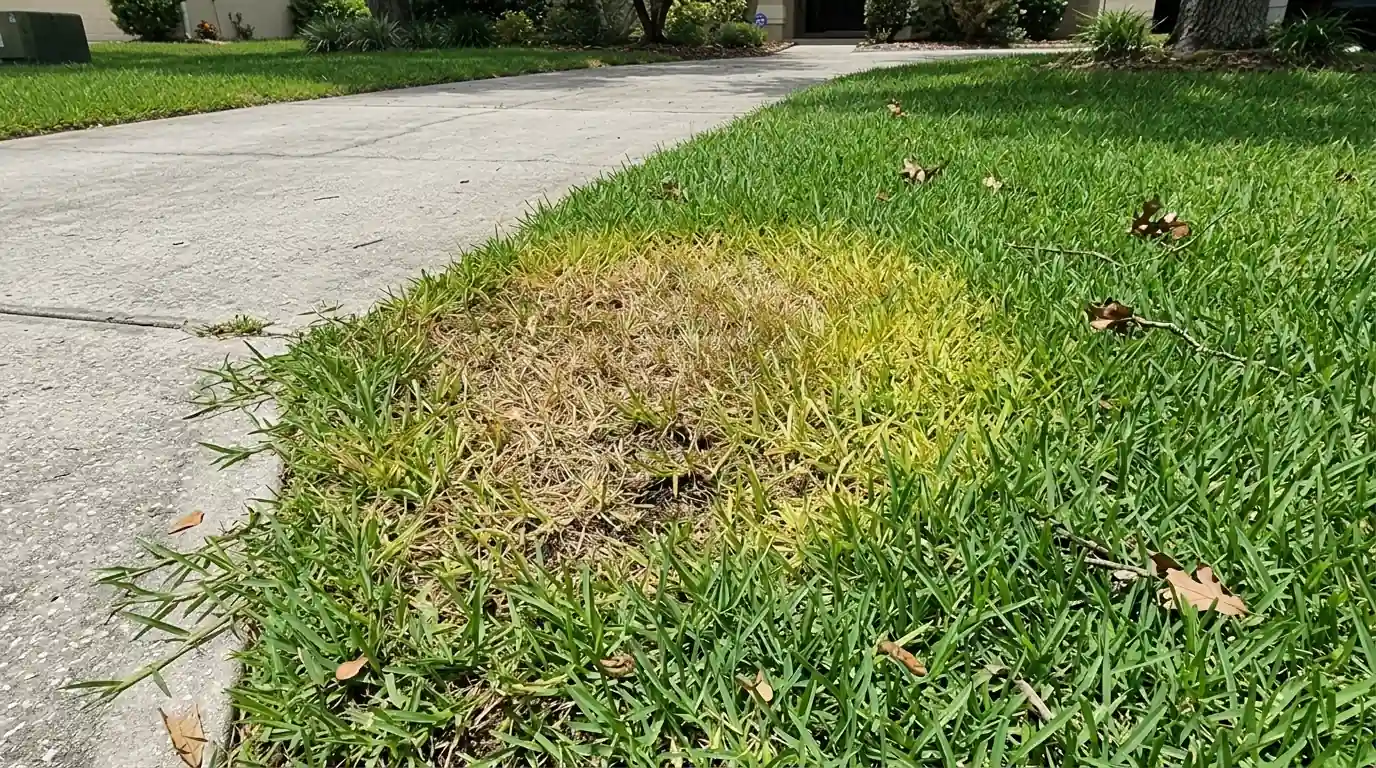
Chinch bug damage in Tampa St. Augustine lawns shows up as roughly circular yellow patches that spread outward. The patches start in sunny, water-stressed spots along driveways, sidewalks and high, dry sandy soil. Infestations peak in early July, but the bugs stay active through the Florida winter, and some local populations resist common insecticides, so a confirmed count comes before treatment.
How to tell a chinch patch from a dry patch
Damage begins beside a driveway, sidewalk or curb where the grass gets the most sun and heat.
The center browns while a ring of yellowing grass spreads outward week by week.
Grass along the edge of the patch keeps fading even after a few good waterings.
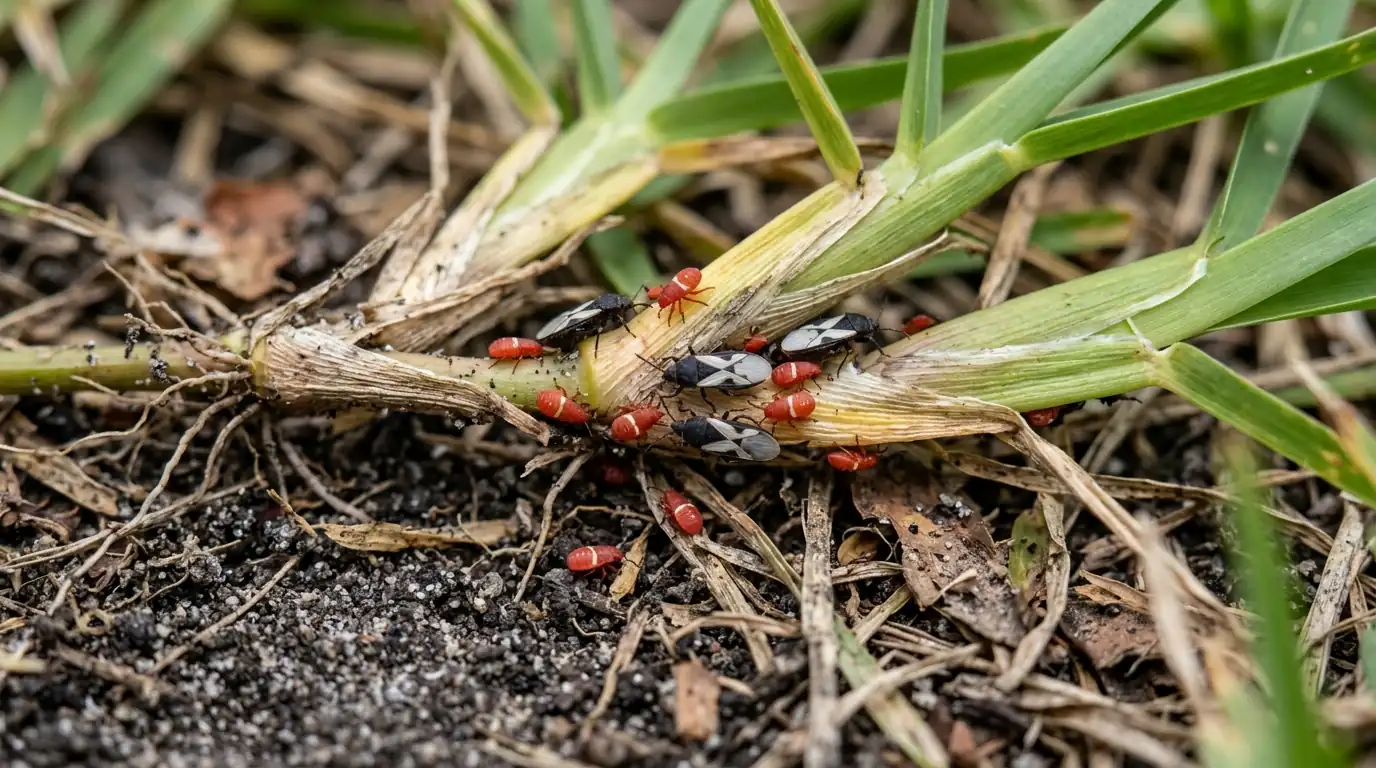
Parting the grass at the yellow edge shows small black bugs with white wing marks and red nymphs.
Patches grow fastest in the hot, dry spells of early summer, before the daily storms settle in.
Why we count chinch bugs before we spray
Yellow St. Augustine in a Tampa summer can be chinch bugs, drought stress, a sprinkler that misses a corner, or a fungus. Treating every yellow spot as chinch bugs wastes product and helps build resistance, so the first step is finding them.
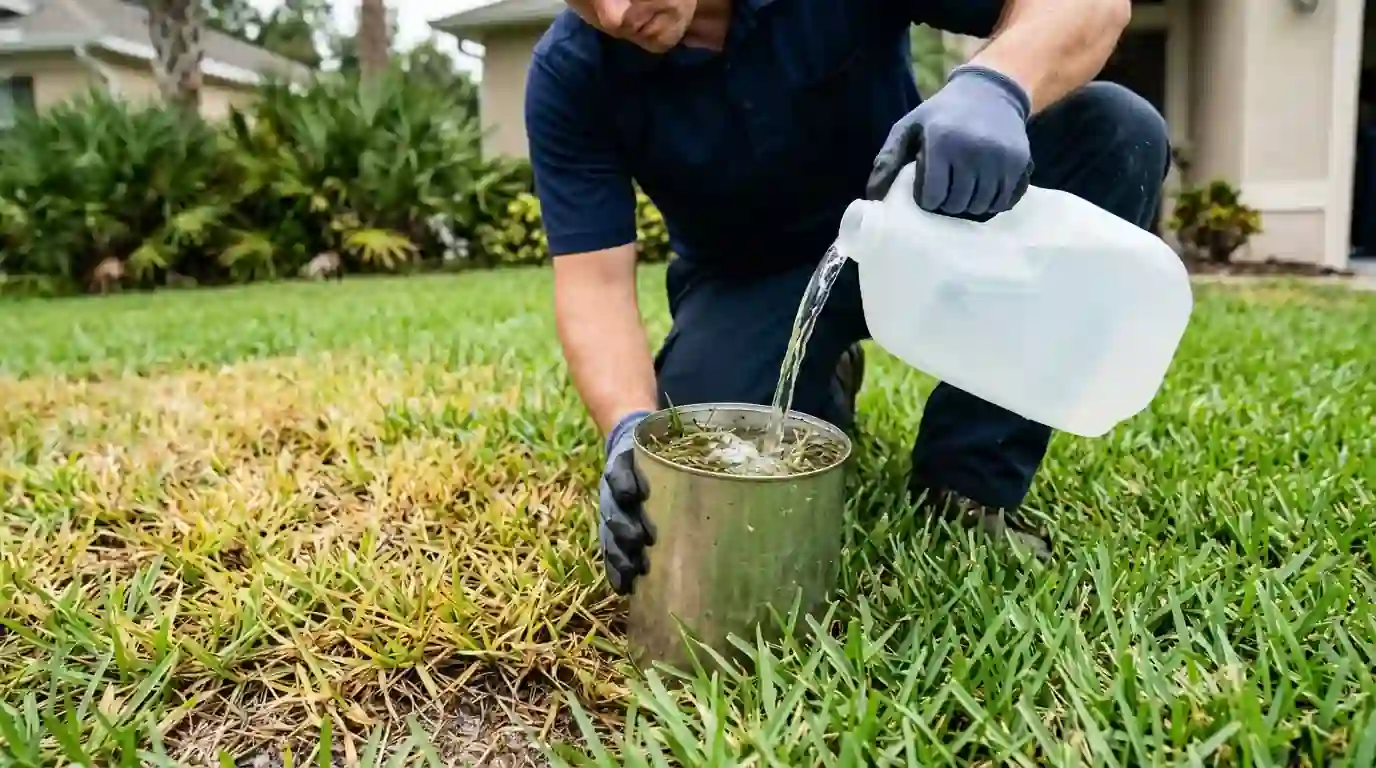
We check the edge of the damage, where green grass meets yellow, because that is where the bugs are feeding. We part the grass at the soil line and use a water float test on the patch edge. If the count is low, we tell you what else is going on.
Yellow patch growing by the driveway? Call and we will check the edge.
Call (813) 471-5363Treating yellow patches in St. Augustine lawns
Chinch bugs suck sap from St. Augustine stems and inject a toxin that turns the grass yellow and then brown. The damage starts small and roughly round. It usually begins where the lawn is most heat stressed, beside concrete, on high spots and along sandy edges.
Once the bugs are confirmed, we treat the active patch plus a band of healthy-looking grass around it. By then the bugs have usually moved past the visible edge. We also check the irrigation on that side of the lawn, because a water-stressed edge invites them back.
When chinch bugs shrug off the usual products
Southern chinch bugs are known for building resistance. Some Florida populations no longer respond well to insecticides that once worked, and even Floratam, the St. Augustine variety bred to resist them, lost that resistance within about 12 years of its 1973 release.
To slow resistance, we rotate between insecticide classes rather than repeating the same one, and we only treat where bugs are confirmed. When a lawn does not respond, we recheck the count and switch products instead of simply spraying again.
Checking the lawn after treatment
Treated grass does not turn green overnight. Grass that was already brown has to grow back, and runners from healthy grass at the edge fill in over the following weeks. The thing to watch is whether the yellow ring has stopped moving outward.
We come back to check the patch edges and run another float test. If the count is down and the edge has stopped spreading, the job is done. If bugs are still there, we tell you why and what the next step is. Because chinch bugs stay active through the winter here, a lawn that had them is worth checking again later in the year.
How a chinch bug treatment runs
- 1
Edge inspection
We part the grass and run float tests at the line between yellow and green.
- 2
Diagnosis and price
You hear whether it is chinch bugs, drought or disease, and the price, before we treat.
- 3
Targeted treatment
We treat the active patch and a buffer band of grass around it.
- 4
Watering advice
We tell you how long to keep pets and children off and how to water afterward.
- 5
Follow-up check
We recheck the edges and count again to confirm the bugs are gone.
Chinch season on Tampa sand
Much of the Tampa area sits on Myakka fine sand, Florida's state soil. It stays wet during the summer rains and turns droughty the rest of the year. That dry stretch is when chinch bugs move in. They start on high, dry, sandy spots and along sunny edges, and infestations peak in early July. Tampa's rainy season usually arrives by late May. Patches spread fastest in the hot days before the storms and in dry spells between them.
Checking a yellow patch yourself
| Task | Doing it yourself | When to call us |
|---|---|---|
| Yellow patch by the driveway | Part the grass at the yellow edge and look at the soil line for small black bugs | You see bugs, or the patch keeps spreading after watering |
| Float test | Push a can with both ends cut out into the edge, fill with water and watch for bugs floating up | More than a few bugs float up in a few minutes |
| Irrigation | Run each zone and look for heads that miss the edges by the concrete | The patch spreads even where the water reaches |
| Store-bought granules | Follow the label exactly and water it in as directed | A product you used already failed, which may mean resistance |
Repeating the same store product on a lawn where it did not work can make resistance worse, so call before trying it a second time.
What chinch bug treatment costs in Tampa
- Square footage of turf
Published lawn insect pricing runs by the square foot, so a big back lawn adds up. - How far it spread
A single patch costs less to treat than damage across the front and back. - Resistance
Lawns that did not respond to one product may need a different class. - Follow-up visits
Rechecks and any second treatment are part of the total. - Annual plan or one-time
A yearly lawn pest plan spreads checks across the season.
Chinch bugs, drought stress or disease?
| What you notice | Chinch bugs | Drought stress or disease |
|---|---|---|
| Where it starts | Sunny edges by concrete and high, sandy spots | Drought: where sprinklers miss. Disease: often shaded, wet spots |
| Shape | Roughly circular, spreading outward | Drought: follows the sprinkler pattern. Disease: rings or blotches |
| After watering | Edge keeps yellowing | Drought: greens up in a few days |
| At the soil line | Small black bugs and red nymphs | No bugs; disease may show leaf spots or rotted stems |
Leaf spots, rotted stems or rings in damp shade point to fungus, which our lawn disease treatment page covers.
Product names you may hear on this job
- Acelepryn
- Talstar
- Arena
- Celsius
- Headway
- Heritage
- Dylox
- Merit
- TopChoice
- Advion Fire Ant