Updated October 2026
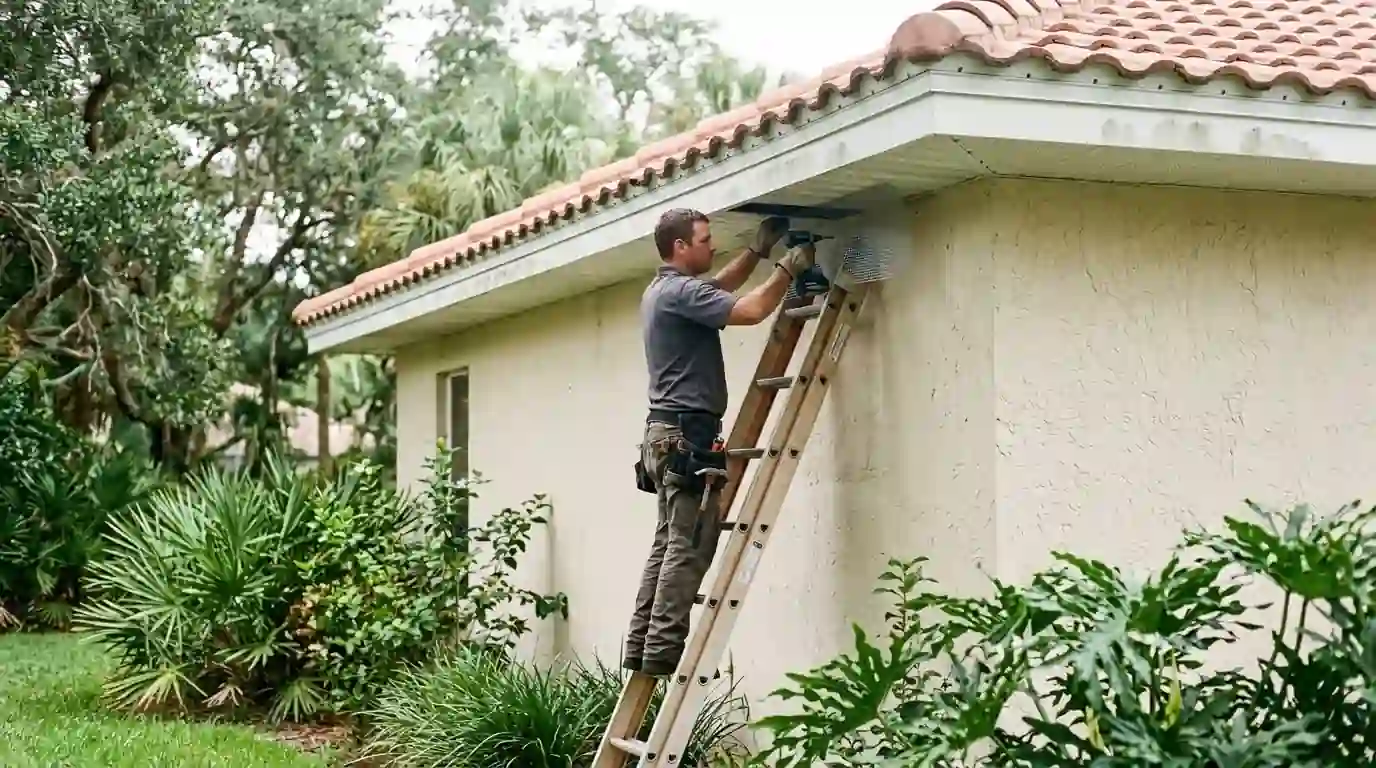
Wildlife removal in Tampa usually means a raccoon in the attic, an opossum under the house or deck, or squirrels chewing in at the roofline. The animal comes out first, with any young, and only then is the opening closed. Sealing too early can trap an animal inside, which leads to new damage or a smell in the walls.
Signs the noise is wildlife, not rats
Thumping or walking sounds too heavy for a rat, mostly after dark, point to a raccoon.
Running and chewing in the early morning and late afternoon is typical of squirrels.
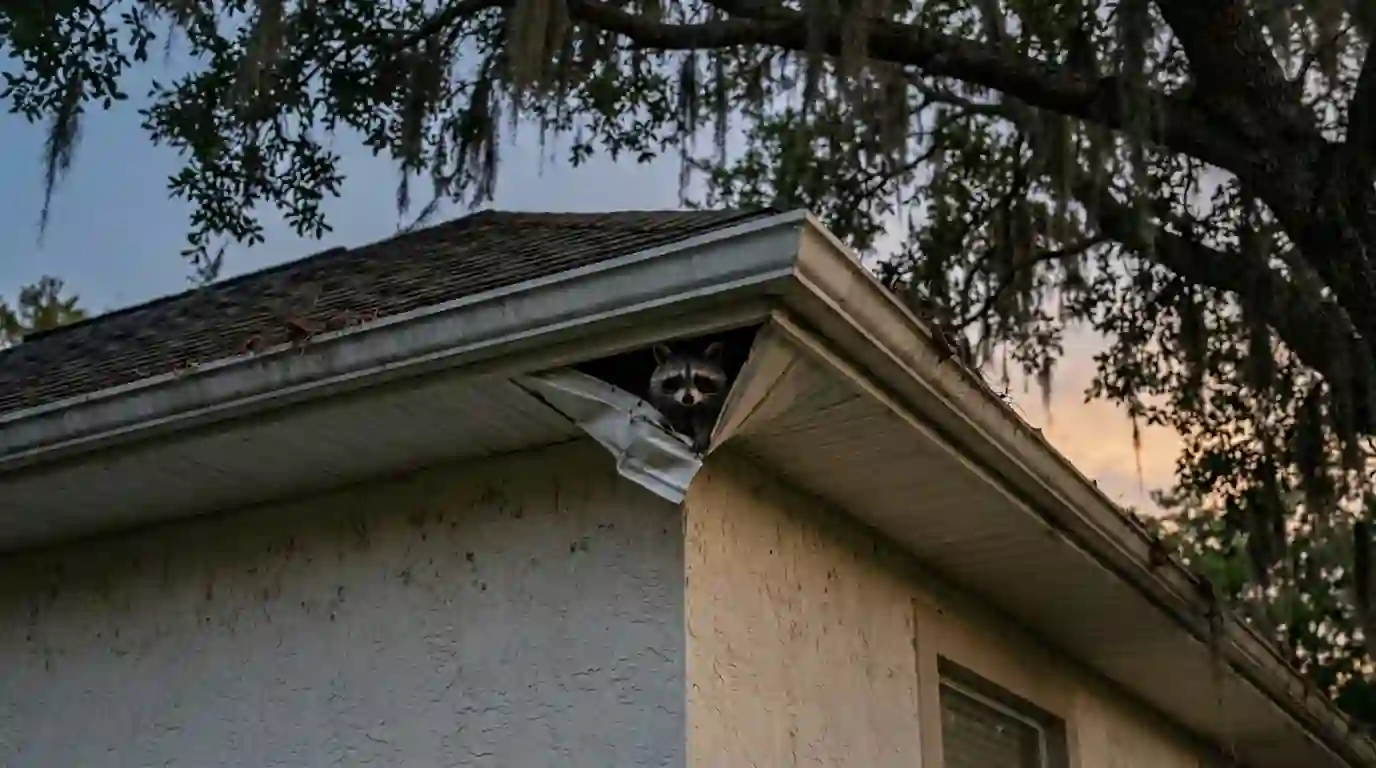
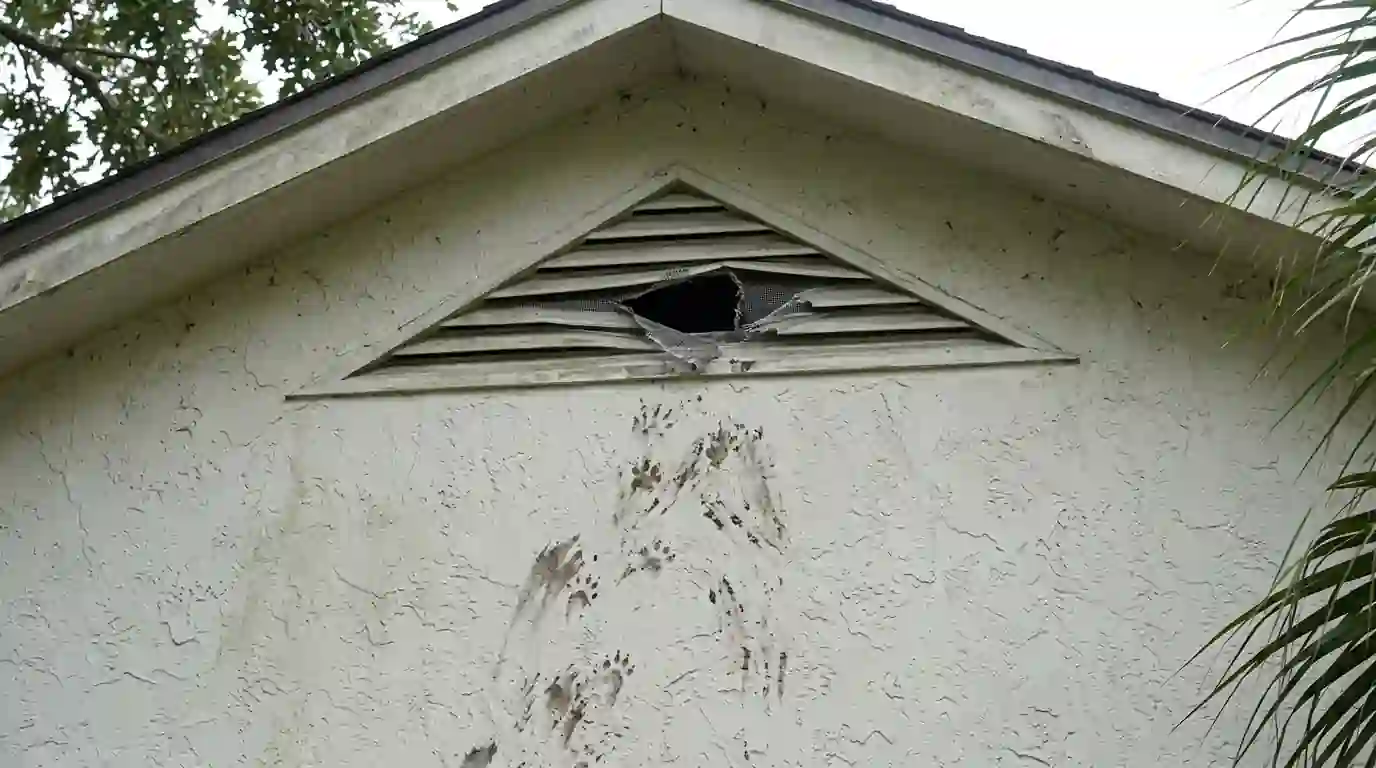
A pulled-back soffit panel, bent vent or ripped screen often marks a raccoon entry.
Rounded chew holes at fascia boards and roof edges are squirrel work.
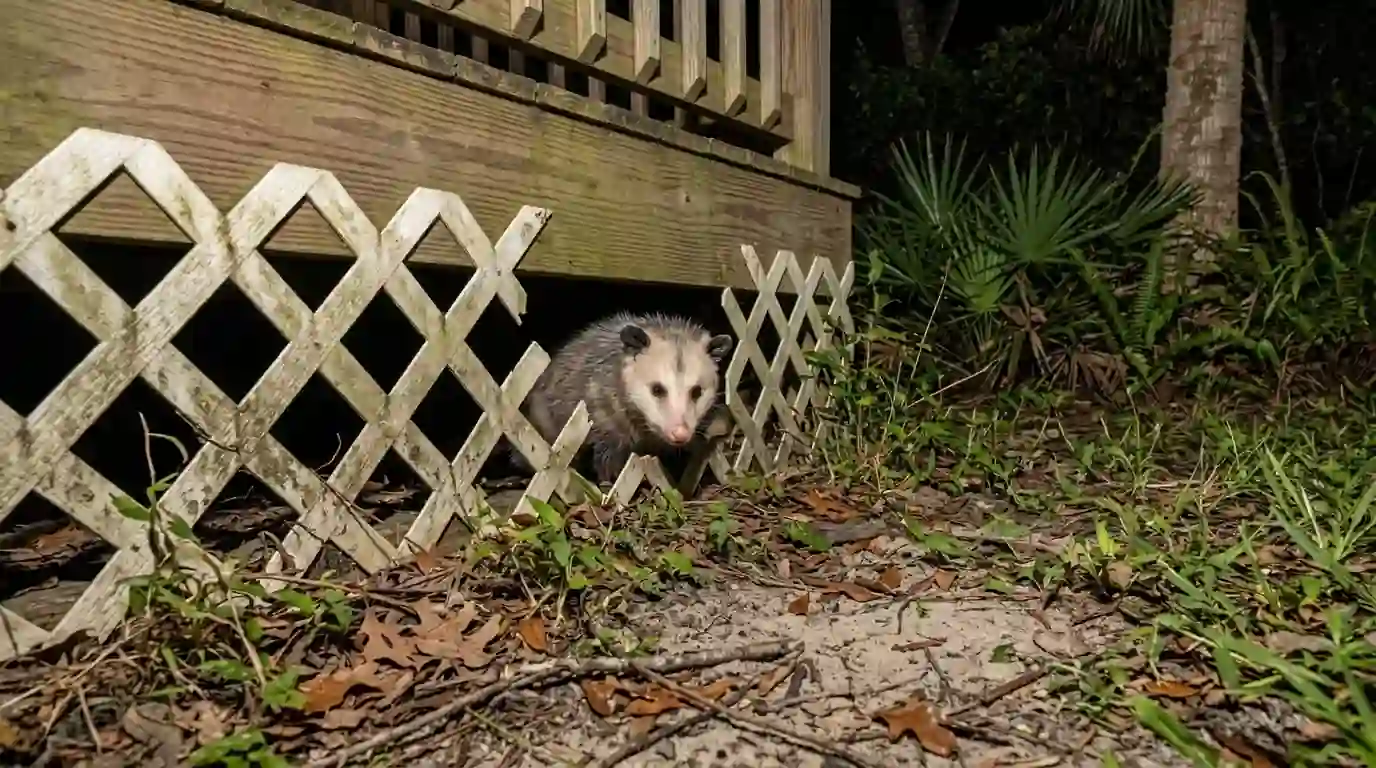
Fresh soil pushed out beside a deck, shed or crawl space points to an opossum or raccoon den.
Getting the animal out before closing the hole
Wildlife jobs fail when the order is wrong. Close an opening with a mother raccoon outside and her young in the attic, and she will tear a new hole to get back in. Close it with a squirrel inside, and it chews out through the ceiling or the soffit. So the first visit is about finding every entry, working out what is using it and whether young are present.
From there, we choose between one-way doors that let the animal leave but not return, and live traps set at the entry. Once the attic or crawl space is confirmed empty, the opening is repaired with metal, and any nest material or droppings are removed.
Something heavy in the attic tonight? Phones are answered around the clock.
Call (813) 471-5363Raccoons in attics and under decks
Raccoons are strong enough to pull open a soffit panel, lift a roof vent or tear a screen, and they often climb in from an overhanging oak limb. Attics appeal most to females raising young, which is why the noise can include soft chattering as well as heavy steps.
We inspect for young before anything else. When kits are present, the mother and young are removed together rather than separated. After the attic is empty, the entry is rebuilt with metal, and their latrine area is cleaned, since raccoon droppings should never be handled bare-handed.
Opossums under the house, deck or shed
Opossums rarely climb into attics. They den low, under decks, sheds, raised floors and porch steps, in gaps left by settling soil or a missing skirting panel. They are often noticed when a pet finds them, or when a smell drifts from under the floor.
Opossum work is mostly at ground level. We confirm the den is in use and set a trap or one-way door at the opening. Once it is empty, buried hardware cloth closes the gap so the animal cannot dig back under. Pet food left outside overnight is the usual draw, so we suggest bringing it in.
Squirrels chewing in at the roofline
Gray squirrels chew their own way in. They gnaw rounded holes at fascia corners, roof edges and gable vents. They are busiest in the early morning and late afternoon, unlike rats, which move at night.
A one-way door over the main hole lets squirrels leave to feed but not return, while other gaps along the roofline are closed. After a few quiet days, the door comes off and the hole is repaired with metal. Trimming limbs that reach the roof makes it harder for them to try again nearby.
How a wildlife removal job runs
- 1
Inspection
We identify the animal, find every opening and check whether young are present.
- 2
Price and plan
You hear the price for removal, repairs and cleanup before work starts.
- 3
Removal
One-way doors or traps are set at the entry, and we check them on a schedule.
- 4
Repair the entry
Once the space is empty, the opening is closed with metal or buried hardware cloth.
- 5
Cleanup
Nest material and droppings are removed, and we show you the repaired openings.
Wildlife on Tampa rooflines, old and new
Housing in Hillsborough County spans several decades: about 17.6% of homes date from before 1970, while 37.5% were built since 2000. Older houses often have wood fascia and open eaves that raccoons and squirrels can pull or chew open. Newer homes still have screened lanais, gable vents and decks with space underneath. Roof rats use many of the same entries. The Tampa Bay Times has reported them as common across the Tampa area, so we look for rat signs on every wildlife call.
What you can do now, and when to call
| Task | Doing it yourself | When to call us |
|---|---|---|
| Pet food and trash | Bring pet bowls in at night and keep trash lids latched | An animal is already denning on the property |
| Branches near the roof | Trim limbs back from the roofline if you can do it safely | Limbs are high or over the roof itself |
| An animal in the living space | Close interior doors, open an outside door, and keep people and pets away | It does not leave on its own or is acting strangely |
| A hole you can see | Leave it open until you know the space is empty | The hole is at the roofline or you hear more than one animal |
Never handle a wild animal or its droppings bare-handed, and keep children and pets away from any animal that is out by day and acting oddly.
What wildlife removal costs in Tampa
- Which animal
Raccoon, squirrel and opossum jobs are priced differently in published figures. - Young present
A mother with young in the attic takes more visits than a single adult. - Entry repair
Rebuilding a torn soffit or fascia corner adds material and ladder time. - Roof height
Two-story rooflines and steep pitches take longer to reach and repair. - Cleanup needed
Soiled insulation is priced as a separate attic cleanup.