Updated October 2026
Palm pest treatment in Tampa starts with telling insect damage apart from cold, nutrient or watering problems, which can look alike from the ground. Scale, whitefly and royal palm bugs all feed on the fronds, and tall palms are usually treated through the root zone so the product rises to the crown. Expect the old damaged fronds to stay until new ones replace them.
Is it bugs or something else on your palm
Palms show stress in the fronds, and the causes overlap. Yellowing older fronds often come from a nutrient shortage. Browned tips can be a dry spell or a cold night. Insect damage has its own look: crusty bumps, white flecks, sticky honeydew, or new fronds that open already scorched.
We check the fronds we can reach and look for honeydew, sooty mold and ant trails below the canopy. Then we tell you whether insects are the cause. When they are not, we say so plainly instead of treating a palm that needs fertilizer or water.
What palm pest treatment costs in Tampa
- Palm height
Tall palms are treated through the root zone, while short ones can also be sprayed. - Number of palms
A row of palms along a drive costs more than a single tree by the pool. - Which insect it is
Scale, whitefly and royal palm bugs need different products and timing. - Nearby host plants
Hedges and trees carrying the same whitefly are often treated at the same visit. - One visit or a schedule
Royal palm bug and scale control often needs a repeat at the right season.
Fronds turning brown or a sticky deck under the palm? Call and describe it.
Call (813) 471-5363Scale insects on palm fronds
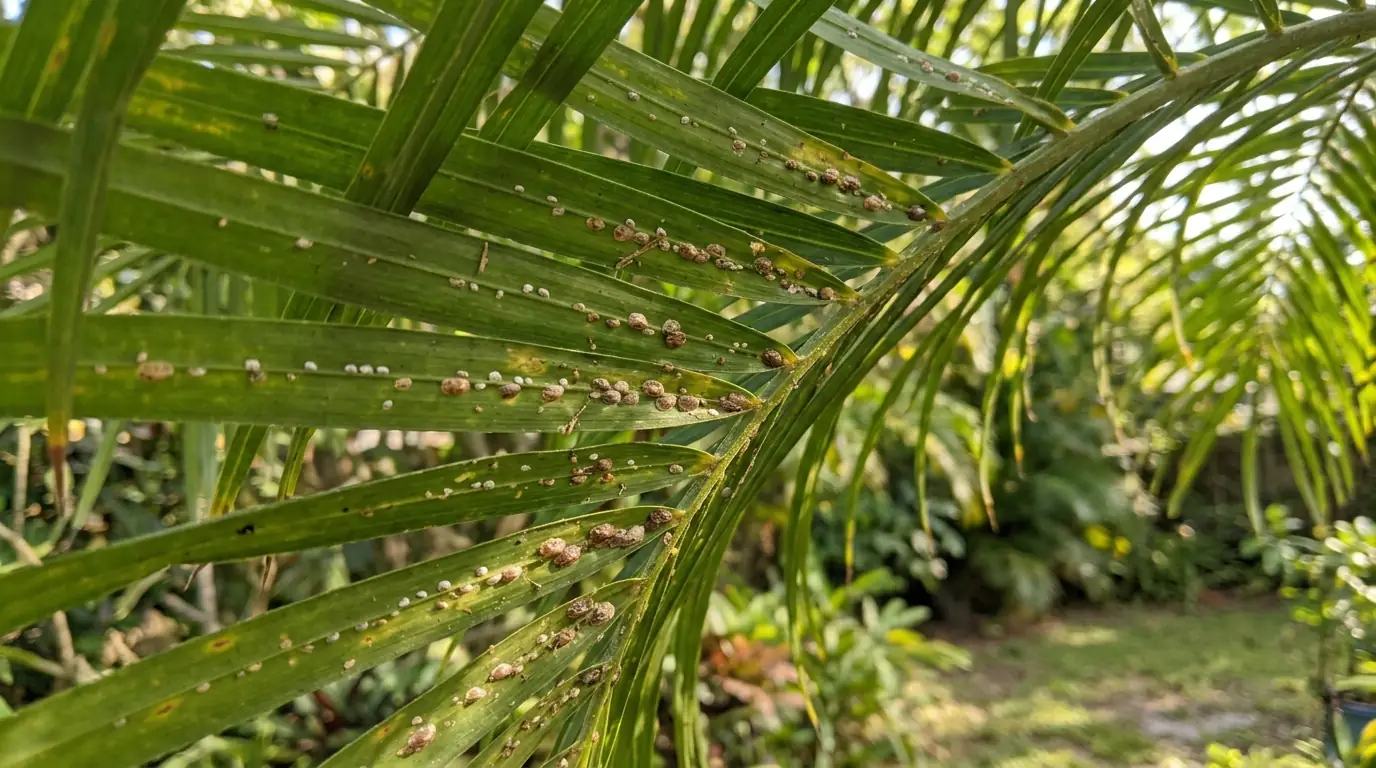
Scale insects show up as small white, brown or reddish bumps stuck along leaflets and frond stems. Heavy infestations make the fronds look dusty or crusted, and the leaflets turn yellow where the insects feed. Sago palms, which are cycads rather than true palms, often get a thick white scale that can cover the whole plant.
Light scale on a short palm can be handled with a horticultural oil on the fronds. Tall palms, and palms with scale on every frond, are better treated through the root zone with a systemic. Badly crusted lower fronds can come off once the treatment is in, as long as the green crown is left alone.
Whitefly colonies on palm fronds
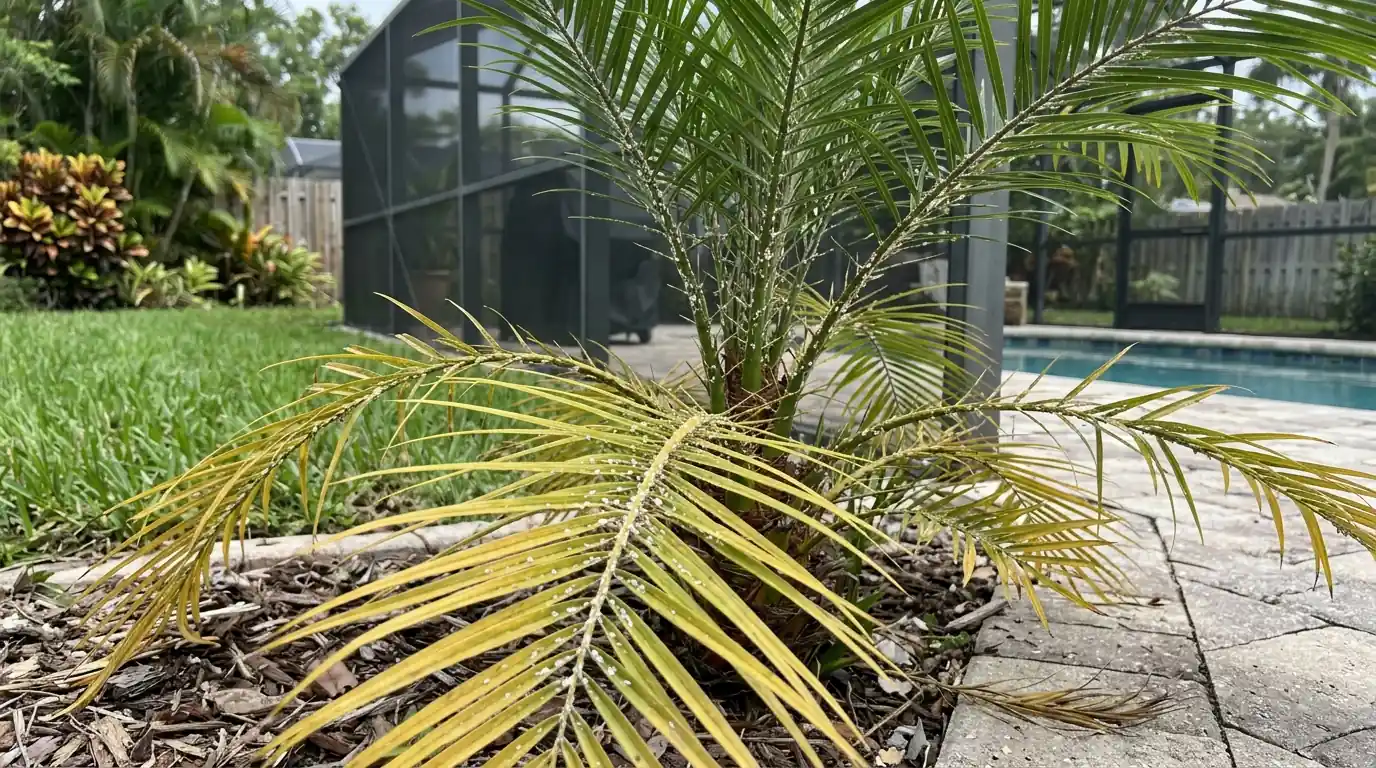
Whitefly on palms usually means thick white, waxy patches on the undersides of the leaflets and a steady drip of honeydew. Coconut palms are a common host of rugose spiraling whitefly. A black film on the pool deck, car or screen cage under a palm is often the first thing owners notice.
A healthy palm usually tolerates whitefly, so the bigger problem is the honeydew and the sooty mold it feeds. We treat the palm and any nearby host trees through the root zone. Once the colonies decline, the mold stops building and the hard surfaces below can be cleaned for good.
Royal palm bugs on new fronds
The royal palm bug is a tiny insect that feeds only on royal palms. It works on the newest fronds in spring and early summer, and those fronds turn brown and look scorched soon after they open. From the street, an affected royal palm can look like it was burned.
The damage is mostly cosmetic, and a healthy palm grows out of it as new fronds replace the scorched ones. Where the browning is heavy year after year, we apply a systemic to the root zone before the new spring fronds open. That timing protects the next fronds rather than the ones already damaged.
Palm pests around Tampa Bay yards
Extension agents in Pinellas County have reported rugose spiraling whitefly spreading countywide on coconut palms, gumbo limbo and live oaks, leaving honeydew and sooty mold behind. Tampa yards share the same mix of palms and shade trees, so a sticky deck under a palm deserves a look. Palms also hide other pests. White-footed ants, collected in Hillsborough, nest in palm fronds and follow them toward the house. When we treat a palm, we check the base and the fronds touching the roofline as well.
How a palm pest visit runs
- 1
Look at the fronds
We check reachable fronds, the crown from the ground and the area under the canopy.
- 2
Rule out other causes
Nutrient, cold and watering problems are separated from insect damage.
- 3
Price before work
You hear the price and the treatment plan before we start.
- 4
Treat the palm
A root-zone systemic for tall palms, and an oil or spray on reachable fronds where it helps.
- 5
Set the timing
We tell you when new fronds should show the change and when a repeat makes sense.
Palm care you can do and work to leave to us
| Task | Doing it yourself | When to call us |
|---|---|---|
| Feeding the palm | Use a palm fertilizer outside the summer fertilizer blackout. | When yellowing keeps spreading after a season of feeding. |
| Short palms with scale | Horticultural oil on fronds you can reach from the ground. | When scale covers most fronds or the palm is tall. |
| Removing fronds | Cut off fully brown lower fronds close to the trunk. | Before cutting green fronds, which the palm still needs. |
| Cleaning honeydew | Wash pavers, furniture and the car with mild soap. | When the film comes back within days of cleaning. |
Over-trimming green fronds weakens a palm more than most insects do, so leave the green crown alone even when it looks rough.
Signs an insect is feeding on your palm
White, brown or reddish dots stuck to fronds usually mean scale.
Fluffy white colonies under the leaflets point to whitefly.
Honeydew dripping onto pavers, cars or the pool deck comes from sap feeders above.
Sooty mold grows on honeydew and dulls the leaflets.
Scorched new growth on a royal palm in spring is the classic royal palm bug sign.