Updated October 2026
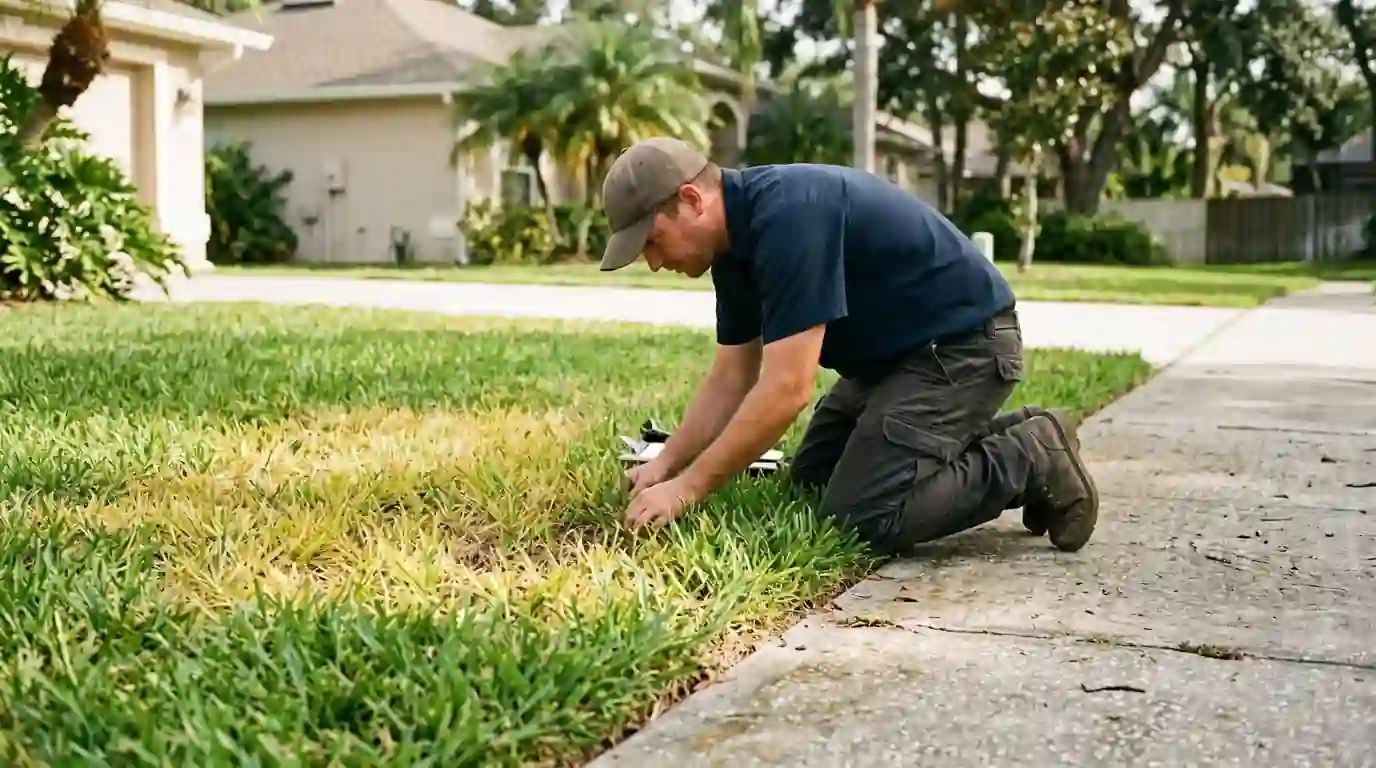
Lawn fertilization in Tampa runs on a split calendar, because the city bans fertilizer application from June 1 to September 30. That leaves spring and fall for feeding. A spring feeding builds the turf before summer heat and insects, and a fall feeding helps it recover. During the ban, the lawn still gets pest checks and care that involves no fertilizer.
How the summer ban shapes a Tampa feeding plan
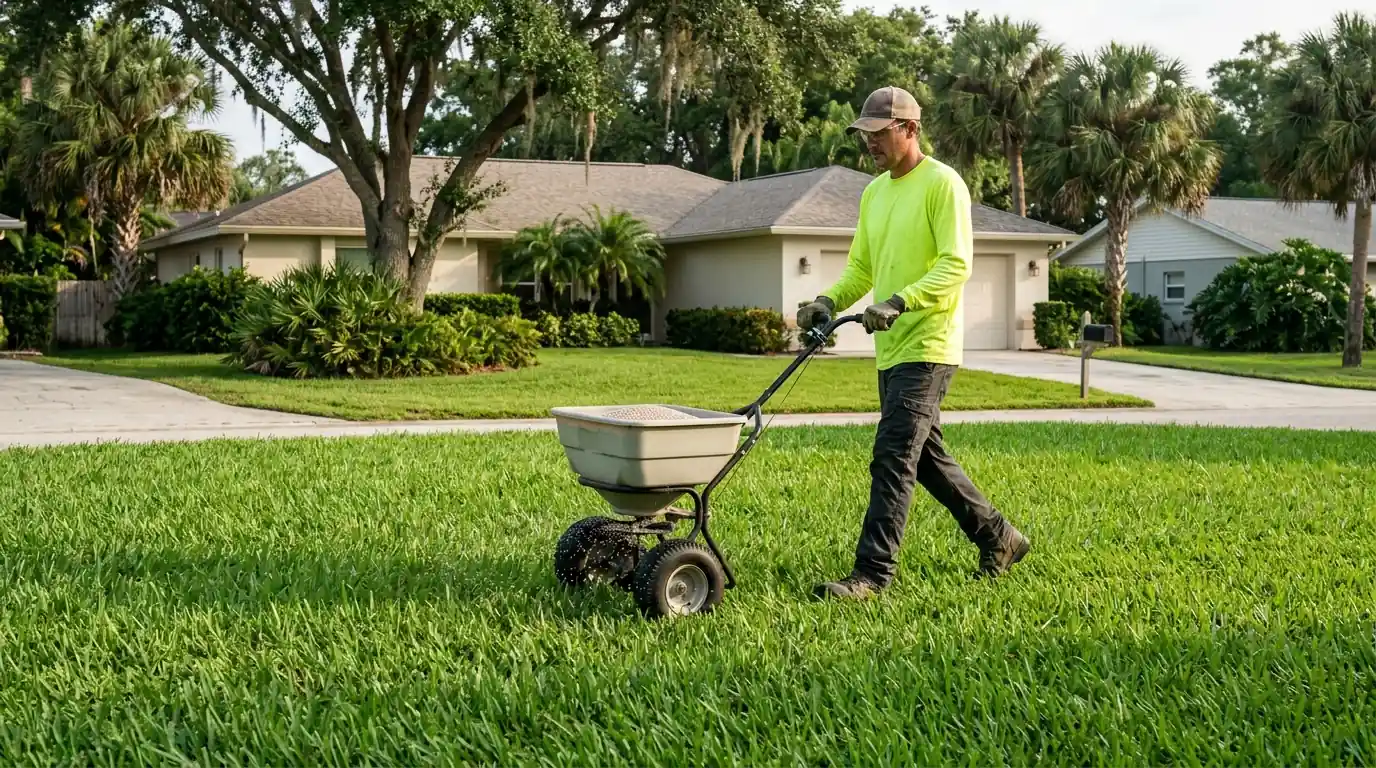
Most fertilizer schedules assume you can feed whenever the grass is growing. In Tampa, the peak growing months are also the ban months, so the plan has to work around them. The feedings before June and after September carry more weight, and getting their timing and rate right matters.
A well-fed lawn is also a big part of pest and weed control. Thick turf crowds out weeds, recovers faster from chinch bug and caterpillar damage, and holds up better to summer heat. Every feeding visit includes a look for insects, fungus and weeds, so problems are caught while they are small.
What a feeding visit includes
Every visit is about more than spreading fertilizer.
- Checking your grass type and how it is growing
- A feeding matched to the season and the lawn
- A look for chinch bugs, caterpillars and fungus
- Spot weed treatment where it is needed
- Watering and mowing advice for that time of year
- When pets and children can use the lawn again
Want a feeding plan built around the summer ban? Call and ask.
Call (813) 471-5363Spring feeding before the ban starts
Spring is when warm-season grasses wake up and start growing hard. A feeding then gives St. Augustine, bahia and zoysia what they need to thicken before summer heat and insect pressure arrive, and before the June 1 cutoff.
We time spring feedings to active growth rather than to the calendar alone, so the grass actually takes up the fertilizer. A slow-release product feeds steadily rather than in one surge. Growth stays even, and chinch bugs and fungus get less soft growth to target.
Fall feeding after the ban lifts
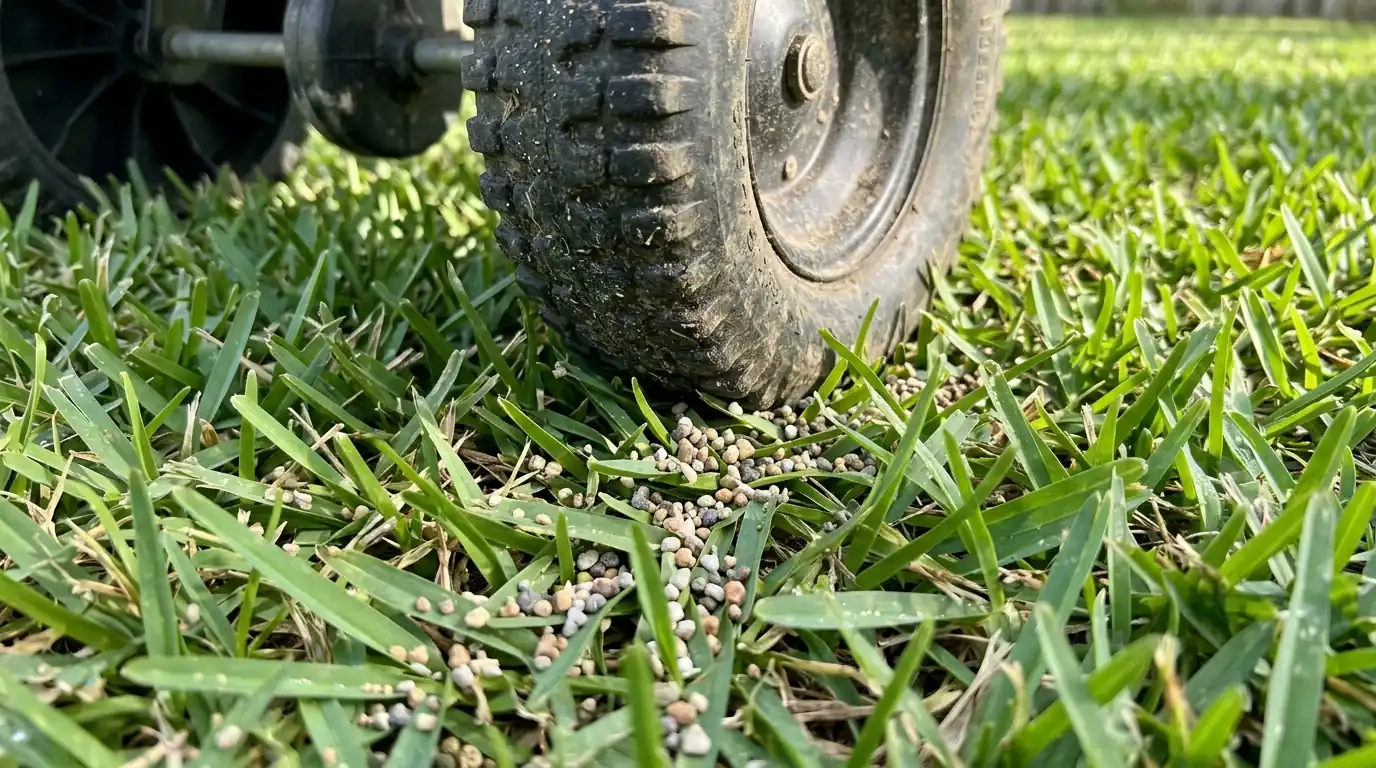
Once October arrives, the lawn can be fed again. A fall feeding helps the grass recover from summer stress, insect damage and heavy rain. It carries the turf into the cooler months in better shape.
Fall feeding is lighter on quick-release nitrogen, since lush growth in cool, damp weather invites large patch. We match the rate to how the lawn came through summer, so a thin, stressed lawn and a thick one are not fed the same way. We also look closely for armyworms in fall, especially on new sod, since heavily fed lawns in late summer attract them.
What we do during the June to September blackout
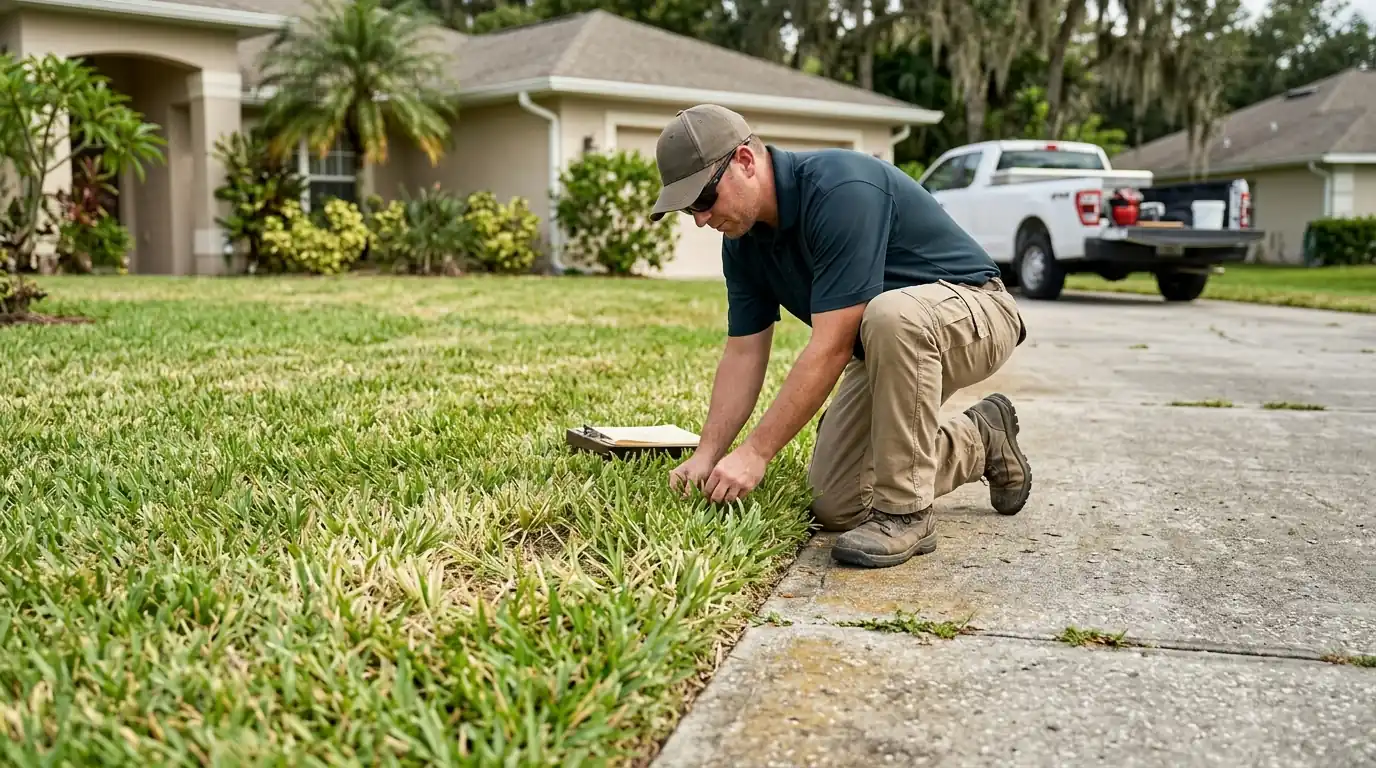
From June 1 to September 30, no fertilizer goes on a Tampa lawn. That does not mean the lawn is left alone. Summer is when chinch bugs peak, sod webworms are feeding, and fungus spreads in the rain, so the visits continue without fertilizer.
During the blackout, we check for insects and disease, spot treat weeds, and help with watering and mowing height. Mow a little taller and water only when the grass needs it. That carries the turf through the hot months until feeding can start again.
Feeding a lawn on Tampa sand
No fertilizer can go on a Tampa lawn from June 1 to September 30, and that city rule shapes every feeding plan here. Much of the area sits on Myakka fine sand, poorly drained over a high water table. It is wet during the June to September rains and droughty the rest of the year. Sandy soil holds little fertilizer, so we favor slow-release feeding in spring and fall over one heavy dose. Watering habits matter as much as the product.
What lawn fertilization costs in Tampa
- Lawn size
Fertilizer is applied by area, so larger lawns use more product. - Number of feedings
The plan sets how many spring and fall visits your lawn gets. - Grass type
St. Augustine, bahia and zoysia have different feeding needs. - Lawn condition
A thin or stressed lawn may need weed or insect work alongside feeding. - Summer visits
Pest checks during the ban months are part of a full-year plan.
How a fertilization program runs
- 1
Lawn check
We note the grass type, how thick it is and any pest or disease problems.
- 2
Plan and price
You hear when each feeding falls, how summer is handled and the price.
- 3
Spring feeding
The lawn is fed during active growth, before the June 1 cutoff.
- 4
Summer care
Visits continue without fertilizer, focused on insects, disease and weeds.
- 5
Fall feeding
Feeding resumes after September 30 to help the lawn recover.
Lawn care you can do between visits
| Task | Doing it yourself | When to call us |
|---|---|---|
| Watering | Water early in the morning and only when the grass shows it needs it | Patches stay yellow or brown even with good watering |
| Mowing height | Keep St. Augustine on the taller side, especially in summer | The lawn is thinning despite mowing changes |
| Store-bought fertilizer | Follow the label and skip it entirely from June 1 to September 30 | You are unsure what your grass type needs |
| Clippings and spills | Sweep granules off driveways and sidewalks back onto the lawn | You want a full-year plan with pest checks included |
Feeding a lawn that has chinch bugs or fungus will not fix it, so we check for both at every visit.