Updated October 2026
Drywood termite spot treatment in Tampa kills a colony inside one piece of wood by drilling small holes into its galleries and injecting a termiticide or foam. It suits a colony confined to a door frame, a sill, a cabinet or a piece of furniture. It cannot reach colonies nobody has found, so the inspection decides whether it is enough.
How a drill-and-inject treatment reaches the colony
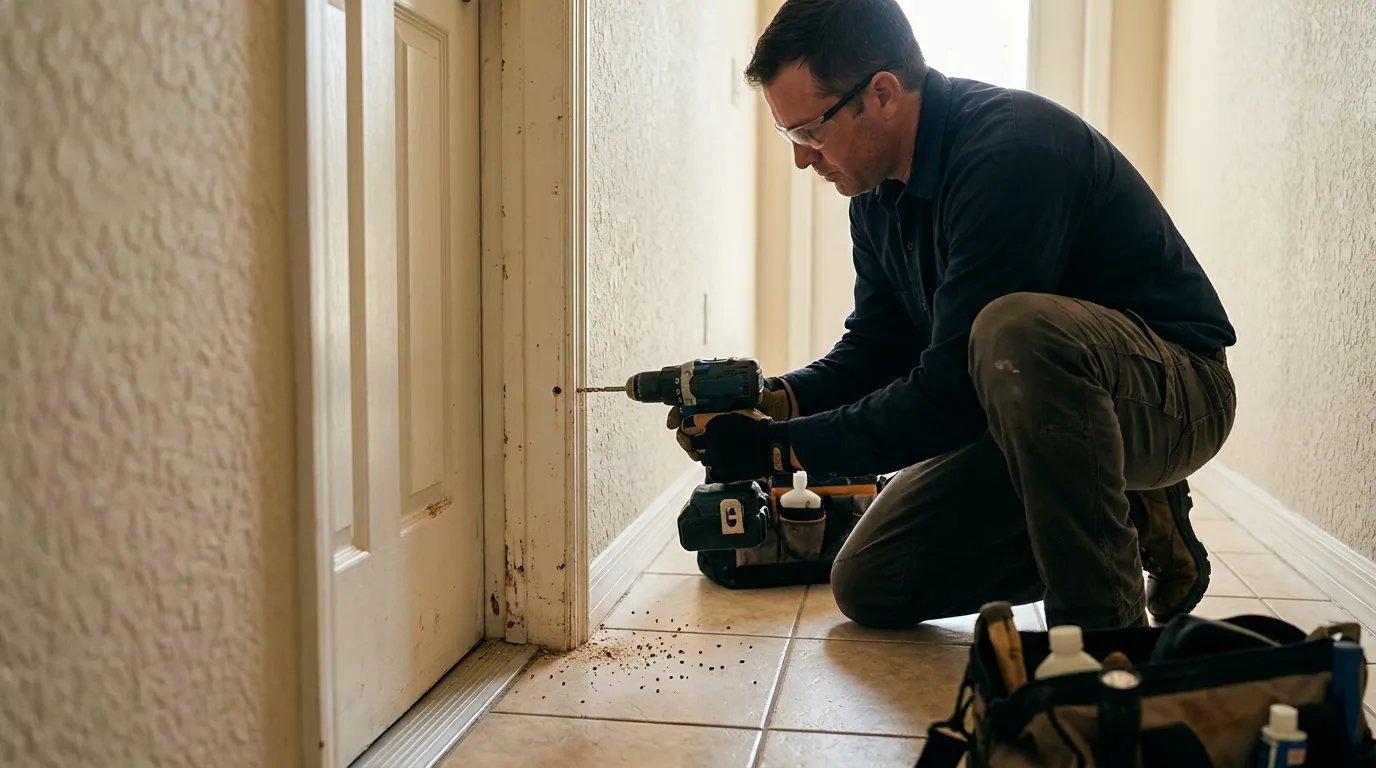
Drywood termites carve flat galleries inside the board and seal themselves in, so a spray on the surface never touches them. A spot treatment works from the inside. We trace the gallery by tapping, probing and following the kick-out holes. Then we drill small holes into the hollow sections and inject the product so it spreads through the tunnels.
The catch is reach. A small colony in one window frame is a good candidate. Pellets in three rooms, or activity up in the attic, usually mean colonies that cannot be mapped from the floor. We say which side of that line your house falls on before any drilling, and the holes are filled afterward so the paint can be touched up.
What a drywood spot treatment costs
- Number of spots
Each separate colony is its own set of drill points and product. - Length of the gallery
A colony running the full height of a door frame takes more drilling than a pocket in one corner. - Finish work
Stained or antique wood needs more care in placing holes than painted trim. - Access
Attic framing, or cabinets that must be emptied first, add time. - Follow-up checks
A return visit to confirm the pellets have stopped may be part of the job.
Pellets under one window? Sweep them, save a few and call.
Call (813) 471-5363One board or the whole house?
| Situation | Spot treatment | Whole-house tenting |
|---|---|---|
| Where the pellets are | One frame, cabinet or piece of furniture | Several rooms or the attic framing |
| How much gets treated | The infested board and the wood around it | The full structure, wall voids included |
| Your household | Stays home during the visit | Packs up and leaves until clearance |
| Future colonies | Untreated boards can still be infested later | New swarmers can still fly in after the tent |
Not sure which you have? A termite inspection maps the pellets first, and the price follows the map.
Drywood colonies in window and door frames
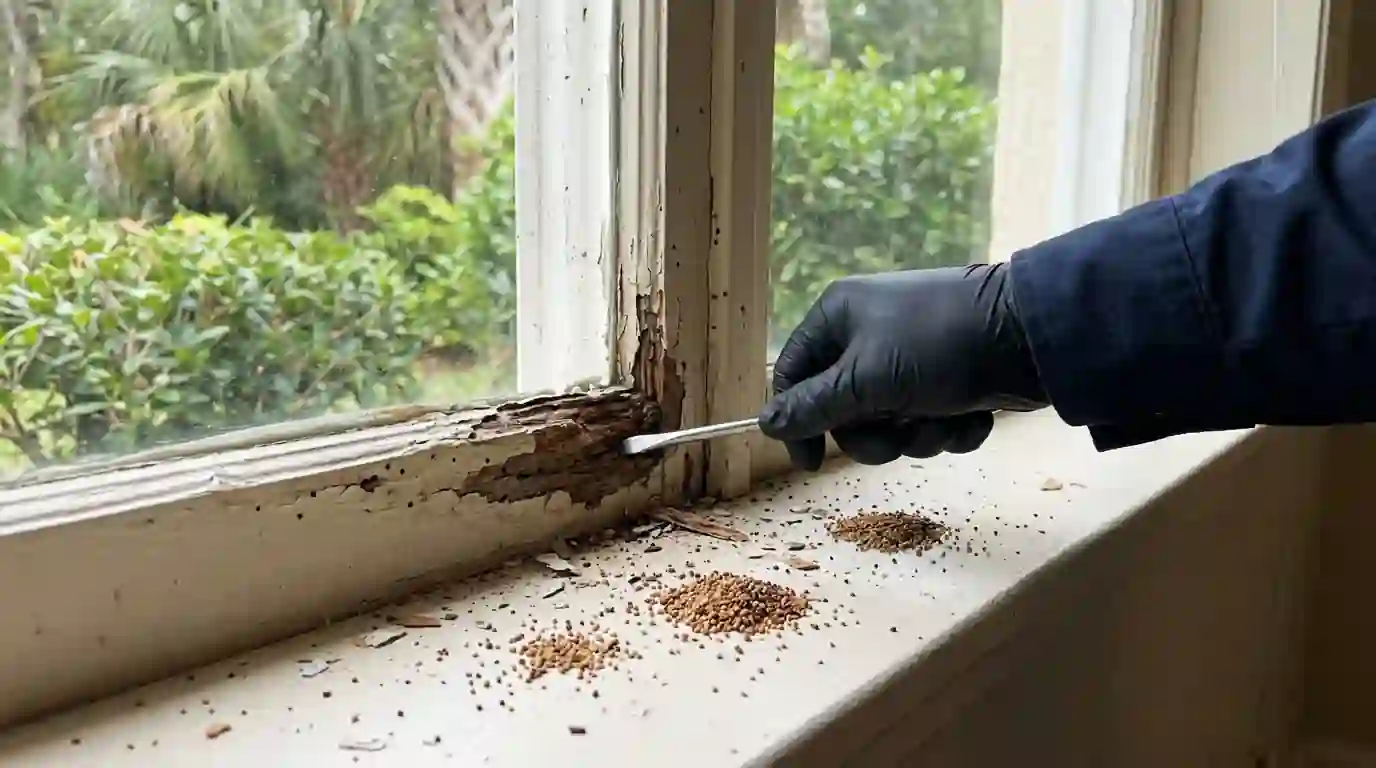
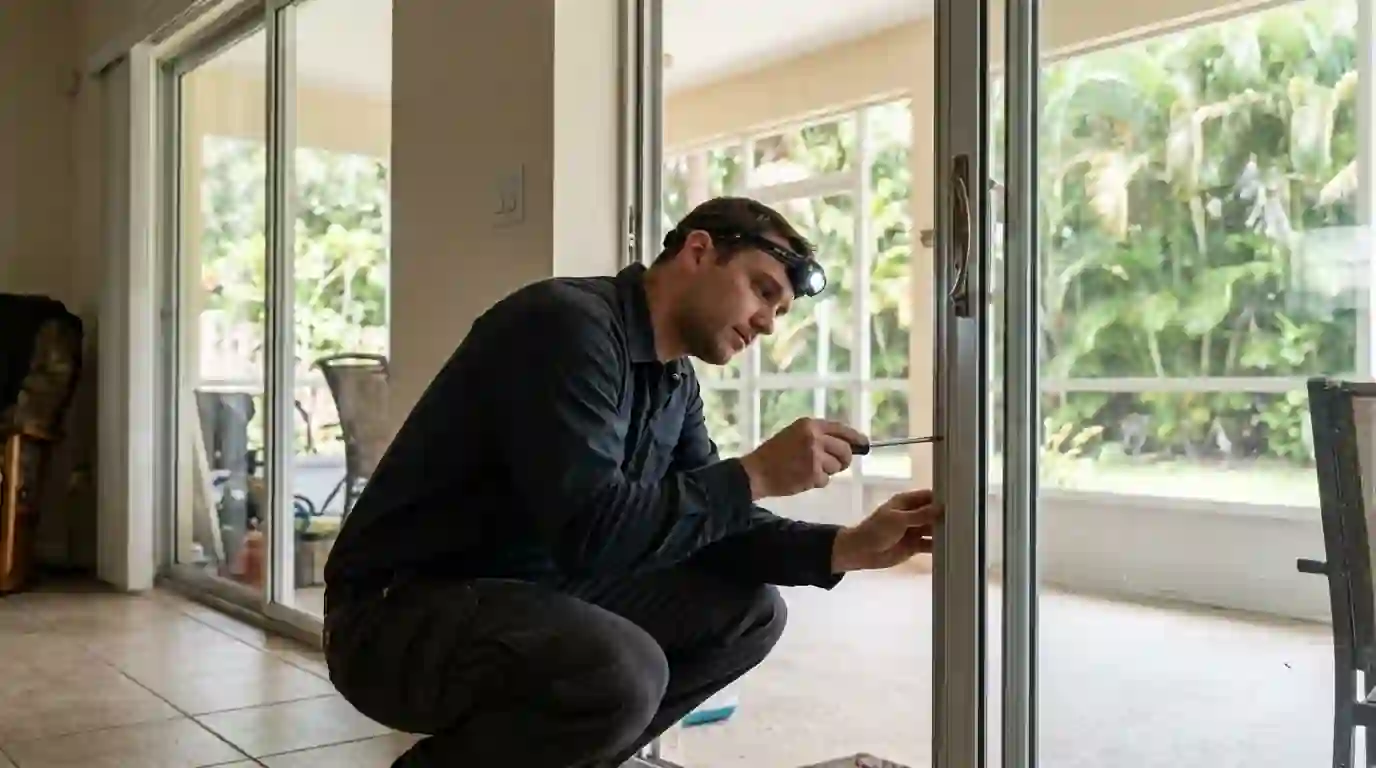
Frames are a classic starting point. Swarmers slip into a crack in the paint or a gap at a miter joint, and the colony grows inside the jamb or sill where nobody looks. The giveaway is a neat pile of pellets on the sill, on the floor below or along the top of the baseboard, often with a pinhole just above it.
We tap along the frame to find the hollow run, drill into it at intervals and inject. Exterior door frames and sliding-door tracks get the same attention, since a colony in one side of a frame often runs into the header above it.
Baseboards, cabinets and wood furniture
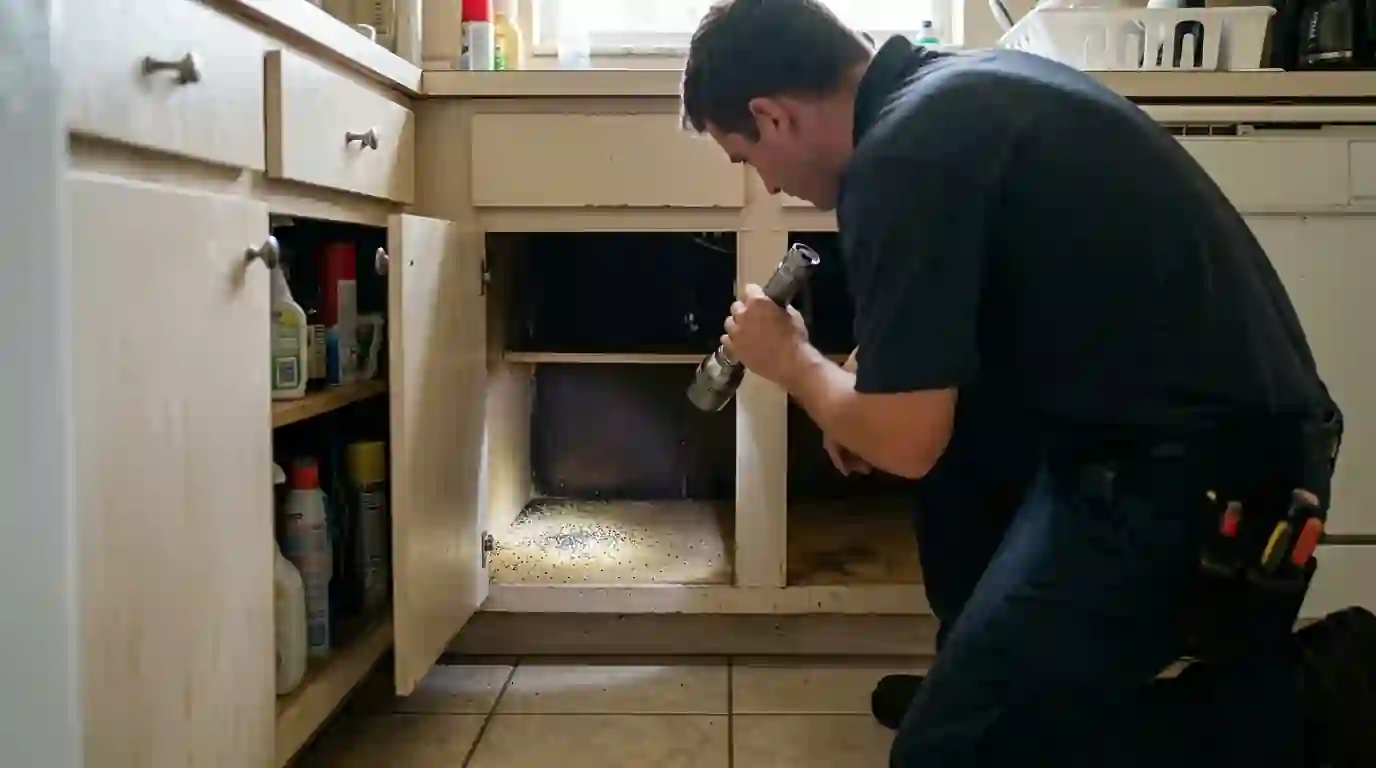
Drywood termites do not need structural lumber. Baseboards, crown molding, kitchen and bathroom cabinets, wooden bed frames and dressers all hold colonies, and pellets on a shelf or inside a drawer are a common first sign. Furniture can even carry a colony into a house from a yard sale or an old storage unit.
Built-in pieces are drilled and injected in place, with the drilling points chosen on edges and backs where the patches will not show. A loose piece of furniture with a contained colony can be treated on its own, and we tell you whether it is worth treating or simpler to replace.
Activity up in the attic framing
Pellets on the attic floor, on top of the insulation or dropping from a ceiling vent mean the colony is in rafters, trusses or roof decking. A single, well-defined area near the hatch can sometimes be drilled and treated directly, especially when the infested wood is exposed.
The attic is also where spot treatment most often falls short. Insulation hides the wood, and the eaves are hard to reach. Where the inspection shows activity spread along the framing, we tell you that a spot job is likely to miss colonies and walk you through termite tenting instead.
Why older Tampa trim keeps drywood termites busy
The West Indian drywood termite has spread along Florida's coasts and does its worst damage in older buildings. Seasoned trim and framing in older Tampa homes suit it well. Colonies live entirely inside dry wood with no contact with the soil, which means a house on a treated slab can still have them in the window frames. Swarmers fly mostly from April to June and slip into gaps in paint and joints. Catching one colony in one board, before a second and third start, keeps the job small.
How a spot treatment visit goes
- 1
Find every pile
We locate pellets, kick-out holes and hollow wood throughout the house, not just the spot you called about.
- 2
Decide on reach
You hear whether the colony is small enough to treat locally or calls for a tent.
- 3
Price
You get the price for the spots we found before any drilling.
- 4
Drill and inject
Small holes go into the galleries, the product is injected, and the holes are filled.
- 5
Watch and recheck
You sweep the area, watch for new pellets, and call us if they return.
How to tell a drywood colony is still active
New pellets on a spot you cleaned a few days earlier mean termites are still feeding.
Pinpoint round holes in trim or furniture, often sealed over again by the termites.
Drywood swarmers shed their wings near windows and lights, mostly from April to June.
Paint that bubbles or cracks along a board where galleries run just under the surface.
Wood that sounds hollow when tapped with the handle of a screwdriver.
Product names you may hear on this job
- Termidor
- Altriset
- Sentricon
- Trelona
- Advance
- Vikane
- Bora-Care
- Premise
- Taurus SC
- Recruit