Updated October 2026
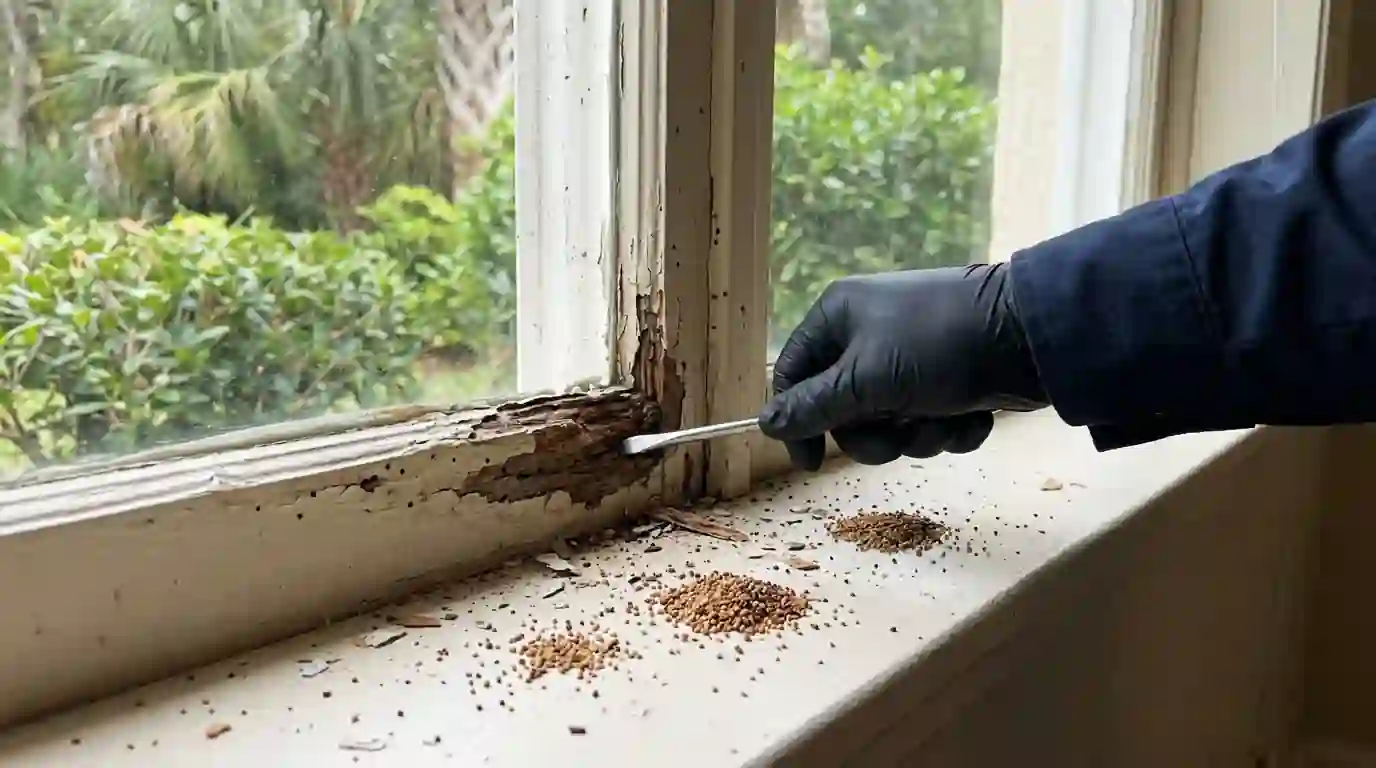
Termite pretreatment in Tampa is the preventive termite protection the Florida Building Code requires on new homes. It can be a registered soil termiticide applied before the slab is poured, a borate treatment on the framing, or a bait system. The pest company then issues a Certificate of Compliance, and Tampa needs it approved before a Certificate of Occupancy is issued.
What the building code asks for, and where we fit in the build
Section R318.1 of the 2023 Florida Building Code, 8th Edition, requires preventive termite protection on new homes. The builder picks one of three routes: a registered soil termiticide, a bait system, or a wood treatment. Whichever is used, the pest company that did the work issues a Certificate of Compliance stating the building received a complete treatment against subterranean termites.
Timing is the whole job. Soil treatment has to go down after grading and plumbing rough-in but before the vapor barrier and the pour. Borate treatment goes on bare framing before insulation and drywall cover it. Coordinate with your builder or superintendent, and tell us the stage so we arrive when the ground or the wood is ready.
What termite pretreatment costs
- Slab size
Soil treatment is measured by the area of the pad and the length of the foundation. - Method chosen
A soil-only treatment costs less than a bait system or a pre-drywall borate job. - Number of trips
Separate visits for the main slab, garage, porches and final grade add up. - Schedule changes
Rain delays or a rushed pour can mean a return visit. - Monitoring
Bait systems carry an ongoing monitoring cost after the install.
Slab pour on the schedule? Call now so the treatment lands on time.
Call (813) 471-5363Soil, borate or bait: how the three code options compare
| Question | Soil or borate | Bait system |
|---|---|---|
| When it is applied | Before the pour, or on open framing | Around the finished foundation |
| Visits needed | One application, plus a final perimeter for soil | Install, then ongoing monitoring |
| Weather risk | Rain can disturb treated soil or wet borate | Little, once stations are set |
| After closing | Owner may add protection later | Owner keeps the monitoring going |
Already in the house and want protection? See termite bait stations for existing homes.
Treating the soil before the slab is poured
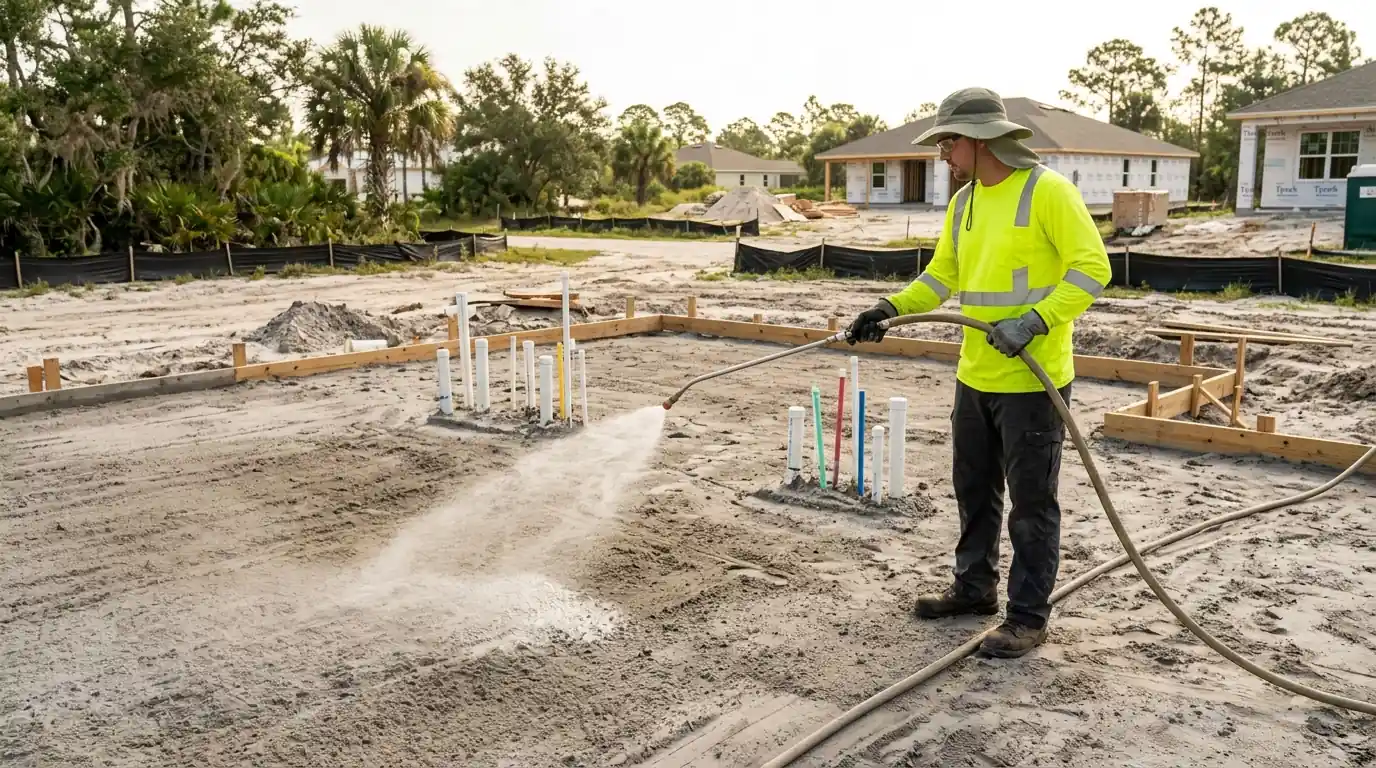
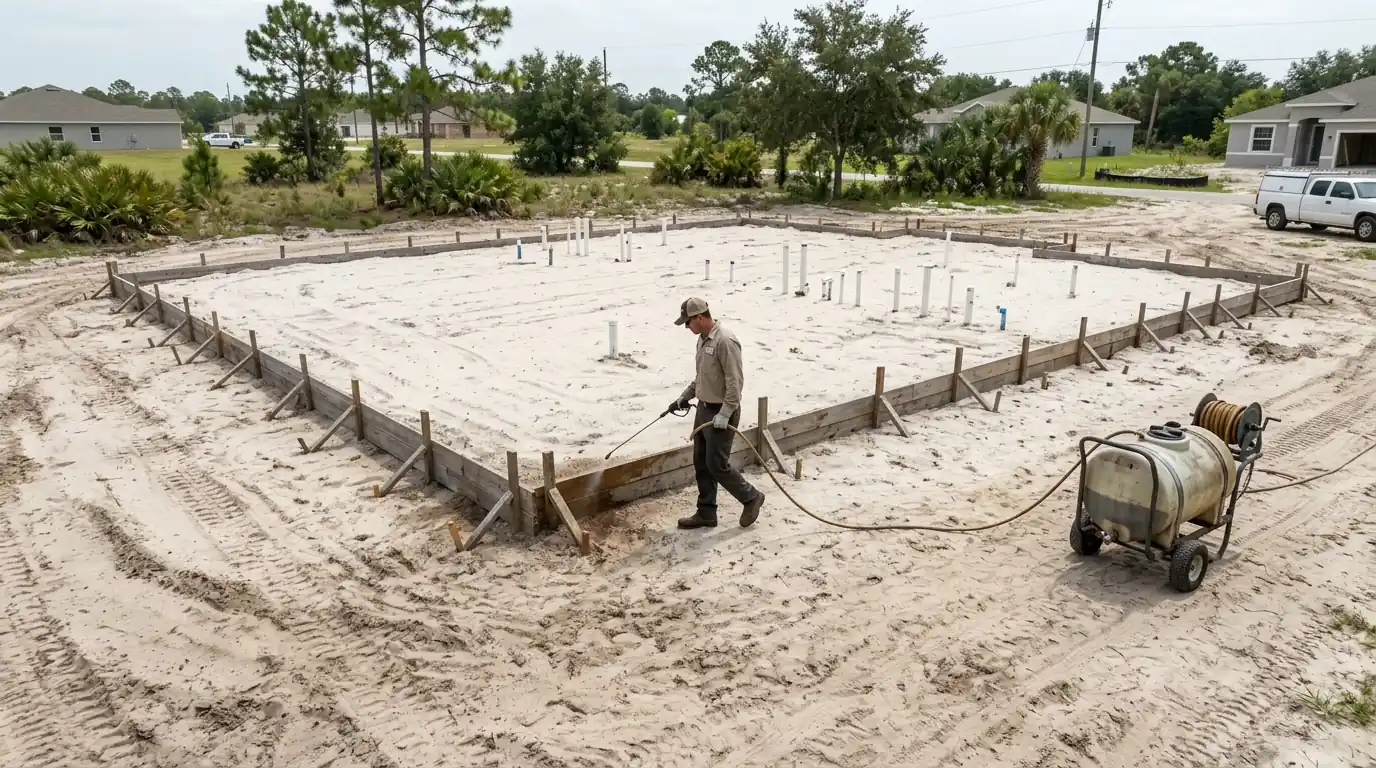
A soil pretreatment puts a continuous layer of termiticide on the graded pad, around plumbing penetrations and along the inside of the forms. Termites coming up from below then meet treated soil under the entire slab. Footings, porches and garage pads get the same attention as the main floor.
Weather and sequence decide the day. A soaking afternoon storm or a crew raking the pad afterward can disturb the treated soil, so we coordinate with the superintendent on timing. Once the pour is done, a final perimeter treatment along the outside of the foundation completes the job, after grading and landscaping are finished.
Borate treatment on bare framing
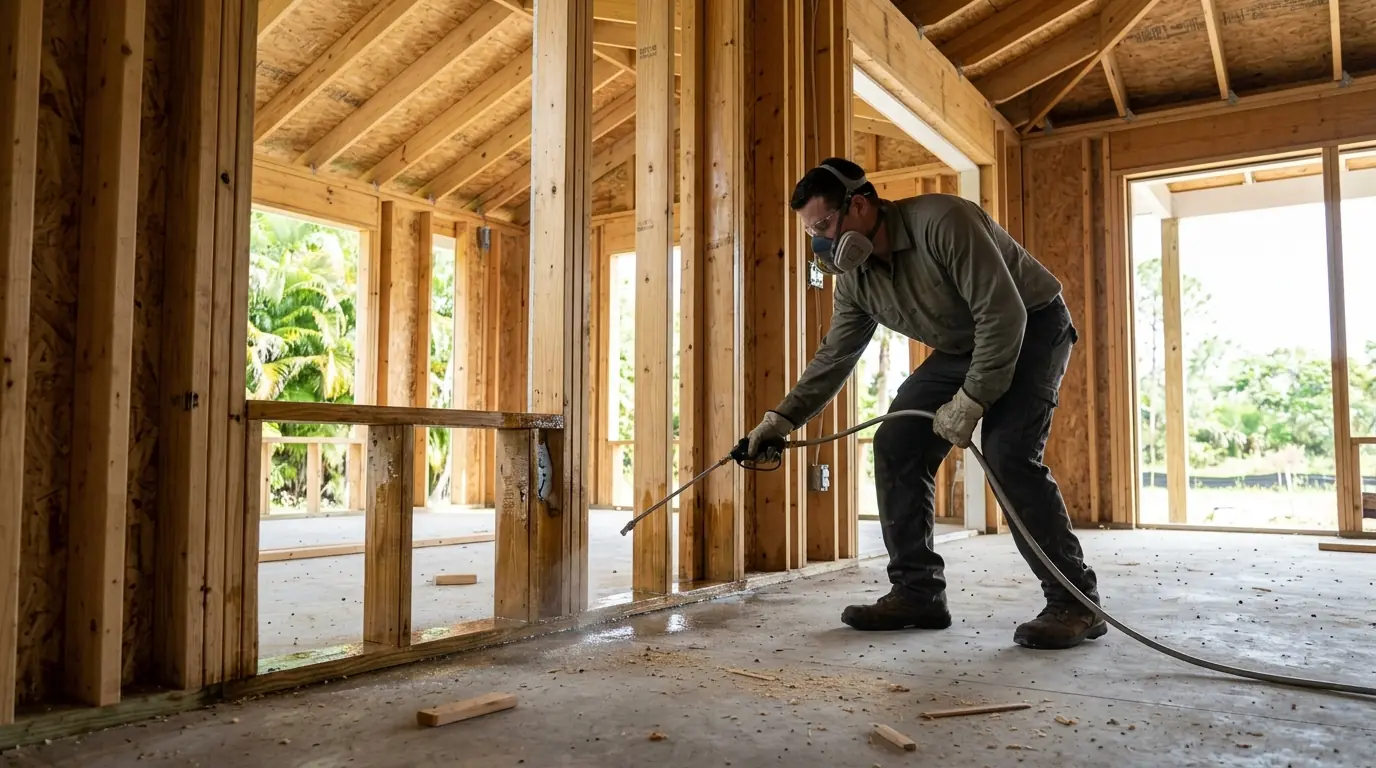
Borate products are sprayed or foamed onto wood framing, sill plates and sheathing while the frame is still open. The borate soaks into the surface of the wood and makes it unpalatable to termites, and it protects against wood-decay fungi too.
This route works well for additions and wood-framed homes where the framing can be reached before insulation goes in. It has to stay dry while it soaks in, so we schedule it once the roof is on and the house is dried in. Wood buried later by drywall cannot be treated the same way, which is why the timing matters.
Installing a bait system as the pretreatment
A bait system can meet the code in place of soil chemicals. Stations go into the ground around the finished foundation, once grading and landscaping are close to final, and the system is monitored from then on.
The difference is the commitment. A soil treatment is a single application, while a bait system only protects the house as long as the stations are checked and serviced. Ask your builder which option is planned and who takes over the monitoring after closing. We explain the schedule to the new owner so the protection does not lapse after move-in.
What a pretreatment job includes
The job is built around the construction schedule and the permit file.
- A schedule set with your builder or superintendent
- Treatment matched to the stage: pad, framing or finished grade
- Attention to plumbing penetrations, porches and garage pads
- A final perimeter treatment once grading is done, for soil jobs
- The Certificate of Compliance for the permit record
- Written notes on monitoring, if a bait system was used
Pretreatment paperwork on a Tampa permit
In Tampa, the termite certificate is part of the permit file. The Florida Building Code requires preventive termite protection on new homes. The pest company that did the work issues a Certificate of Compliance confirming the building received a complete treatment against subterranean termites. That certificate is uploaded to the permit record, and it must be approved before a Certificate of Occupancy is issued. A missing or late certificate can hold up the final steps of the build, so we treat the paperwork as part of the job.
How a pretreatment fits into the build
- 1
Call at permit stage
Tell us the address, the builder and which code option is planned.
- 2
Schedule with the site
We set the treatment date around grading, plumbing rough-in or framing.
- 3
Treat
Soil, framing or perimeter is treated at the right stage, with penetrations covered.
- 4
Final perimeter or install
Soil jobs get the outside perimeter, and bait systems go in at final grade.
- 5
Certificate
We issue the Certificate of Compliance for the permit record.
Product names you may hear on this job
- Termidor
- Altriset
- Sentricon
- Trelona
- Advance
- Vikane
- Bora-Care
- Premise
- Taurus SC
- Recruit