Updated October 2026
Mosquito control in Tampa works best as two jobs at once: a residual treatment on the shady plants where adult mosquitoes rest, and a hunt for the buckets, saucers and toys where they lay eggs. Hillsborough County runs its own spraying and larval program, but it cannot reach the water inside your yard.
Where yard mosquitoes rest, breed and bite
The container mosquitoes that bother people in Tampa yards, Aedes aegypti and Aedes albopictus, do not fly far. They lay eggs just above the waterline in anything that holds rain, and the eggs hatch once the water rises over them. Between bites, the adults rest in shade under shrubs, decks and dense ground cover. Hillsborough County names these two species as the local dengue carriers, which is why the county asks residents to deal with standing water at home.
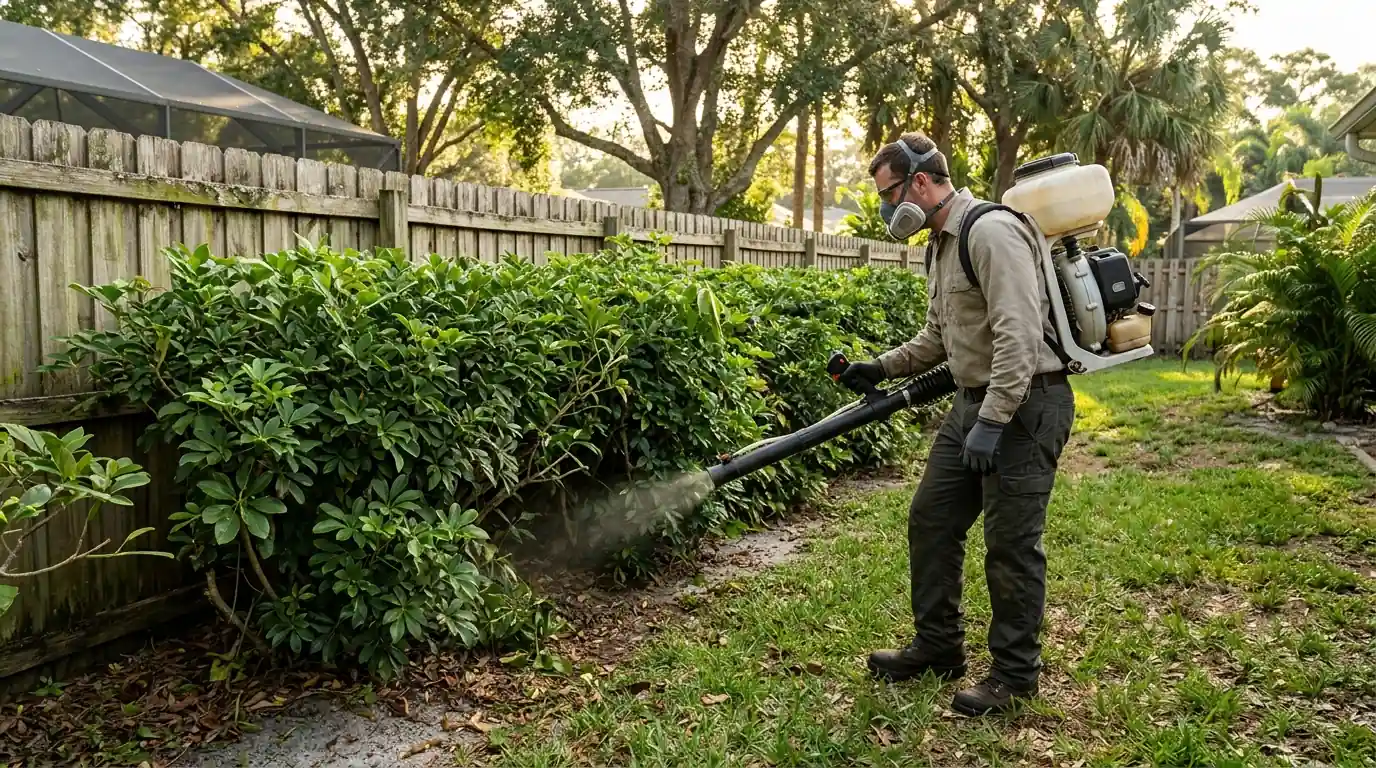
A visit covers both halves. We treat the undersides of leaves and the shady spots where adults rest, and we walk the yard looking for water, from flowerpot saucers to clogged gutters. What can be tipped out gets tipped. What has to stay, like an ornamental pond, gets treated with a larvicide.
What a mosquito visit covers
Each visit covers both the adults and the water they come from.
- A walk of the yard for containers, puddles and clogged gutters
- Dumping water that can be emptied, and pointing out what keeps refilling
- Larvicide in water that has to stay, such as ponds or rain barrels
- A barrier treatment on shrubs, hedges, ground cover and under decks
- Care around flowering plants that pollinators visit
- A note on how long to keep pets and people off treated plants
Getting bitten every evening? Call and book a yard walk.
Call (813) 471-5363Barrier treatments on the resting spots
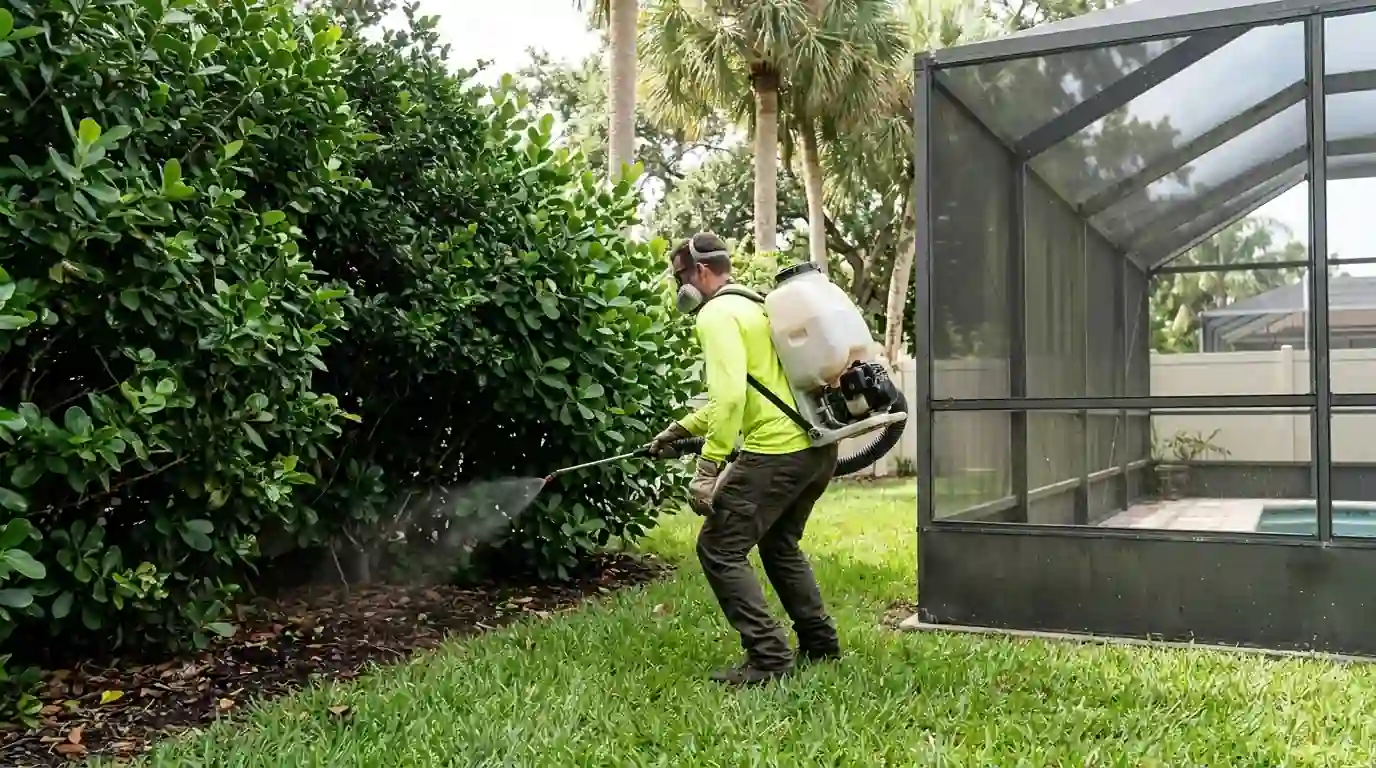
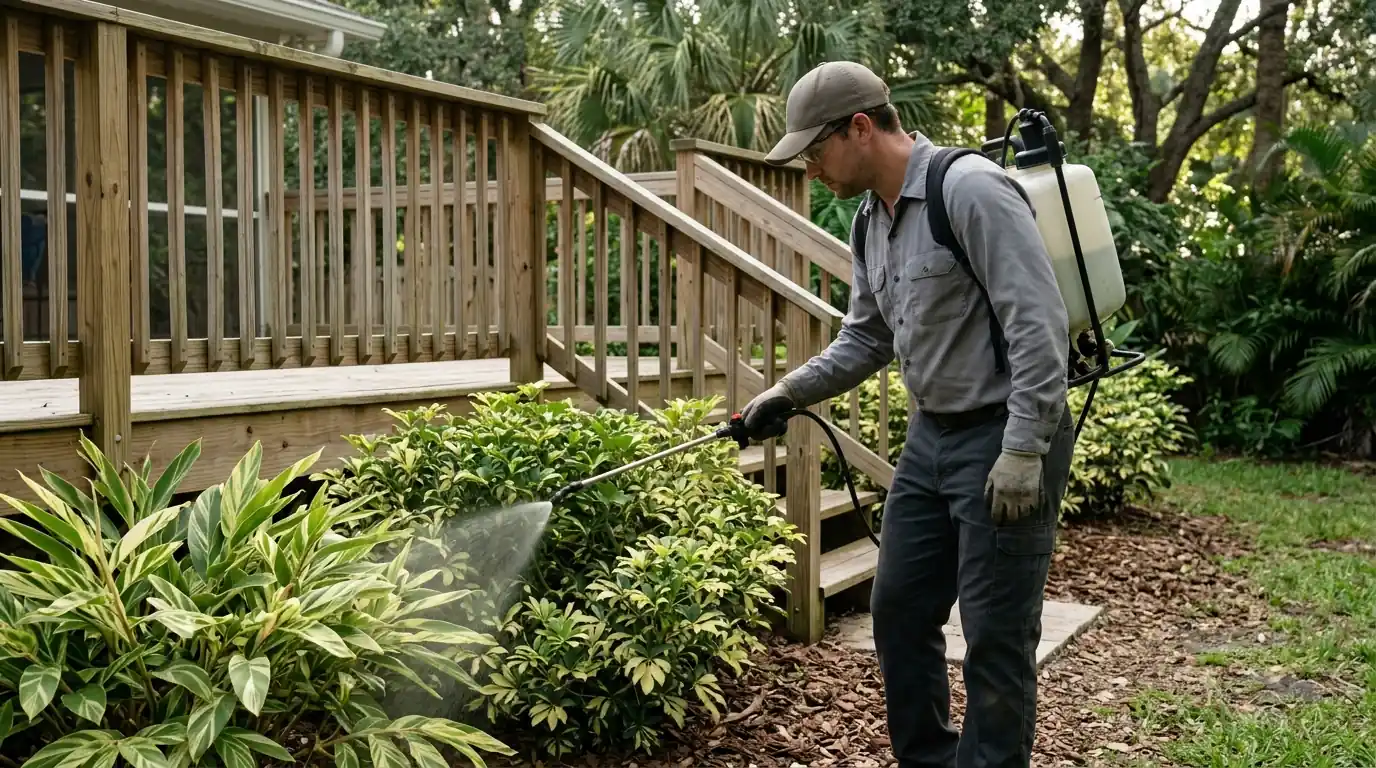
A barrier treatment applies a residual product where adult mosquitoes rest. That means the undersides of shrub leaves, hedges along fences, ground cover, the shady side of the house, and the space under decks and raised porches. Mosquitoes that land there pick up the product.
Visits are repeated on a schedule through the warm, wet months, since rain and new plant growth wear the treatment down. We avoid flowering plants that pollinators are working, and we tell you how long to keep pets and children off treated plants until they dry. Barrier work cuts the adults you have today, while container work cuts the ones coming next week.
Finding the containers and standing water
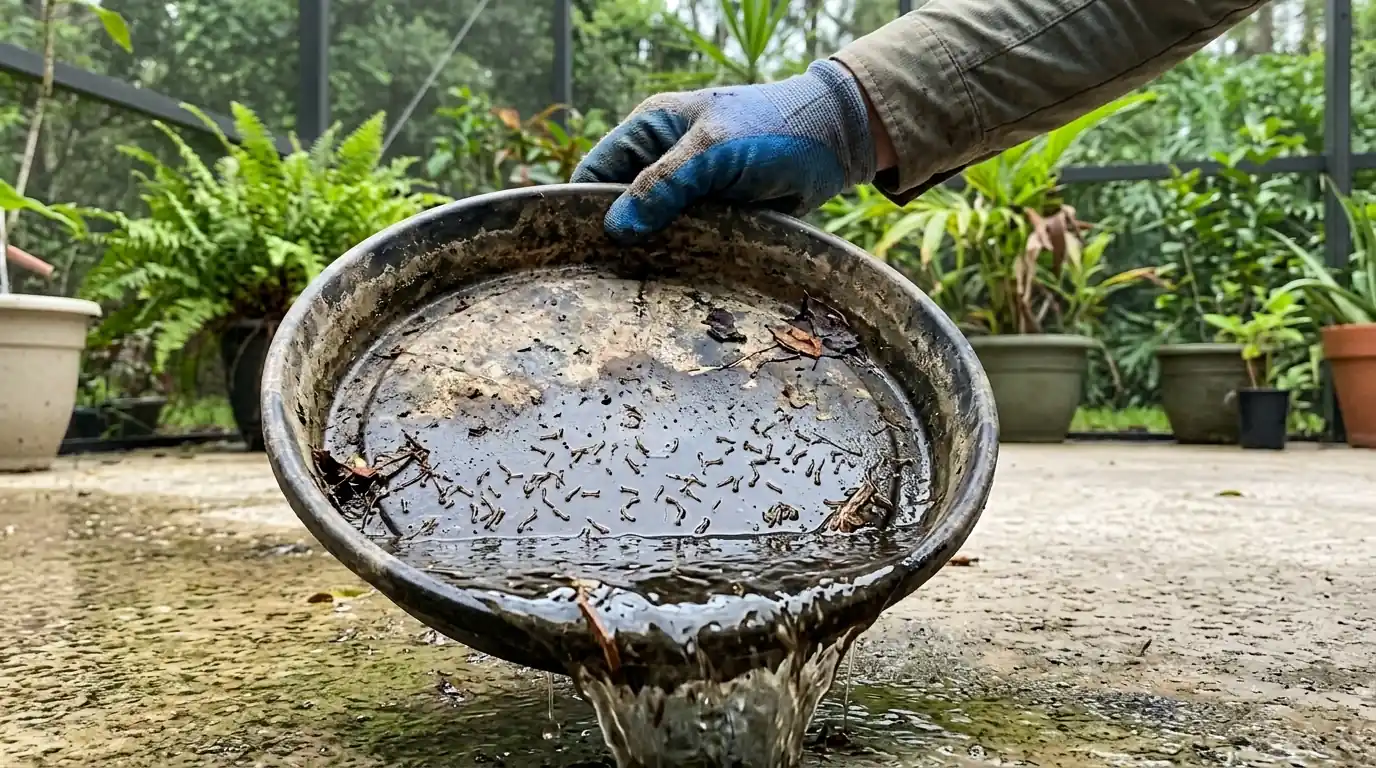
Container mosquitoes lay eggs in surprisingly small amounts of water: a bottle cap, a pet dish, the folds of a tarp, a flowerpot saucer, a toy left in the grass. Bromeliads, birdbaths, clogged gutters and the low spots on a pool cover are other favorites. On each visit we walk the property, dump what can be dumped and show you what keeps refilling.
Water that has to stay, such as a decorative pond or a rain barrel, can be treated with a larvicide like Bti, the same bacterial product the county uses on larvae. Rain barrels need tight screens. Between our visits, the county advice still applies: empty and scrub containers at least twice a week.
No-see-ums near water and marsh
No-see-ums are tiny biting midges, not mosquitoes. Their larvae live in wet mud, marsh edges and damp organic soil. Yards near ponds, retention areas, mangroves or tidal water get them most, usually around dawn and dusk on calm days.
They are harder to control than mosquitoes. The breeding mud is often outside your property, and the adults are small enough to slip through standard screens. Barrier treatments on nearby plants can help on some properties, and we tell you honestly how much difference to expect. Fans on the lanai and finer screen mesh often do as much as any spray.
Mosquitoes and the 2026 dengue season in Hillsborough
This has been an unusual season for Hillsborough. As of Sept. 18, 2026, the county had about 134 locally reported dengue cases, roughly 88 percent of Florida's total. On Oct. 1 the county extended its dengue state of local emergency through Oct. 8, with aerial treatments over East Tampa, South Tampa, Temple Terrace and other areas. Spraying from the air cannot reach water in your yard. The county asks residents to empty and scrub containers at least twice a week, since Aedes eggs survive above the waterline.
What mosquito control costs
- Yard size
More shrubs, hedges and fence line take more product and time. - Vegetation
Dense plantings and ground cover create more resting spots to treat. - Water on site
Ponds, bromeliads and drainage areas add container and larvicide work. - Season length
A plan that runs through the whole rainy season has more visits. - One-time or ongoing
An event treatment is priced differently from a recurring plan.
How a mosquito visit runs
- 1
Walk the yard
We look for standing water and the shady spots where adults rest.
- 2
Dump and flag
Water that can be emptied is dumped, and refill spots are pointed out to you.
- 3
Treat water that stays
Ponds, barrels and drains that hold water get a larvicide.
- 4
Barrier treatment
Shrubs, hedges, ground cover and under-deck areas are treated.
- 5
Next visit
We note what changed and return on the schedule you chose.
Yard steps you can take between visits
| Task | Doing it yourself | When to call us |
|---|---|---|
| Containers | Empty and scrub them at least twice a week, as the county advises | Water keeps collecting in spots you cannot reach |
| Gutters and tarps | Clear debris and pull tarps tight so water drains | Gutters hold water after storms |
| Ponds and barrels | Screen rain barrels and keep pond water moving | Larvae show up in water that has to stay |
| Biting on the lanai | Run fans and repair torn screens | Biting continues after the yard is cleared |
Questions about dengue or symptoms belong with your doctor and the county health department. Our work is the yard.