Updated October 2026
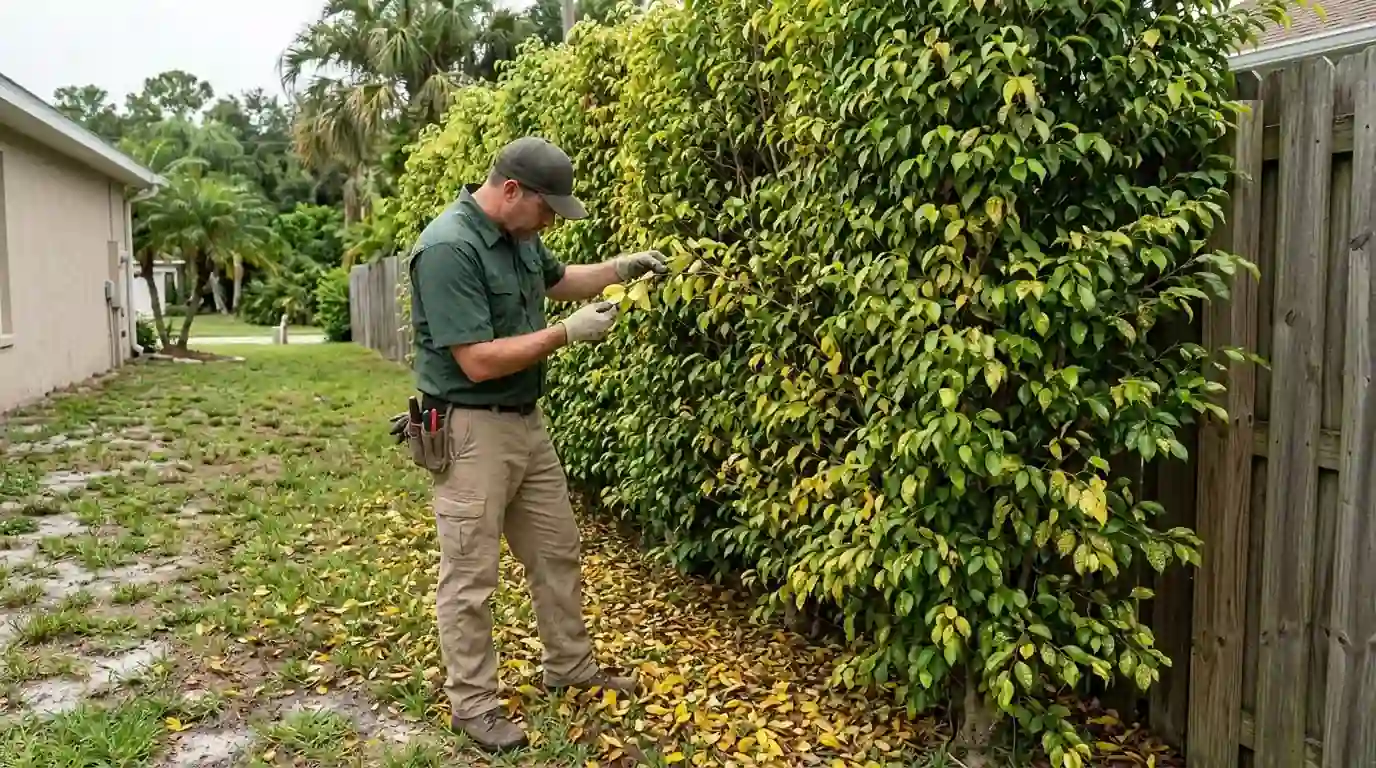
Lanai pest control in Tampa covers the screen frame, the cage corners and the pool deck, where spiders, wasps and ants settle in. A pool cage stays warm and sheltered, and the lights at night draw insects that spiders feed on. We brush down webs, remove nests and treat the frame and deck edges while keeping product out of the pool.
Why a pool cage collects so many pests
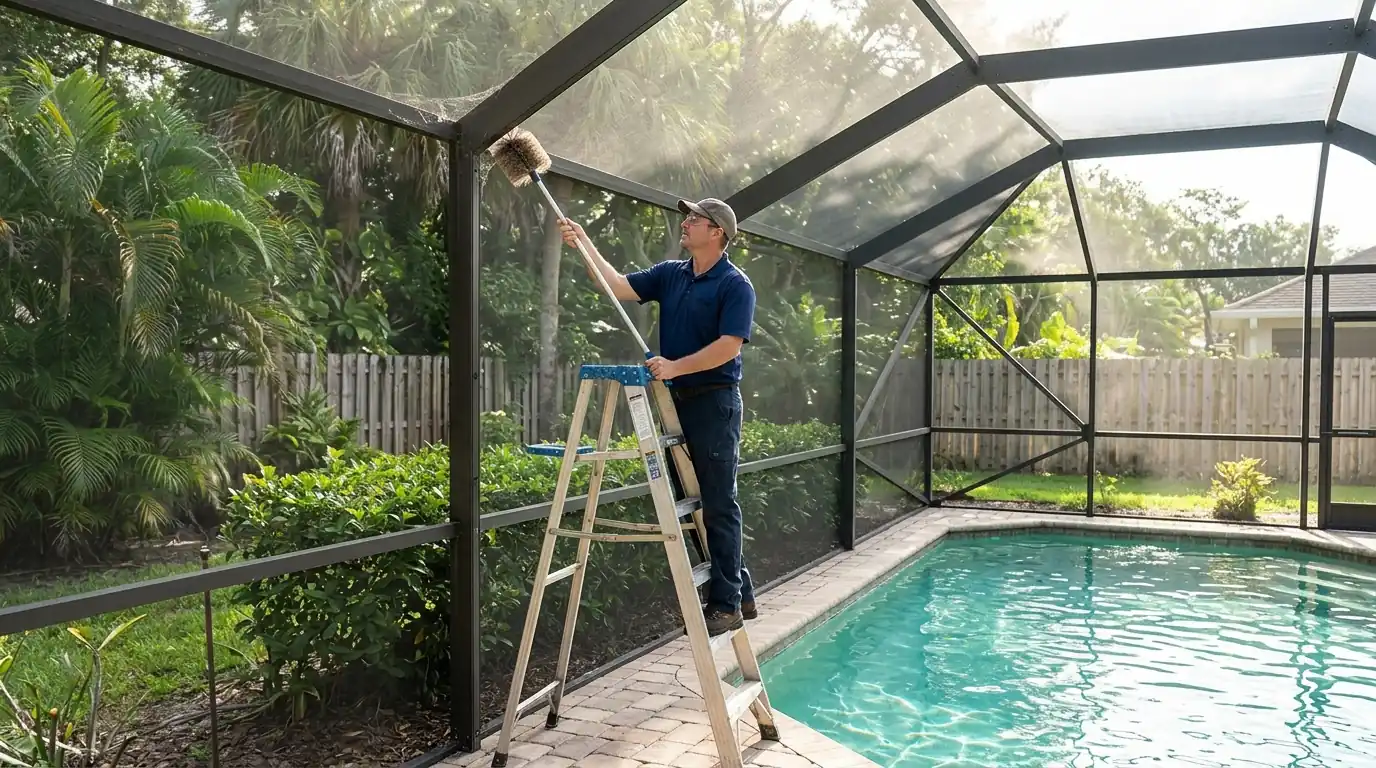
A screened enclosure is a sheltered box of aluminum channels, corners and ledges. Spiders anchor webs in the top corners where nobody reaches with a broom. Paper wasps hang combs under the horizontal rails. Ants run along the screen spline and push up sand between pavers, and moths drawn to the pool lights keep every one of them fed.
Treating that space takes more care than treating an open yard. We work the frame from a ladder, keep sprays to the edges and the outside of the screen, and use baits and dusts where the deck meets the house. You get a clear note on how long to stay off any treated surface before anyone swims.
What a lanai visit covers
Each visit works from the top of the cage down to the deck.
- Webs and egg sacs brushed from corners, rails and screens
- Paper wasp nests removed from the frame and roof line
- Treatment of frame corners, rail ends and screen edges
- Bait along ant trails and in the paver joints
- Granules in the beds and mulch outside the cage
- A note on how long to stay off treated areas before swimming
Wasps in the cage or webs over the pool? Tell us where and we will plan the visit.
Call (813) 471-5363Spider webs on the screens and cage frame
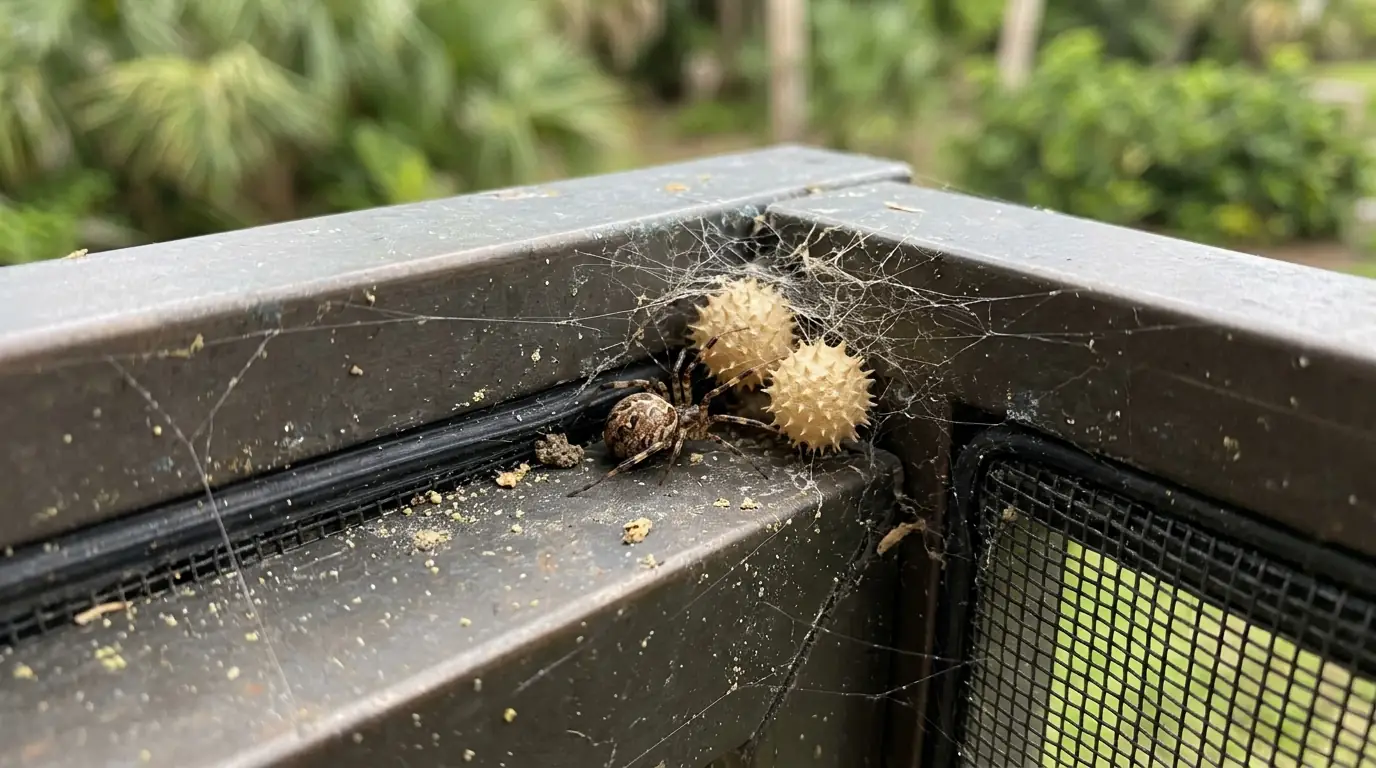
Orb weavers string big webs across the outside of the screen at dusk and pull them down by morning. Cobweb spiders, including brown widows, settle into the corners of the frame, under the pool furniture and inside the hollow ends of rails. Brown widow egg sacs are small round balls with tiny spikes, and they are worth pointing out before anyone sticks a hand in.
We brush down webs and egg sacs first, so the treatment reaches the frame instead of the silk. Then we treat the corners, rail ends and outside edges of the screen. Fewer insects around the lights means fewer spiders, so we may also suggest bulb changes.
Paper wasp nests under the cage rails
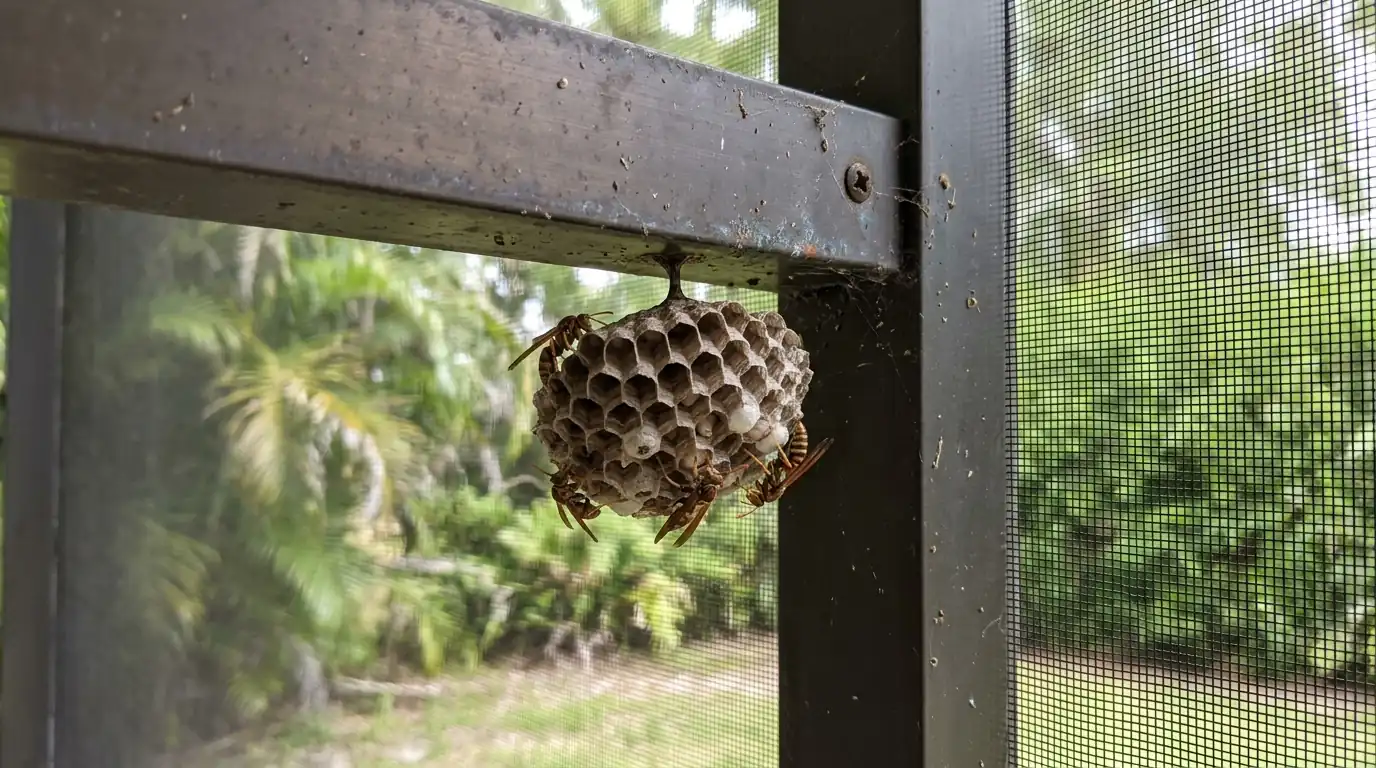
Paper wasps build open, umbrella-shaped combs under the horizontal rails of a pool cage, along the roof line where the cage meets the house, and under lanai ceiling fans. A small nest started in spring can hold dozens of wasps by summer. The cage gives them shelter from rain and wind.
Wasps defend a nest that gets bumped, so we remove nests when the wasps are least active and treat the spot so new queens are less likely to rebuild there. Nests outside the cage, on the eaves or the fence, get the same attention, since the wasps often come through a torn screen panel.
Ants in the paver joints and along the pool deck
Little piles of loose sand pushed up between pavers usually mean ants nesting under the deck. Trails running along the screen spline or up the wall toward the kitchen often lead back to colonies in mulch, palms or the lanai ceiling. Fire ants may also build under slabs and along the deck edge.
Spraying the whole deck does little against colonies living underneath it. We place baits along the trails and at the joints, which the workers carry back to the colony. Granules go in the beds outside the cage. Fire ant mounds by the deck are treated directly, and we tell you how long to stay off.
Tampa summers inside a screened cage
Tampa's rainy season runs from late May through October, with afternoon thunderstorms almost every day and humidity peaking in August. A screened enclosure gives pests a dry, sheltered spot to wait out those storms. White-footed ants are a common cage problem here. They have been collected in Hillsborough, nest in palm fronds, trees and mulch, and follow cables into kitchens and bathrooms. Colonies can run into the millions, they do not sting, and baits are the only proven control. A spray along the deck will not touch them.
What lanai and pool cage pest control costs
- Cage size and height
A two-story enclosure takes more ladder work than a small patio screen room. - Wasp nests present
Active nests in the frame or on the eaves add removal time to the visit. - Ant colonies under the deck
Large colonies under pavers may need more than one round of bait. - Outside the cage
Treating the beds, palms and eaves around the cage adds to the job. - One visit or a schedule
Recurring visits through the warm months are priced differently from a one-time cleanout.
How a lanai treatment runs
- 1
Walk the enclosure
We check the frame, corners, roof line, deck joints and the beds just outside the screen.
- 2
Price before work
You hear the price and what the visit covers before we start.
- 3
Clear the frame
Webs, egg sacs and wasp nests come down first so treatment reaches the surface.
- 4
Treat and bait
Frame edges are treated, baits go along ant trails, and granules go in the outside beds.
- 5
Re-entry note
We tell you how long to stay off treated areas before kids, pets or swimmers use the deck.
Lanai upkeep you can do between visits
| Task | Doing it yourself | When to call us |
|---|---|---|
| Brushing webs | Sweep reachable webs with a soft broom every week or two. | When webs and egg sacs keep coming back in the top corners. |
| Lighting | Switch to warm or yellow bulbs that draw fewer night insects. | When spiders keep up even with fewer insects at the lights. |
| Torn screens | Patch small tears so wasps and lizards do not walk in. | When wasps are already nesting inside the cage. |
| Ant trails | Wipe the trail and keep food and drink spills off the deck. | When sand keeps piling up between the pavers. |
Leave active wasp nests alone. Knocking one down from a ladder inside a closed cage leaves nowhere to retreat.