Updated October 2026
Bee removal in Tampa starts with telling a resting swarm from an established hive. A swarm hanging on a branch or eave is looking for a home and often moves on. A colony going in and out of a wall, soffit or meter box has built comb inside, and that comb and honey have to come out with the bees.
Swarm or established hive, and why it matters
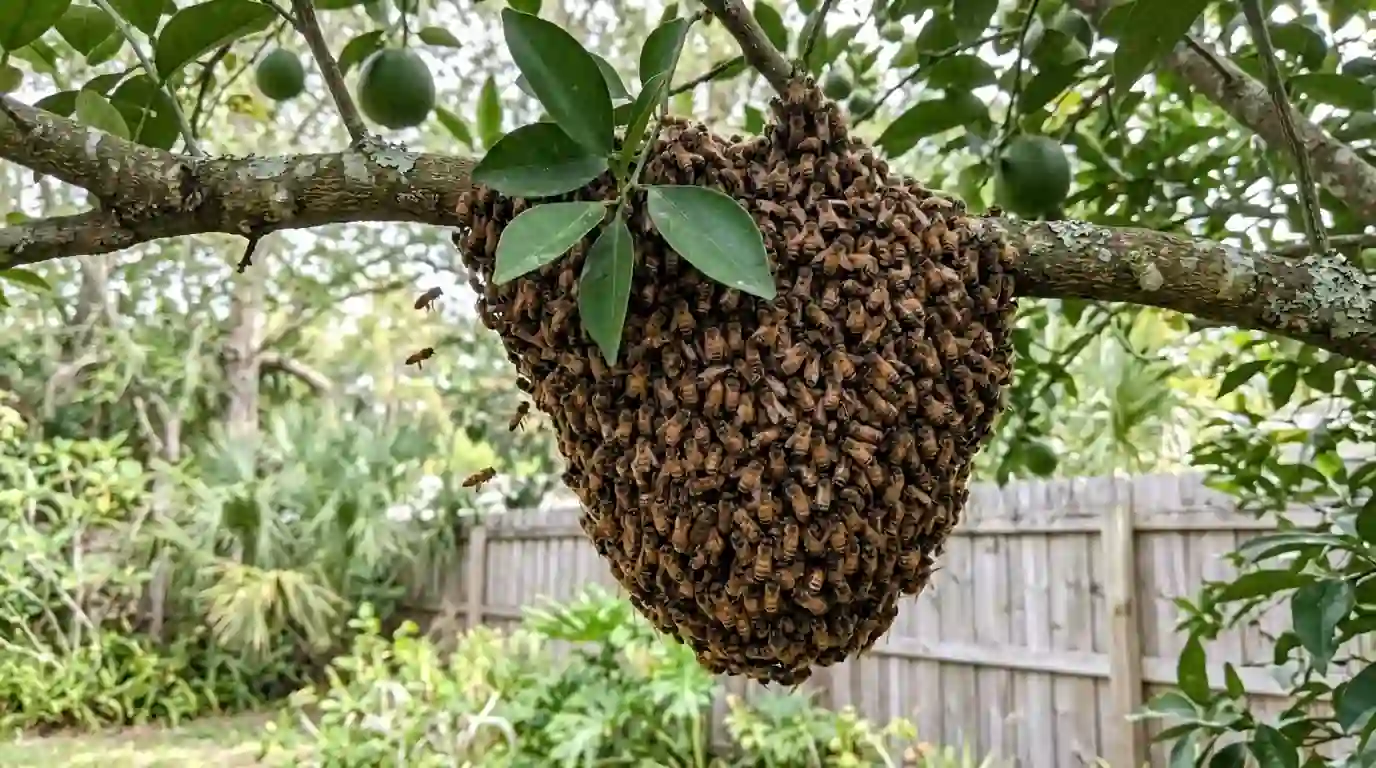
Honey bee colonies reproduce by swarming. The old queen leaves with a large share of the workers, and the group hangs in a cluster on a branch, fence or eave while scouts search for a cavity. That cluster is usually calm, because it has no comb or young to defend yet. Once the bees choose a spot inside a wall, a soffit, an irrigation box or a hollow tree, they start building comb and become an established colony that defends its home.
Africanized honey bees are established in Florida and look the same as other honey bees, so we treat every wild colony as possibly defensive. Keep people and pets back, do not spray water or insecticide on a cluster, and call us with a description of where the bees are coming and going.
Swarms hanging from eaves, fences and trees
A resting swarm can look alarming, a dense ball of bees the size of a football or larger, but it is usually the calmest stage of a colony. Many swarms leave on their own once the scouts agree on a new home. The risk is that the new home turns out to be your soffit or wall.
If the swarm is in a spot where people need to pass, or it starts building comb where it hangs, we deal with it. Leave it alone in the meantime. Spraying a cluster with a hose or a can of insecticide scatters it and can drive the bees into the nearest gap in the house.
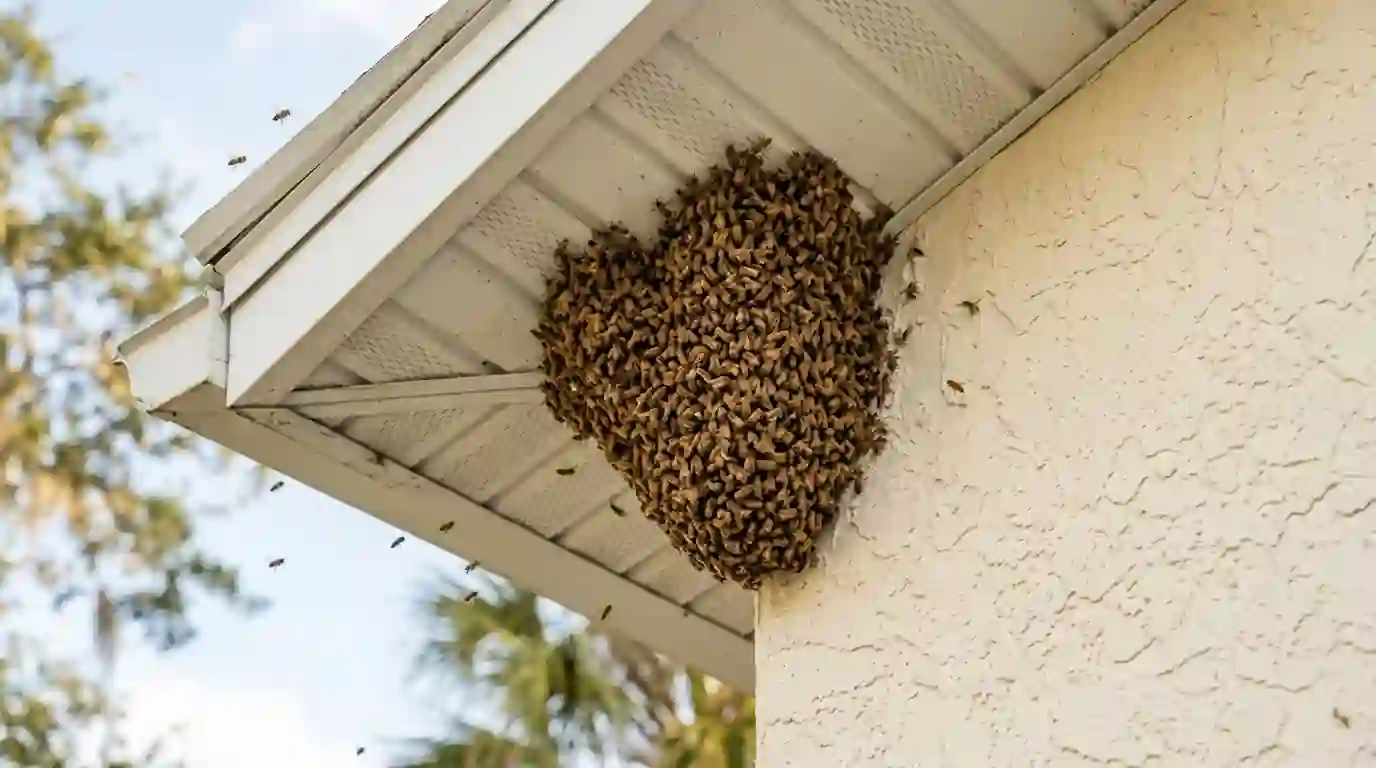
Bees pouring out of a wall? Keep back and call us now.
Call (813) 471-5363Colonies inside walls, soffits and boxes
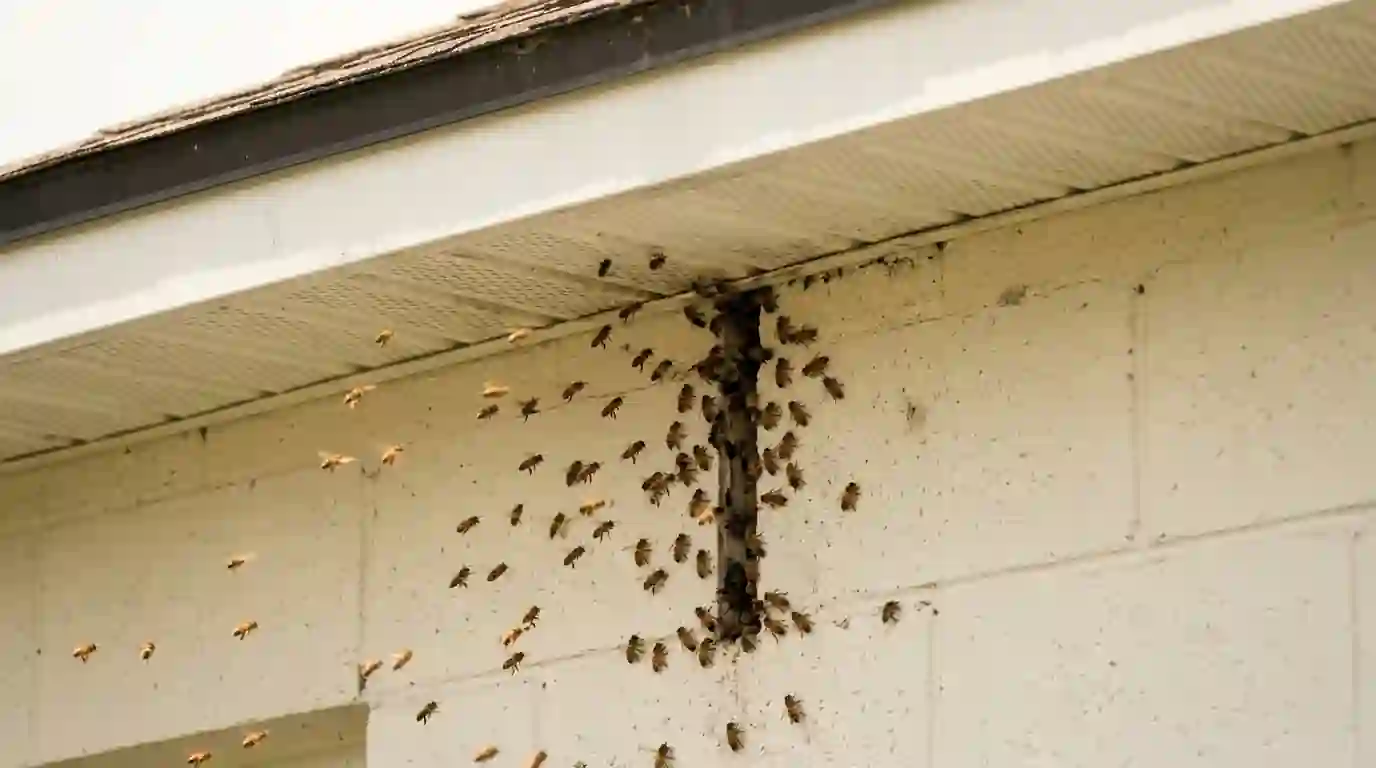
An established colony shows itself as steady traffic at one opening: a gap under a soffit, a weep hole, a hole in siding, a utility box or a water meter box in the lawn. Inside, the bees may have built sheets of comb across a stud bay or the soffit run.
We trace the flight path and the sound to find where the comb sits, then plan the opening. Removing the colony usually means opening the wall, soffit panel or box to reach the comb. You hear before we start exactly what will be opened and how it will be left. Sealing the entry gap afterward keeps the next swarm from moving in.
Why the comb and honey must come out
Killing or removing the bees is only half the job. Comb left in a wall keeps its honey and wax. Without the colony to cool it, summer heat can soften the wax and let honey seep through drywall and ceilings. The leftovers draw ants, roaches, wax moths and robber bees, and the scent of old comb attracts the next swarm.
We remove the comb and honey, scrape the cavity, clean what we can reach, and seal the entry. A follow-up check catches stragglers. Repairing the drywall or soffit afterward is separate from the removal, and we tell you what to expect before the work begins.
How a bee removal job runs
- 1
Describe it
Tell us whether the bees are clustered outside or going in and out of an opening.
- 2
Assess on site
We confirm a swarm or an established colony and locate the comb.
- 3
Plan and price
You hear what will be opened, what it costs and what is left to repair.
- 4
Remove
The bees, comb and honey come out, and the cavity is cleaned.
- 5
Seal and recheck
The entry is sealed and we check for returning bees.
How long a bee job takes
A swarm in an easy spot is often a single short visit. An established colony in a wall or soffit takes longer, because the comb has to be reached, cut out and cleaned up. The size of the colony and how much comb it has built decide the time.
Plan on a follow-up visit for wall hives to check for stragglers and returning foragers. You get the expected visit times when the job is booked, and any drywall or soffit patching is scheduled after we finish.
Bee season and Tampa summers
Swarming is mostly a spring event, and in Tampa that overlaps the end of the dry season, which runs from early November to early May. A swarm that moves into a wall then has the whole summer to build comb. By July and August, highs average about 91 degrees. A hive left in place after the bees are killed then becomes a real problem, as warm wax softens and honey seeps into ceilings and walls. That is why we remove the comb, not just the bees.
What to do before we get there
| Task | Doing it yourself | When to call us |
|---|---|---|
| Swarm on a branch | Keep people and pets back and leave it alone for a day | It stays or starts building comb |
| Bees in a wall gap | Do not plug the hole or spray into it | Traffic keeps going in and out |
| Bees in a meter or valve box | Leave the lid closed and stay clear | You need access to the box |
| Old comb in a wall | Do not leave it after the bees are gone | Honey stains, smells or ants appear |
Anyone with a known allergy to stings should stay indoors and away from the bees until the job is done.
What bee removal costs
- Swarm or hive
A swarm in the open costs less than a colony built into a wall. - Comb size
The more comb built inside, the more cutting and cleanup. - Location
Second-story soffits, roof peaks and tight cavities take more time. - Opening needed
Removing siding, soffit panels or drywall adds labor. - Follow-up
Wall hives usually need a recheck for returning bees.