Updated October 2026
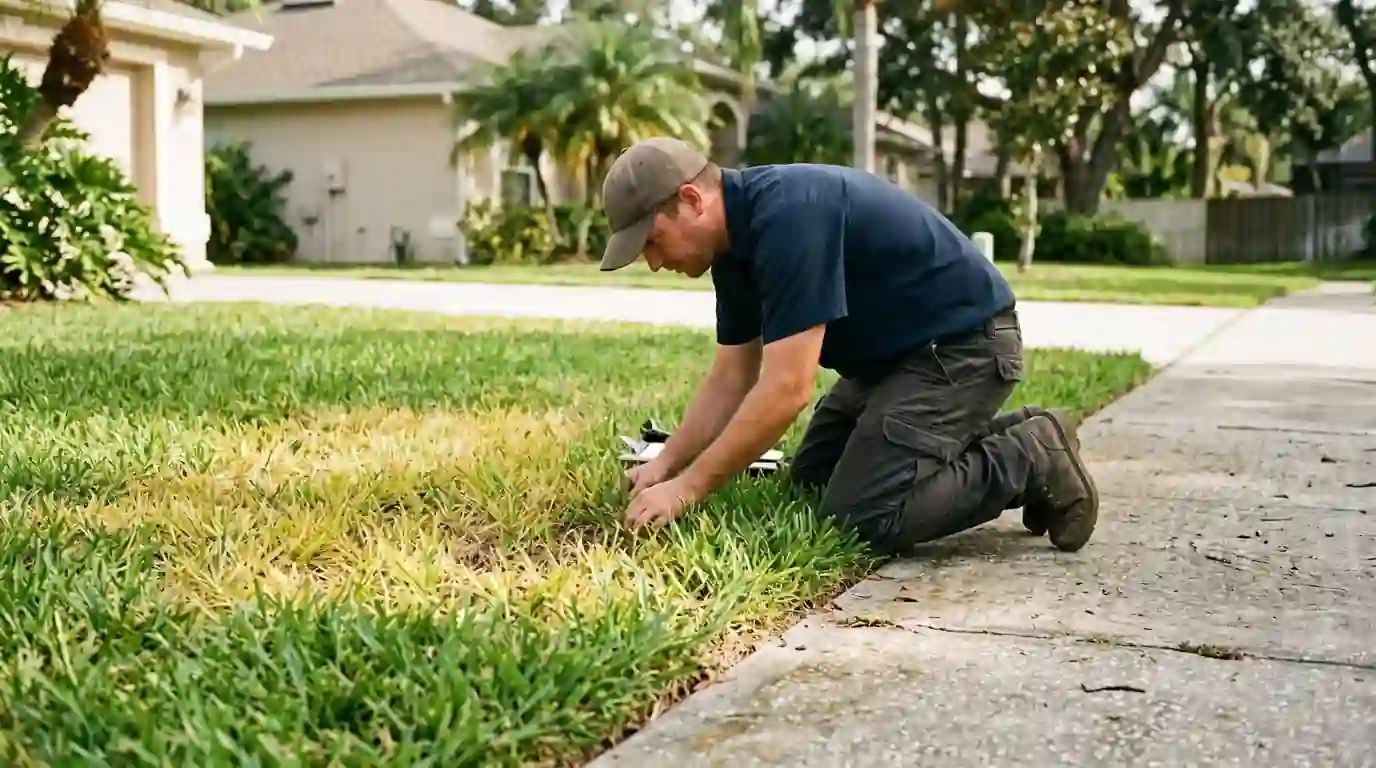
Fire ant control in Tampa works best as two steps: treat the mounds you can see, and spread bait across the lawn for the colonies you cannot. Red imported fire ants nest in lawns, under patio slabs, along driveways and inside electrical boxes. After heavy rain, colonies often move to higher ground, so new mounds can appear overnight.
Why one mound treatment rarely clears a yard
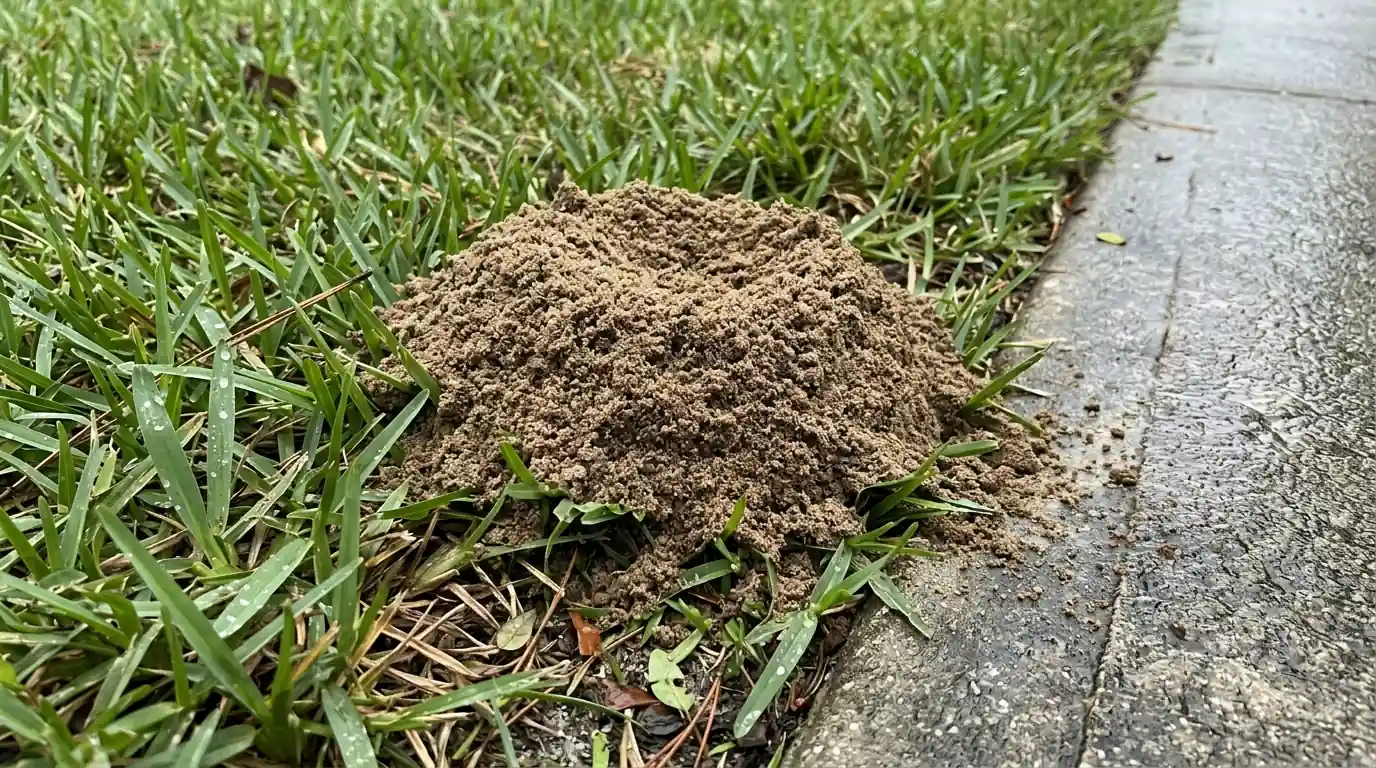
A mound you can see is one colony. Most yards with fire ants have several more colonies that have not pushed up a mound yet. They nest under slab edges, along the driveway or in a sprinkler valve box. Treating only the visible mound kills that colony, and the neighbors fill the space within weeks.
So we combine the two approaches. Individual mounds near doors, play areas and walkways get a direct treatment for quick results. A broadcast bait across the lawn reaches colonies we cannot see, because foraging workers carry it back to the queen. Together they cut the ant numbers far longer than either one alone.
What fire ant treatment costs in Tampa
- Lawn size
Broadcast bait is priced by the area it has to cover. - Number of mounds
Many visible mounds near the house add time for direct treatment. - Nest sites
Ants in utility boxes or under slabs need separate, careful work. - One-time or plan
A yearly plan spaces bait applications so new colonies are caught early. - Season
Rainy months bring more moving colonies and new mounds to treat.
Mounds by the front walk after the storm? Call and we will treat them.
Call (813) 471-5363Mound treatment or broadcast bait?
| Question | Mound treatment | Broadcast bait |
|---|---|---|
| What it reaches | The one colony you can see | Colonies across the lawn, seen or not |
| How fast it works | Quick, often within days | Slower, as workers carry bait to the queen |
| Best place for it | Mounds near doors, play areas and paths | Whole lawns with repeat mounds |
| How long it lasts | Until new colonies move in | Longer, since hidden colonies are reached too |
Most Tampa yards get both: direct treatment on mounds where people walk, and bait over the rest of the lawn.
Treating individual fire ant mounds
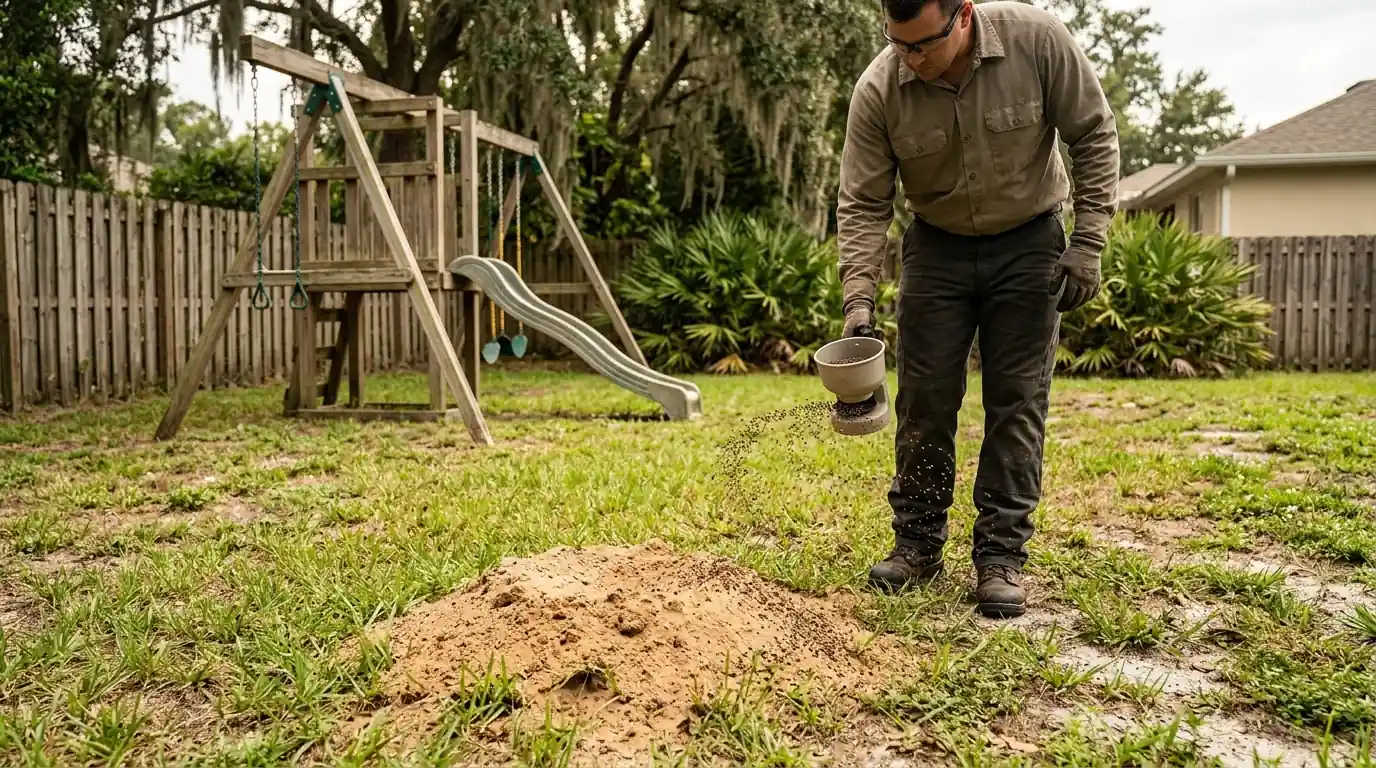
Mound treatments target a single colony with product applied directly to the mound and the soil around it. They work fast. That is why we use them beside the front walk, the pool deck, the swing set and anywhere people walk barefoot.
Fire ant stings leave a white pustule about a day later, and in sensitive people they can trigger a serious allergic reaction. That makes speed matter near doors and play areas. We avoid disturbing the mound before treating, since a kicked mound sends the queen deeper and the workers out in force.
Broadcast bait across the whole lawn
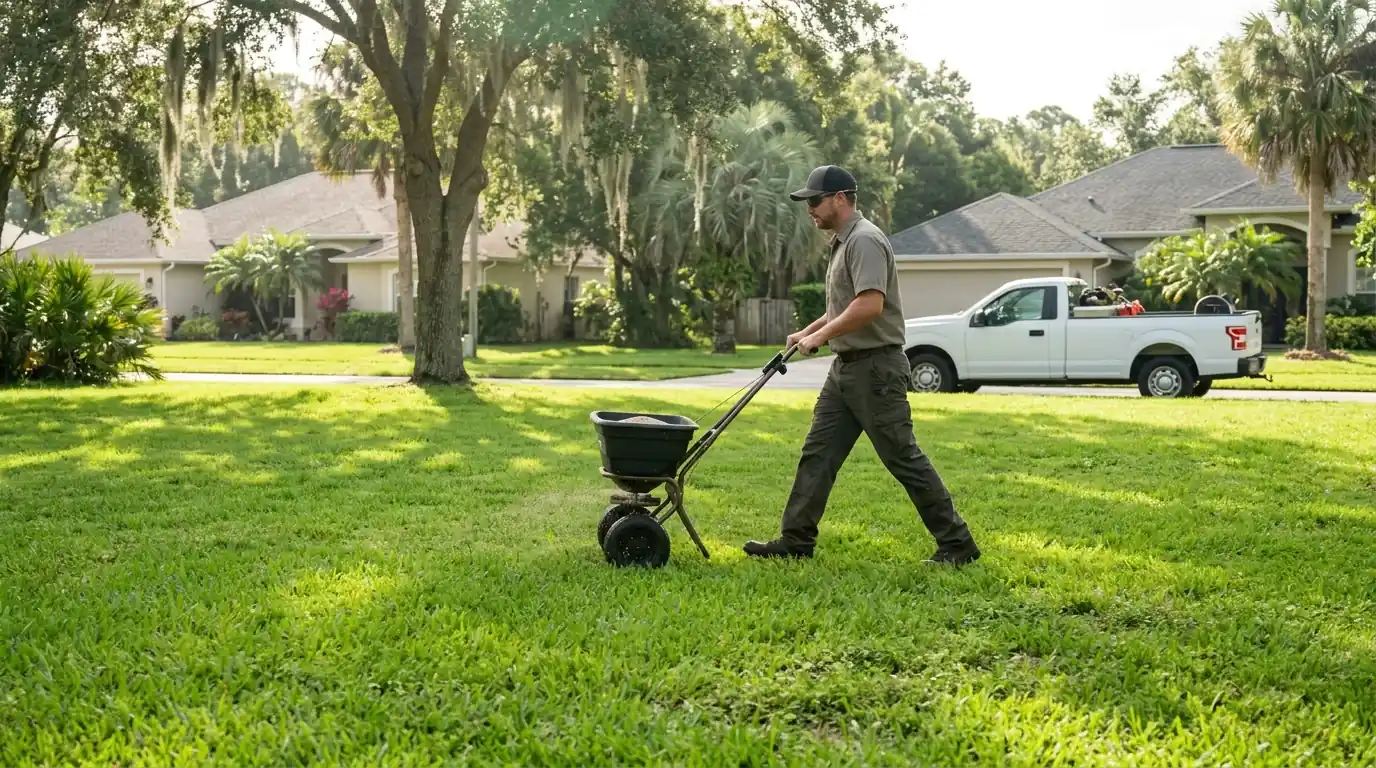
Broadcast bait is spread lightly over the whole lawn with a spreader. Foraging workers carry the bait back to the colony, where it reaches the queen. That includes colonies that have not built a visible mound yet.
Bait works on a dry day when ants are actively foraging. We time it around the weather and ask you to hold off on watering for a while afterward. Results come more slowly than a mound treatment, but they cover far more ground and last longer.
Fire ants under slabs and inside utility boxes
Fire ants nest beside foundations, under patio slabs, along driveways and sidewalks, and inside electrical and sprinkler boxes. In utility boxes they can pack soil around wiring and damage the equipment. After heavy rain, colonies sometimes move up into these spots or even indoors.
Nests at slabs get a treatment worked into the crack line. For utility boxes, we treat around the box and bait nearby rather than opening equipment that belongs to the utility. Ants coming inside after a storm are traced to where they enter.
Fire ants and Tampa rains
Tampa's rainy season runs from late May through October. About two-thirds of the year's rain falls from June to September. Fire ants respond to that water. After heavy rain, colonies move to higher ground: the crown of the lawn, the edge of a slab, a raised sprinkler box or sometimes indoors. That is why new mounds appear the morning after a storm. We put bait down during the drier stretches between storms.
How a fire ant treatment runs
- 1
Yard walk
We find visible mounds and check slab edges, sidewalks and utility boxes.
- 2
Plan and price
You hear which areas get mound treatment, where bait goes, and the price.
- 3
Mound treatment
Mounds near doors, paths and play areas are treated directly.
- 4
Broadcast bait
Bait goes across the lawn on a dry day when ants are foraging.
- 5
Follow-up
We check for new mounds and treat any that pushed up after the first visit.
Handling a mound yourself, or calling us
| Task | Doing it yourself | When to call us |
|---|---|---|
| A single mound away from the house | A labeled store mound product used exactly as directed often handles it | Mounds keep coming back in new spots |
| Kicking or flooding the mound | Skip it; it scatters the colony and sends the queen deeper | The mound is beside a door or play area |
| Ants in a sprinkler or utility box | Keep hands out of the box and do not pour products into equipment | Ants are packed into the box or around wiring |
| Mounds after a storm | Note where they pushed up and keep children and pets clear of them | New mounds keep appearing by doors, walks and the pool deck |
Fire ant stings can trigger a serious allergic reaction in sensitive people. Questions about a sting belong with a doctor; we handle the ants.
Product names you may hear on this job
- Acelepryn
- Talstar
- Arena
- Celsius
- Headway
- Heritage
- Dylox
- Merit
- TopChoice
- Advion Fire Ant