Updated October 2026
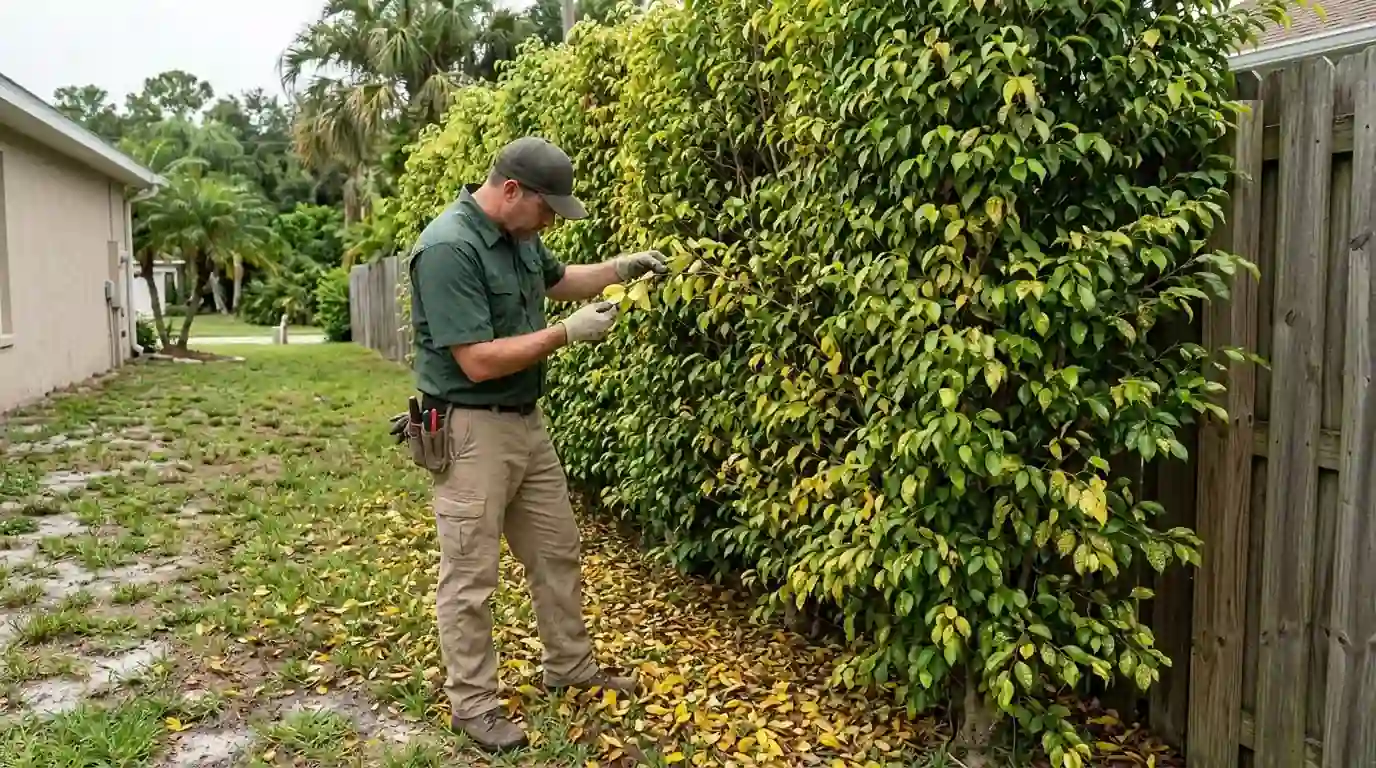
Shrub pest control in Tampa works best as a schedule of checks, because scale, aphids and mites build up fast in the heat and humidity. Each visit, we look under leaves and along stems, treat only the plants carrying insects, and match the product to the pest. Scale needs a different approach than mites, so identification comes first.
What is eating the shrubs in your foundation beds
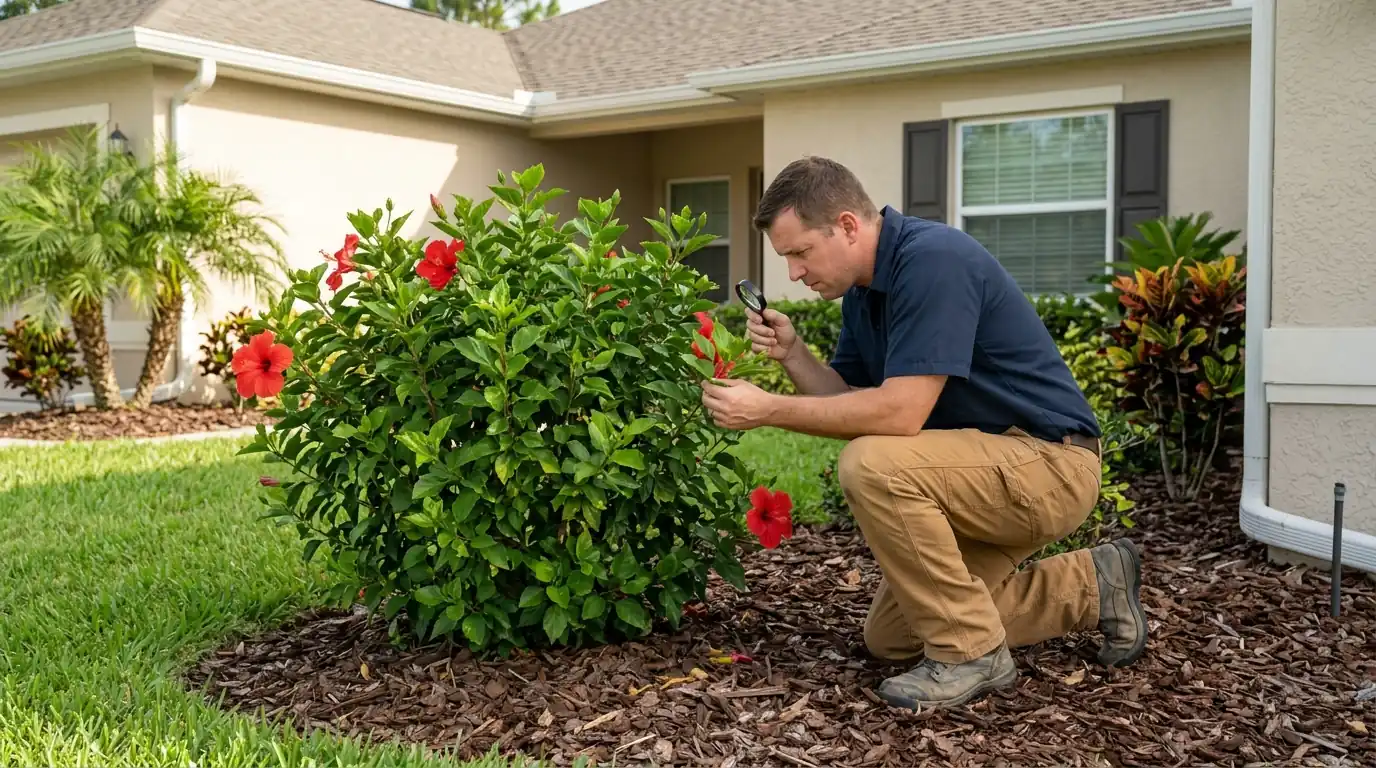
Hibiscus, gardenias, crotons, azaleas, hollies and ixora all carry their own short list of sucking insects. Some drip honeydew and turn leaves black with sooty mold. Others leave pale stippling, curled tips or crusty bumps along the stems. A plant that looks tired is often a plant that is being fed on.
We walk the beds, turn over leaves, and check stems and leaf joints where these insects hide. Then we tell you what is on each plant and whether it needs treatment at all. Light infestations sometimes only need pruning or a hard rinse, and we say so when that is the case.
What each shrub visit covers
Every visit follows the same pattern, so nothing in the beds gets skipped.
- A walk through every bed, hedge and container plant
- Leaf undersides, stems and leaf joints checked up close
- Treatment only on plants carrying insects
- A product matched to the pest, not one spray for everything
- Notes on pruning, watering or plants worth replacing
- How long to keep kids and pets off treated plants
Sticky leaves or white cotton on your shrubs? Describe it and we will tell you what it is.
Call (813) 471-5363Scale insects on stems and leaves
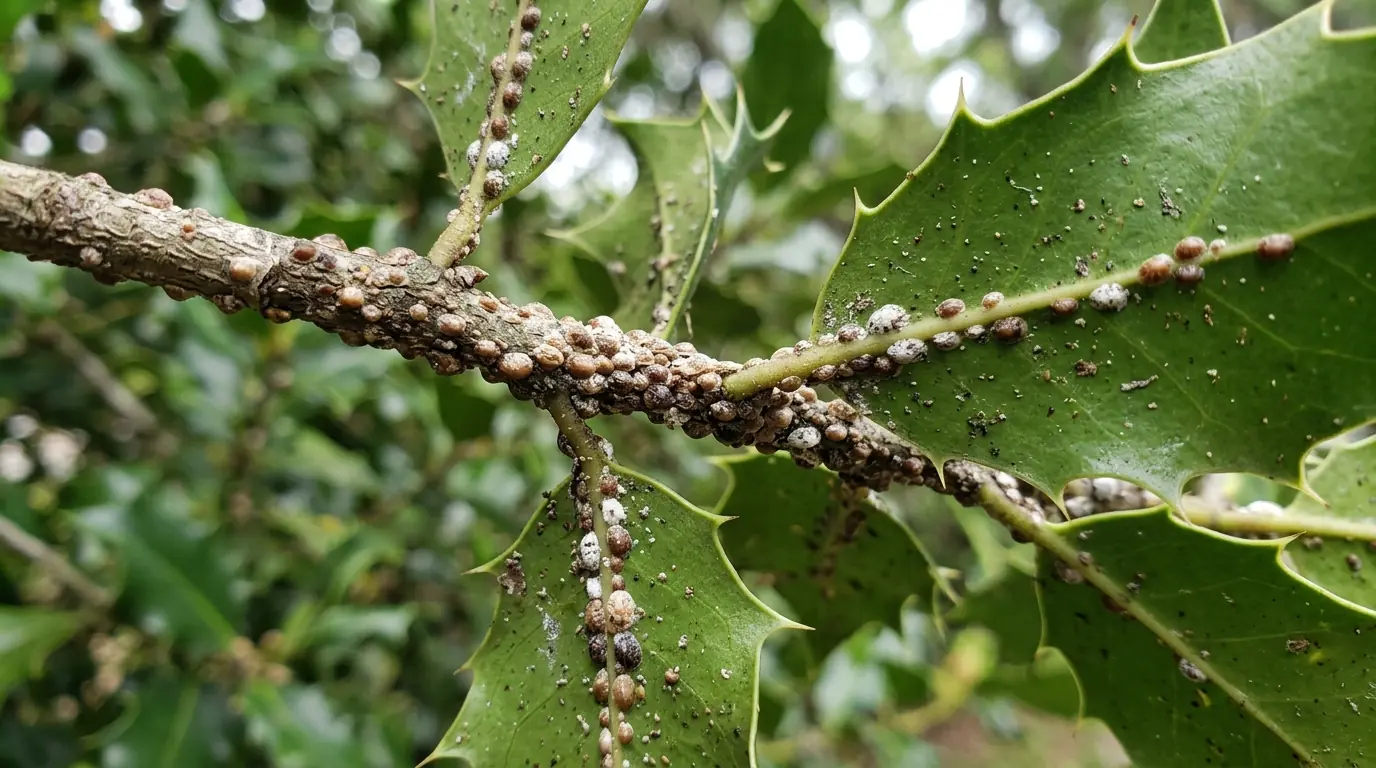
Scale insects look like tiny bumps, shells or crusty dots stuck to stems and leaves. Armored scales stay under a hard cover and do not make honeydew. Soft scales are rounder, drip honeydew and often bring ants and sooty mold with them.
The difference changes the treatment. Soft scales take up systemic products well. Armored scales are usually handled with oil sprays timed to the crawler stage, when the young are moving and unprotected. We confirm which kind you have before anything is sprayed, and badly crusted branches are often better pruned out first.
Aphids and mealybugs on new growth
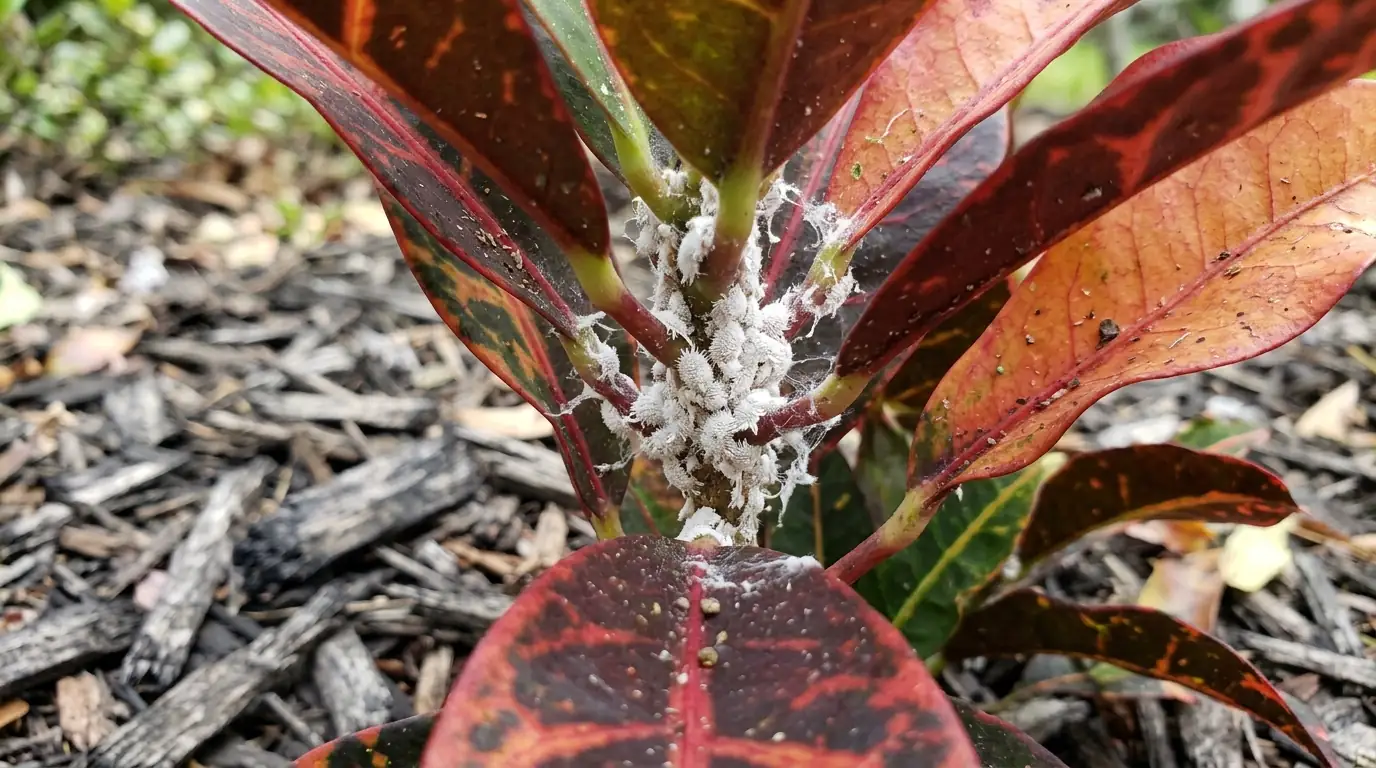
Aphids cluster on soft new shoots and flower buds, and the leaves above them curl and pucker. Mealybugs look like small tufts of white cotton tucked into leaf joints and along the stems of hibiscus, crotons and gardenias. Both make honeydew, and ants often climb the plant to collect it.
Lady beetles and lacewings eat aphids, so we avoid broad sprays that wipe them out when a targeted treatment will do. For mealybugs hidden deep in the plant, a systemic usually reaches them better than a spray. Thinning dense growth also helps the next treatment get in.
Spider mites and lace bugs that stipple the leaves
Spider mites are almost too small to see. The first sign is fine pale speckling on the leaves, then a dull bronze color and sometimes thin webbing at the tips. They build up fastest on dusty, dry, stressed plants.
Lace bugs feed on the undersides of azalea and similar leaves, leaving yellow speckling on top and dark, varnish-like spots underneath. Both pests need a product that reaches the leaf undersides. Since mites shrug off many common insecticides, we use one labeled for mites rather than a general spray.
Tampa weather and the shrub pests it favors
Tampa's rainy season runs from late May through October, with afternoon storms almost every day, and shrubs answer with flushes of soft new growth. That tender growth is where aphids and scale crawlers settle first. The dry season, from early November to early May, is the stretch when spider mites build up on dusty, thirsty leaves. White-footed ants, collected in Hillsborough, nest in mulch, palm fronds and trees. An ant trail running up a shrub stem is often the clue that leads us to scale or aphids feeding above.
Signs your shrubs have sucking insects
Honeydew from scale, aphids or mealybugs leaves a tacky coating on leaves and anything below.
Sooty mold grows on that honeydew and dulls the leaves.
Small fluffy tufts tucked into stems usually mean mealybugs.
Fine stippling points to spider mites or lace bugs feeding.
A steady ant trail up a single shrub often leads to honeydew makers.
What shrub pest treatment costs in Tampa
- Number of beds and shrubs
A few foundation shrubs cost less than a full yard of hedges and flowering beds. - Which pest is present
Mites and armored scale may need more than one visit to break the cycle. - Plant size
Tall hedges and small trees take more product and time than waist-high shrubs. - Visit schedule
A regular schedule of checks is priced differently from a one-time treatment. - Pruning first
Heavily crusted or dead branches may need cutting back before treatment works well.
How a shrub pest visit runs
- 1
Walk the beds
We go plant by plant and note which ones show insects, honeydew or leaf damage.
- 2
Identify the insect
Scale, aphids, mealybugs, mites and lace bugs each call for a different product.
- 3
Price before work
You hear the price and the plan before anything is applied.
- 4
Targeted treatment
Only the affected shrubs are treated, with a spray, a systemic or an oil.
- 5
Next check
We set the next visit for the season and look again at the plants we treated.
Product names you may hear on this job
- Safari
- Merit
- Distance
- Talstar
- Acelepryn
- Mainspring
- Altus
- Kontos