Updated October 2026
Apartment and HOA pest control in Tampa covers unit turns, clubhouses, pools, hallways and trash areas, plus building-wide programs when roaches move between units. Work is scheduled with the property manager or board, residents get notice before entry, and each unit visit is logged. Termite inspections and lawn pest work for HOA grounds are separate services.
Why one unit at a time does not fix a building
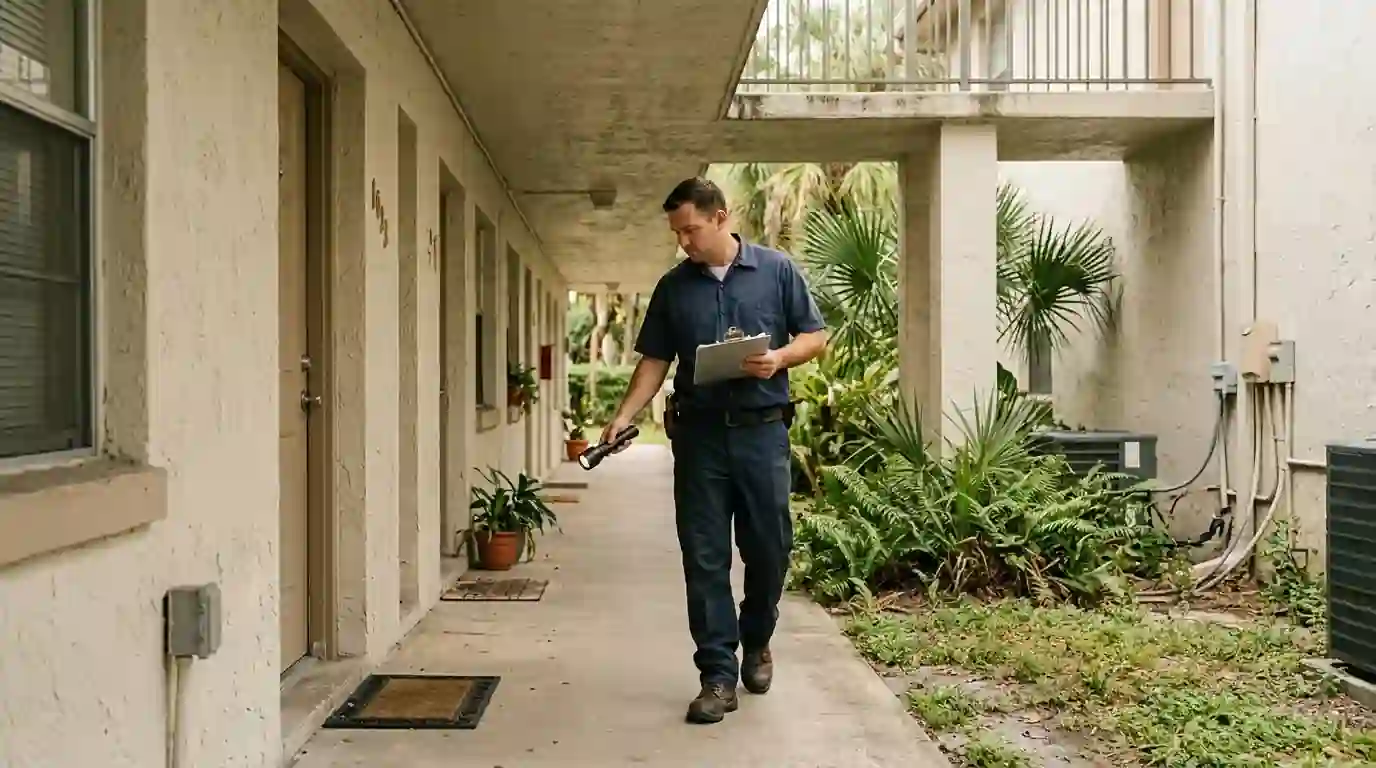
German roaches, ants and even bed bugs move between units through shared walls, plumbing chases, electrical runs and the gaps under doors. Treat the unit that complained and the problem often shows up next door within weeks, or comes back from the unit that was never checked.
We start by mapping the problem with the manager: which units reported, which share walls and plumbing stacks, and which common areas connect them. Then we inspect and treat in groups, stack by stack or building by building, log every unit we enter, and report which units need follow-up and why. That record is what lets a manager see whether the problem is shrinking.
What apartment and HOA pest control costs
- Number of units
More units and buildings mean more scheduled entries and more log entries. - Common areas
Clubhouses, pools, laundry rooms and trash areas add to each visit. - Roach activity
Building-wide German roach work needs follow-up visits until units are clear. - Service calendar
Monthly community visits add up to more over a year than a quarterly round. - Unit turns
Make-ready treatments are priced per unit, separate from routine service.
Managing a building with roach complaints? Call and tell us how many units.
Call (813) 471-5363Complaint-only service or a building program?
| Question | Treating complaints only | Building-wide program |
|---|---|---|
| Units treated | Only the ones that called | Reported units plus those sharing walls and stacks |
| Roaches next door | Often missed | Inspected and treated in the same round |
| Records | Scattered visit notes | One log for the whole building |
| Long-term result | Problems move around the building | Numbers fall across the building |
For single homes, see German cockroach treatment.
Treating a unit between residents
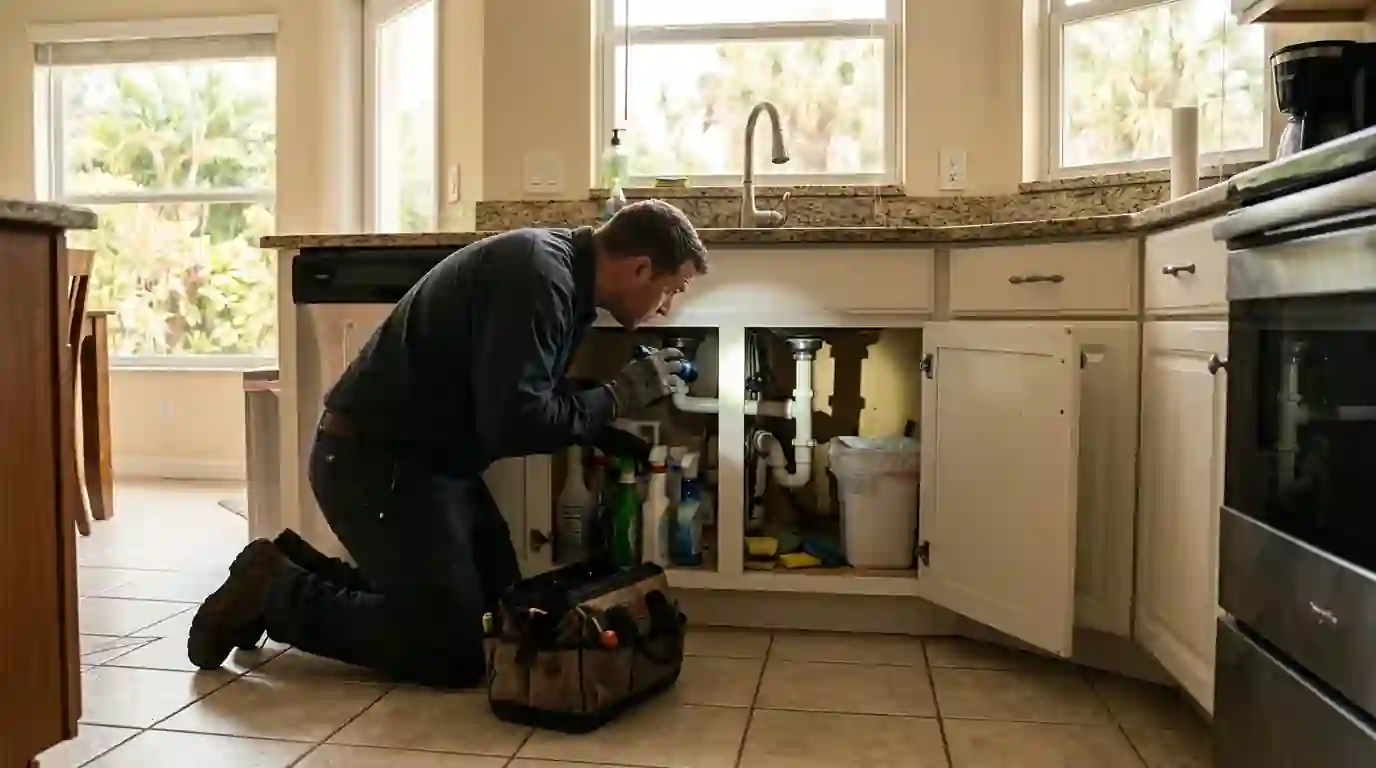
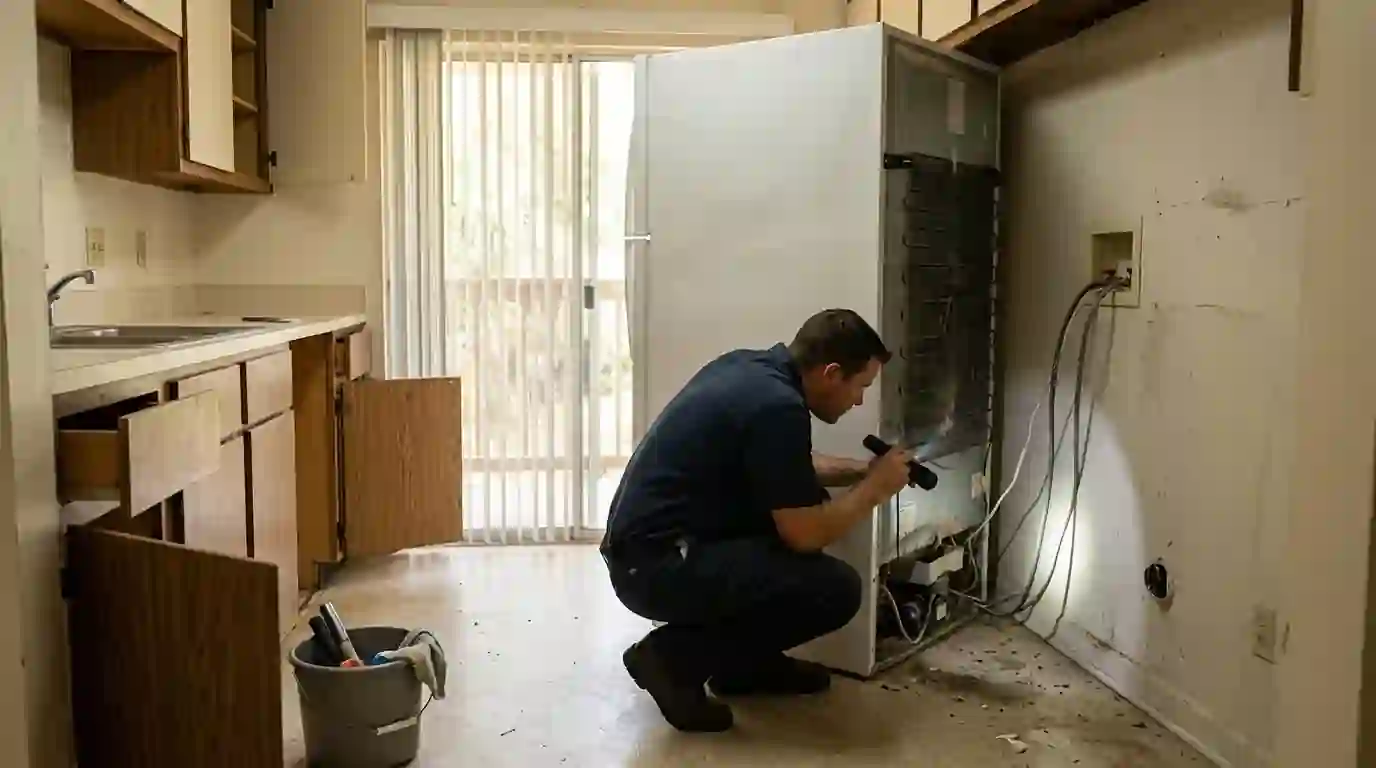
A vacant unit is the best chance to treat thoroughly. Cabinets are empty, appliances can be pulled out and there is no furniture in the way. We inspect kitchens, baths and closets, treat cracks, plumbing gaps and appliance voids, and check for signs of bed bugs, German roaches or rodents before the next resident moves in.
Tell us the move-in date so the work fits the make-ready schedule, ideally after the deep clean and before new carpet or paint. If we find an active problem, we note it in the log and check the neighboring units that share walls.
Clubhouses, pools, mail rooms and trash areas
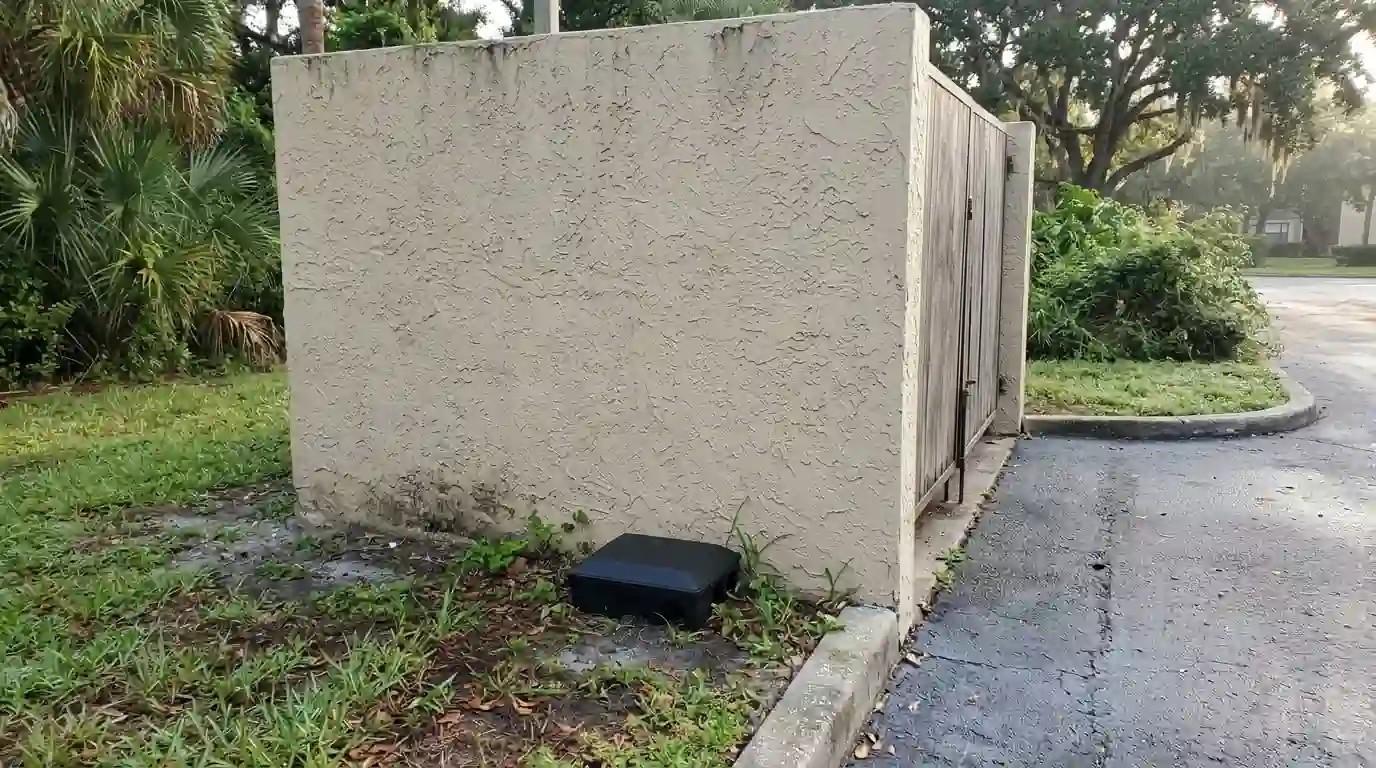
Common areas get heavy use and little attention: the clubhouse kitchen, fitness room, pool deck and cabanas, mail room, laundry room, trash chutes and dumpster enclosures. Ants trail into clubhouse kitchens, palmetto bugs come out of the trash areas at night, and webs build up on breezeways and stairwells.
We treat these on a regular schedule, sweep webs from breezeways and pool cages, place rodent stations around dumpster enclosures, and log what we find. Problems at the trash area often show up in nearby units next.
German roach programs across a building
When German roaches are reported in several units, we treat the building, not just the complaints. Units are inspected in stacks, because roaches follow the plumbing up and down, and the worst units get gel bait, growth regulator and follow-ups until monitors show they are clear.
Residents get notice and a short prep list before entry: empty the cabinets under the sinks, clear counters and pull items off the kitchen floor. We report unit by unit, flag units that refused entry or were not prepared, and schedule the follow-ups.
What community service includes
Here is what managers and boards get with a community account.
- A walk-through with the manager or board
- Resident notice and a short prep list before unit entries
- Unit-by-unit inspection and treatment logs
- Common area, pool deck and trash enclosure service
- Make-ready treatments for unit turns
- A report flagging units that need follow-up
Shared buildings in Hillsborough
Housing here is a mix of owned and rented homes: about 61.5% of occupied homes in Hillsborough County are owner-occupied, so close to four in ten are rented. Half the county's housing dates from 1991 or earlier, with about 17.6% built before 1970, while some 37.5% is from 2000 on. Older buildings tend to have more worn gaps around plumbing, while newer communities often share long runs of walls and attic space. Both let roaches and ants travel from unit to unit.
How community service is set up
- 1
Meet the manager
We go over complaints, building layout, common areas and the turnover schedule.
- 2
Walk the property
We inspect common areas, trash enclosures and a sample of units with known activity.
- 3
Plan and price
You get a schedule, a resident notice and a price before work starts.
- 4
Treat and log
Units and common areas are treated on schedule and every entry is logged.
- 5
Report and follow up
The manager gets a unit-by-unit report and the follow-up dates.