Updated October 2026
Flea and tick control in Tampa treats the house, the yard and the places pets rest, all on the same schedule as your vet's flea product for the animal. Fleas live most of their lives off the pet as eggs, larvae and pupae, so treating only the dog or only the carpet leaves the rest to hatch. A follow-up visit usually catches the fleas that were still in cocoons.
Why fleas keep coming back after one spray
An adult flea lays eggs on the pet, and those eggs fall off wherever the animal sleeps, sits or rolls. Larvae hide deep in carpet, under furniture cushions and in shaded soil, then spin cocoons that shield them from most treatments. Adults can wait in the cocoon until vibration or warmth tells them a host is near, which is why a house can seem clear for a week and then light up again.
We treat the adults that are active now and add an insect growth regulator that stops eggs and larvae from developing. Indoors that means floors, rugs, under furniture and pet beds; outside it means the shaded, sheltered spots pets use. We schedule a follow-up for the fleas still emerging, and we ask that your pet is on a vet-recommended product at the same time.
What flea and tick treatment costs in Tampa
- House size and floors
More carpeted rooms mean more area to treat than mostly tile floors. - Yard size and shade
Large shaded yards with decks and brushy edges take longer to treat. - How many pets
More pets usually means more resting spots and a heavier flea load. - Follow-up visits
Most jobs include or need a second visit for fleas emerging from cocoons. - Ticks indoors
Brown dog ticks breeding inside call for more interior work.
Fleas biting right now? Call and tell us about your pets and yard.
Call (813) 471-5363Treating floors, rugs and furniture
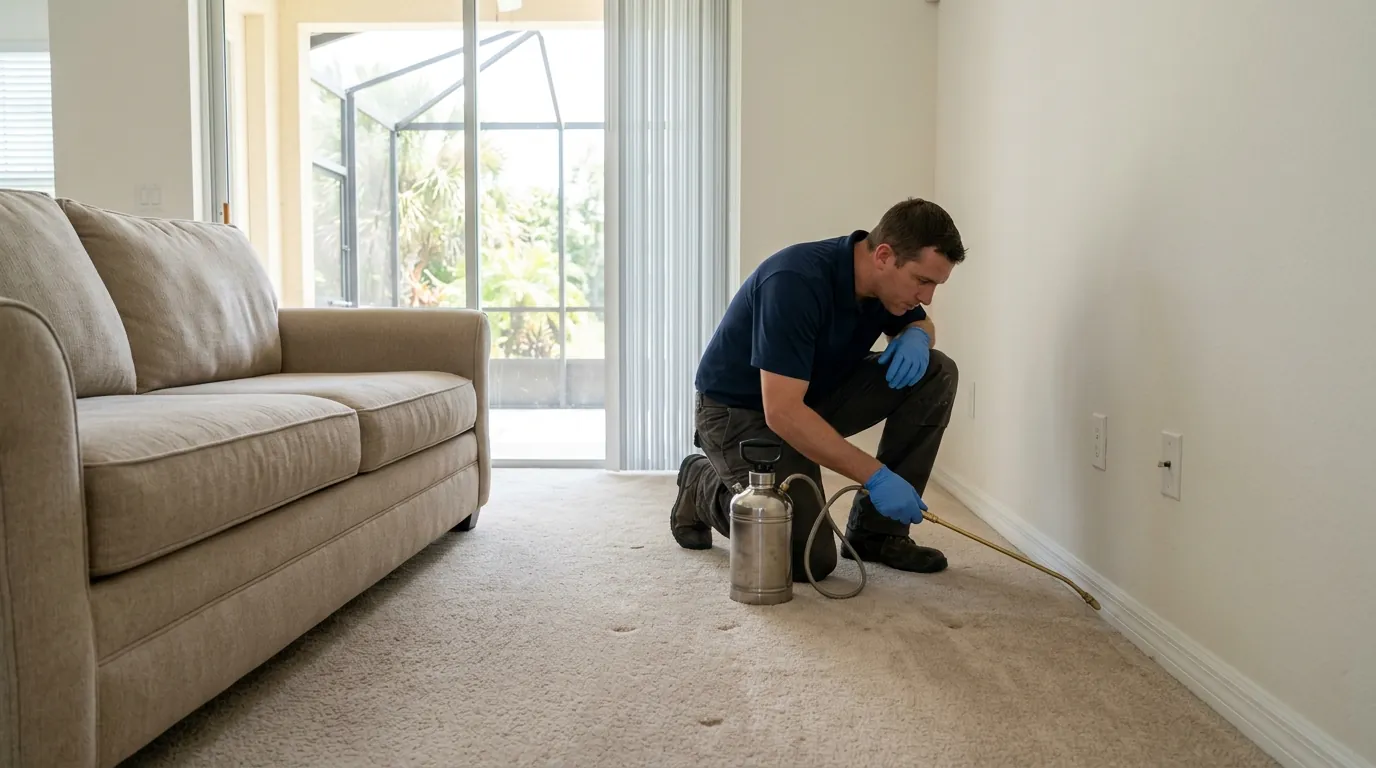
Indoors, we treat carpet and rugs wall to wall, the edges along baseboards, under beds and sofas, and the gaps in hard floors where larvae settle. Furniture cushions get attention where pets lie on them. The growth regulator keeps working on eggs and larvae after the visit.
Before we arrive, pick up floor clutter, wash pet bedding and throw rugs on hot, and vacuum thoroughly, including under furniture. Vacuuming wakes up cocoons, which helps the treatment reach them. People and pets stay off treated floors until they are dry, and we tell you how long that is.
Fleas and ticks in the shaded yard
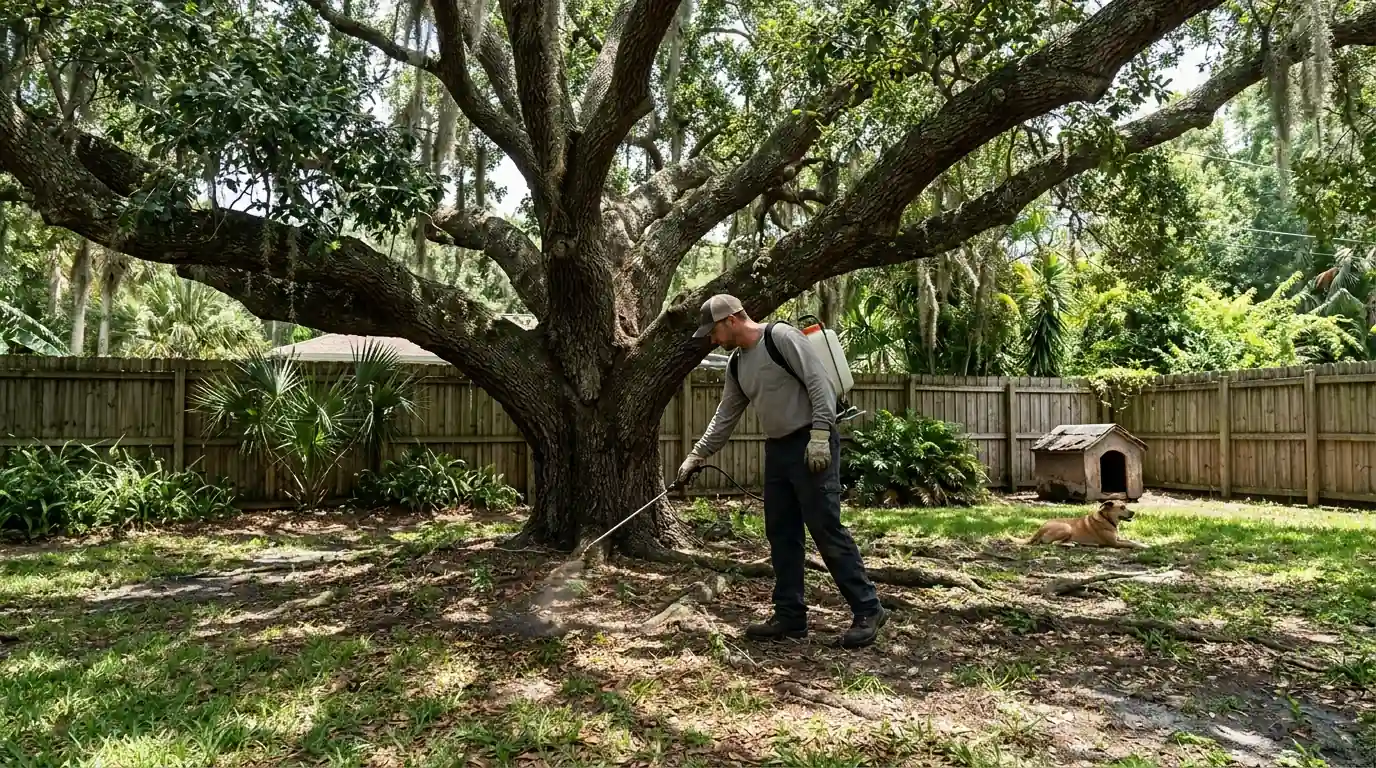
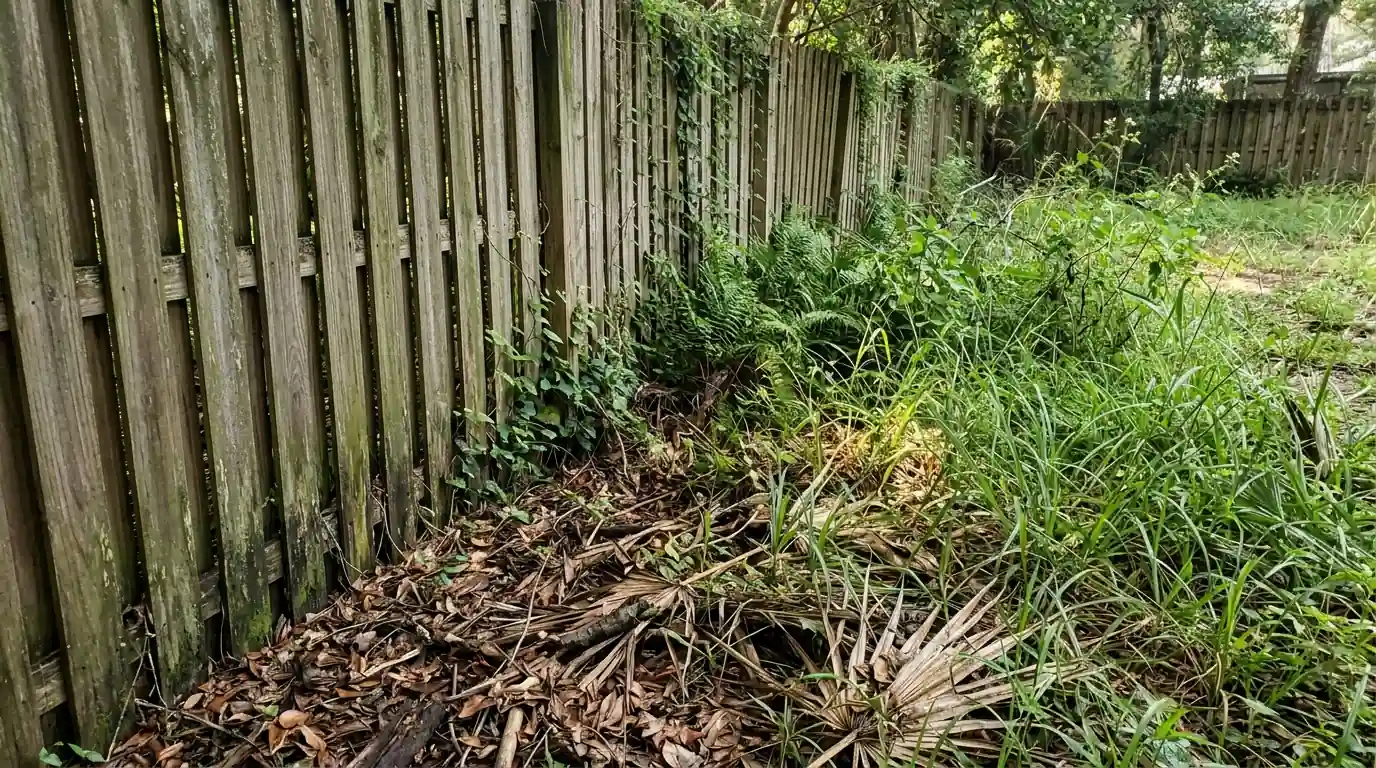
Flea larvae do not survive long in full sun, so the yard treatment targets shade: under trees and decks, along fences, beside the house, in crawl spaces and wherever pets dig a cool spot. Ticks wait in tall grass and brushy edges, so overgrown fence lines and wooded borders get treated too.
Mow before the visit and clear leaf piles from under shrubs so the treatment reaches the soil. Wildlife like opossums and stray cats can keep bringing fleas back into a yard, and we point out the spots under decks and sheds where they bed down.
Pet beds, crates, cars and favorite spots
Every place your pet spends time collects eggs: the bed, the crate, the spot on the sofa, the back seat of the car, the corner of the lanai, under the porch. Those spots hold more larvae than the rest of the house combined.
We ask where your pets sleep and lie, inside and out, and give those areas extra attention. Wash bedding and blankets every few days during treatment and vacuum the car. The brown dog tick can live and breed indoors, so if ticks show up on walls or furniture, tell us, because that changes where we treat.
What a flea and tick visit includes
These are the parts of every flea job.
- Questions about pets, resting spots and current flea products
- A written prep list before the visit
- Indoor treatment of floors, rugs and furniture edges
- Yard treatment of shade, decks and fence lines
- An insect growth regulator indoors and out
- A follow-up visit for newly hatched fleas
Fleas and Tampa weather
Flea eggs and larvae need warmth and humidity, and Tampa has both for most of the year. Wet months stretch from late May into October, average humidity is highest in August at around 78%, and across the year the city averages 74.5°F. With winters that mild, shaded soil under oaks and decks can keep producing fleas well past summer. So the house and the yard get treated together, not weeks apart.
How a flea and tick job runs
- 1
Ask about pets
We find out where pets sleep, sit and roam, inside and out, and what flea product they use.
- 2
Prep the house
You vacuum, wash bedding and clear the floors before we arrive.
- 3
Treat indoors
Floors, rugs, furniture edges and pet areas get an adulticide and a growth regulator.
- 4
Treat the yard
Shaded soil, decks, fence lines and pet paths get treated outside.
- 5
Follow up
We come back for fleas that were still in cocoons and check the yard again.
How long it takes to clear fleas
Adult fleas start dying soon after the treatment dries, but you may still see some for two to three weeks as new ones emerge from cocoons and cross the treated floor. Keep vacuuming every day during that time, because it pulls them out of the carpet and into the treatment.
Most homes are clear after the first visit and one follow-up, as long as the pets are treated too. If fleas are still active after the follow-up, we look for an outside source like wildlife under the deck.
Signs of fleas or ticks at home
Small itchy bites on the lower legs are a common sign of fleas in the floor or yard.
Constant scratching or chewing at the base of the tail points to fleas on the animal.
Black specks in pet bedding that turn reddish on a damp paper towel are flea droppings.
Walking on carpet in white socks and seeing small dark specks jump on is a quick test.
Ticks climbing walls or curtains point to brown dog ticks breeding indoors.