Updated October 2026
Pantry pest control in Tampa clears the moths and beetles that breed inside stored dry food: cereal, flour, rice, pasta, spices, nuts, pet food and birdseed. The key step is finding every infested package, because the larvae live in the food, not on the shelves. Once that is out, we treat the cracks and shelf joints and set traps to confirm the problem is over.
Why the source matters more than the spray
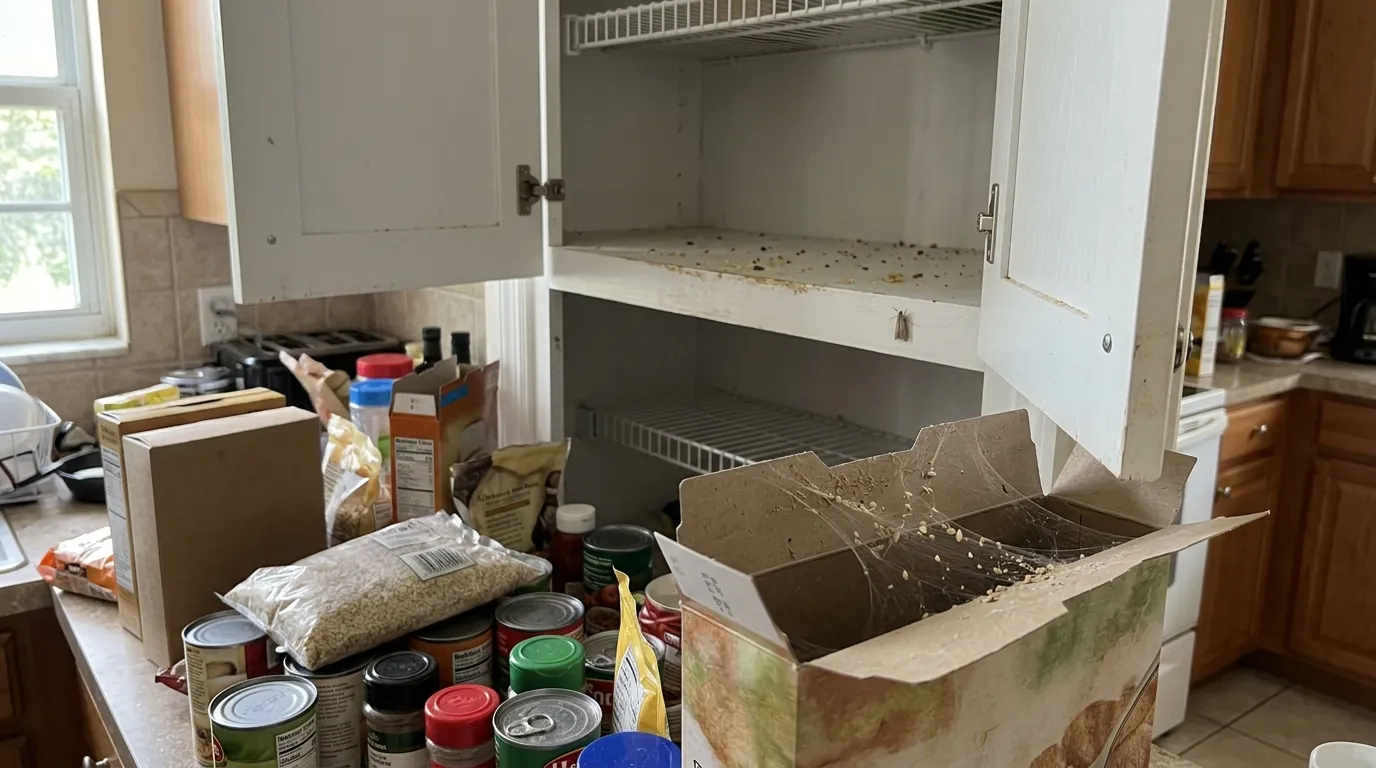
Pantry pests spend most of their lives inside the food. Moth larvae spin silk in the top of a cereal box, weevils develop inside whole grains, and pantry beetles bore through paper and thin plastic. Adults wander out to mate and lay eggs on the next package, which is how one bag of birdseed in the garage becomes moths in the bedroom closet.
So the job starts with a search. We go through the pantry and cabinets with you, open and check the likely packages, and look at pet food, birdseed and decorative dried items too. After the infested food is gone and the shelves are vacuumed, a targeted treatment goes into the shelf joints, cracks and pin holes where larvae crawl to pupate, and traps go up to catch stragglers.
What pantry pest treatment costs
- How far it spread
One cabinet costs less than a pantry, a garage shelf and a laundry room together. - Number of food sources
More infested items mean more search and cleanout time. - Bulk storage
Large bins of pet food, birdseed or bulk grains add places to check. - Follow-up
A second visit to read traps and retreat is sometimes needed. - Other pests
Pantry pests found with roaches or ants may fold into a broader pest plan.
Moths coming out of the cereal? Call and describe the package.
Call (813) 471-5363Indian meal moths in cereal, nuts and pet food
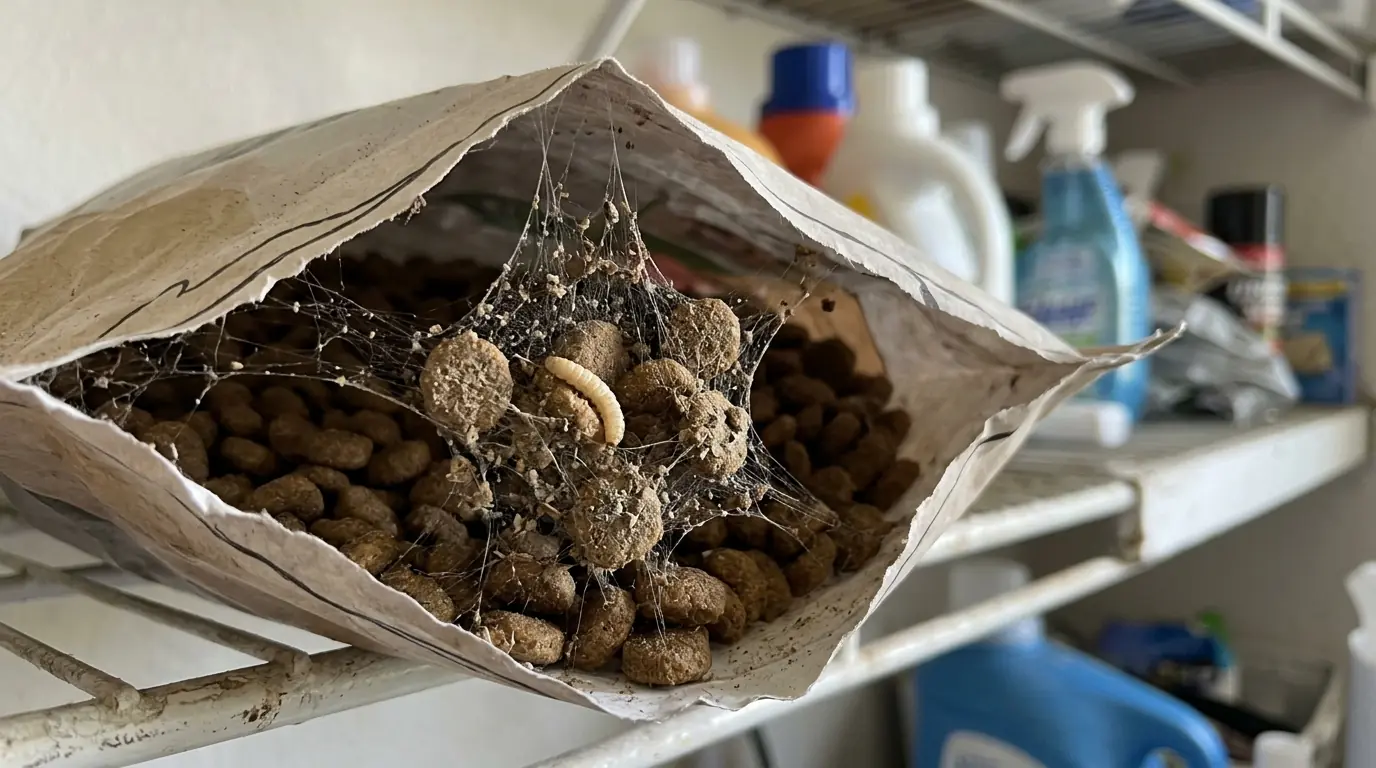
Indian meal moths are the small moths with wings that are pale near the body and coppery toward the tips. You usually notice the adults first, flying in a zigzag around the kitchen at night. The larvae are cream-colored caterpillars that leave silky webbing and clumps in cereal, granola, dried fruit, nuts, chocolate, pet food and birdseed.
Larvae often leave the food to pupate, so you may find them crawling on the ceiling or tucked into shelf joints far from the source. We find and remove the infested food, vacuum and treat the cracks, and place pheromone traps that catch males and show whether the problem is ending.
Rice weevils and flour beetles in dry goods
Rice weevils are tiny dark beetles with a long snout, and they develop inside whole kernels of rice, wheat, popcorn and similar grains, leaving small exit holes. Flour beetles, often called flour weevils, are reddish-brown and feed on flour, cake mix and other milled products, which can turn grayish and smell off when the infestation is heavy.
We check every grain product, including the bag at the back of the shelf. Infested food goes out sealed in a bag, the shelves are vacuumed and treated, and we tell you how to store the replacements so a new bag cannot be reached.
Cigarette and drugstore beetles in spices and more
Cigarette and drugstore beetles are tiny, round, reddish-brown beetles that hold their heads tucked down. They eat a wide range of dry goods: spices, especially paprika and chili powder, dried herbs, tea, dry pasta, pet food and even dried flower arrangements and book bindings. They fly toward windows and light.
These beetles can chew through paper and thin plastic, so we check sealed-looking packages too. Treatment follows the same path: find every source, clean and treat the shelves, and trap to confirm.
What a pantry pest visit includes
This is what we handle on the visit.
- Identifying the moth or beetle
- Checking every dry food package with you
- Checking pet food, birdseed and decorative dried items
- Vacuuming shelves, corners and joints
- Targeted treatment of cracks and shelf joints, never on food
- Pheromone or sticky traps to confirm the result
Warm Tampa kitchens and stored food
Summer afternoons in Tampa average about 91°F in July and August, and indoor spaces without steady air conditioning, like garages and laundry rooms, stay warm for months. Pantry moths and beetles develop faster when it is warm, so a pantry against a sunny wall or a garage holding bags of pet food and birdseed can go from a few moths to a full outbreak quickly. We pay particular attention to the garage and laundry room here, because that is where bulk pet food and birdseed tend to sit through the summer.
How we clear a pantry infestation
- 1
Search the food
We check every dry food item in the pantry, cabinets, garage and laundry room.
- 2
Remove the sources
Infested packages are bagged and thrown out, and you choose what to keep.
- 3
Vacuum the shelves
Shelves, corners and joints are vacuumed to pick up larvae, eggs and spilled food.
- 4
Treat the cracks
A targeted treatment goes into shelf joints and cracks, never onto food.
- 5
Trap and confirm
Pheromone or sticky traps show whether any adults are still emerging.
Jars, freezers and cleanup: your part
| Task | Doing it yourself | When to call us |
|---|---|---|
| Throw out infested food | Bag and discard anything with webbing, holes or live insects | You cannot find the source and they keep appearing |
| Storage | Move dry goods into glass or thick plastic jars with tight lids | Insects keep showing up in sealed jars |
| Cleaning | Vacuum shelves and joints, then wipe them down | Larvae keep crawling out of the shelving |
| Pet food and birdseed | Store it in sealed bins and buy smaller bags | The garage or laundry room is full of moths |
Freezing new bags of flour or birdseed for a few days before storing them is an easy habit that helps.
Signs of pantry pests
Moths flying in a zigzag through the kitchen or living room are often Indian meal moths.
Silky threads or clumps in cereal, nuts or pet food mean moth larvae.
Tiny round beetles near windows can be drugstore or cigarette beetles flying toward light.
Small round holes in paper or thin plastic bags point to beetles boring in or out.
Small caterpillars crawling on walls or ceilings are moth larvae looking for a place to pupate.