Updated October 2026
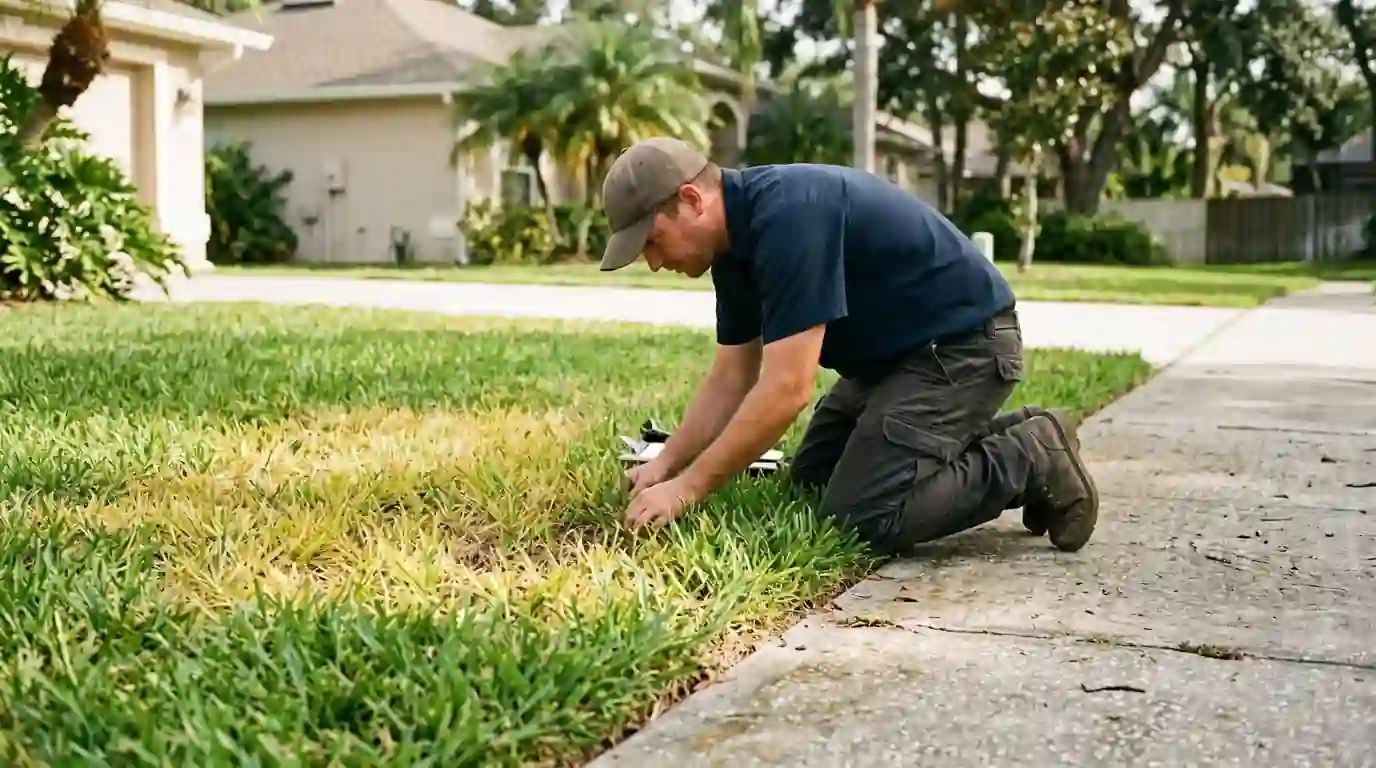
Lawn caterpillars in Tampa chew grass blades rather than sucking sap, so the damage looks ragged and notched instead of yellow. Tropical sod webworms feed at night from spring through fall. Fall armyworms leave bare patches across a wide area, worst on new, heavily fed sod. A dish soap flush over a small square brings them up so they can be identified.
Signs caterpillars are eating your lawn
Blades look chewed or notched along the sides instead of cut cleanly.
Patches look mowed too low even though the mower has not been near them.
Small tan moths flutter up from the grass when you walk across it in the evening.
Birds pecking at one area day after day are often eating caterpillars.
Small green droppings at the base of the grass are left by feeding caterpillars.
Why caterpillar damage needs a quick answer
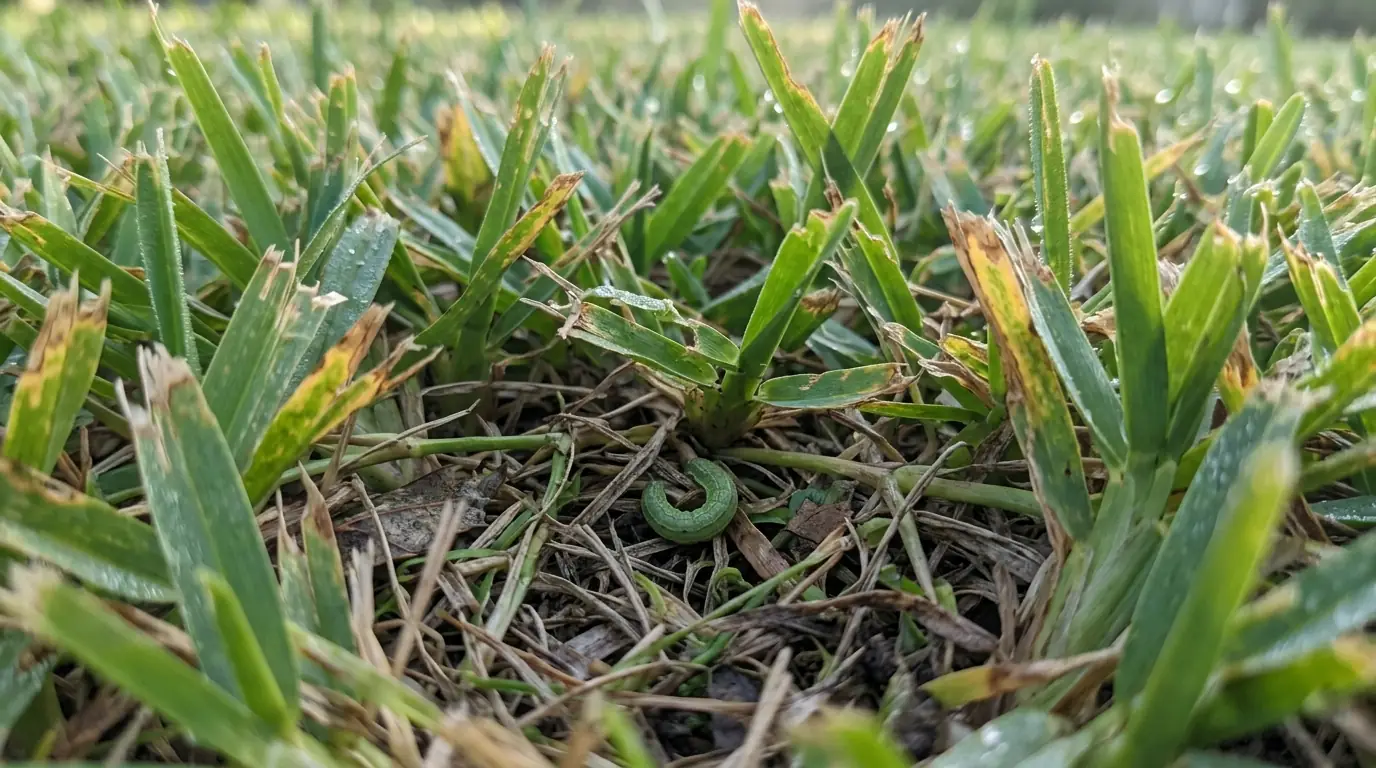
Caterpillars can thin a lawn fast. Sod webworms feed at night and hide by day, so the damage seems to appear from nowhere. Armyworms move across a lawn in numbers and can strip a wide area in a short time. Both feed on the blades, which means the roots are often still alive, and the grass can grow back if the feeding stops quickly.
We start with a soap flush on the edge of the damage. Seeing the caterpillar tells us which one it is and whether treatment is warranted. Then we treat the lawn in the evening when the caterpillars come up to feed, and check back to make sure the feeding has stopped.
Grass looking chewed and thin? Call any hour and describe it.
Call (813) 471-5363Tropical sod webworms in St. Augustine, bermuda and zoysia
Tropical sod webworms go after St. Augustine, bermuda and zoysia, and they feed from spring into fall. The grayish-green caterpillars feed at night and hide in the thatch by day. Most homeowners notice ragged blades first, then thinning turf, then brown patches.
The moths fly from dusk to dawn, and you may see them rise from the grass when you walk across it in the evening. We confirm the caterpillars with a soap flush and treat late in the day. That way the product is on the blades when they come up to feed.
Fall armyworms across wide areas of the lawn
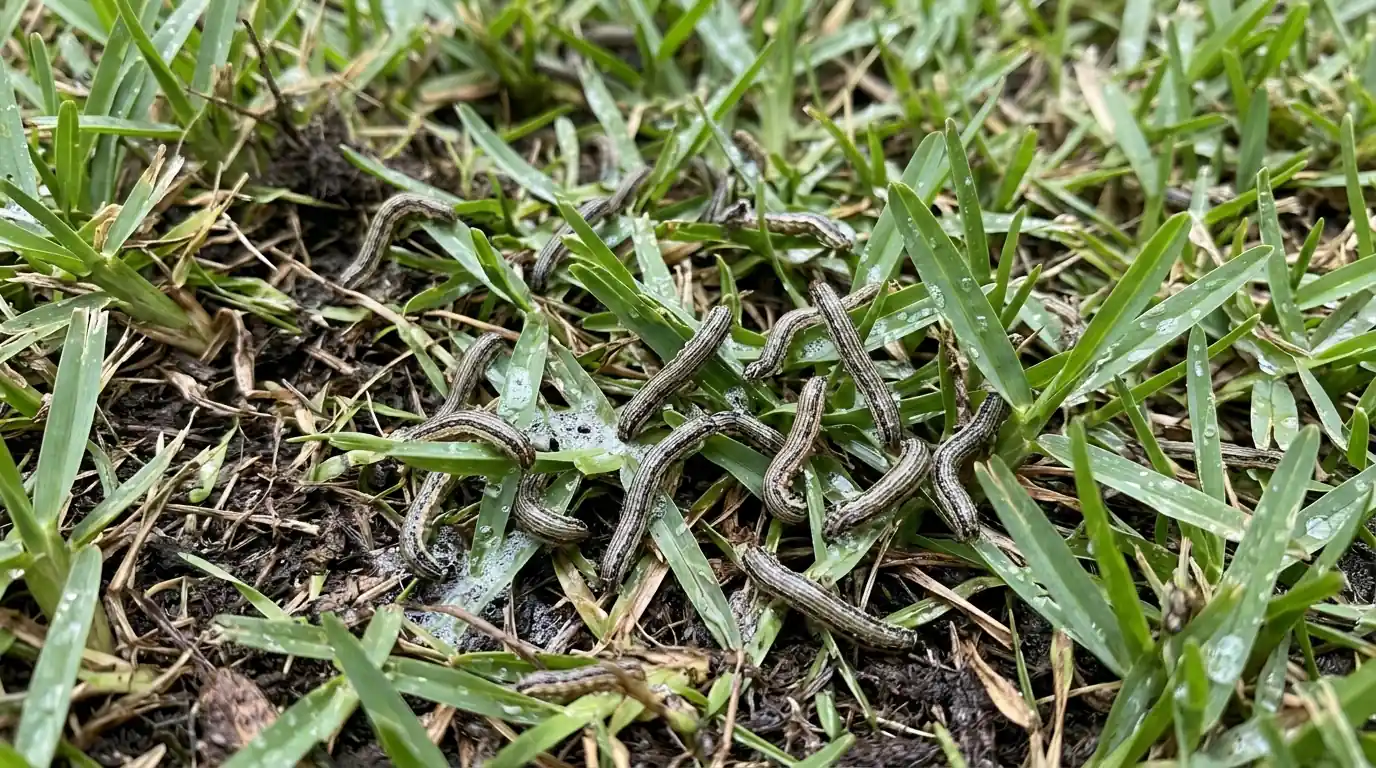
Fall armyworms damage Florida turf in both spring and fall. They feed in the early morning and late evening and leave bare patches spread across a wide area rather than one tidy spot. New sod that was heavily fertilized in late summer is most at risk.
A tablespoon of dish soap in a gallon of water, poured over a four-by-four foot square, brings the caterpillars to the surface within a few minutes. When they show up in numbers, we treat the whole affected area, not just the bare patch. Armyworms move ahead of the visible damage.
Grass loopers feeding alongside webworms
Grass loopers are striped caterpillars that move with an arching, inchworm-like crawl. They chew grass blades much like webworms and often share the same lawns. One soap flush can bring up both.
From a distance their damage looks the same: ragged blades and thinning turf. Up close, loopers are usually fewer in number than webworms, and they rarely strip a lawn on their own. We treat them in the same evening application used for webworms, so you are not paying for a separate visit. The follow-up flush then confirms the feeding has stopped for both caterpillars.
How a caterpillar treatment runs
- 1
Soap flush
We pour soapy water over a small square at the damage edge and count what comes up.
- 2
Identify and price
You hear which caterpillar it is, how far it has spread and the price, before we treat.
- 3
Evening treatment
We treat late in the day so the product is on the blades when caterpillars feed.
- 4
Keep-off time
We tell you how long to keep pets and children off the grass and when to water.
- 5
Recheck
We flush the edge again to confirm the feeding has stopped and the grass is regrowing.
Caterpillar season in Tampa lawns
Tampa's rainy season runs from late May through October, with afternoon storms most days, and lawns grow fast in that heat and humidity. Sod webworms feed from spring through fall, and fall armyworms hit Florida turf in both spring and fall. The warm months bring steady pressure. New sod laid in late summer and fed heavily is the most at risk. If you are putting down new grass, ask us to check it for armyworms in the first weeks after it goes in.
Running your own soap flush
| Task | Doing it yourself | When to call us |
|---|---|---|
| Soap flush | Mix a tablespoon of dish soap per gallon of water and pour it over a four-by-four foot square | Caterpillars come up in numbers within a few minutes |
| Evening walk | Walk the lawn at dusk and watch for small moths rising from the grass | Moths are many and the grass is thinning |
| Mowing | Raise the mower height so the lawn has more blade to lose | Patches keep spreading after mowing changes |
| New sod | Watch new grass closely and go easy on late summer fertilizer | New sod shows bare patches in the first weeks |
Chewed blades with no caterpillars in the flush may be mower damage or disease; we can tell you which on a visit.
What lawn caterpillar treatment costs in Tampa
- Lawn size
Bigger lawns take more product and more time on each pass. - Area affected
Armyworms spread across wide areas, which can mean treating the whole lawn. - How fast it is moving
Heavy feeding may need a second application to stop it. - Grass type
St. Augustine, bermuda and zoysia lawns need different product choices. - Plan or one-time
A yearly lawn pest plan includes checks through the caterpillar months.
Product names you may hear on this job
- Acelepryn
- Talstar
- Arena
- Celsius
- Headway
- Heritage
- Dylox
- Merit
- TopChoice
- Advion Fire Ant