Updated October 2026
A termite inspection in Tampa is a full check of the house for wings, mud tubes, pellets and damaged wood, inside the rooms, up in the attic and around the foundation. The point is to name the species, because drywood and subterranean termites need different treatments, and some finds turn out not to be termites at all.
What an inspector is actually looking for in a Tampa house
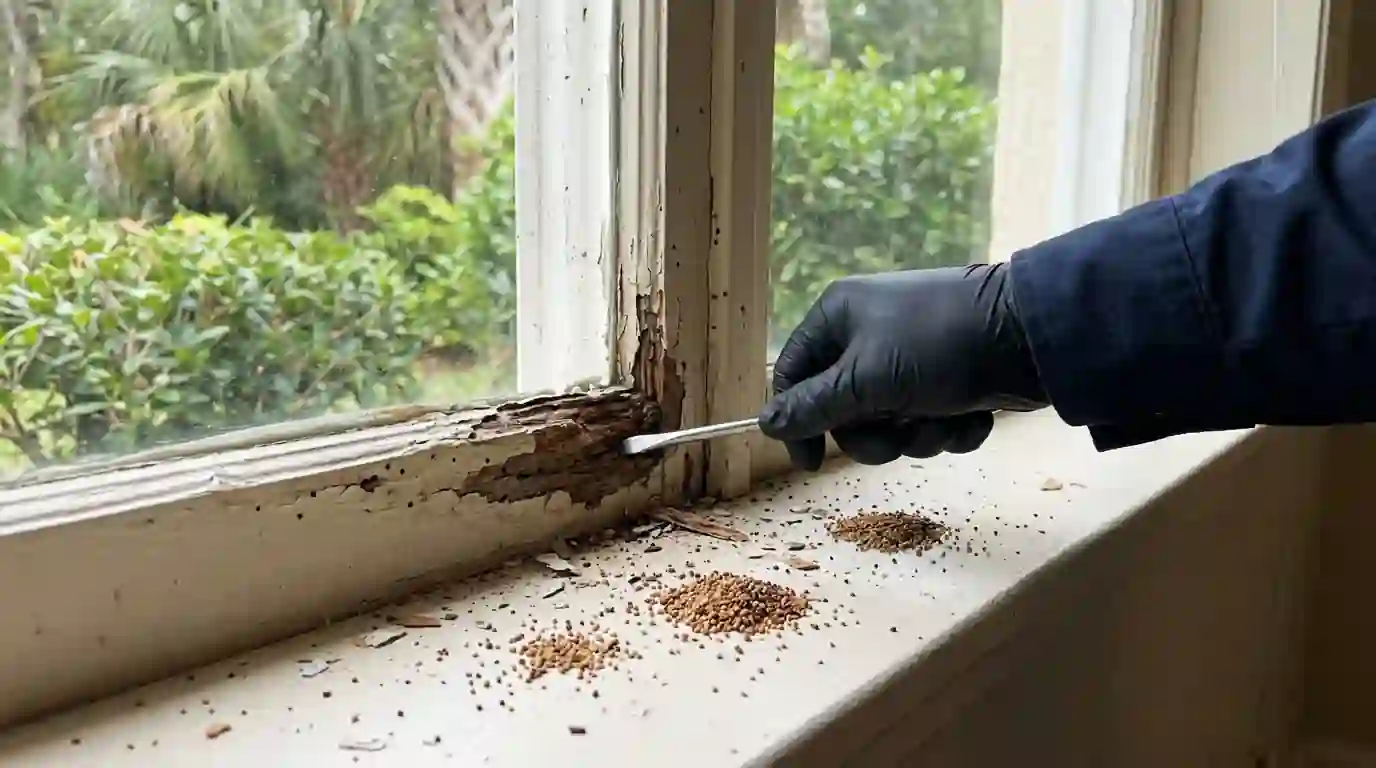
Termites stay hidden inside wood or soil, so an inspection is mostly detective work. Subterranean species leave mud: shelter tubes on the stem wall, mud packed into cracks, soil lines on drywall. Drywood termites leave dry, six-sided pellets pushed out of tiny holes. Both groups shed wings after a swarm, usually near windows and lights, and those wings are often the first thing a homeowner notices.
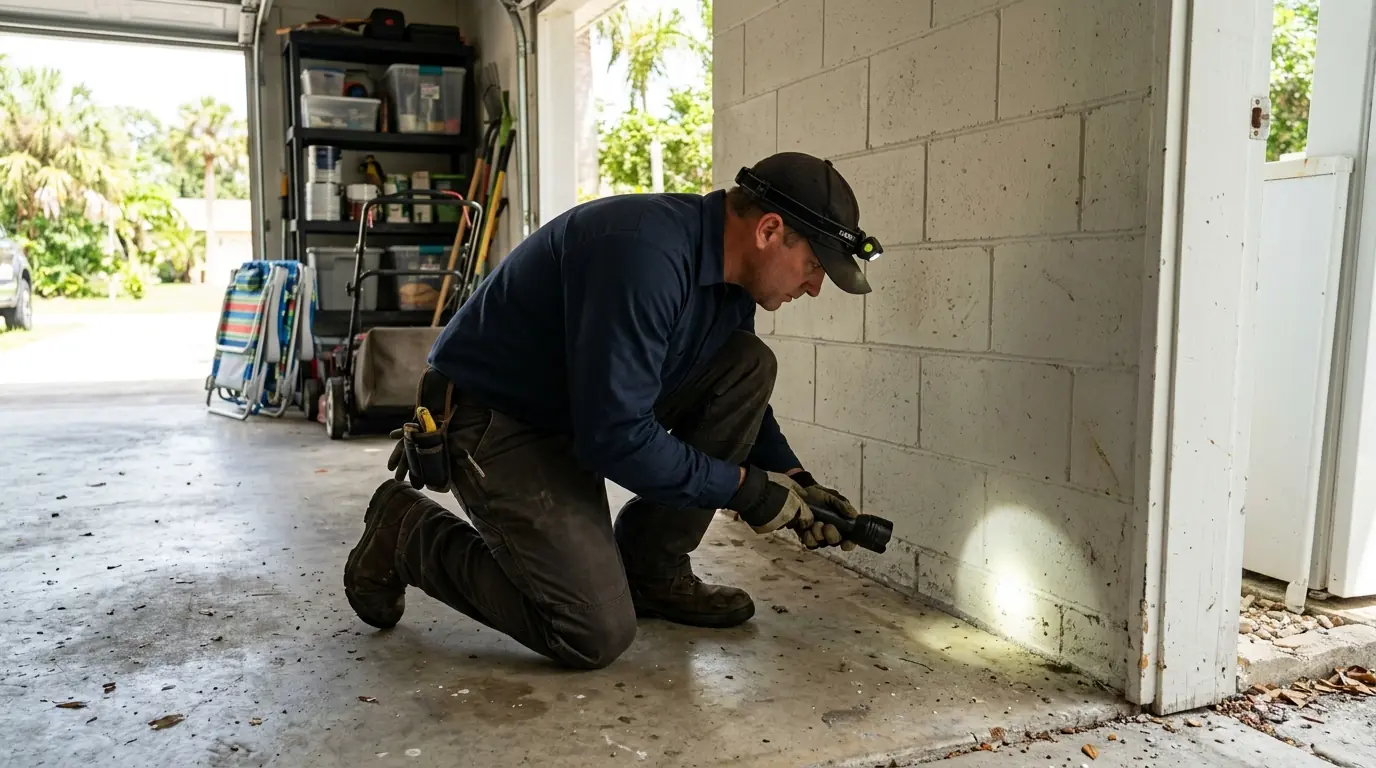
We go room by room, then through the attic and garage, then around the outside of the house. Along the way we sound wood that seems hollow and check where pipes and wires pass through the slab. Before we leave, you hear what we found, what species it points to, and whether anything needs treating. Sometimes the honest answer is nothing.
What the inspection covers
Every inspection follows the same order, so no part of the house gets skipped.
- A walk-through of every room, closet and cabinet base
- The attic, wherever access and insulation allow
- Garage walls, the water heater and plumbing penetrations
- The exterior foundation, eaves and wood trim
- Wing and pellet samples matched to a species
- A plain explanation of the findings, with any treatment priced before work starts
Found wings or mud on a wall? Bag a few and call us.
Call (813) 471-5363Checking swarmer wings on sills and light fixtures
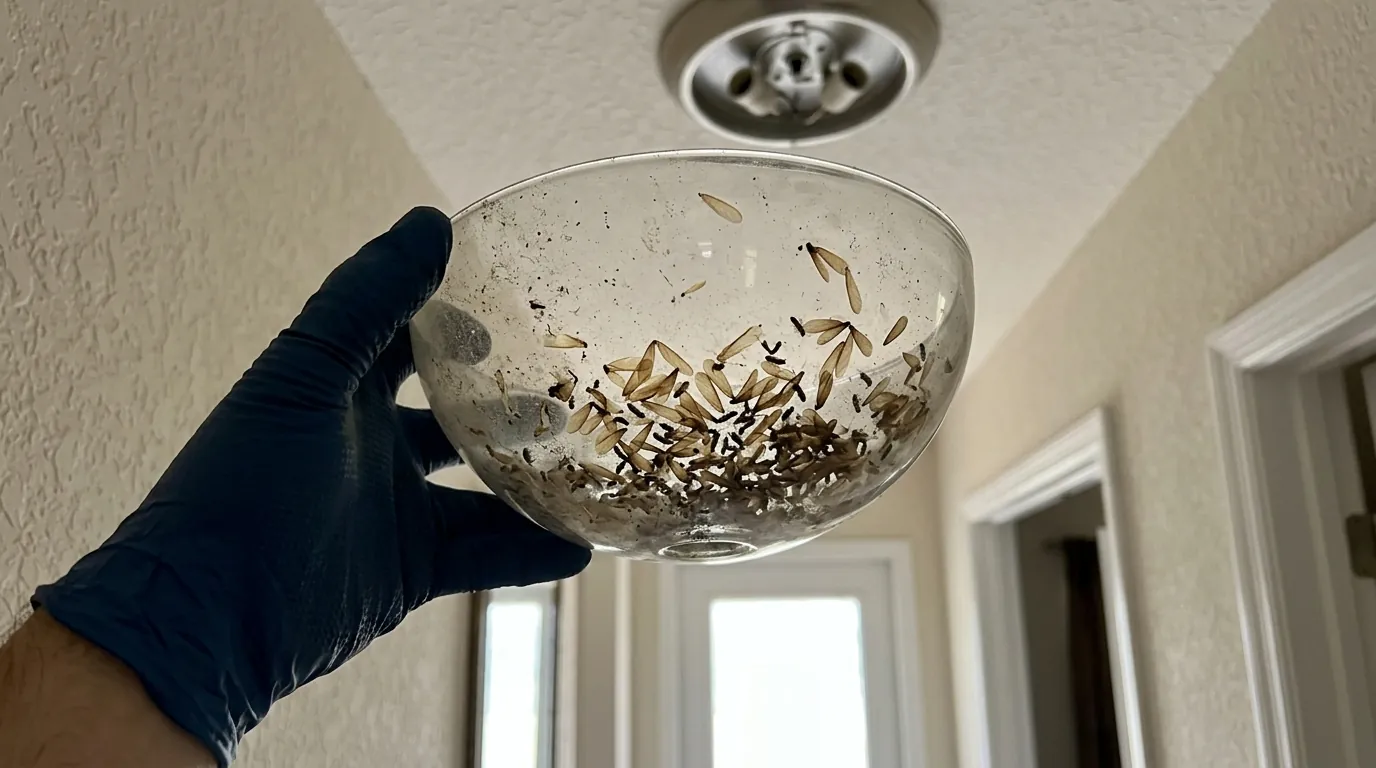
Piles of shed wings on a windowsill, a tub ledge or inside a light globe usually mean a swarm came from inside the house, or flew in toward the lights. Termite wings are all the same length. Flying ants have a longer front pair, a pinched waist and bent antennae. We bag a sample, look at it under magnification, and match it to the species.
Timing helps too. Eastern subterranean flights run from January into April, Asian subterranean termites fly in March near sunset, Formosans start in late April, and drywood swarmers show up from March to June. Wings found in February point to a different culprit than wings found in May.
Following mud tubes up the slab and stem wall
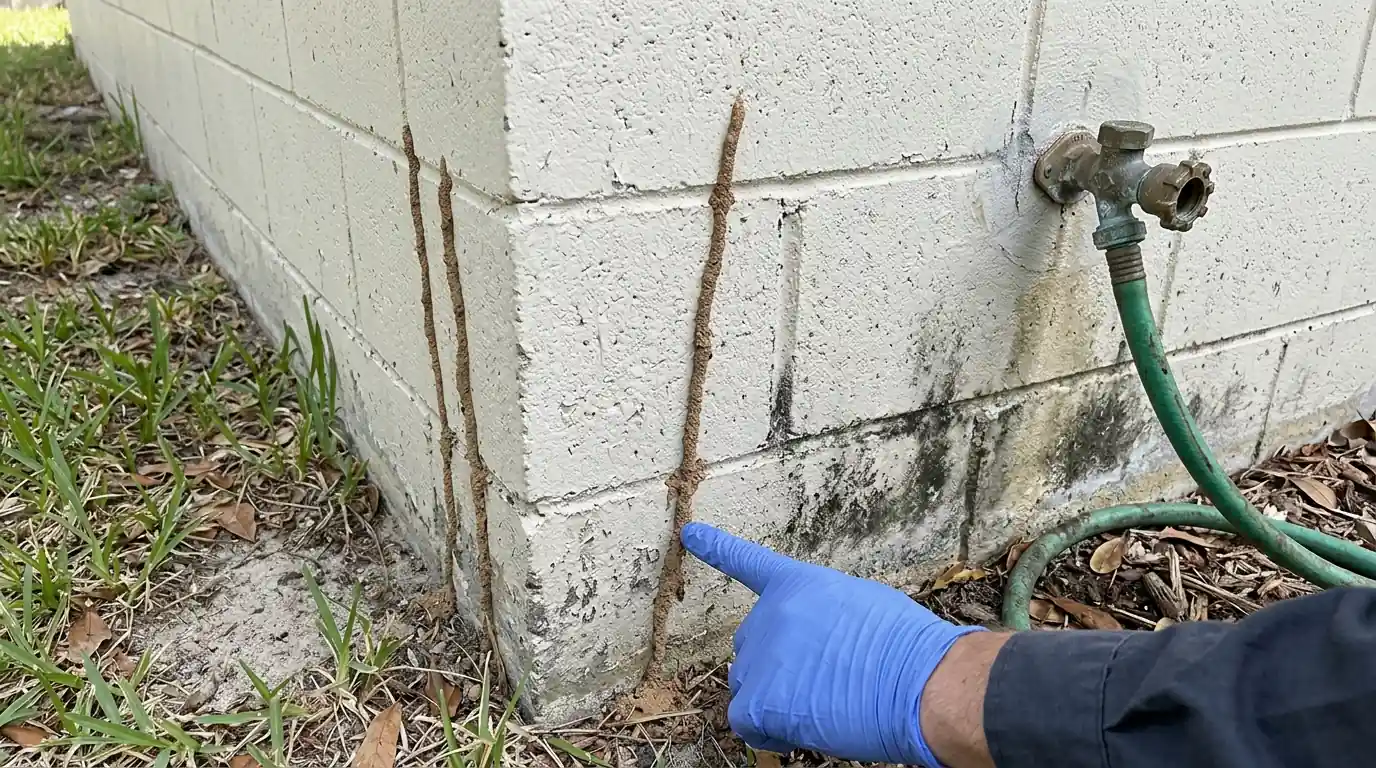
Subterranean termites dry out in open air, so they build pencil-width tubes of soil and saliva to travel from the ground to the wood. We look for them on block foundations, along plumbing that runs through the slab, behind water heaters, on garage walls and inside expansion joints. A short section gets broken open: fresh, moist tubes with workers inside mean an active colony, while dry, crumbling ones may be old.
Not every tube is termite work. Big-headed ants build fragile debris tubes along foundations that look similar at a glance. Telling the two apart keeps you from paying for a termite treatment you do not need.
Reading pellets and frass around wood trim
Drywood termites push their droppings out of tiny kick-out holes, so we look for small piles of hard, six-sided pellets under sills, door frames, cabinets and furniture. Fresh pellets pile up again after you sweep them. That makes a simple test before we arrive: clean the spot, then check it again in a few days.
Powderpost beetles leave flour-like dust instead of pellets, and carpenter ants push out coarse debris mixed with insect parts. The shape and texture of what falls out of the wood tells us which pest made it, and that decides the treatment.
Why timing matters for a Tampa termite check
Florida has about 20 established termite species, more than any other state, and a Tampa house can meet several of them. Activity is easiest to spot from March through June, and most swarms come between mid-April and early May. Drywood droppings are different: they can turn up in any month around cabinets, windowsills and wood furniture, so a December inspection can still find an active colony. Booking in spring simply catches the swarm evidence while it is fresh.
Five signs a Tampa house is due for a termite check
Piles of shed wings on sills, tub ledges or under lights after a warm evening.
Thin brown tubes climbing the slab edge, a garage wall or a pipe chase.
Tiny six-sided droppings that reappear under trim after you sweep them up.
Baseboards or door frames that sound papery when tapped or dent under a thumb.
Rippled paint, pinholes or soil lines on drywall where termites feed behind it.
What a termite inspection costs in Tampa
- Home size
More rooms, more trim and a longer foundation take more time to check. - Attic access
A tight or heavily insulated attic slows the visit and limits what can be seen. - Crawl space or slab
Raised floors on piers add a crawl under the house to the visit. - Purpose of the report
A home-sale report on the state form is a different job from a homeowner check-up. - Samples to identify
Wings or soldiers that need a closer look under magnification add a little time.
How the inspection runs
- 1
Your call
Tell us what you saw and where, and keep any wings in a sealed bag.
- 2
Inside the house
We check every room, cabinet base, window and door frame, and the garage.
- 3
Attic and outside
We look over the attic framing, then walk the foundation, eaves and trim.
- 4
Identify the species
Samples are matched to drywood, subterranean or another wood pest.
- 5
Findings and options
You hear what we found, what it means, and the price of any treatment before it starts.