Updated October 2026
Bat exclusion in Tampa means fitting one-way devices at the openings bats use, so they leave at dusk and cannot return. Timing matters: FWC marks mid-April as the start of Florida's bat maternity season and urges owners to check their homes for bats before it begins. Once the bats are out, the gaps are sealed and the guano is cleaned up.
Why bats are moved out, never trapped or killed
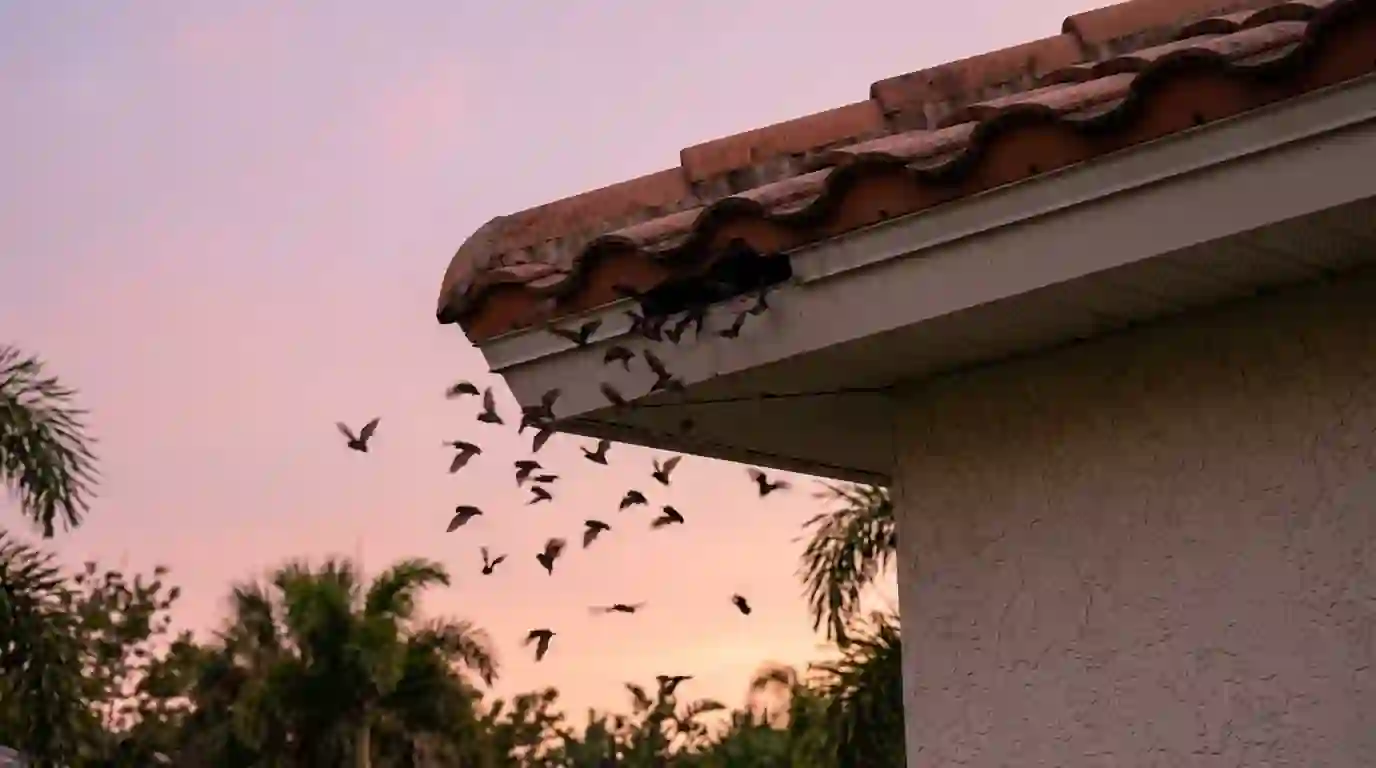
Bats eat night-flying insects and are not something you want dead in the walls. They also squeeze through narrow gaps at tile ends, soffits, fascia joints and shutters. Once a colony settles in, droppings pile up below the roost and the smell builds. The answer is to move them out, not to kill them.
Exclusion works with the way bats behave. They leave every evening to feed, so a one-way device over the roost opening lets them out and blocks the return. Every other gap is sealed first, and once the colony is gone the last opening is closed and the guano is removed.
What bat exclusion costs in Tampa
- Size of the colony
A large colony usually uses more openings, and each one needs a device or a seal. - Roof type
Barrel tile has many open ends that take more closure work than a shingle roof. - Number of gaps
Every crack along the fascia, soffit and shutters is sealed before the devices go up. - Height and access
Two-story walls and steep pitches add ladder time on every visit. - Guano cleanup
Droppings in the attic or on the ground are priced as a separate cleanup.
Bats leaving your roofline at dusk? Call before the season starts.
Call (813) 471-5363How one-way exclusion devices work
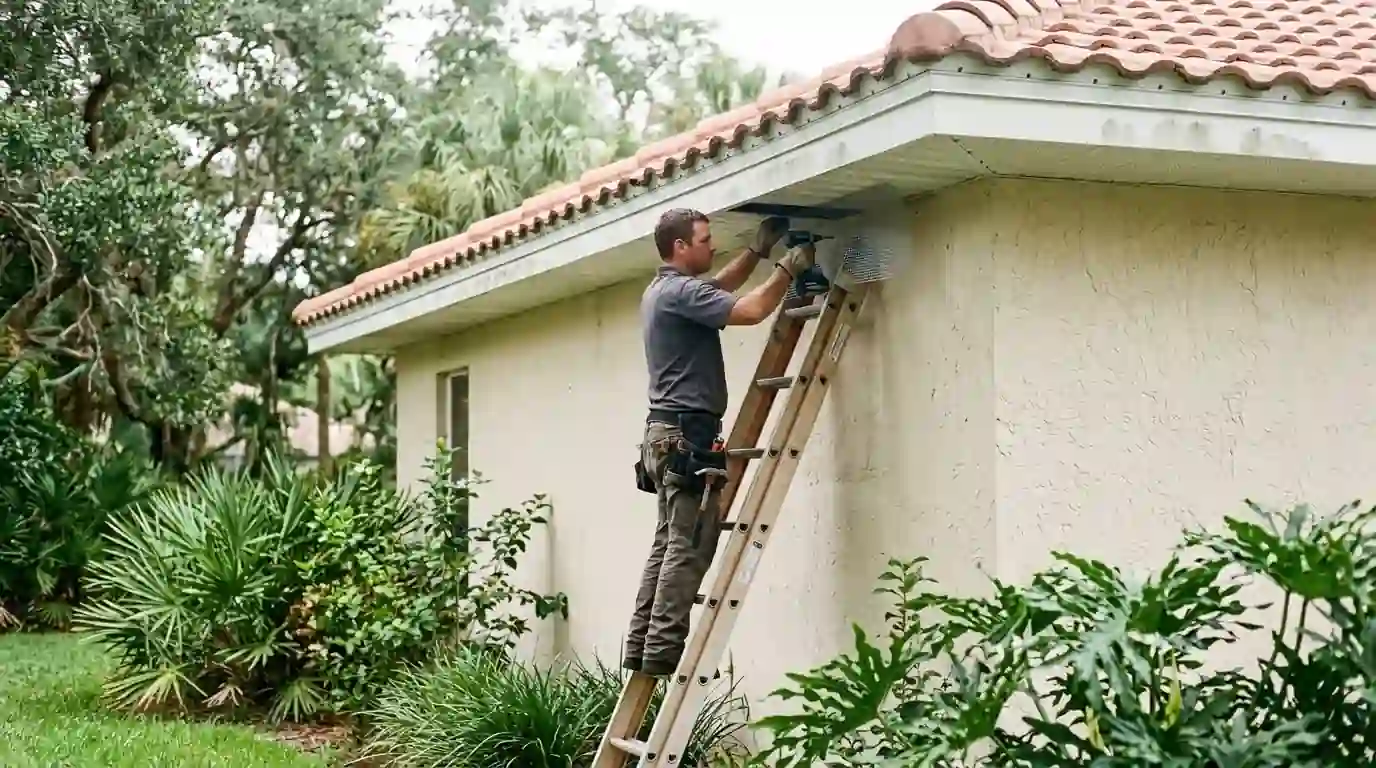
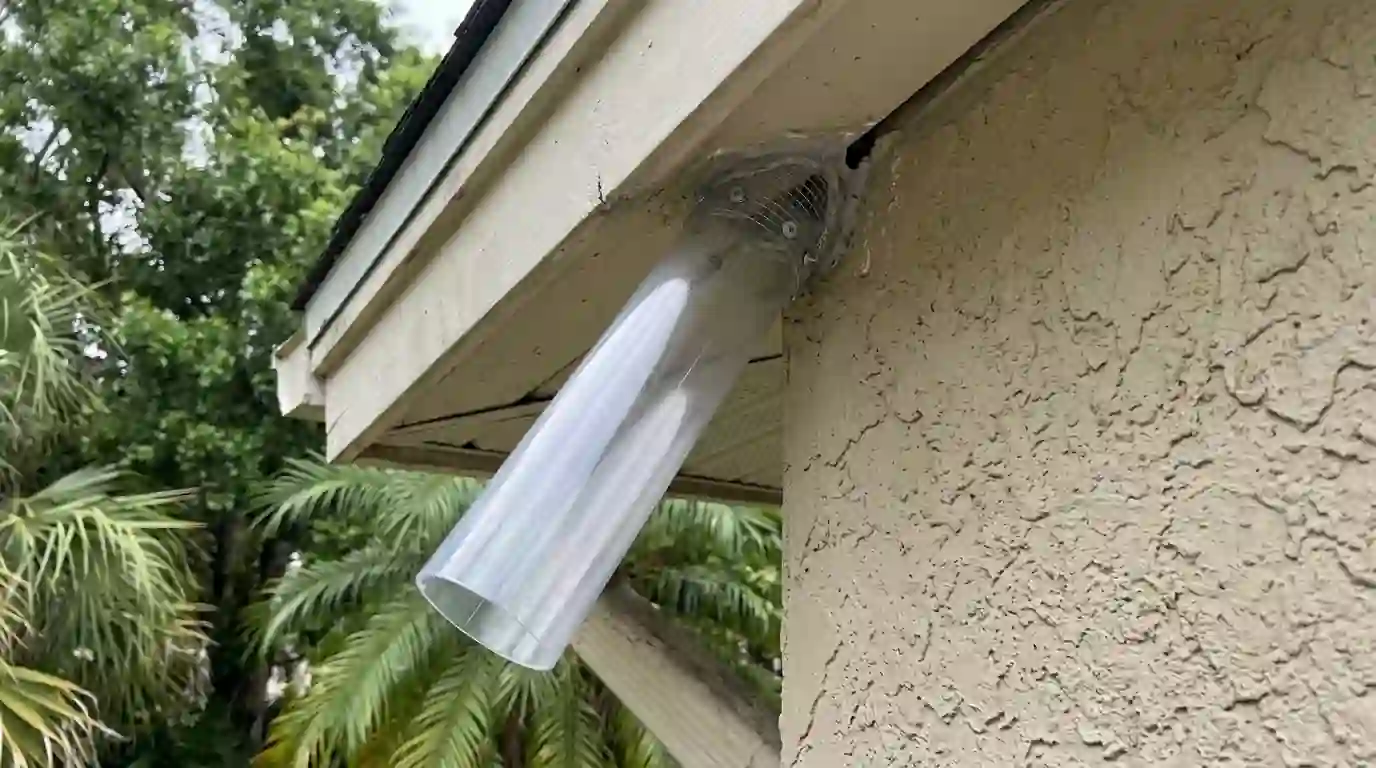
A one-way device is a tube or a mesh flap fixed over the opening the bats use. Bats crawl out and drop away to fly, but they cannot find their way back through it. Before the devices go up, we watch the house at dusk to see every opening in use. Gaps the colony is not relying on are sealed first.
The devices stay in place for several nights so every bat has a chance to leave. When no bats are seen leaving and none are found roosting, the devices come off. The openings are then sealed with materials that suit the roof and wall.
Planning around the bat maternity season
FWC's yearly notice marks mid-April as the start of Florida's bat maternity season and asks homeowners to check for bats before it begins. During that season, mothers raise young that cannot fly yet. An exclusion then would shut those pups inside to die.
So the time to look is before mid-April. If you see bats at the roofline, call early so the work can be planned. When bats are found after the season has started, we tell you on the call and schedule the exclusion for once the young are flying.
Cleaning up guano after the colony leaves
Bat droppings collect below the roost, in the attic over the ceiling, inside wall cavities, or on the ground and lanai under an outside roost. They dry into dust that should not be swept or blown around.
After the bats are gone and the gaps are closed, we remove the guano with respirators and HEPA equipment, bag it, and treat the surfaces underneath. When guano has soaked into attic insulation, we quote that section as an attic cleanup with insulation replacement.
Checking Tampa homes for bats before mid-April
Every year, FWC puts out a notice marking mid-April as the start of Florida's bat maternity season. It reminds owners to check their homes for bats before then. For Tampa homeowners, that makes the weeks before mid-April the time to stand outside at dusk and watch the roofline. Look under tile ends, around shutters and along fascia joints, and note any droppings stuck to the wall below. If you see bats, call before the season starts and we will plan the work.
How a bat exclusion job runs
- 1
Dusk inspection
We watch the roofline as the bats leave to find every opening they use.
- 2
Price and timing
You hear the price and the plan, set around the maternity season.
- 3
Seal secondary gaps
Gaps the colony is not using are closed so the bats leave by the main roost openings.
- 4
Fit one-way devices
Devices go over the active openings and stay up until no bats are left.
- 5
Seal and clean
Devices come off, the last openings are sealed, and the guano is removed.
How long a bat exclusion takes
Expect the job to run over several visits, not a single afternoon. The inspection and sealing come first, then the devices stay on for several nights so every bat has time to leave on its own.
Guano cleanup comes last, once the house is confirmed empty. If the timing falls inside the maternity season, the start date moves, and we tell you that plainly on the call.
Signs bats are roosting in your home
Small dark shapes dropping from the roofline and flying off right around sunset.
Small dark pellets piled on the ground, a window ledge or the lanai under one point on the eave.
Dark, greasy smudges around a gap at a tile end, shutter or fascia joint.
Faint squeaking or rustling in a wall or attic, often loudest near dusk.
A strong ammonia odor in the attic or near the roosting wall.