Updated October 2026
Bed bug treatment in Tampa starts with confirming the bugs, because bites alone can come from many things. Then the infested rooms are treated with heat, which raises everything in the room past what bed bugs and eggs survive, or with residual products and dusts placed in seams, cracks and furniture. Either way, a follow-up inspection confirms nothing hatched afterward.
Signs it really is bed bugs
Small dark stains on sheets, mattress seams or the box spring, left by the bugs' droppings.
Pale, empty casings along seams, in the bed frame or behind the headboard.
Clusters of pinhead-sized eggs tucked into fabric folds and wood joints.
Flat, apple seed sized reddish-brown bugs in seams, tufts or couch cushions.
A distinct odor in rooms with a heavy infestation.
Why bed bugs take a plan, not a spray can
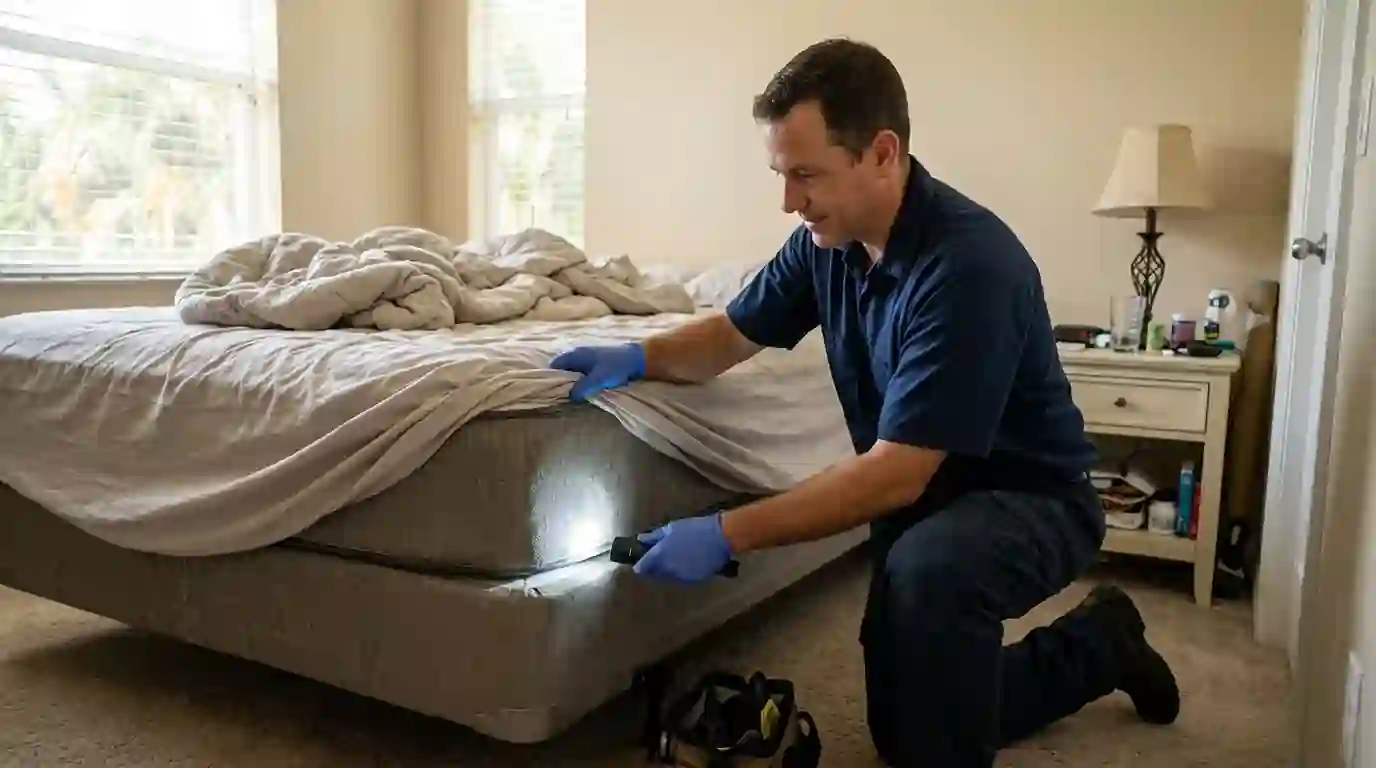
Bed bugs are flat enough to hide in a mattress seam, a screw hole in a bed frame or the gap behind an outlet cover. They come out to feed while people sleep. Over-the-counter foggers do not reach them, and spraying a room can scatter them into the walls and the next room. Eggs are the other problem: many products do not kill them, so a treatment that looks finished can restart once they hatch.
We start with an inspection of the beds, couches and surrounding rooms to confirm the bugs and map how far they have spread. You then hear which method fits, what the prep involves, and the price. Heat suits many single-family homes. A chemical program fits where heat is impractical or the infestation is light.
Found a bug in the mattress seam? Bag it and call us.
Call (813) 471-5363Whole-room heat treatment
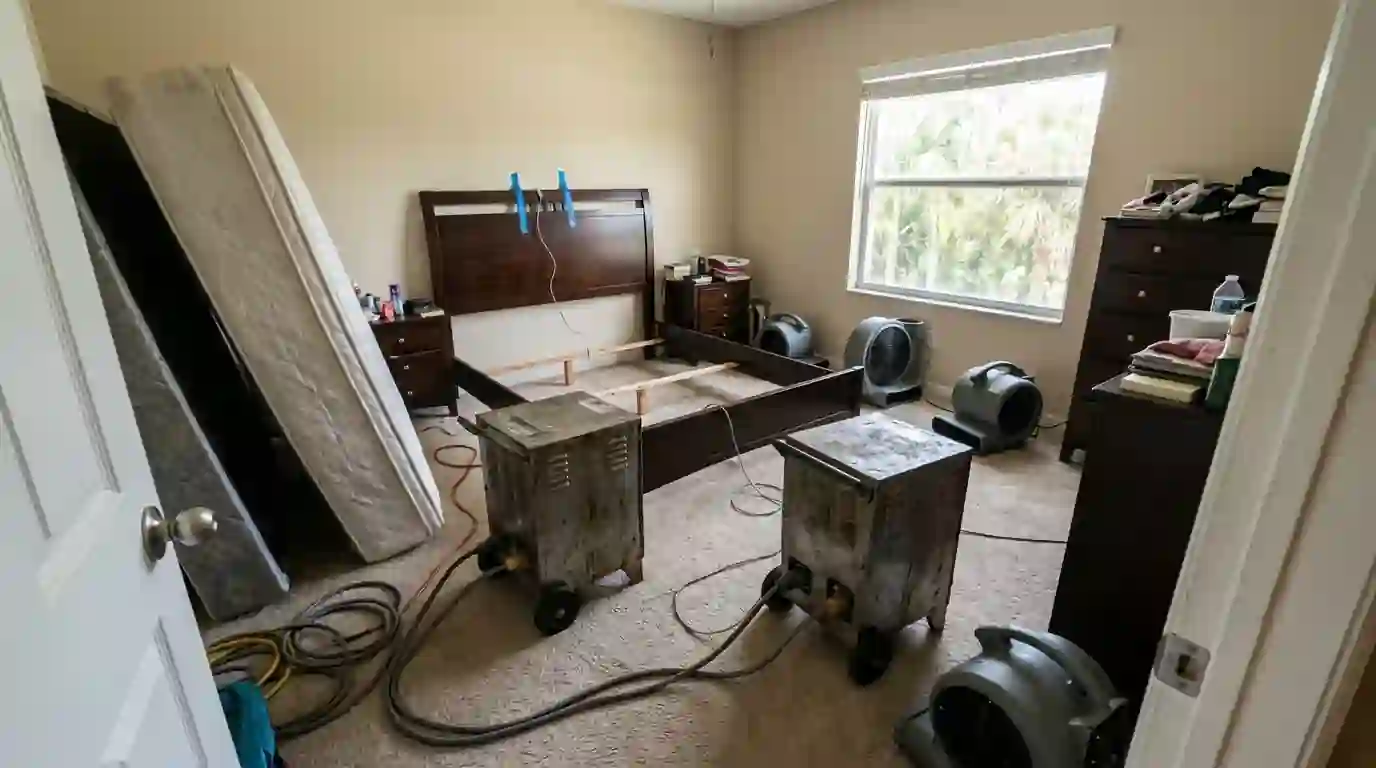
Heat treatment uses electric heaters and fans to raise the room, the furniture and everything in it to a temperature bed bugs and their eggs cannot survive. The heat is held long enough to reach deep into mattresses, couches and closets. Sensors placed in the hardest-to-heat spots tell us when the whole room has reached the target.
Because heat kills eggs as well as adults, it can clear a room in a single visit, and it leaves no residue on bedding. The prep matters: anything that melts or is pressurized, plus pets and plants, comes out of the rooms. We give you the list when the job is booked.
Residual products and dusts
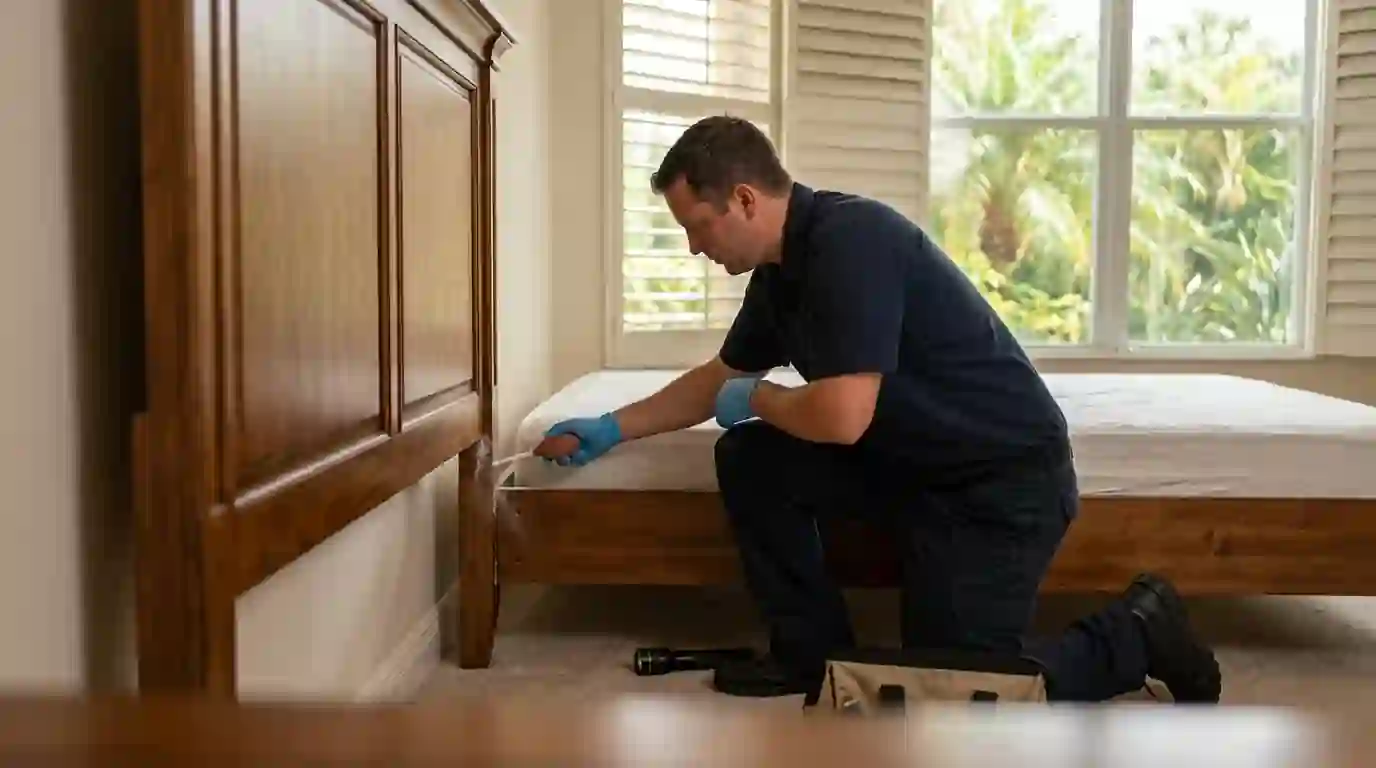
A chemical program places residual products in the cracks, seams and joints of beds and furniture and along baseboards. Desiccant dust goes into wall voids, outlets and the hollow spaces behind headboards. Bed bugs pick up the product as they travel to feed. Mattress and box spring encasements trap any left inside and make the next inspection easier.
Since many products do not kill eggs, chemical treatment usually takes more than one visit, timed so newly hatched bugs are caught before they can lay eggs of their own. We tell you how long to keep people and pets out of treated rooms after each visit.
Follow-up inspections after treatment
The follow-up visit is where we confirm the job worked. We recheck the beds, couches and baseboards, look at the encasements, and read the interceptor cups under the bed legs that catch bugs trying to climb up. Bites alone are not proof either way, so we look for live bugs, fresh spots and new eggs.
If we find activity, the next step is planned around what we found, whether that is another chemical visit or a heat treatment in one room. Tell us right away about new bites, new spots or a guest who stayed over, because catching a reintroduction early keeps it small.
How a bed bug job runs from first call to clear
- 1
Confirm the bugs
We inspect beds, furniture and nearby rooms for bugs, eggs, skins and spots.
- 2
Choose the method
You hear whether heat, chemical or both fit, and the price, before any work starts.
- 3
Prep
You follow the checklist for laundry, clutter and items to remove from the rooms.
- 4
Treat
The rooms are heated or treated, and encasements and interceptors are placed.
- 5
Reinspect
We come back to check for survivors and plan any next step.
Bed bugs in the Tampa Bay area
Bed bugs travel in luggage, used furniture and moving boxes, and a busy metro gives them plenty of rides. In June 2025, UF/IFAS cited a pest-industry ranking that placed Tampa Bay among the top 50 U.S. metros for bed bugs, though no Florida city made the top 10. UF/IFAS also says foggers do not work against them, which matches what we see after failed store-bought attempts. One step that does help on clothing: 20 to 30 minutes in a dryer on high heat kills them.
What you can do now, and what needs us
| Task | Doing it yourself | When to call us |
|---|---|---|
| Clothes and bedding | Run them through a hot dryer cycle and bag them clean | Bugs keep turning up after laundry |
| Checking the bed | Look along seams and corners with a flashlight | You find bugs, eggs, skins or spots |
| Foggers and sprays | Skip them; they scatter bugs and miss eggs | You already tried them and still see bugs |
| Used furniture | Inspect seams and joints before it comes inside | A piece is already in the house and infested |
Do not move to another bedroom or couch to sleep. The bugs follow, and the infestation spreads to new furniture.
What bed bug treatment costs in Tampa
- Number of rooms
Each infested room adds equipment time or product and labor. - Method
Heat and chemical programs are priced differently, per room or per square foot. - Clutter
Heavily filled rooms take longer to heat or treat thoroughly. - Furniture involved
Couches, recliners and headboards add hiding spots to treat. - Visits needed
Chemical programs usually need a return visit for hatching eggs.
Heat or chemical: which fits your home?
| Question | Heat treatment | Chemical treatment |
|---|---|---|
| Eggs | Killed along with the adults | Often survive, so a return visit is planned |
| Visits | Often one treatment visit plus a reinspection | Usually two or more visits |
| Residue | None left on bedding or furniture | Residual product stays in cracks and seams |
| Prep | Remove anything that melts, is pressurized or is alive | Laundry and decluttering around the beds |
Some homes get both, heat for the bedrooms and residual products as a backstop around them.
Product names you may hear on this job
- CimeXa
- Crossfire
- Temprid
- Aprehend
- Alpine
- Gentrol
- Altosid
- Talstar