Updated October 2026
Emergency pest control in Tampa covers the problems that cannot wait: a wasp or bee nest by a doorway, a rat in the living space, or termite swarmers inside the house. Our phones are answered 24/7, and the first thing you get is advice for right now, like which door to use or how to close off a room. Then we schedule the technician visit and tell you when.
What counts as a pest emergency
A pest emergency is anything that puts people or pets at risk of stings or bites, or that will get worse by the hour. A nest beside a busy door, rats in a room where children sleep, and a termite swarm pouring out of a wall all qualify. A few roaches at night, a slow ant trail or webs on the eaves can wait for a regular visit, and we say so honestly.
On the call, we ask what you see, where it is and who is in the house, then tell you what to do until a technician arrives: close a door, keep pets inside, leave the nest alone. You hear the price before work starts, and we explain whether the problem needs a follow-up visit after the urgent part is handled.
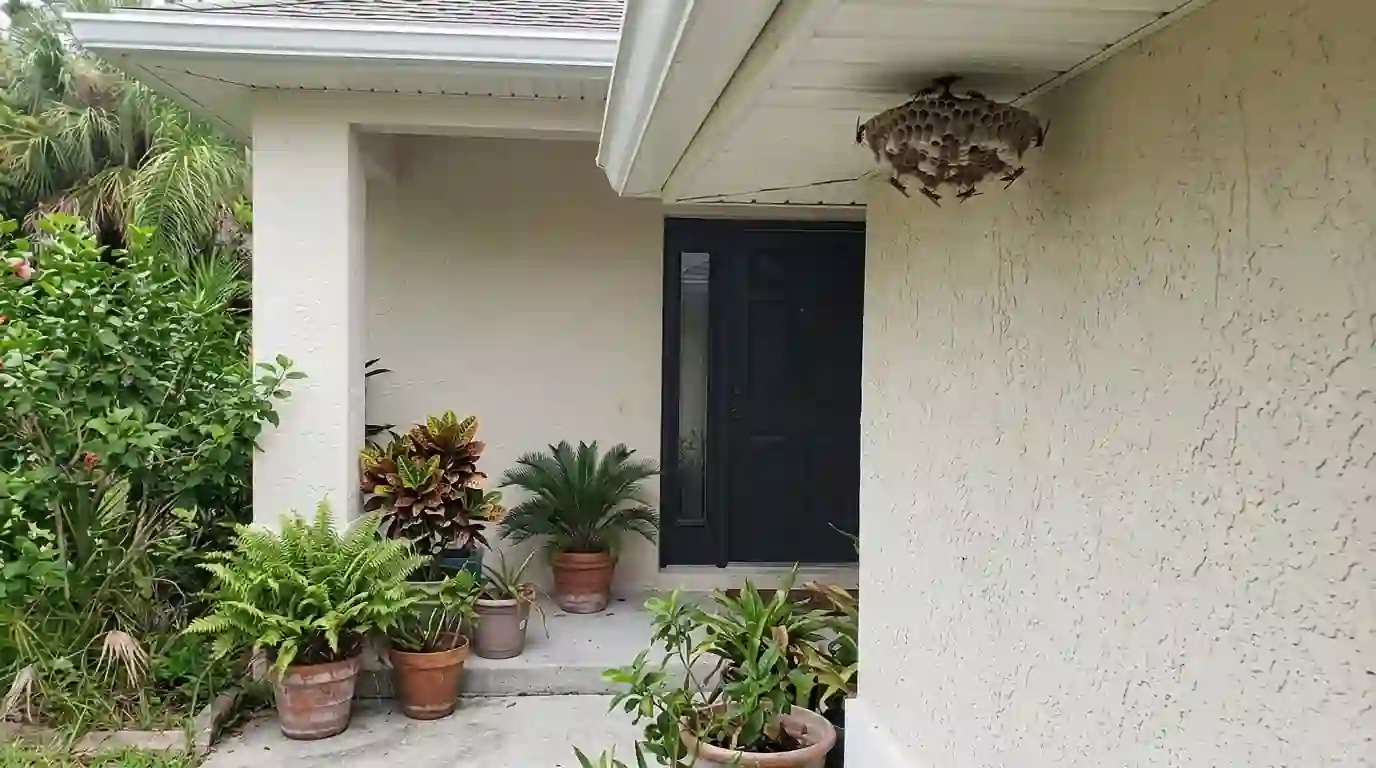
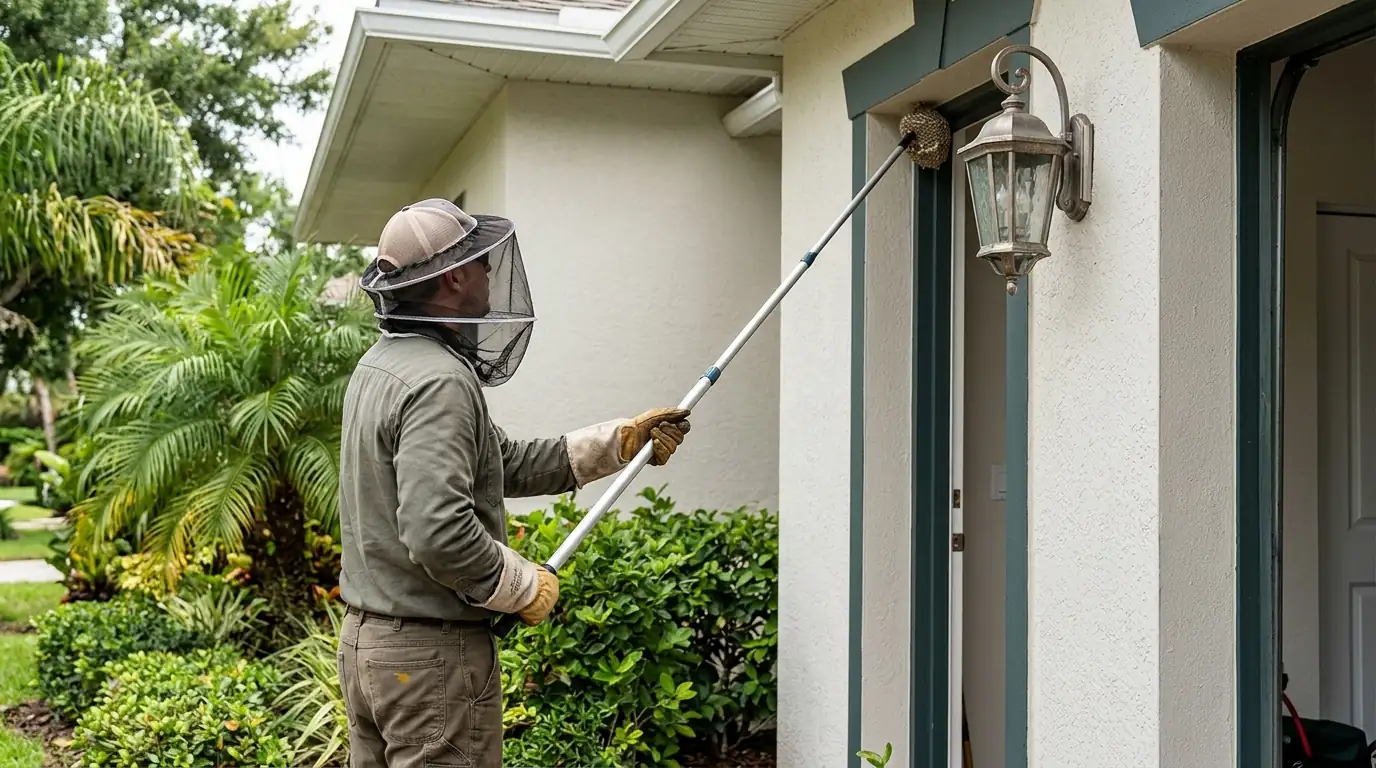
A wasp or bee nest next to the door
Paper wasps build open comb under eaves, door frames and light fixtures, yellow jackets nest in the ground or in wall voids, and honey bees can cluster on a soffit or move into a wall. All of them defend the nest, and a nest by a doorway means someone walks past it many times a day.
Until we arrive, use a different door, keep pets and children inside, and do not spray it, knock it down or block the opening, which can drive the insects into the house. Tell us if anyone in the house has had a bad reaction to stings, so we know to plan around it.
Something urgent tonight? A person picks up 24/7.
Call (813) 471-5363A rat in the kitchen or bedroom
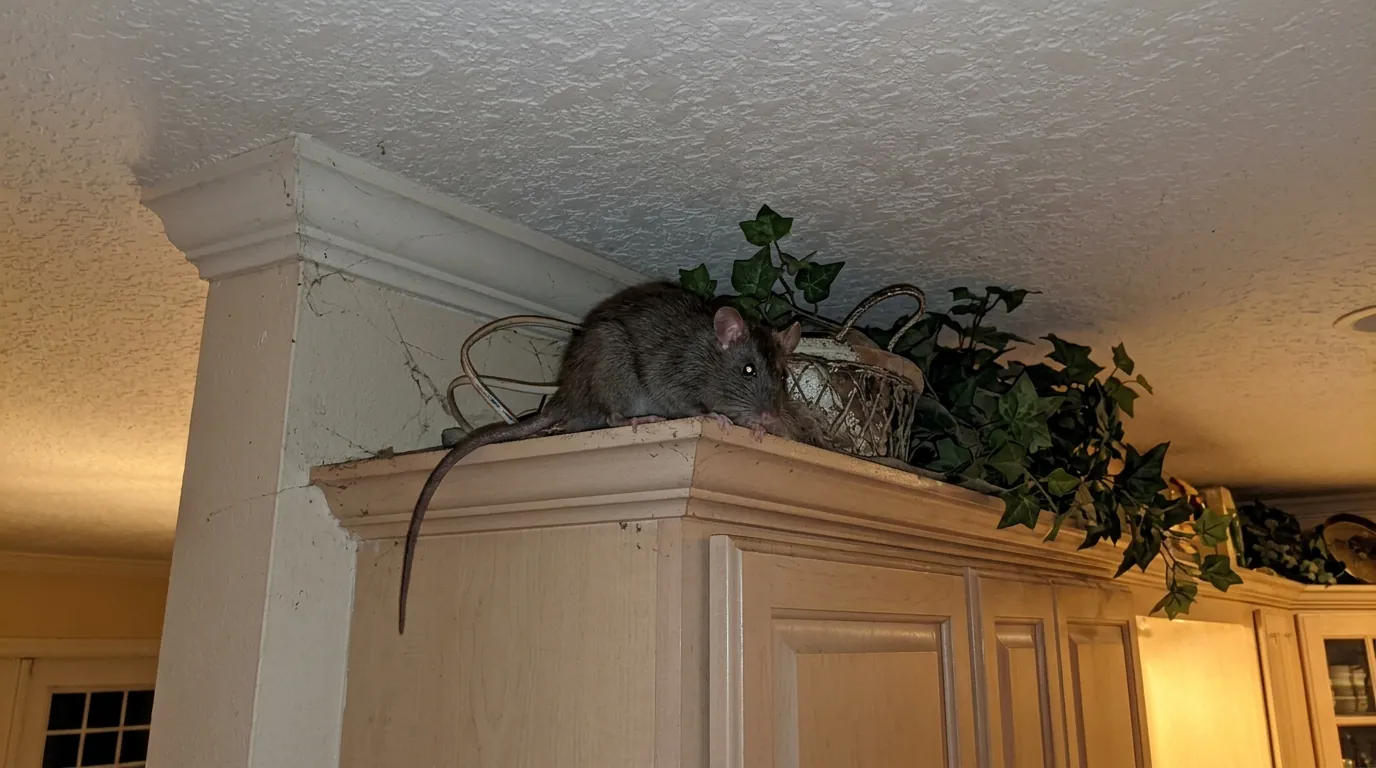
A rat in the living space has usually come down from the attic or up through a gap around plumbing, a dryer vent or the garage. In Florida, roof rats nest high in attics, palms and shrubs, and an opening of half an inch is enough for one to slip through.
Close interior doors to keep it in one room, put food and pet food away in sealed containers, and do not try to corner it. Do not touch droppings with bare hands. We set traps on the visit, find how it got in, and plan the sealing work so the next one cannot follow. The full approach is on our rat and mouse control page.
Termite swarmers inside the house
Hundreds of winged insects at a window or light, or a pile of shed wings on the sill, often means termite swarmers. When they emerge indoors, the colony is likely in the walls or under the floor rather than out in the yard.
The swarmers themselves do not chew wood and die quickly. Vacuum them up, but keep a few in a jar or zip bag for identification, because ants with wings look similar. Do not spray the wall they came from. A termite inspection confirms the species and which treatment fits.
What happens when you call
- 1
Answer and listen
A person picks up 24/7 and asks what you see, where, and who is home.
- 2
Advice for right now
You get clear steps to stay safe until a technician arrives.
- 3
Book the technician
You get a time and a plain outline of the visit.
- 4
Handle the urgent part
The nest comes down, traps go in, or the swarm is identified and the colony traced.
- 5
Plan the follow-up
If it needs sealing, trap checks or termite treatment, you get that plan and its price.
How long an urgent visit takes
Removing an exposed wasp nest is usually a short visit. A nest in a wall void, or bees that have built comb inside the structure, takes longer and may need part of the wall or soffit opened.
Rats and termites take more than one visit. Rat trapping runs over several checks while the entry points are sealed, and a termite swarm leads to a full inspection, then a treatment on a separate day. We tell you the timeline at the first visit.
Tampa seasons for swarms and rats
Around 20 termite species are established in Florida, and in this part of the state most of them fly in spring. Asian subterranean termites fly in March around sunset, Formosans peak in May and fly toward lights just after sunset, and drywood swarmers appear from March to June. Rats come in every month. Roof rats are common around Tampa, according to Tampa Bay Times reporting, and from the attic they find their way into kitchens with easy food.
What urgent pest calls cost
- Type of problem
A single wasp nest is a short job, while rats or termites lead to trapping or an inspection and treatment plan. - Nest size and height
Large nests, wall voids and high eaves take more time and equipment. - Honey bees
Bees living inside a wall need comb removal, which is a bigger job than an exposed nest. - Follow-up visits
Rats need trap checks and sealing, and termites need a treatment after the inspection. - Access
Tile roofs, tall soffits and tight attics add time to reach the problem.
What an urgent call includes
Here is what you get from the first call to the follow-up plan.
- A person answering the phone 24/7
- Advice to keep people and pets safe until we arrive
- A clear price before work starts
- Nest removal, trap setting or swarmer identification
- A look for how the pest got in
- A written plan for any follow-up visits