Updated October 2026
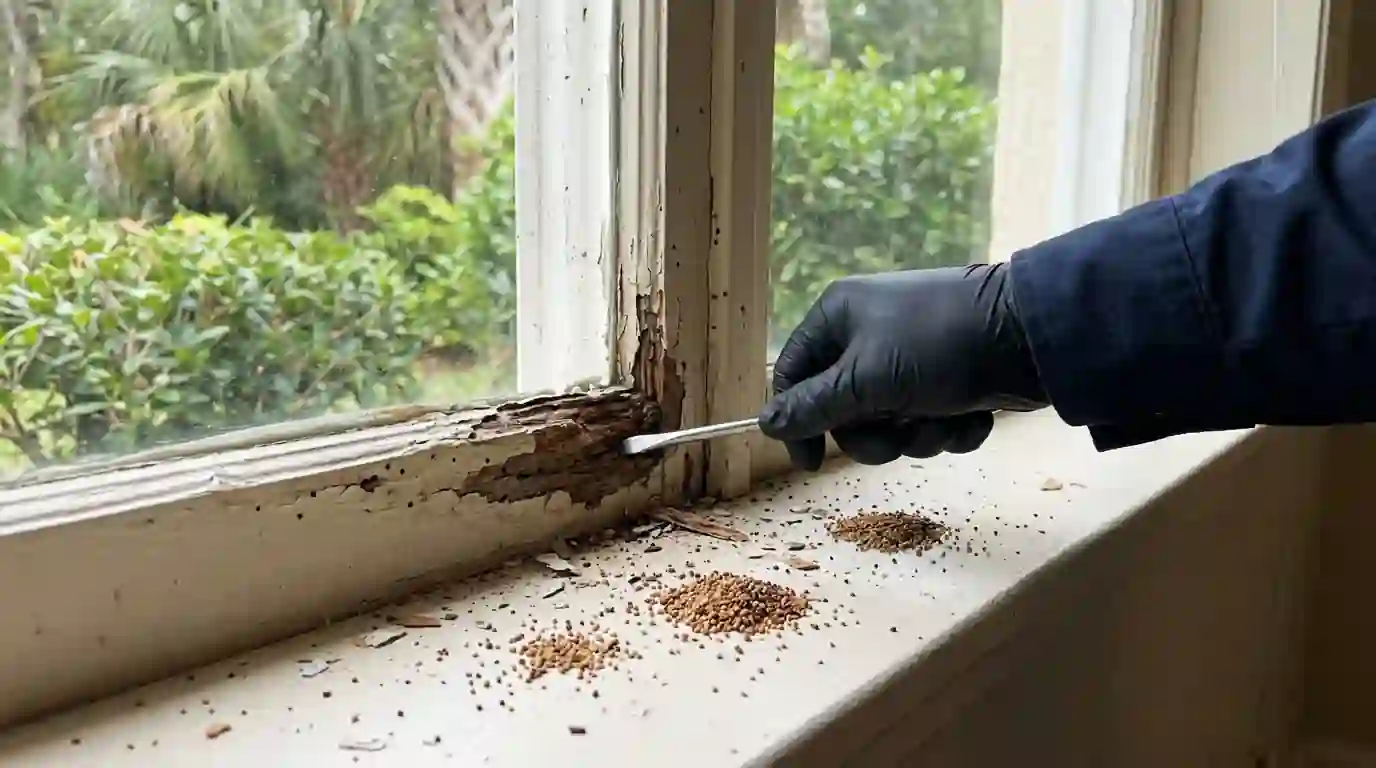
Termite bait stations in Tampa are capped tubes set into the soil around the house that subterranean termites find while foraging. Once workers are feeding, a slow-acting bait is shared through the colony until it declines. The system only works if someone checks the stations on schedule, so monitoring is part of the job.
How a bait system protects a Tampa house
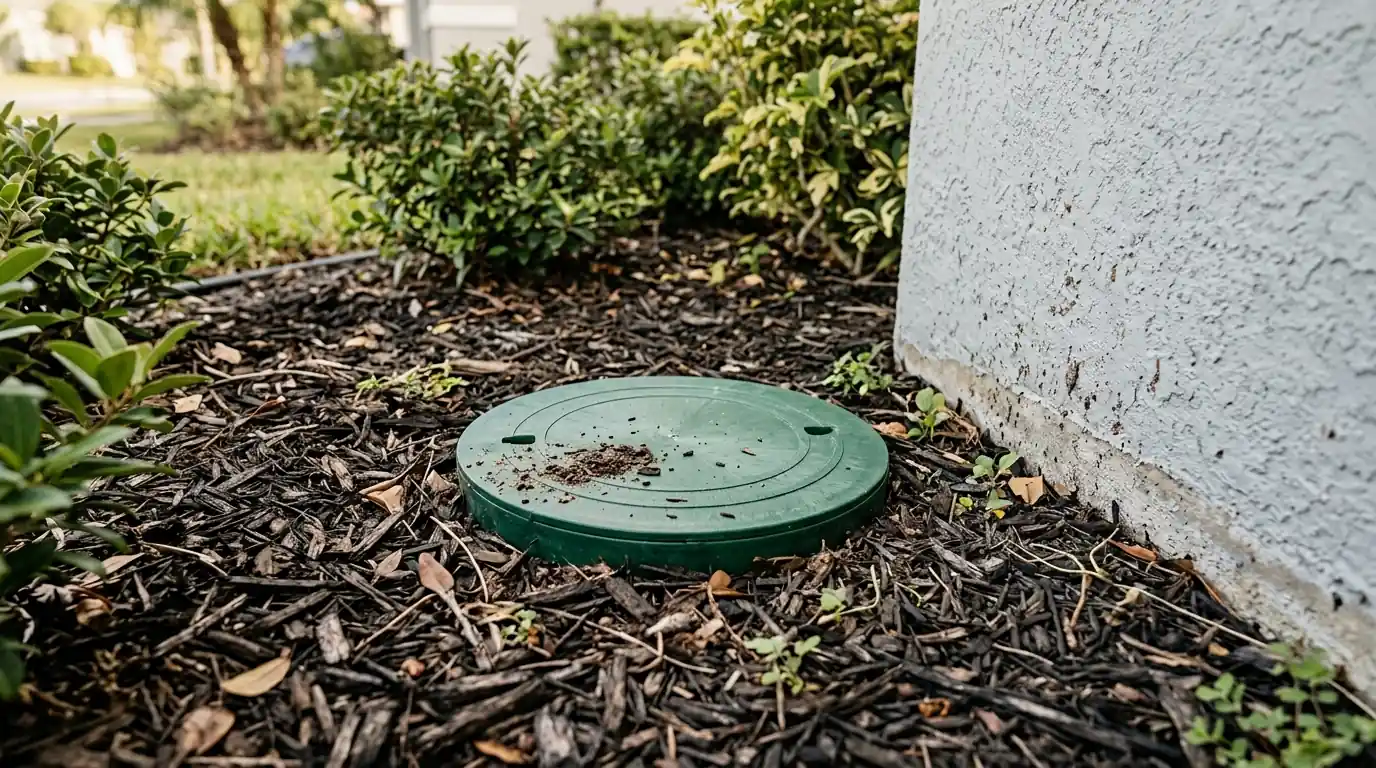
Subterranean workers spend their lives searching the soil for wood. A ring of stations around the house gives them something to find. Some systems start with a wood or cellulose monitor and switch to bait once termites show up. Others hold bait from day one. Either way, the active ingredient works slowly on purpose, so workers survive long enough to carry it home and pass it along.
Baits are a good fit where trenching is hard: patios and pool decks poured against the house, planter beds, or owners who would rather not have a liquid termiticide in the soil. They are not a quick fix for a swarm already inside, and on those jobs they are often paired with treatment where the termites are entering.
What a bait station program includes
The install is the start. Most of the value comes from the visits that follow.
- An inspection of the house and soil conditions first
- A station layout matched to the perimeter and moisture spots
- Numbered stations and a copy of the property map
- Scheduled monitoring visits with every station opened
- Bait replaced whenever termite feeding is found
- Notes on mulch, moisture or yard changes that affect protection
Have old stations nobody checks? Call and we will find them.
Call (813) 471-5363Installing stations around the house
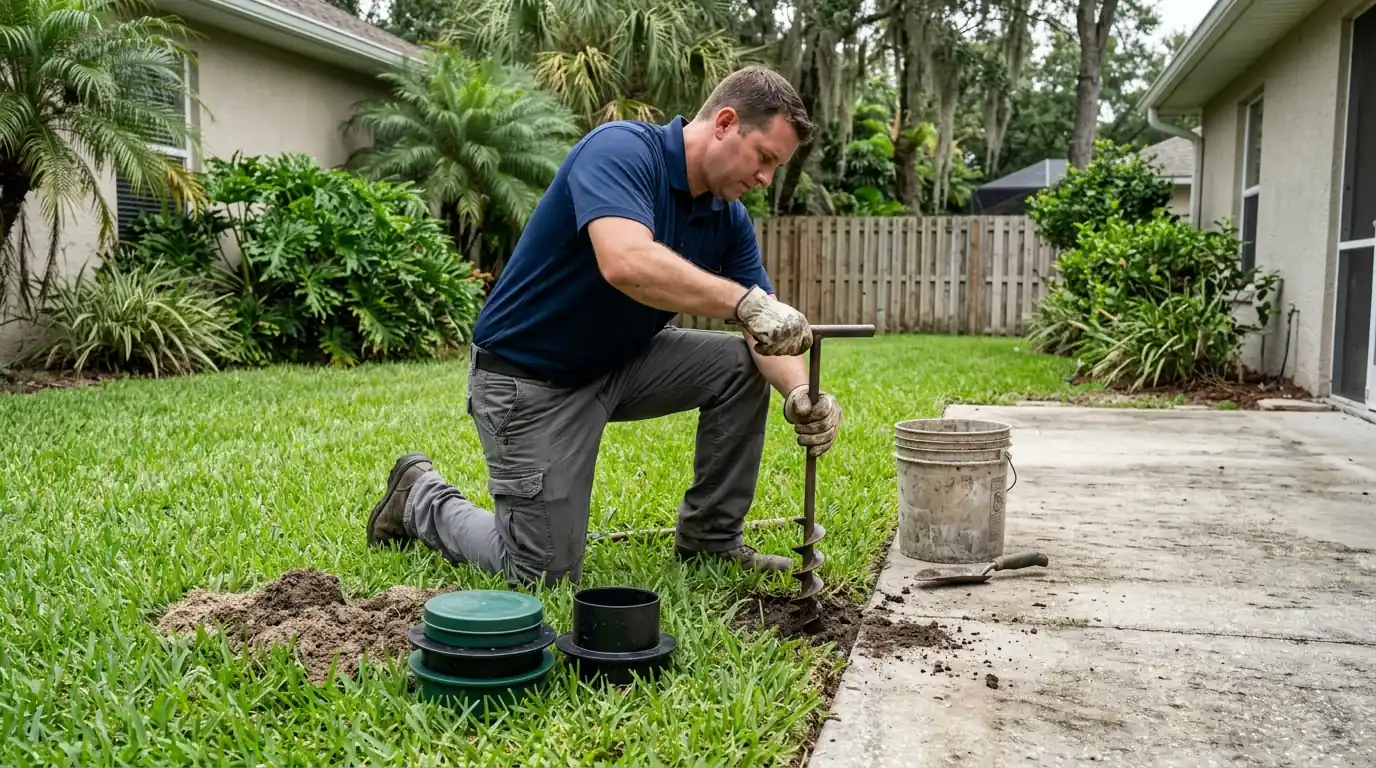
We walk the house first and mark station points around the perimeter, spaced so foraging workers are likely to cross one. Spacing tightens near spots termites favor: downspouts, AC drain lines, irrigation heads, wood mulch and any place the soil stays damp. Stations go in with an auger, set flush, and each one is numbered on a map of the property.
Where concrete covers the soil right up to the wall, stations go at the edge of the slab or in nearby beds instead. You get a copy of the map, which helps when landscapers or a new pool contractor are working near them.
What happens on a monitoring visit
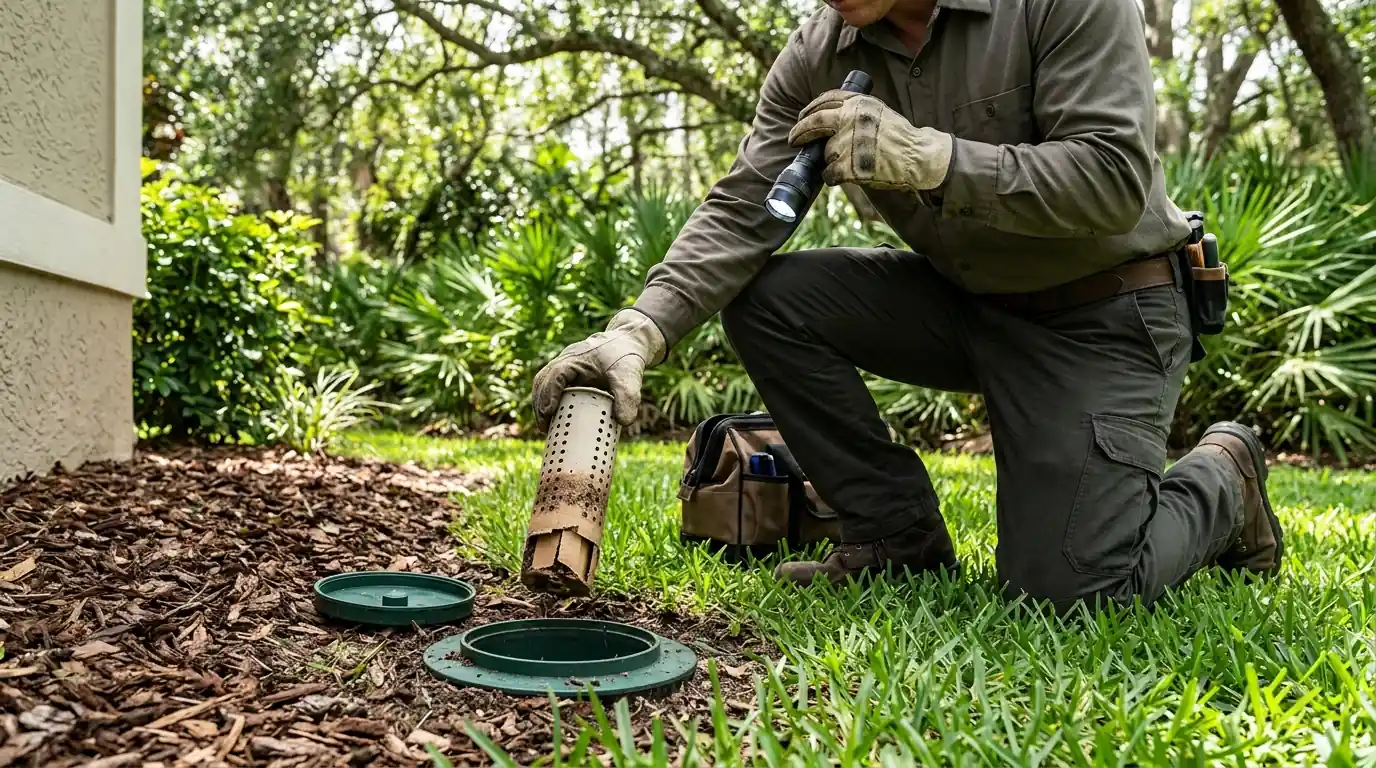
On each visit we open every station on the map, look for termites or feeding, and replace bait or monitors that are worn, wet or eaten. Stations with active feeding are noted and checked more closely, since that is the evidence the colony is taking the bait.
We also look at the conditions around the house: mulch piled against the wall, a dripping AC line, a new flower bed that buried a station. A missed station can leave a gap, so access matters. Tell us about any changes to the yard between visits.
Taking over a system someone else installed
Buying a house with stations already in the yard, or unhappy with who checks them, is common. We start by finding every station. Some will be buried under new mulch or sod, broken by mowers, or missing entirely.
Each station is opened and its contents checked. Then you hear what is in the ground and whether the system can stay as is, needs replacement stations, or needs extra stations where the old layout left gaps. We do not assume the old map is right, because a station nobody can find protects nothing.
Why station spacing matters with Tampa termites
Native eastern subterranean termites live all over Florida. A single colony can hold anywhere from about 100,000 to a million workers, foraging as far as 150 feet from the nest. Formosan colonies are common in the denser parts of the city too. A colony that big may be feeding under two or three houses at once, so the stations have to sit where those workers are likely to pass. That is why the layout follows moisture and soil conditions rather than a fixed spacing.
What termite bait stations cost
- Perimeter length
Longer foundations need more stations to close the gaps. - Hardscape
Pool decks and patios against the wall push stations to the edges and add planning. - Monitoring schedule
How often stations are checked sets the yearly cost. - Active colony
Termites already in the house may need treatment at the entry points as well. - Existing hardware
Taking over a system can mean replacing lost or broken stations.
How we set up a bait station program
- 1
Inspect
We check the house for activity and note moisture, mulch and slab edges around the perimeter.
- 2
Plan the layout
You see where stations will go, how often they will be checked, and the price.
- 3
Install
Stations are augered in, set flush, numbered and drawn on the property map.
- 4
Monitor
Every station is opened on each visit, with bait added or replaced as needed.
- 5
Report
You hear what we found, from fresh feeding to a buried station that needs moving.
Bait stations or a liquid soil treatment?
| Question | Bait stations | Liquid soil treatment |
|---|---|---|
| Best fit | Prevention, or sites where trenching is hard | Active termites that need stopping at the slab |
| Yard work | Small holes for each station | A trench along the foundation and slab drilling |
| Results | Colonies decline over months | Activity fades over weeks |
| Upkeep | Regular monitoring visits | Little upkeep beyond rechecks |
If termites are already inside, read subterranean termite treatment for how the two methods combine.
Product names you may hear on this job
- Termidor
- Altriset
- Sentricon
- Trelona
- Advance
- Vikane
- Bora-Care
- Premise
- Taurus SC
- Recruit