Updated October 2026
Palmetto bug control in Tampa targets the big roaches that breed outside and wander into the house. Mulch, pine straw, palm crowns, storm drains and garages are the source, so most of the treatment happens there, not in your kitchen. Indoors, we close the gaps and treat the voids they use. Small brown roaches breeding in kitchen cabinets are German cockroaches, a different job.
Why spraying the one you see does not stop the next one
Palmetto bug is the Florida name for several large outdoor roaches. They live in damp, sheltered spots around the house and come inside looking for water or to escape heavy rain. A single roach in the hallway is a scout from a population living in the beds, the palm crowns or the sewer line.
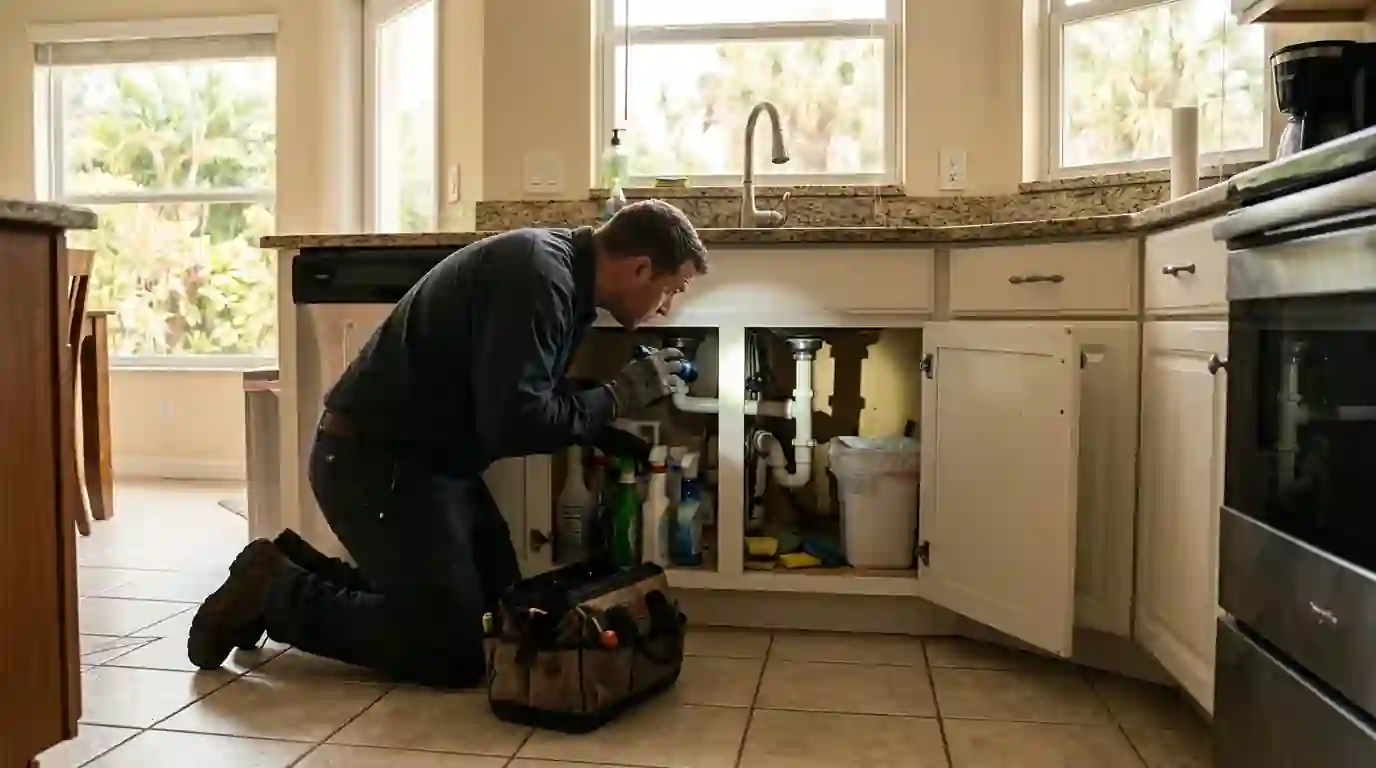
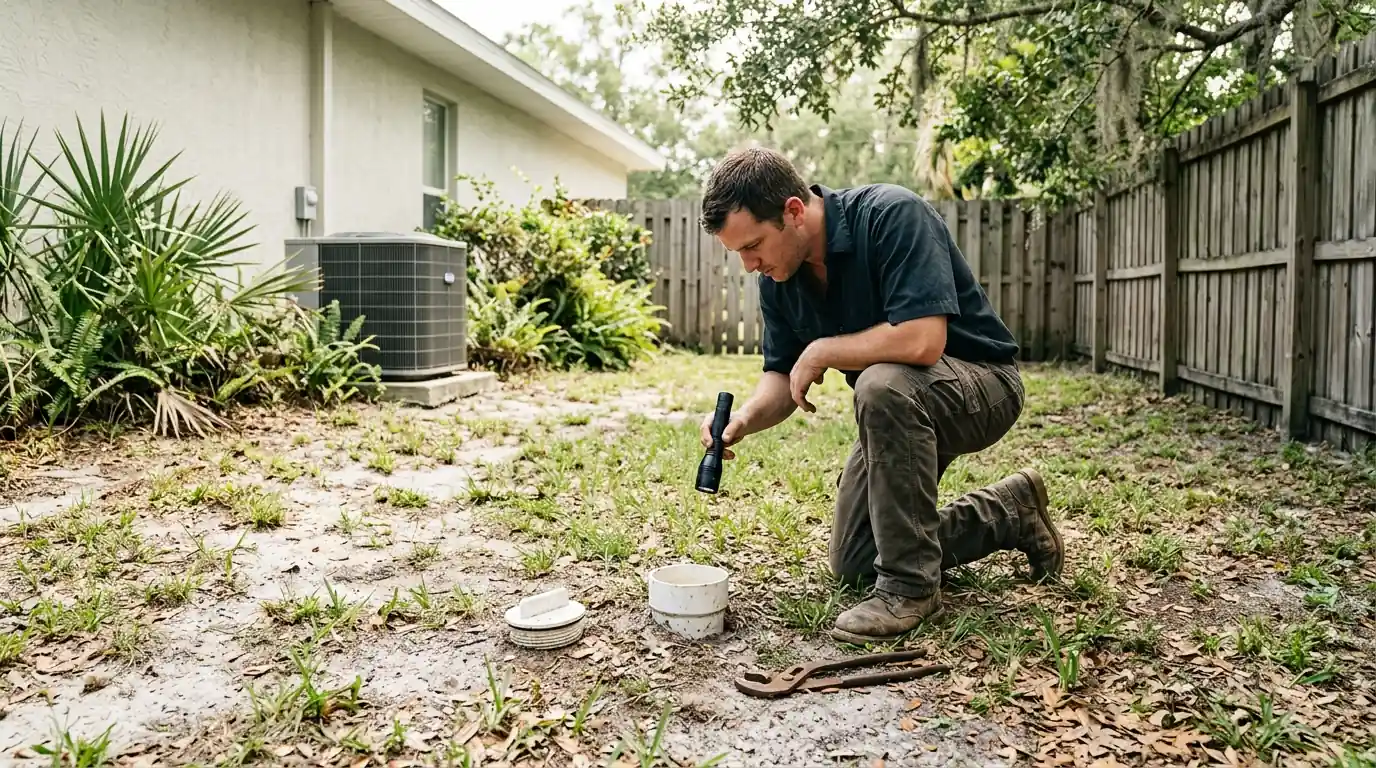
The visit opens outside, with a look at mulch and pine straw against the slab, palm boots, gutters, the garage, weep holes and the water heater closet. Granular bait goes into the beds, a residual band goes along the foundation, and dust goes into the attic eaves and wall voids where they hide. Indoors, we look at drains and plumbing gaps and tell you which ones to seal.
What palmetto bug control costs
- Landscaping
Deep mulch, pine straw and many palms near the house mean more bait and more outdoor time. - Attic and eaves
Smokybrown problems often need attic and soffit dusting, which adds labor. - Drains and plumbing
Roaches coming up through drains need the drain lines and cleanouts treated too. - How many you see
A few a month is a perimeter job, while several a night means more interior work. - One visit or a plan
Ongoing perimeter visits cost less per visit than repeated one-time calls.
Seeing big roaches at night? Call and tell us where they show up.
Call (813) 471-5363American cockroaches from drains and sewers
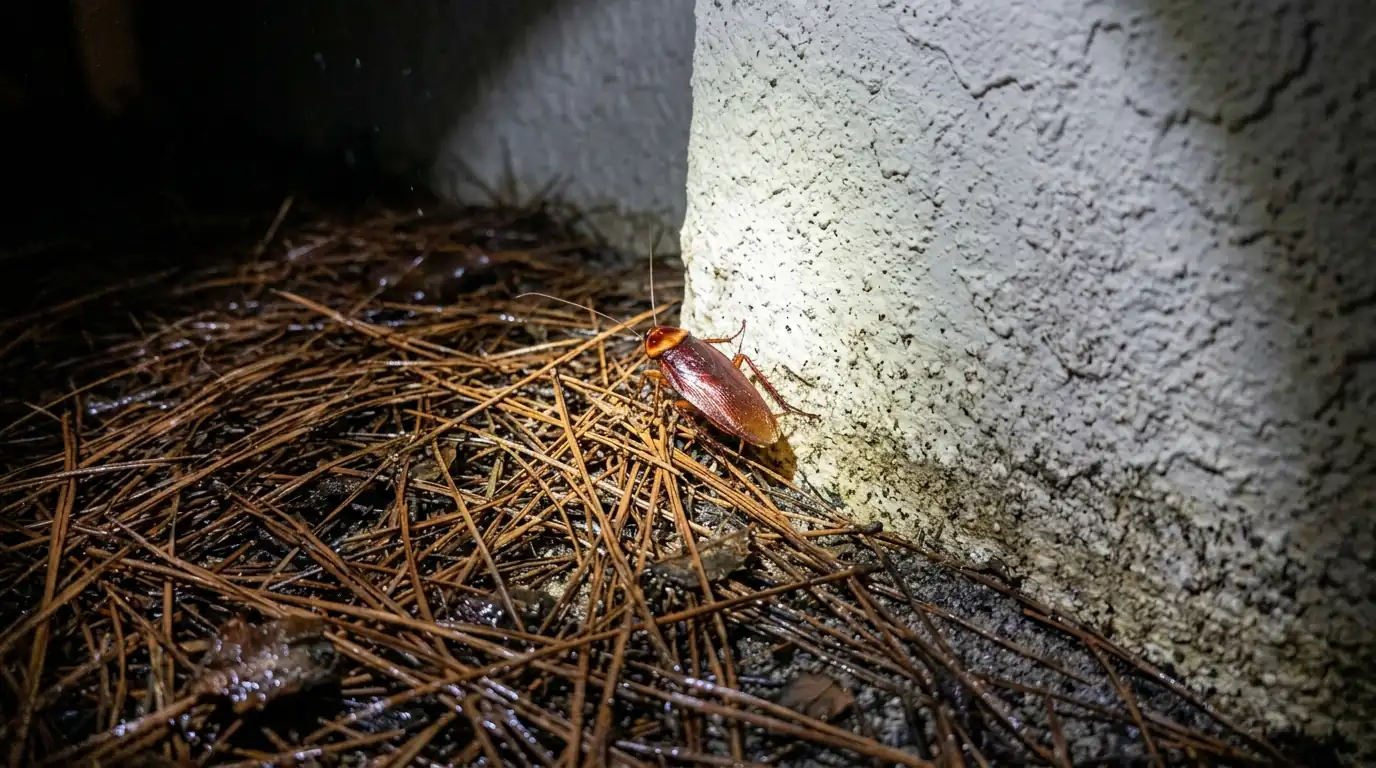
The American cockroach is the biggest of the group, reddish-brown with a pale band around the shield behind the head. Around Tampa homes it lives in sewers, storm drains, crawl spaces, water meter boxes and damp garages, and it often enters the house through a floor drain or a gap around the plumbing.
Seeing them in a bathroom or laundry room after a heavy rain points to the drain line. We treat the cleanouts and outdoor drains, check that the plumbing gaps under sinks are closed, and put bait where they travel. A drain that rarely gets used can dry out and leave an open path, so run water in guest baths and floor drains now and then.
Smokybrown cockroaches in palms, gutters and attics
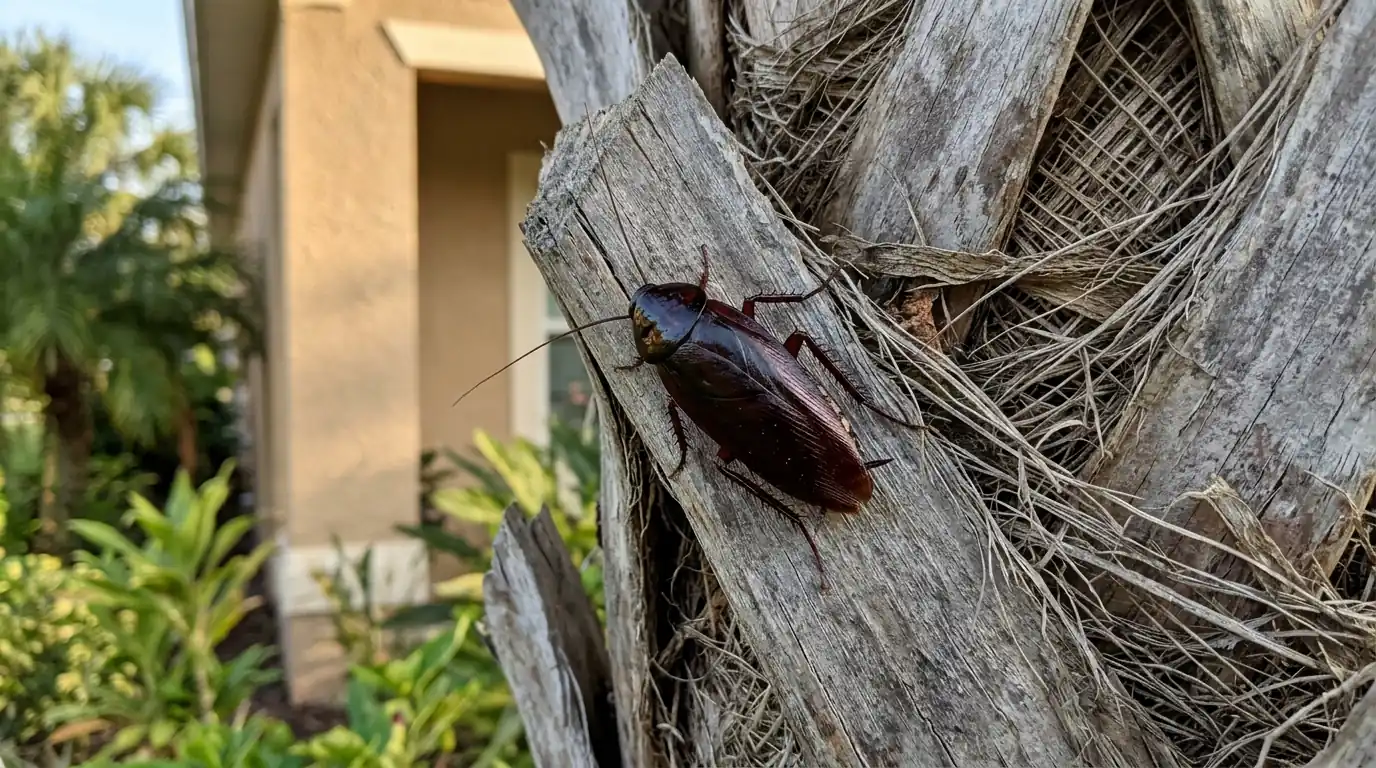
Smokybrown roaches are a solid, shiny dark brown and lose water quickly, so they stay where it is humid: tree holes, palm crowns, clogged gutters, mulch, and the attic just above the soffits. They fly well on warm nights and come toward porch lights.
Because they live high as well as low, smokybrown work looks up. We check the soffit vents and attic edges, dust the eaves, and treat the palm boots and the trees that touch the roof. Cleaning out gutters and trimming branches back from the roofline takes away a big part of their shelter.
Australian cockroaches around plants and lanais
The Australian cockroach is a little smaller than the American and easy to pick out by the bright yellow streaks on the edges of its wings, near the shoulders. It favors plants and leaf litter, so it turns up in planter beds, potted plants on the lanai, and plant-filled sunrooms.
Treatment follows the plants. We bait the beds and the base of pots, treat the lanai frame and screen edges, and check under outdoor rugs and furniture cushions. Bringing a potted plant indoors for the winter can carry them with it, so check the pot and the saucer first.
Tampa and its big roaches
Of the seven cockroaches commonly found in Florida homes, four big species get lumped together as palmetto bugs: the American, the Australian, the brown and the smokybrown. All of them reproduce outside, in landscape mulch, pine straw, palm crowns, sewer lines and garages, and only drift indoors. Tampa has a long record with them, too; in the 2013 American Housing Survey, it placed among the large US cities reporting the most roach sightings. So our palmetto bug work begins in the yard and the drain lines.
How palmetto bug treatment works
- 1
Find the source
We check beds, palms, gutters, drains, the garage and the attic edge for where they live.
- 2
Bait outside
Granular bait goes into mulch and pine straw where roaches feed at night.
- 3
Band the foundation
Residual product goes on the slab edge, door frames, weep holes and the bottom of the garage door.
- 4
Dust the voids
Attic eaves, wall voids and plumbing gaps get a dust that keeps working where sprays cannot reach.
- 5
Close the gaps
We show you the door sweeps, pipe gaps and drains to seal so fewer get inside.
Keeping palmetto bugs out between visits
| Task | Doing it yourself | When to call us |
|---|---|---|
| Beds against the house | Thin the mulch and rake it away from the stucco | Roaches still come in from the beds anyway |
| Drains | Run water in unused drains and keep stoppers in | Roaches still come up through a drain |
| Gutters and palms | Clean gutters and trim palm fronds off the roof | You find roaches in the attic or the soffits |
| Doors and garage | Fit new door sweeps and a new rubber seal on the garage door | They are getting in through gaps you cannot find |
Store bait stations help indoors, but they do not reach the beds, palms and drains where most palmetto bugs breed.
Signs palmetto bugs are living close by
Large roaches running when you turn on a light point to a population nearby, even if you never see them by day.
Pellet-sized droppings along garage walls or in a storage shelf mark where they shelter.
Small dark capsules glued in garage corners, under shelves or in the attic are roach egg cases.
A strong, oily odor in a closet or garage often means more roaches than you have seen.
A sudden run of roaches indoors after a storm means they were flooded out of the beds or drains.
Product names you may hear on this job
- Advion
- Alpine
- Demand CS
- Vendetta
- Maxforce
- Gentrol
- Suspend
- Temprid
- Phantom