Updated October 2026
Occasional invader control in Tampa deals with silverfish, earwigs, millipedes and centipedes, pests that live in damp soil, mulch and wall voids and wander indoors, mostly in the rainy months. Most do no harm beyond the nuisance, though silverfish chew paper and fabric. Treatment pairs a perimeter band at the slab with drying out the spots that hold them.
Why these pests show up after a week of storms
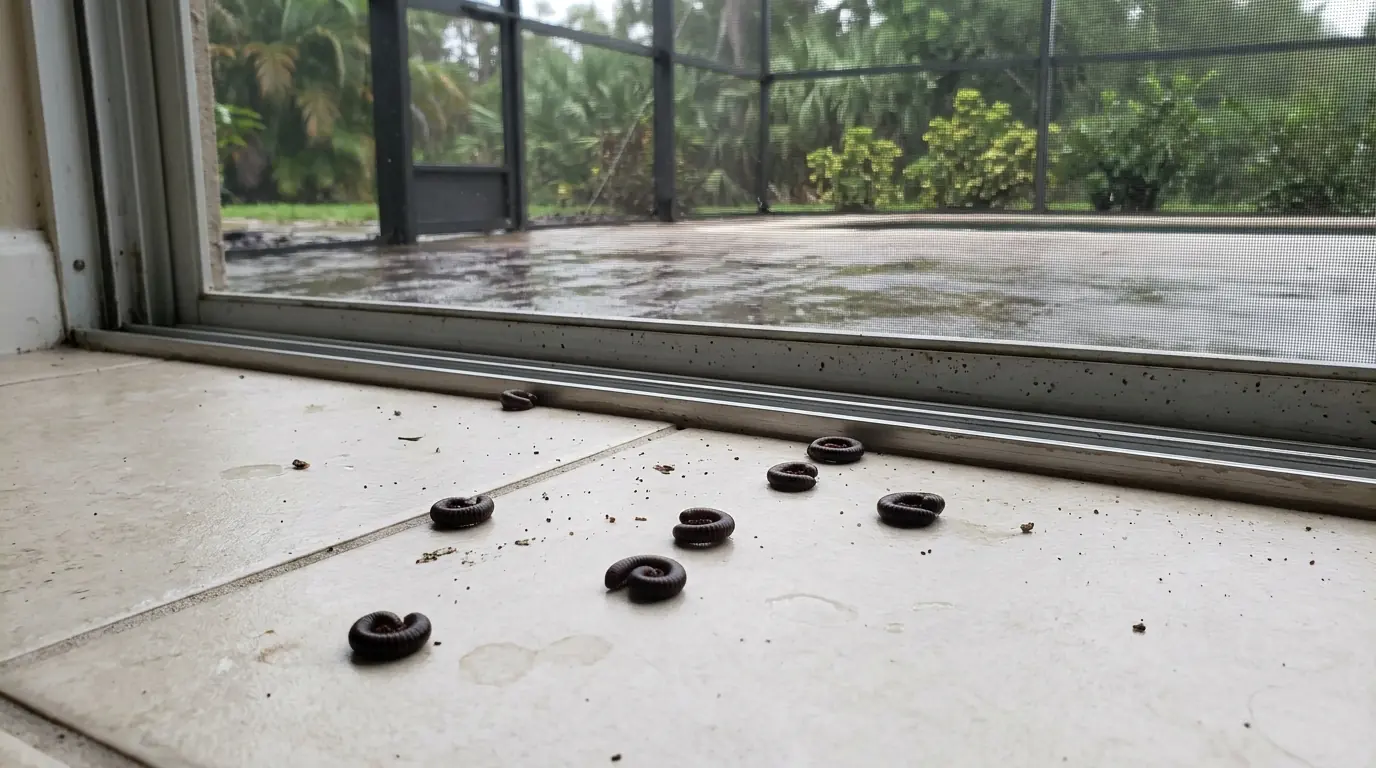
These are called occasional invaders because they do not set up house the way roaches or ants do. They live outside in moist leaf litter, mulch and soil, or in damp wall voids, and they move indoors when the ground floods or dries out. That is why you may find a dozen millipedes on the garage floor after a storm and none for weeks after.
Treatment starts with moisture. We look at mulch depth against the slab, gutters and downspouts, irrigation spraying the wall, and leaks under sinks and around the water heater. Thresholds, the slab edge and the bottom rubber of the garage door get a residual treatment, and bath plumbing gaps and wall cavities get a dust where silverfish rest.
Silverfish in bathrooms, closets and attics
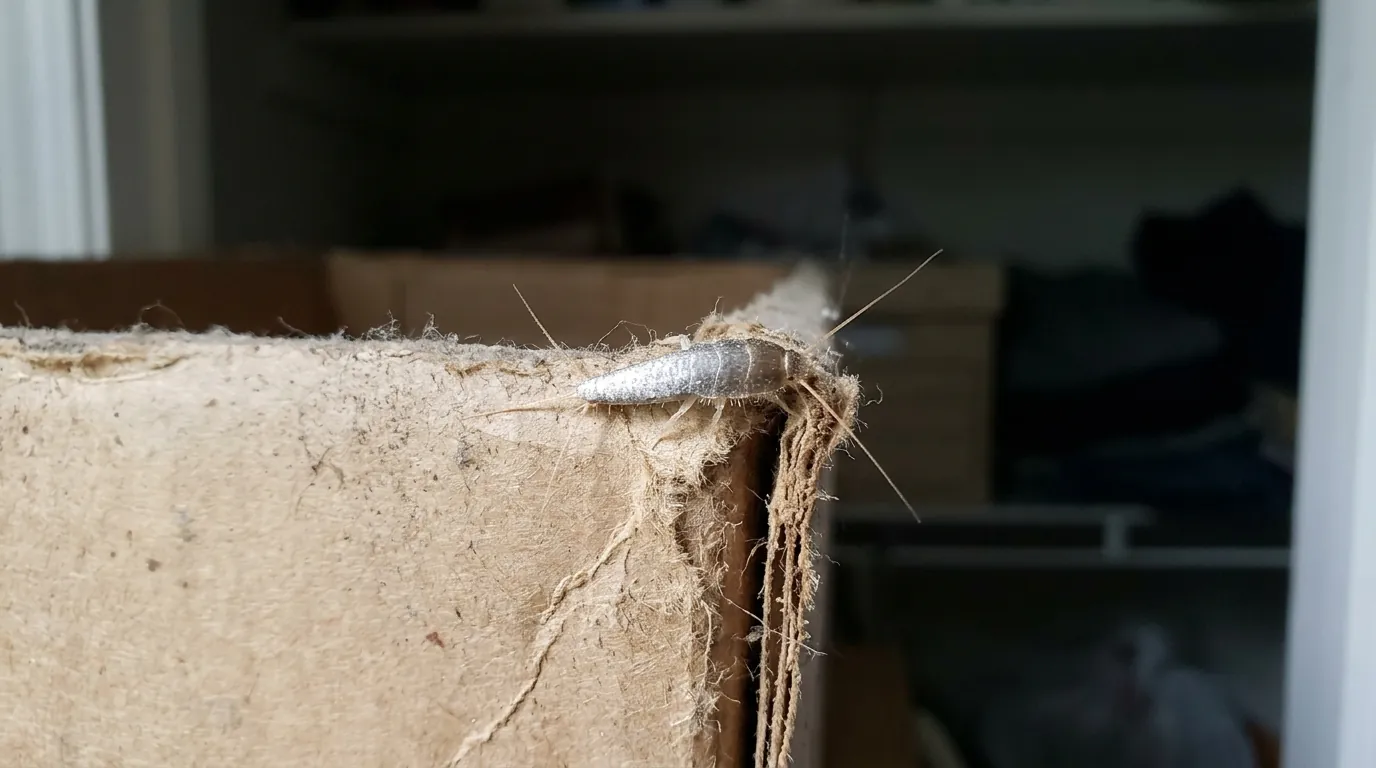
Silverfish are wingless, carrot-shaped and silvery, with three long bristles at the tail. They hide by day in damp, dark spots: under bathroom sinks, behind baseboards, in closets, attics and stored boxes. They feed on starch, so they chew wallpaper paste, book bindings, cardboard, cotton and stored paperwork.
We treat the voids and cracks where they rest, dust the attic edges and plumbing gaps, and point out the leaks and humidity that keep them there. Moving paper storage from cardboard boxes into sealed bins helps a lot.
Millipedes or earwigs coming in after the rain? Call and tell us where.
Call (813) 471-5363Earwigs at the patio door and in the mulch
Earwigs are dark, flat insects with pincers at the tail. The pincers look threatening, but earwigs are scavengers that feed on decaying plant matter and small insects. They live in mulch, under pavers and potted plants and in damp leaf litter, and they slip in under sliding doors and garage door seals.
We treat the beds and the gap under doors and thresholds, check the garage door seal, and tell you where mulch and pots are holding water against the house. Lights near doors pull them in at night, too.
Millipedes and centipedes after heavy rain
Millipedes are slow, rounded and have two pairs of legs on most body segments; they curl into a coil when disturbed and die quickly indoors once they dry out. Centipedes are flatter and fast, with one pair of legs per segment, and they hunt other insects. A centipede in the bathroom usually means it is finding food there.
Both come from moist soil and mulch. We treat the perimeter and door thresholds, check weep holes and the gaps under the garage door, and look at any spot where water sits against the slab.
Tampa rain and the pests it moves
In Tampa's weather normals, August is the soggiest month at just over 9 inches, and June through September together bring most of the year's rain. Saturated mulch and soil push millipedes, earwigs and centipedes toward the slab and under the doors, and the humidity keeps bathrooms and wall voids damp enough for silverfish. Many of the calls we get about these pests come right after a run of afternoon storms, which is also when a perimeter treatment does the most good.
Signs you have an occasional invader problem
Curled dead millipedes by the garage door point to wet mulch or soil outside.
Ragged holes in stored papers, books or clothing can be silverfish feeding.
Earwigs gathering under mats and pots by the door mean damp shelter nearby.
A centipede indoors means it is finding insects to hunt there.
A sudden spike after heavy rain points to pests moving out of flooded soil.
What occasional invader treatment costs
- How many are coming in
A few in the garage is a perimeter job, while steady numbers indoors need more interior work. - Mulch and beds
Deep beds along the house need more treatment and a few changes. - Moisture problems
Leaks or gutter issues we find need fixing, and that repair is separate from treatment. - Attic and voids
Silverfish in the attic or wall voids add dusting time. - Schedule
A recurring plan covers these pests along with roaches, ants and spiders.
How we treat occasional invaders
- 1
Find the moisture
We check mulch, gutters, irrigation and plumbing for the dampness drawing them in.
- 2
Identify the pest
Silverfish, earwigs, millipedes and centipedes each favor different hiding spots.
- 3
Treat the entry line
Thresholds, slab edges and weep holes get a residual product where these pests cross.
- 4
Dust the voids
Wall voids, attic edges and plumbing gaps get a dust where silverfish hide.
- 5
Advise on fixes
We point out the mulch, leaks and seals to change so fewer come back.
Drying things out: your side of the job
| Task | Doing it yourself | When to call us |
|---|---|---|
| Mulch | Keep beds shallow and leave a bare strip next to the wall | Millipedes still pile up by the doors |
| Gutters and irrigation | Clear gutters and aim sprinklers away from the walls | Water still pools against the foundation |
| Indoor humidity | Run bath fans and use a dehumidifier in closets | Silverfish stay even with drier rooms |
| Doors | Close daylight gaps under exterior doors | They still get in under doors and thresholds |
A shop vacuum is the easiest way to clear millipedes and earwigs that make it inside.