Updated October 2026
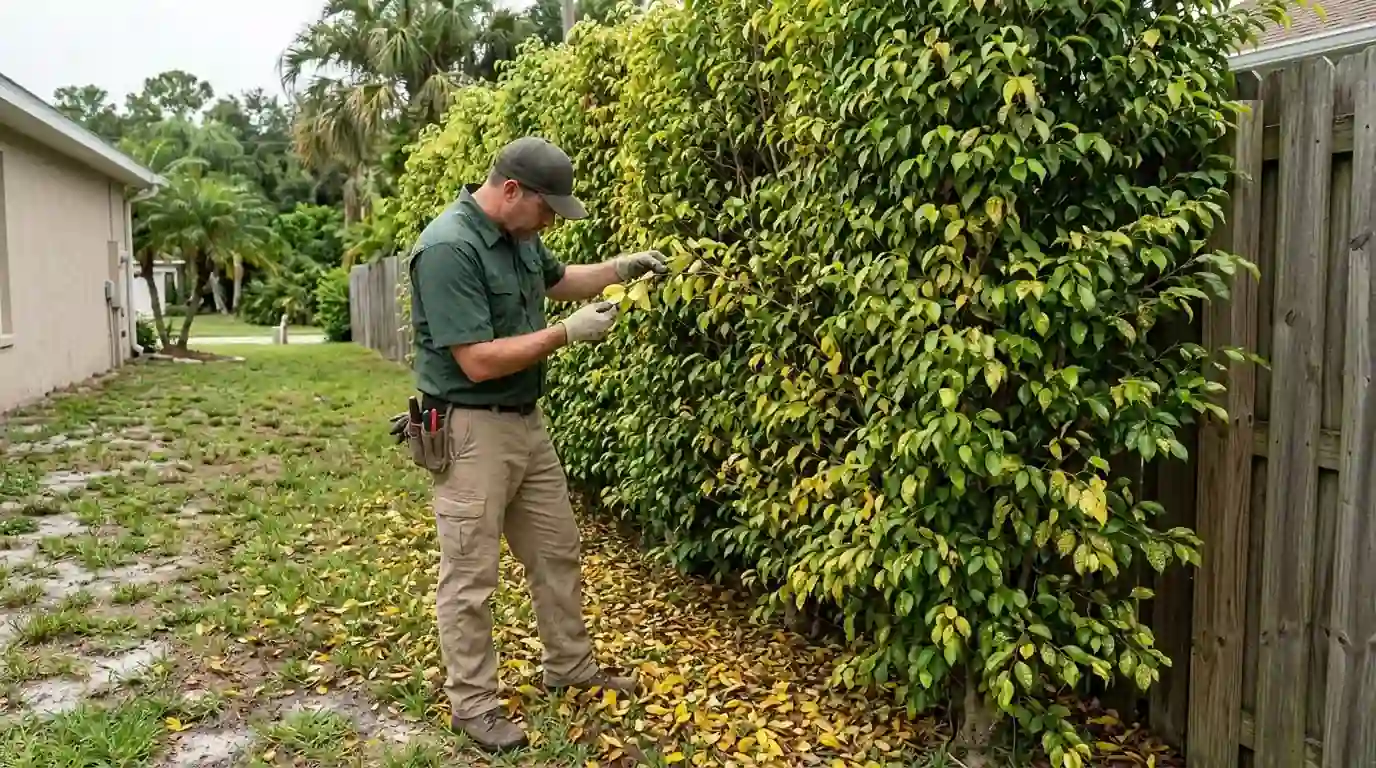
Whitefly control in Tampa usually means treating the hedge or tree through its roots with a systemic product, which the plant carries up to the leaves where the insects feed. Ficus whitefly, in Florida since 2007, can strip a Ficus benjamina hedge and kill whole branches if nobody steps in. Expect the regrowth to take a season, not a week.
Why whitefly hits Tampa privacy hedges so hard
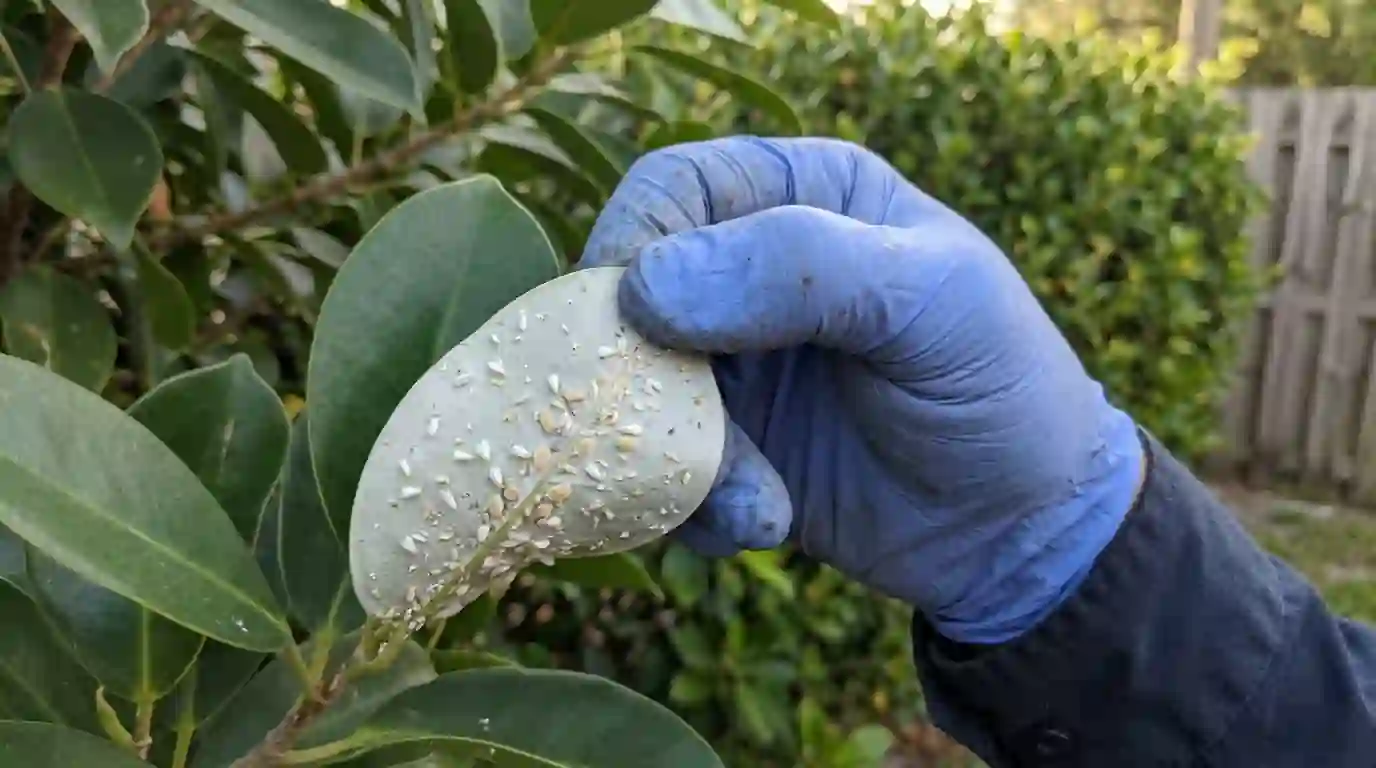
Whiteflies are tiny sap feeders that live on the undersides of leaves. The adults look like flecks of white dust that lift off when you brush the plant. The eggs and young stay flat on the leaf and do most of the feeding. While they feed, they drip honeydew, a sugary liquid that coats whatever sits below.
Ficus benjamina takes the worst of it. It is widely planted as a tall privacy hedge, and it is the ficus whitefly's favorite host. We start by turning over leaves to confirm which whitefly is there. Then we check nearby palms and shade trees before deciding where the treatment goes.
What whitefly treatment costs in Tampa
- Plant count and height
A long hedge or a row of tall trees takes more product and time than a few shrubs. - Which whitefly it is
Ficus whitefly on one hedge is a smaller job than rugose spiraling whitefly spread through several trees. - Access to the roots
Pavers, pool decks and narrow side yards over the root zone change how the drench goes in. - Other host plants
Palms and shade trees carrying whitefly near the hedge are usually treated at the same visit. - One visit or a plan
Published Florida figures give separate ranges for a single treatment and a yearly program.
Leaves piling up under the hedge right now? Tell us where and how fast.
Call (813) 471-5363Ficus whitefly in privacy hedges
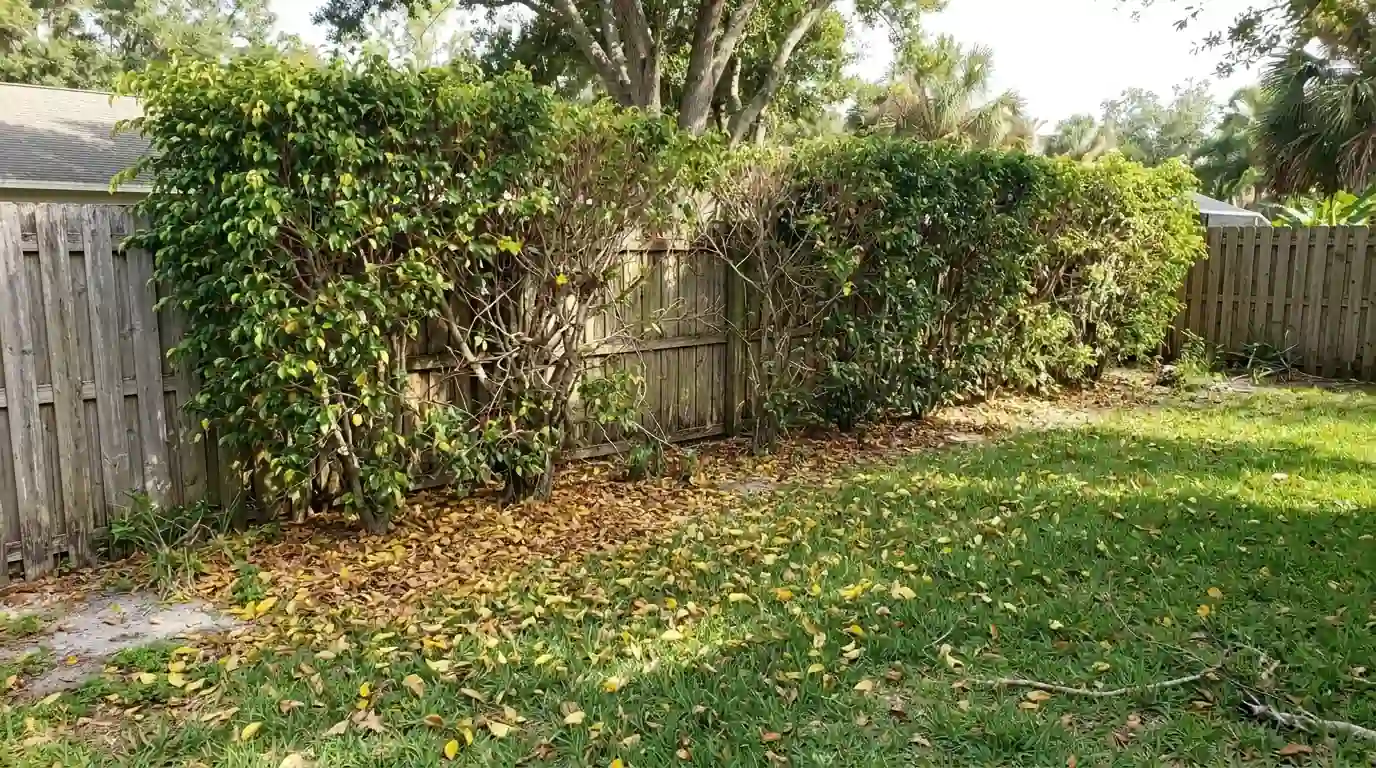
The ficus whitefly attacks at least 11 kinds of ficus, but a tall Ficus benjamina hedge is where it does the most harm. Most owners notice a carpet of yellow and green leaves under the hedge long before they see an insect. Left alone, the hedge thins, branches die back, and some plants never recover.
We treat the root zone with a systemic product. It travels through the whole hedge, including the top a sprayer cannot reach well. Heavy infestations get a leaf spray as well. New growth follows once the insects are under control, and it comes slower in the cooler months.
Rugose spiraling whitefly on palms and shade trees
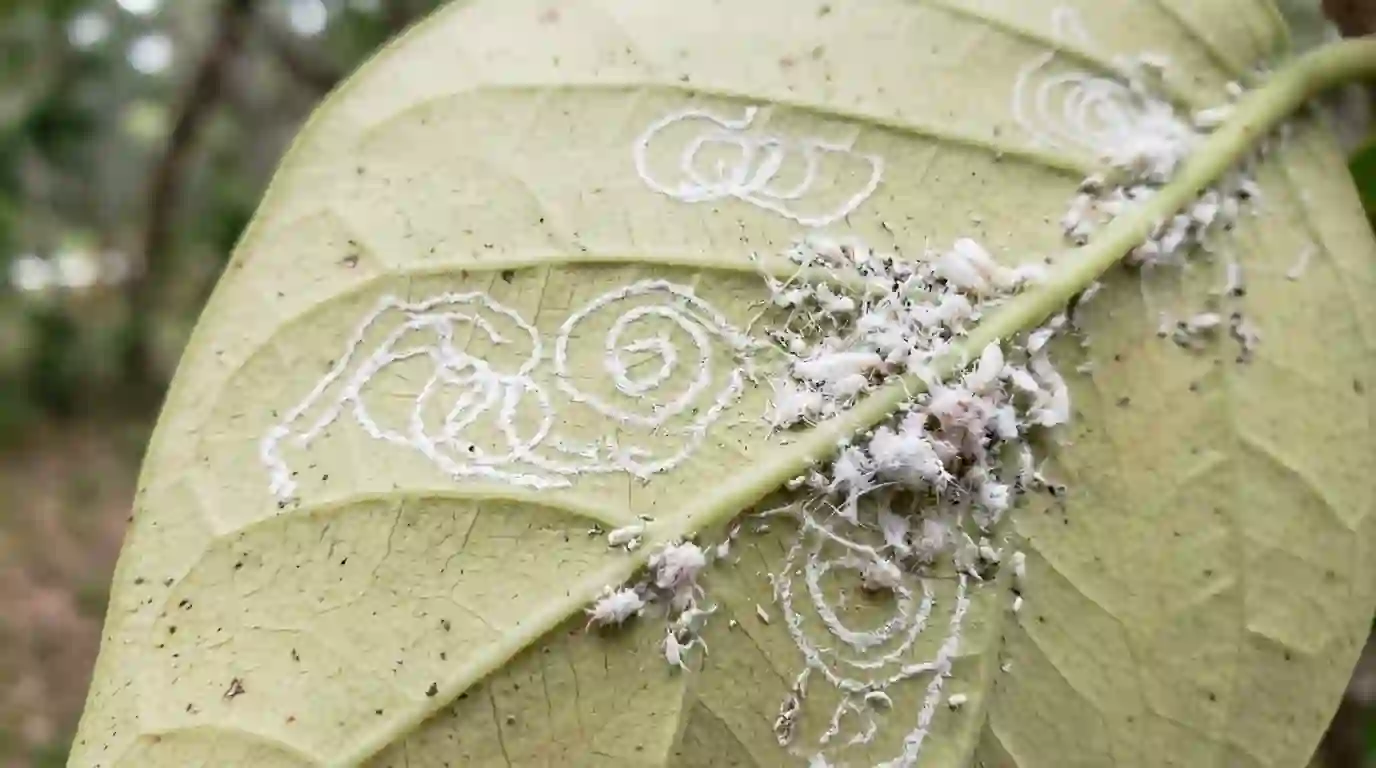
Rugose spiraling whitefly lays its eggs in loose white spirals of wax on the undersides of leaves, and the colonies grow into thick, fluffy patches. Extension agents have tracked it on gumbo limbo, coconut palm, live oak and many other landscape plants. It rarely kills a plant. It does drip a lot of honeydew.
That honeydew lands on cars, pool decks, screen cages and lawn furniture, and black sooty mold soon grows on it. We treat the trees and palms carrying the colonies, mostly with a systemic product in the root zone, because tall canopies are hard to cover with a spray.
Cleaning up sooty mold after whitefly
Sooty mold is a black fungus that grows on honeydew, not on the plant itself. It fades once the whiteflies feeding it are gone. Leaves coated in it catch less light, which slows the recovery of a hedge that is already stressed.
Getting it off hard surfaces is mostly soap, water and patience. On the plants, rain and new growth take care of most of it over time. We tell you which surfaces to wash, what to leave alone, and why scrubbing before the whitefly is controlled just means doing the job twice.
How whitefly spread through Tampa Bay yards
Ficus whitefly reached Florida in 2007 and was confirmed in Pinellas County in August 2009, so Tampa Bay hedges have lived with it for well over a decade. Pinellas Extension has also reported rugose spiraling whitefly spreading countywide on gumbo limbo, coconut palm and live oak, leaving honeydew and sooty mold behind. Neither pest stops at a fence line. A treated hedge beside untreated hosts tends to pick up new whiteflies. So we look at every host plant on your lot and plan a follow-up check.
How a whitefly job runs
- 1
Leaf check
We turn over leaves on the hedge, palms and nearby trees to confirm which whitefly is feeding.
- 2
Host map
We note every plant carrying eggs or young, since a missed host keeps the cycle going.
- 3
Price before work
You hear the price and the treatment plan before anything is applied.
- 4
Root-zone and leaf treatment
The systemic goes into the root zone, with a leaf spray where the infestation is heavy.
- 5
Follow-up look
We come back to check new growth and tell you when the sooty mold cleanup is worth starting.
Whitefly jobs to handle yourself and ones to hand off
| Task | Doing it yourself | When to call us |
|---|---|---|
| Checking leaves | Turn over leaves every few weeks and look for flat, pale young. | When you find them on more than one plant. |
| Washing honeydew | Hose off pavers and wash cars and furniture with mild soap. | When the film keeps coming back after washing. |
| Light infestations | Insecticidal soap or horticultural oil on leaves you can reach. | For hedges taller than you can spray from the ground. |
| Pruning | Bag heavily infested clippings instead of leaving them under the hedge. | Before a hard cutback, so treatment timing fits the regrowth. |
Hedges and trees taller than a ladder are where a root-zone systemic does what a spray cannot, and that covers most of the whitefly work we do.
Signs whitefly is feeding on your hedge
Green and yellow ficus leaves dropping in large numbers is often the first clue.
Tiny white adults lift off the foliage and settle back within seconds.
Honeydew leaves a shiny, tacky film on leaves, cars and patio furniture below.
Sooty mold grows on that honeydew and turns leaves and pavers a dull black.
Loose rings of white wax on leaf undersides point to rugose spiraling whitefly.
Product names you may hear on this job
- Safari
- Merit
- Distance
- Talstar
- Acelepryn
- Mainspring
- Altus
- Kontos