Updated October 2026
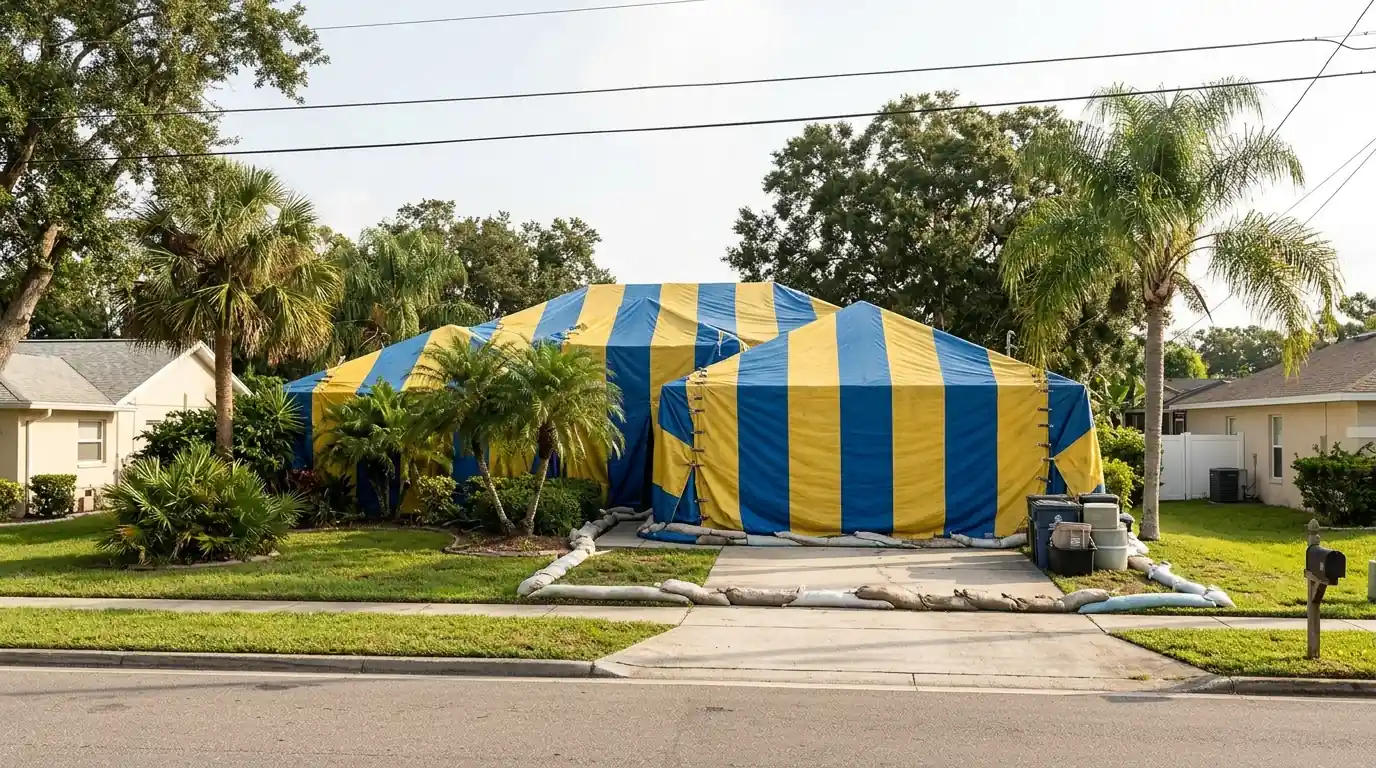
Termite tenting in Tampa treats drywood termites living inside the wood of the whole house. The home is sealed under gas-tight tarps and a fumigant fills every void, so colonies in walls, attic framing and trim are reached at once. It fits when pellets show up in more than one room or the colony cannot be reached with a drill.
When tenting is the right call for a Tampa house
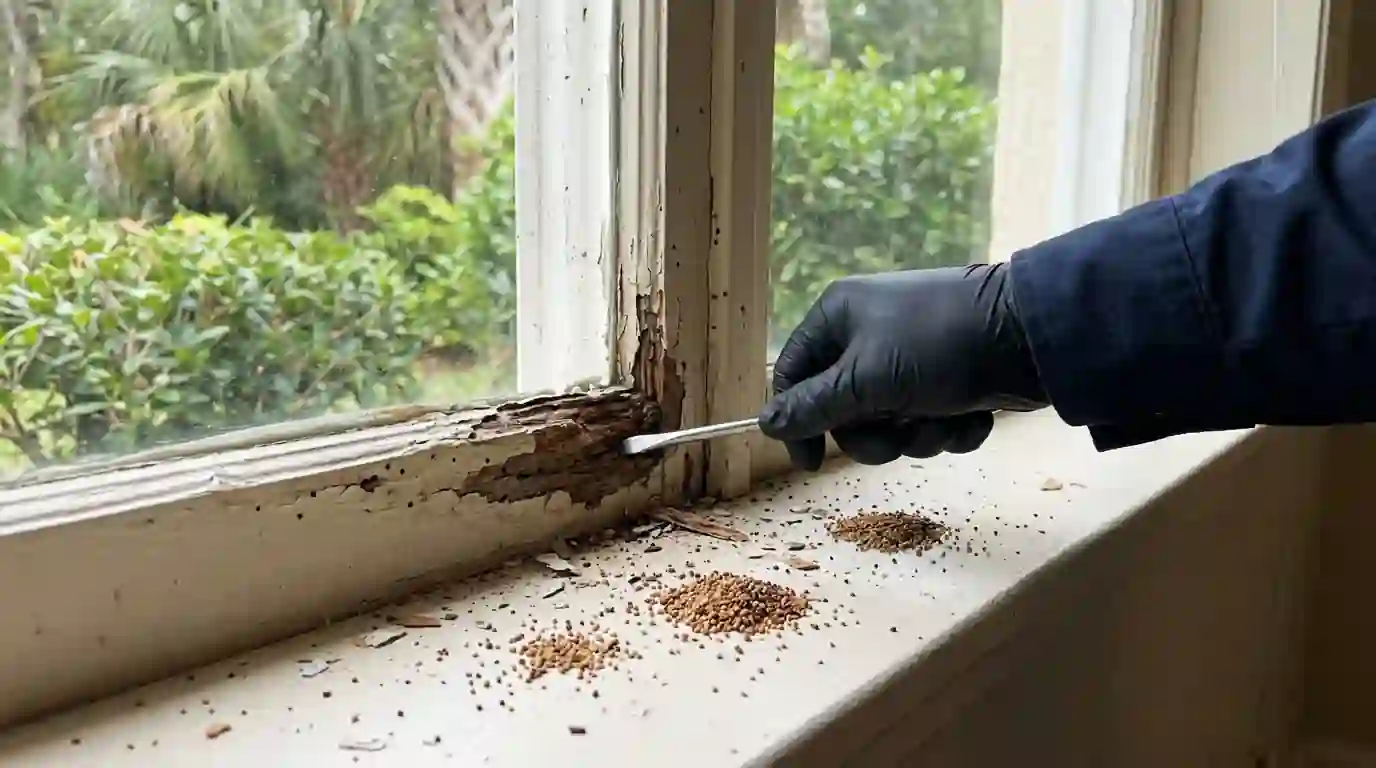
Drywood termites never touch the soil. They live inside dry framing, trim, furniture and attic lumber, so a soil barrier or a bait station cannot reach them. A spot treatment works when the colony is small and the wood is reachable. When pellets keep appearing in different rooms, or the attic framing is involved, the colony is too spread out to drill and inject one board at a time.
Tenting solves that by treating the structure as one sealed space. We inspect first, map where the pellets and kick-out holes are, and tell you plainly whether a spot job will do. If it will not, we explain the tent, the prep and the day you can move back in.
What termite tenting costs in Tampa
- House size
Fumigant is priced by the volume of the structure, so a bigger or taller house costs more. - Roof type
Tile roofs and steep pitches take more time and care to cover than a low shingle roof. - Plants and access
Shrubs touching the walls, fences and tight side yards add labor to get a clean seal. - Attached units
Townhome and condo jobs are priced per building, not per unit. - Follow-up work
Damaged trim or framing found during the inspection is a separate repair from the fumigation.
Seeing it right now? Tell us what you found and where.
Call (813) 471-5363Tenting or a spot treatment?
| Question | Tenting | Spot treatment |
|---|---|---|
| How far it reaches | Every void in the structure at once | Only the boards we drill and inject |
| When it fits | Pellets in several rooms or the attic framing | One small colony in reachable wood |
| Time out of the house | You move out for the tent period | You stay home |
| What it leaves behind | No lasting residue in the wood | Product stays in the treated board |
If the inspection shows a small, reachable colony, we say so and quote the drywood spot treatment instead.
Tenting a single-family home
Most of our tenting work is on detached homes, and the size of the house sets the job. We measure the volume, check the roofline for anything the tarps could snag, and look at plants and shrubs touching the walls, which need a gap so the tarp seals at the ground.
On the day, the crew covers the house, seals the base, releases the fumigant and posts warning signs. After the exposure period the tarps come off, the house is aired out, and readings are taken before anyone goes back inside.
Condos, townhomes and shared walls
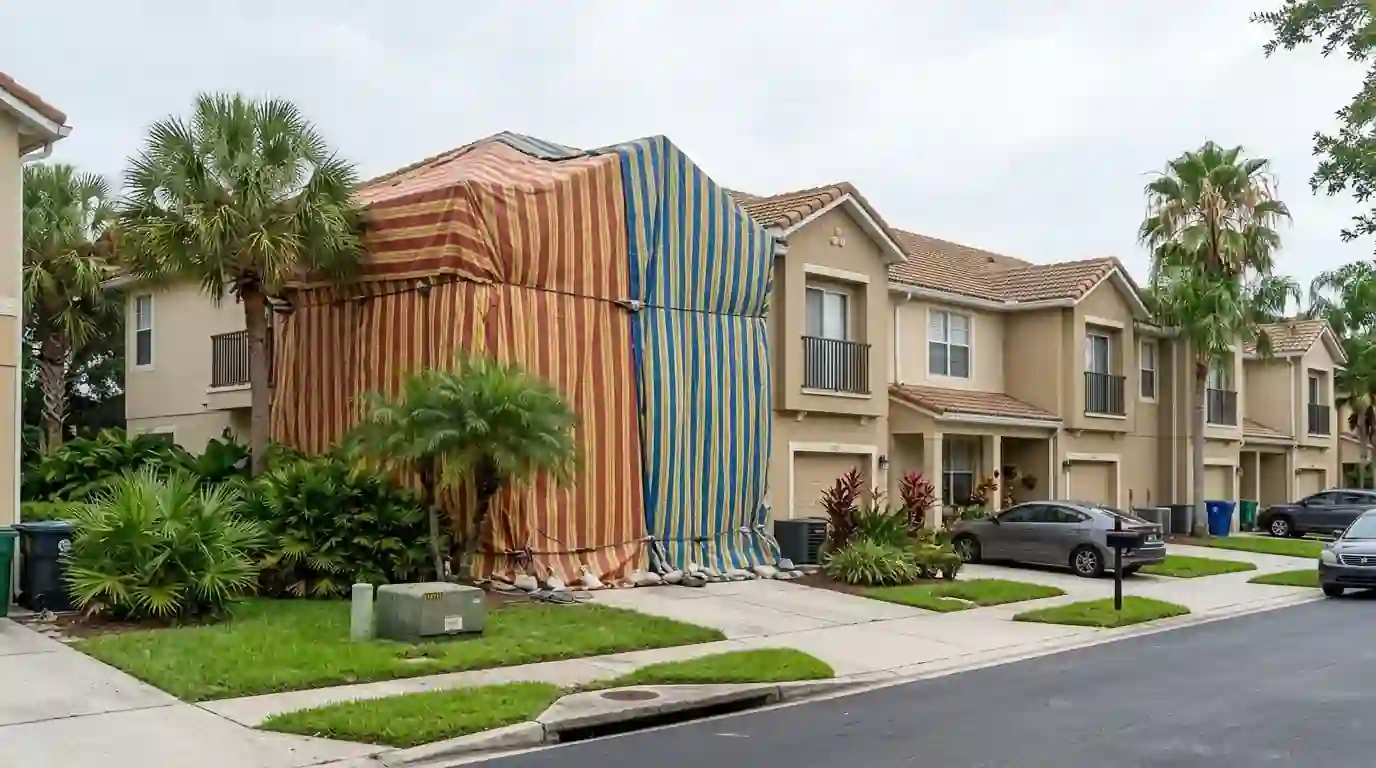
Drywood colonies do not stop at a unit line. In a townhome row or a small condo building, termites in one unit often mean wood shared with the next, so a single unit is rarely tented on its own.
These jobs run through the association. We work with the manager or board on which buildings are covered, how residents are notified, and how the move-out and re-entry days are scheduled, so every unit is cleared and accounted for before release.
Getting the house ready for the tent
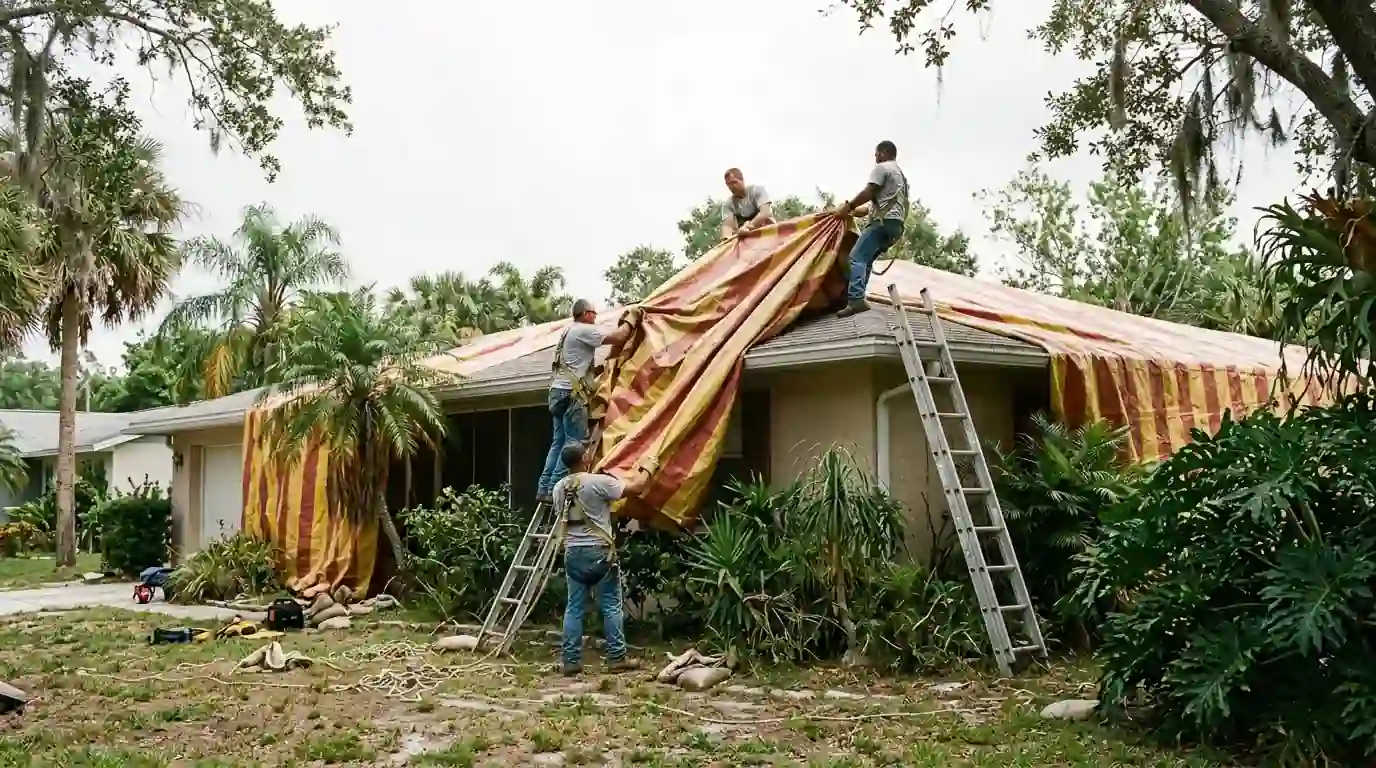
The prep is where most of the homeowner's work sits. Food, medicine and anything you put in your mouth either leaves the house or goes into special sealed bags we provide. Pets, fish and houseplants leave too.
Turn off the gas if we ask, open interior doors, cabinets and drawers, and water the soil along the foundation the day before so it holds the tarp seal. We give you a written checklist when the job is booked, and we walk the house with you before the tarps go on.
What a tenting job includes
Here is what the work covers from the first visit to the day you move back in.
- A full inspection and a map of pellets and kick-out holes
- Measuring the structure for the fumigant volume
- A written prep checklist and sealed food bags
- Tarps, sealing at the base and posted warning signs
- Aeration and clearance readings before re-entry
- A walk-through with you after the tarps come off
Drywood termites in older Tampa houses
Drywood termites are worst in older wood along Florida's coasts, and Tampa has plenty of it. In Seminole Heights, many homes are craftsman bungalows from the 1910s and 1920s boom, with wood porches, trim and framing that colonies have had decades to settle into. Hyde Park's historic homes and bungalows are the same story. In houses that old, pellets turning up in more than one room is common, and that is when tenting beats a spot job.
How a tenting job runs
- 1
Inspection and map
We find the pellets, kick-out holes and damaged wood, and decide between tenting and a spot job.
- 2
Price and date
You get the price, the prep checklist and the move-out and re-entry times.
- 3
Prep day
Food, pets and plants leave the house, and doors, cabinets and drawers are opened.
- 4
Tent and fumigate
The crew covers and seals the house, releases the fumigant and posts warning signs.
- 5
Air out and clear
Tarps come off, the house is aired, and readings are taken before you go back in.
How long you are out of the house
Plan on being out of the house for roughly two to three days, depending on the size of the home and the fumigant schedule. The tarps stay on for the exposure period, then the house is aired and tested.
We give you the exact move-out and re-entry times when the job is booked, and nobody goes back inside until the clearance readings are done.
Product names you may hear on this job
- Termidor
- Altriset
- Sentricon
- Trelona
- Advance
- Vikane
- Bora-Care
- Premise
- Taurus SC
- Recruit