Updated October 2026
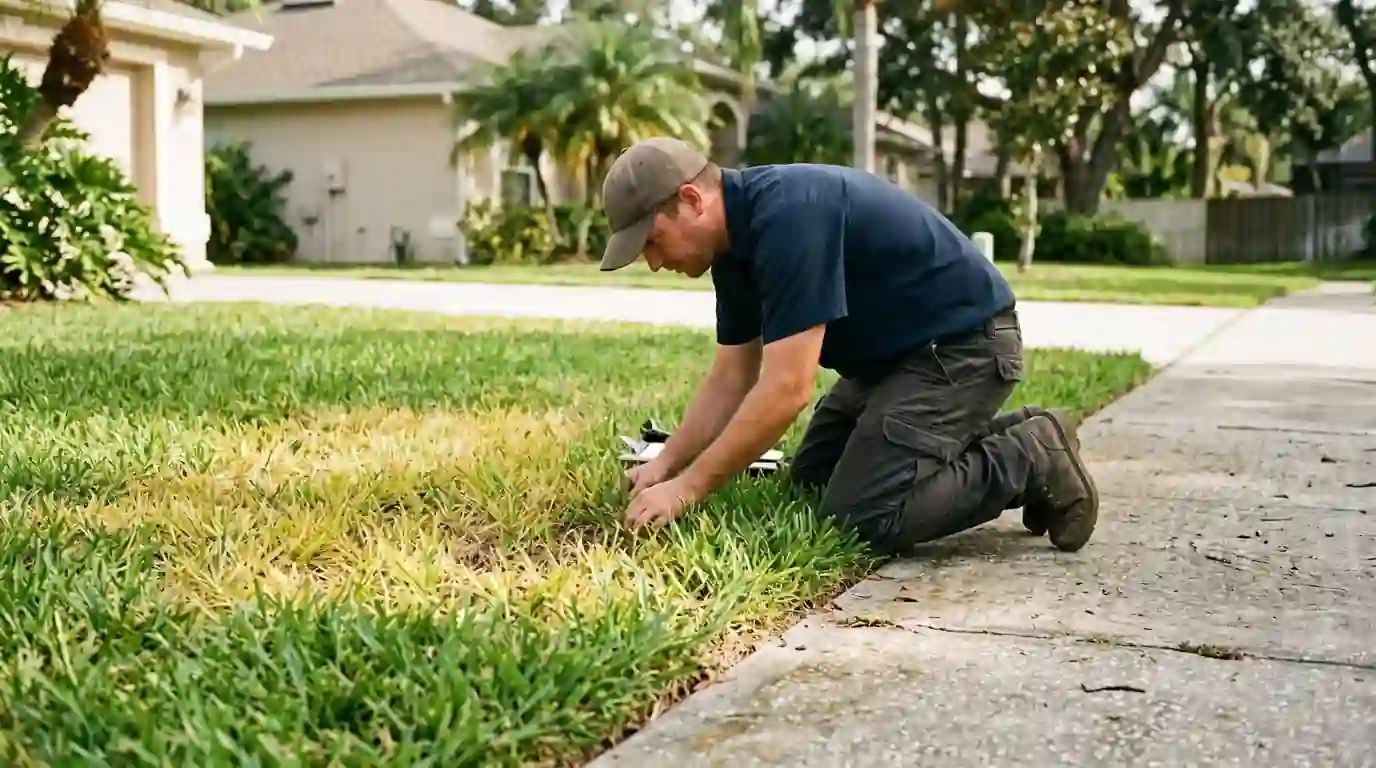
Mole crickets in Tampa lawns tunnel through the top few inches of soil, cutting grass roots and lifting the surface. Bahiagrass and bermudagrass take the worst of it, and damage peaks from March to June and from late August to early October. A soap flush that brings up 2 to 4 crickets from a four square foot area within three minutes justifies treatment.
How mole crickets damage a lawn from below
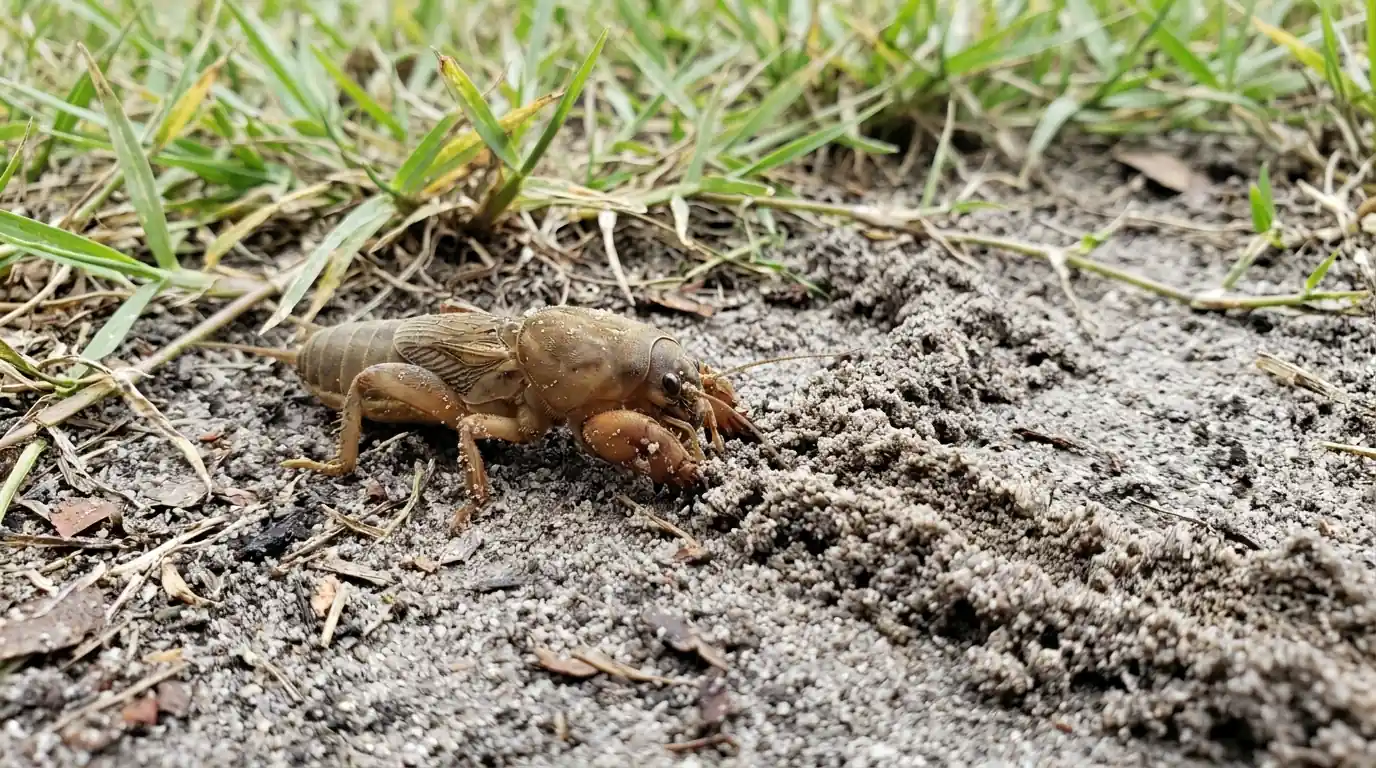
Mole crickets spend most of their lives underground. Their tunnels run just below the surface, slicing through roots and pushing up the soil, so the grass loses its grip and dries out. In a bad year, a bahia lawn can feel like walking on a sponge, and the turf peels back by hand.
Because the damage is hidden, counting is everything. A soap flush brings the crickets to the surface so we can see how many there are and how large they are. That tells us whether to treat and which kind of treatment fits the stage they are in.
What mole cricket treatment costs in Tampa
- Treated area
Crickets cluster, so treating only the active zones costs less than the whole yard. - Timing
Treating young nymphs takes less product than chasing large adults later. - How bad the count is
Heavy counts over a large area may need more than one application. - Grass type
Bahia and bermuda lawns call for different product choices. - Repair after
Re-sodding or reseeding dead areas is separate from the insect treatment.
Lawn feeling spongy underfoot? Call and we will count the crickets.
Call (813) 471-5363Mole crickets in bahiagrass lawns
Bahiagrass is a favorite of Florida's pest mole crickets, and it is common on larger lots, roadsides and the back sections of yards. Its open growth lets crickets tunnel freely, and thinning bahia often shows the raised soil and loose turf clearly.
On bahia we usually treat the whole affected area rather than spot by spot, since the crickets spread through the turf. Treating when young nymphs are near the surface works far better than chasing large adults. We tell you how long to keep off the lawn afterward.
Mole crickets in bermudagrass lawns
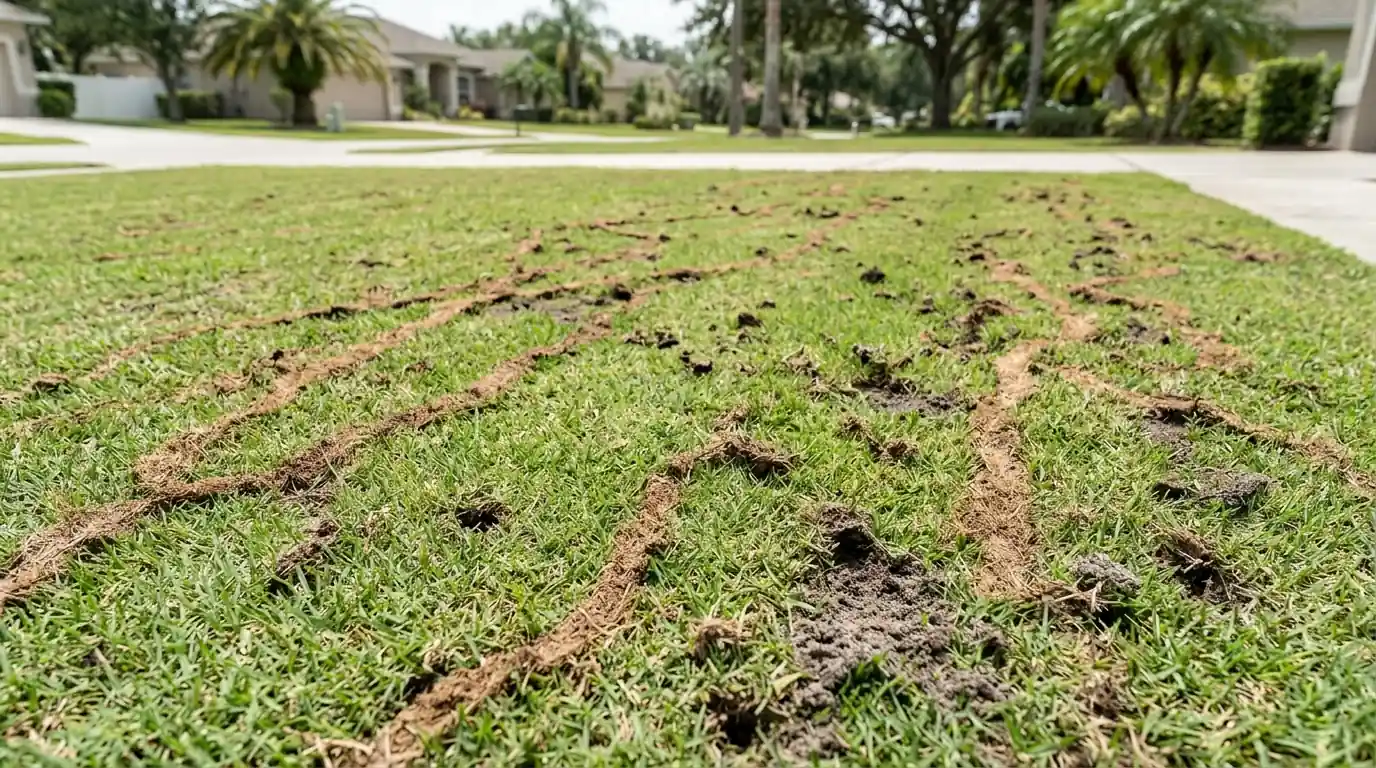
Bermudagrass is the other grass mole crickets prefer, and it is often kept short on sport-style lawns and play areas. The tunnels show up as raised, wandering lines, and the low-cut turf browns quickly once roots are severed.
Bermuda lawns also attract birds and other animals that dig for crickets, which adds to the torn-up look. We treat the active area based on flush counts. Then we come back to confirm the tunneling has stopped before any repair seeding or sodding.
How a soap flush tells us whether to treat
The flush is simple. Mix one and a half fluid ounces of dish soap into two gallons of water, then pour it over four square feet. The soap irritates the crickets and drives them to the surface.
If 2 to 4 crickets come up within three minutes, the count justifies treatment. Fewer than that, and treatment is usually not worth it yet. We run several flushes across the lawn because mole crickets cluster, and one spot does not speak for the whole yard. The size of the crickets also tells us whether they are young nymphs or adults.
Mole crickets in sandy Tampa soil
Sandy soils suit mole crickets. Much of the Tampa area sits on Myakka fine sand, Florida's state soil, found across the old pine flatwoods. It is poorly drained, with a high water table. It stays wet during the June to September rains and turns droughty the rest of the year. Tunneling crickets loosen that sand around the roots, and the turf dries out faster in the dry months. Larger lots with bahia lawns see the most damage.
How a mole cricket treatment runs
- 1
Soap flushes
We run several flushes across the lawn and count the crickets that surface.
- 2
Decide and price
You hear whether the count justifies treatment and the price, before anything is applied.
- 3
Timed treatment
We treat when nymphs are near the surface, usually after watering the lawn.
- 4
Keep-off time
We tell you how long to keep pets and children off and when to water again.
- 5
Recheck
We flush again later to confirm the tunneling has stopped before any repairs.
Spotting mole crickets on your own
| Task | Doing it yourself | When to call us |
|---|---|---|
| Soap flush | Mix 1.5 fl oz of dish soap in 2 gallons of water and pour it over a four square foot area | Two or more crickets come up within three minutes |
| Spongy turf | Press the grass with your foot and tug at loose spots | Turf lifts away freely over a wide area |
| Watering | Keep the lawn evenly watered so cut roots have a chance to recover | Brown areas keep growing despite watering |
| Repair | Wait before re-sodding or seeding | Crickets are still active in the area you plan to repair |
Run the flush in the evening or after rain, when crickets are closer to the surface and easier to count.
Signs mole crickets are under your lawn
The ground feels soft and gives underfoot where tunnels run below.
Thin, wandering lines of lifted soil cross the lawn, often after a damp night.
Grass pulls loose by hand because the roots have been cut.
Birds and other animals dig small holes hunting for the crickets.
Damage shows most from March to June and late August to early October.
Product names you may hear on this job
- Acelepryn
- Talstar
- Arena
- Celsius
- Headway
- Heritage
- Dylox
- Merit
- TopChoice
- Advion Fire Ant