Updated October 2026
Rodent exclusion in Tampa means sealing every opening a rat or mouse can use, starting at the roofline. Rats fit through half-inch cracks, so the standard materials are 26-gauge sheet metal and 19-gauge hardware cloth with openings no larger than a quarter inch. Foam and steel wool alone do not hold up against chewing or humidity.
What a sealed house looks like from the ladder
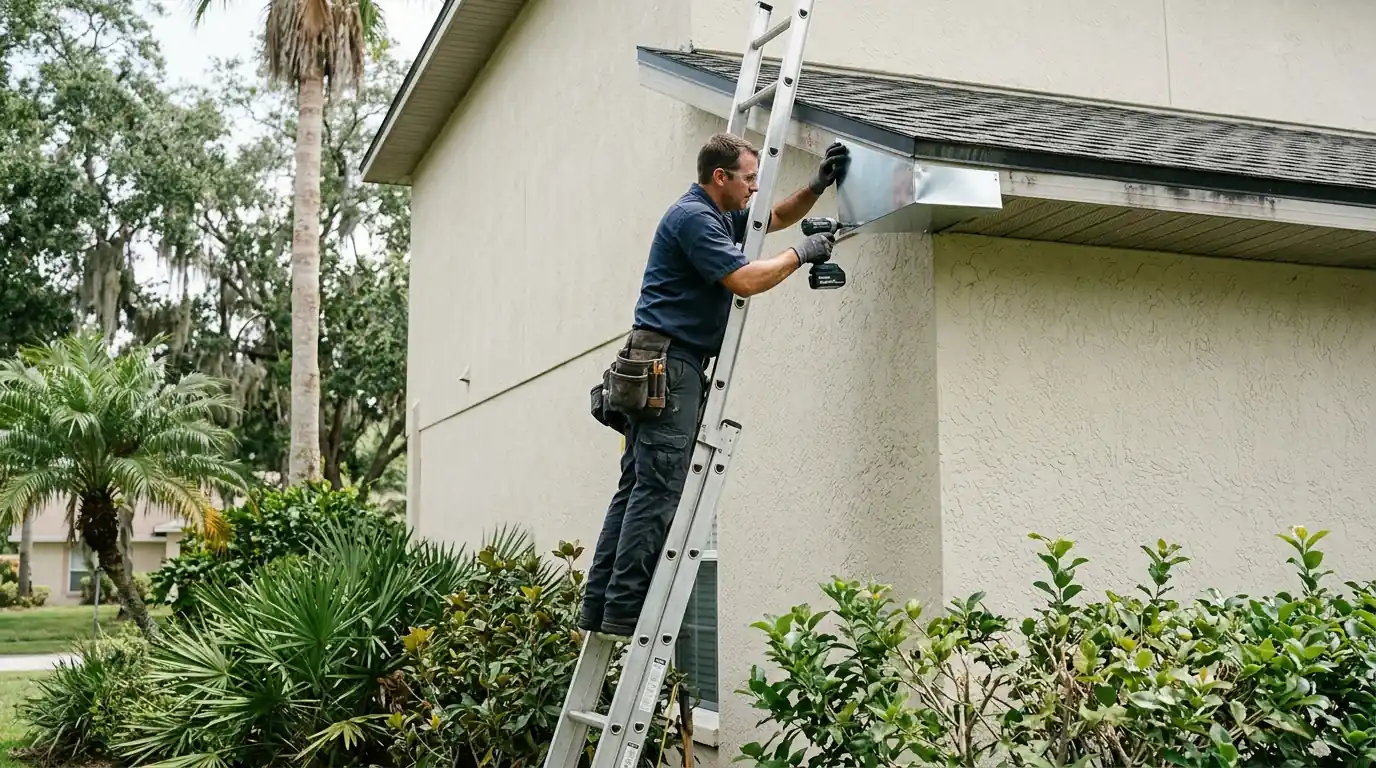
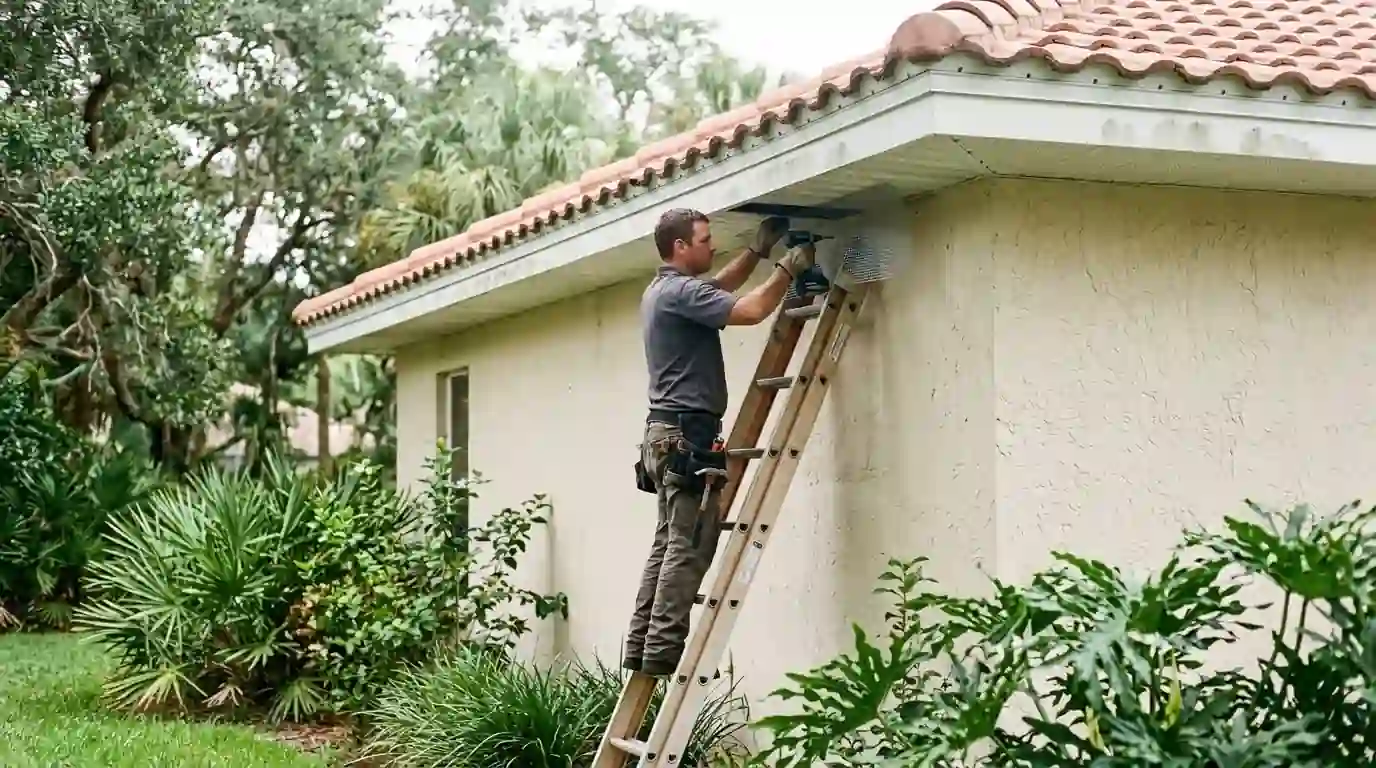
Exclusion is slow, careful work. We go around the whole house. Up on the ladder, that means every soffit return and roof vent. Down low, it means the pipe chases, the air conditioner line set, the dryer vent and the garage door corners. Each gap gets measured and closed with metal shaped to fit, fastened so it stays put through summer storms.
Timing matters as much as material. Sealing a house with rats still inside traps them in the attic, where they chew new holes or die in a wall. That is why exclusion usually runs alongside rat and mouse control, with the last opening closed only once the traps stay empty.
What rodent exclusion costs in Tampa
- Number of gaps
Each opening needs its own measured patch, so a house with many costs more. - Roof type
Tile roofs need eave and ridge closures that a shingle roof does not. - Height and access
Two-story walls and steep pitches mean more ladder time per gap. - Material per opening
Large vents and long fascia runs take more sheet metal and cloth than a pipe collar. - Trapping alongside
If rats are still inside, the trapping visits are priced with the job.
Rats back after you trapped them? Call and we will find the gap.
Call (813) 471-5363Soffit returns, fascia gaps and roof vents
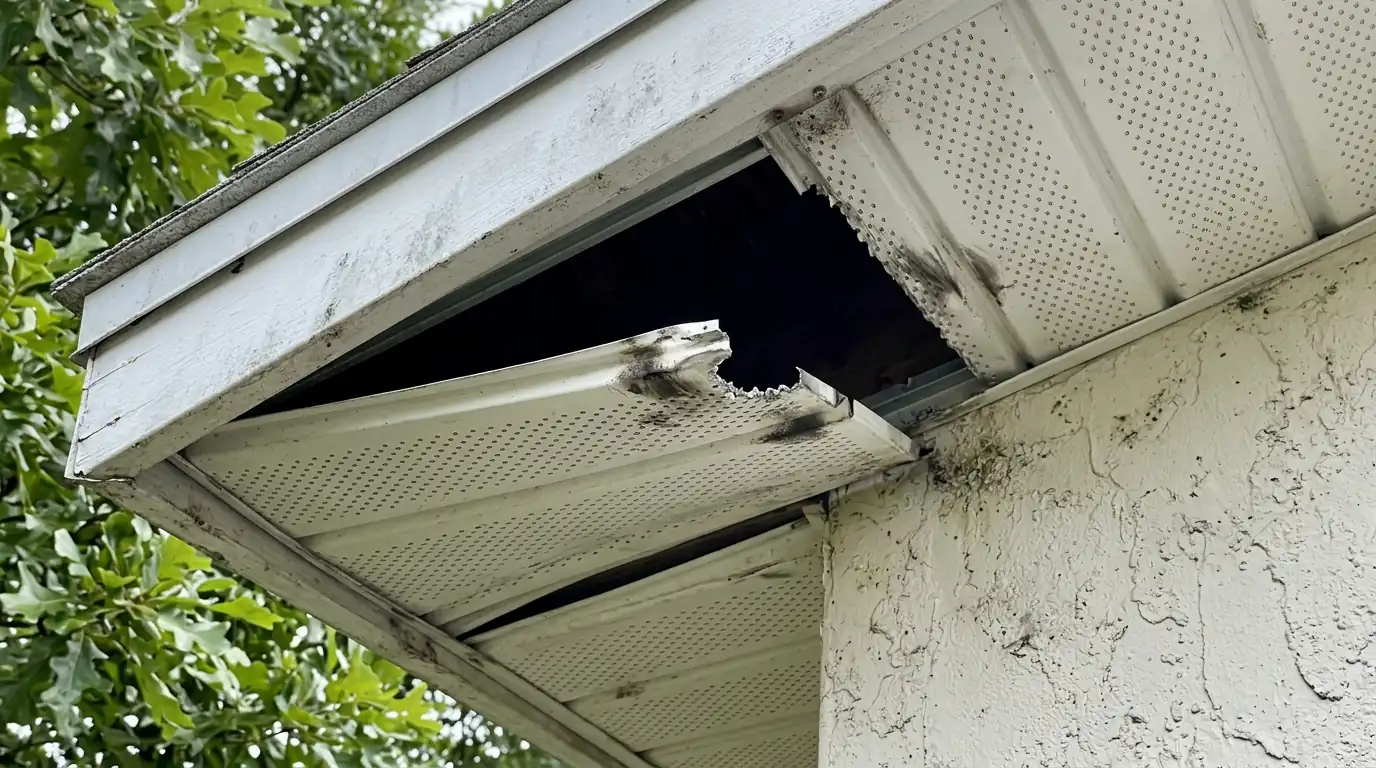
Most roof rat entries are high. The usual spots are soffit returns, the joint where fascia meets the roof deck, loose soffit vent panels, and vents with torn screens. Tile roofs add open ends at the eaves and ridge that need their own closures.
We close these with sheet metal or hardware cloth cut to the shape of the roof, keeping vents working so the attic still breathes. Rub marks and droppings tell us which gap was the main route, and that one gets a careful look after trapping ends.
Pipe chases, line sets and cable entries
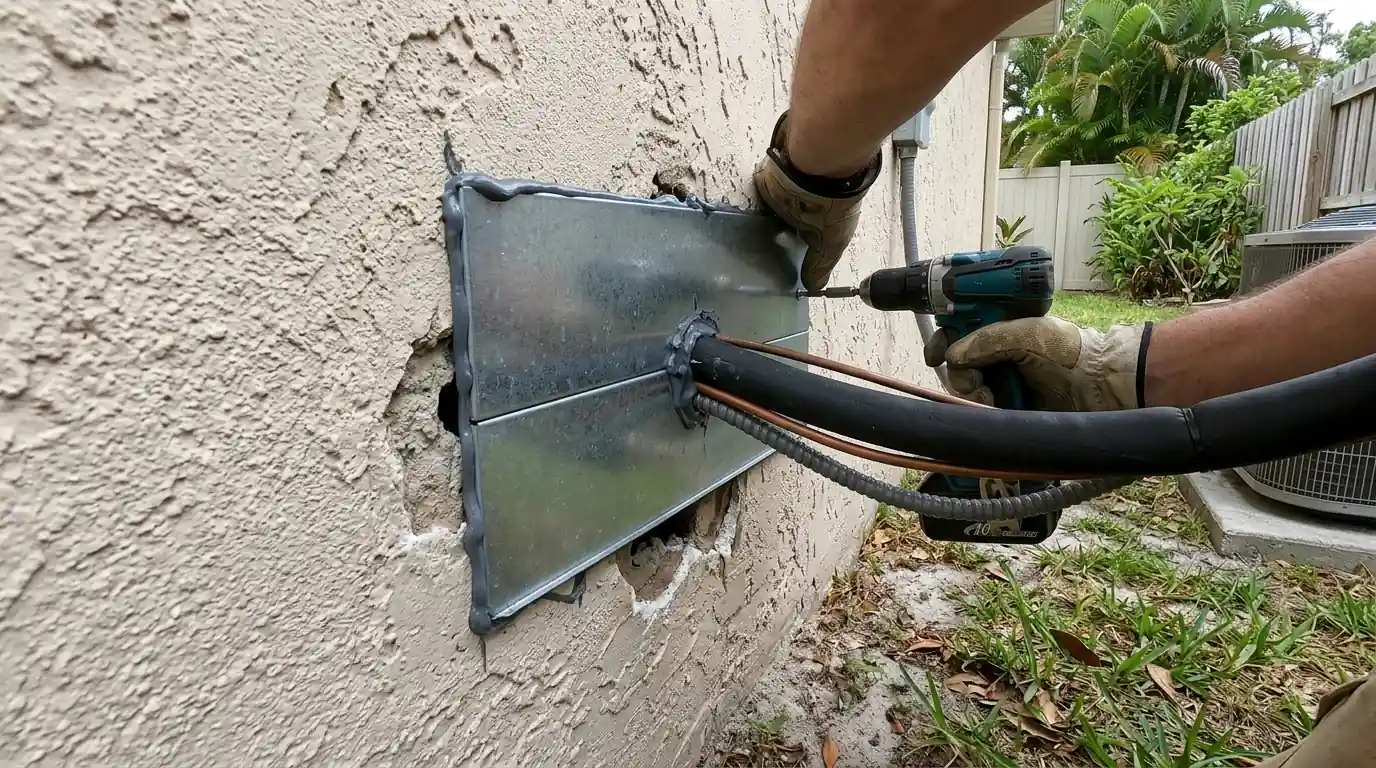
Every pipe, cable and refrigerant line that passes through a wall leaves a gap around it. The air conditioner line set, dryer vent, hose bibs, gas lines and cable entries are the common ones. Inside, every plumbing line through a cabinet floor leaves the same kind of gap.
Around round pipes, metal collars or tightly packed hardware cloth hold better than expanding foam, which rats chew straight through. Indoors, we close gaps behind the stove, under the sink and around the water heater. Mice follow those lines once they are inside the walls.
Garage door corners, weep gaps and low vents
Low entries matter most for Norway rats and mice. A worn garage door seal, especially at the bottom corners, leaves a gap a rat can squeeze through. From the garage, it is a short trip into the house through the wall or attic.
We check the bottom seal and side stops on every garage door. Raised homes also get a look at the crawl space and foundation vents. Corners get metal or rodent-rated seal inserts, and vents get hardware cloth so air still moves.
What an exclusion job includes
Here is what the work covers from the first walk-around to the final check.
- A roofline-to-slab inspection with every gap noted
- Photos of the main entry points before they are closed
- Sheet metal or hardware cloth shaped to each opening
- Vent screens replaced so the attic still breathes
- Branches and fronds touching the roof pointed out for trimming
- A final look at every seal once trapping ends
Gaps on older and newer Tampa houses
Census figures put the median Hillsborough County home at 1991, with about 17.6% of units built before 1970. Older houses tend to have settled soffits, open eaves and patched vents. Newer ones still have line sets, dryer vents and garage corners to close. The Tampa Bay Times has reported roof rats as common across the Tampa area, so we check the roofline on every house, whatever its age.
How we seal a house against rodents
- 1
Walk-around
We go along the roofline, walls and slab, noting every gap a rat or mouse could use.
- 2
Quote
You hear the price and see where each patch will go before work starts.
- 3
Seal all but the main route
Most gaps are closed first, leaving the main route open while trapping finishes.
- 4
Close the last gap
When the traps stay empty, the final opening is sealed.
- 5
Recheck
We look over the patches again to make sure nothing was missed or pushed loose.
How long sealing a house takes
A single-story house with a shingle roof and a handful of gaps is usually closed in one visit. Tile roofs, two-story walls and houses with many vents take longer, and the work may be split so it lines up with trapping.
The last opening waits until the traps stay empty, so the job is not finished the day the ladder comes down. We give you the schedule after the inspection, including when the final seal and recheck happen.