Updated October 2026
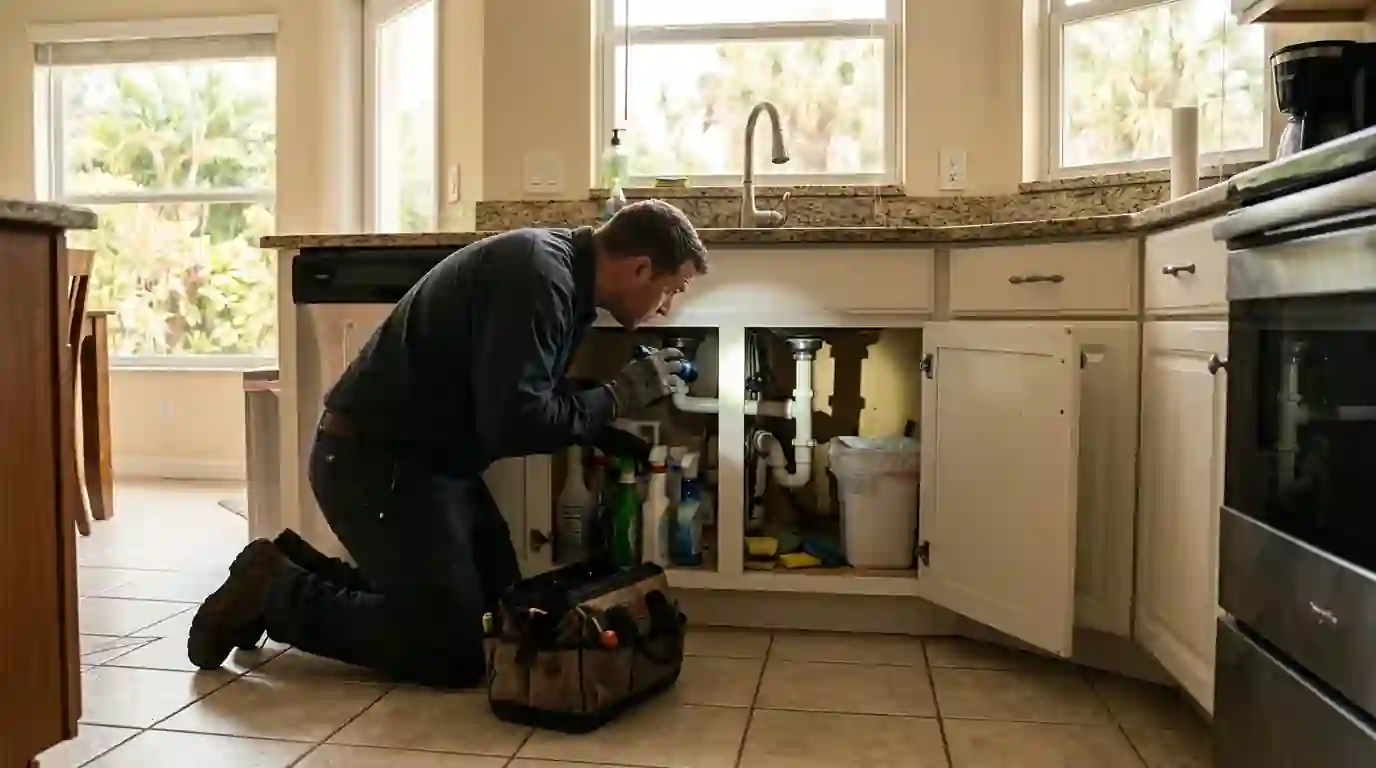
Commercial pest control in Tampa keeps roaches, ants, rodents and flies out of offices, medical suites, warehouses and storefronts on a fixed schedule. Visits are timed around your hours so staff and customers are not disturbed. Each visit is logged with what we found, what we used and where, which helps when a landlord, auditor or health inspector asks for your pest records.
How a business service differs from a home visit
A business has more doors opening all day, deliveries coming in, food in break rooms, and dumpsters out back. Pests come in with shipments and through dock doors, and a problem in one suite can spread to the next. The work is less about one big treatment and more about steady monitoring and catching problems early.
We start with a site survey: entry points, dock doors, break rooms, restrooms, dumpster areas and storage. Then we set a schedule, place monitors and bait stations where they make sense, and log every visit. The log shows activity trends, so a rise in captures at the back door gets dealt with before anyone sees a pest out front.
What commercial pest control costs
- Square footage
Larger buildings take more time and more monitoring points. - Type of business
Food, medical and warehouse spaces usually need more frequent visits than a typical office. - How often we come
A monthly account costs more per year than a quarterly one. - Rodent stations
Exterior and interior station counts add to the service. - After-hours service
Visits before opening or after closing are scheduled to fit your hours.
Pests showing up at work? Call and tell us about the building.
Call (813) 471-5363Which schedule fits your business?
| Business | Common schedule | Main focus |
|---|---|---|
| Office or medical suite | Monthly or quarterly | Break rooms, restrooms and plumbing walls |
| Warehouse or shop | Monthly | Rodent stations, dock doors and stored goods |
| Retail storefront | Monthly or bi-monthly | Back rooms, entry and storefront webs |
| Restaurant or food service | Monthly or more often | Kitchen roaches, drains and rodents |
Restaurants have their own page: restaurant pest control.
Offices, clinics and medical suites
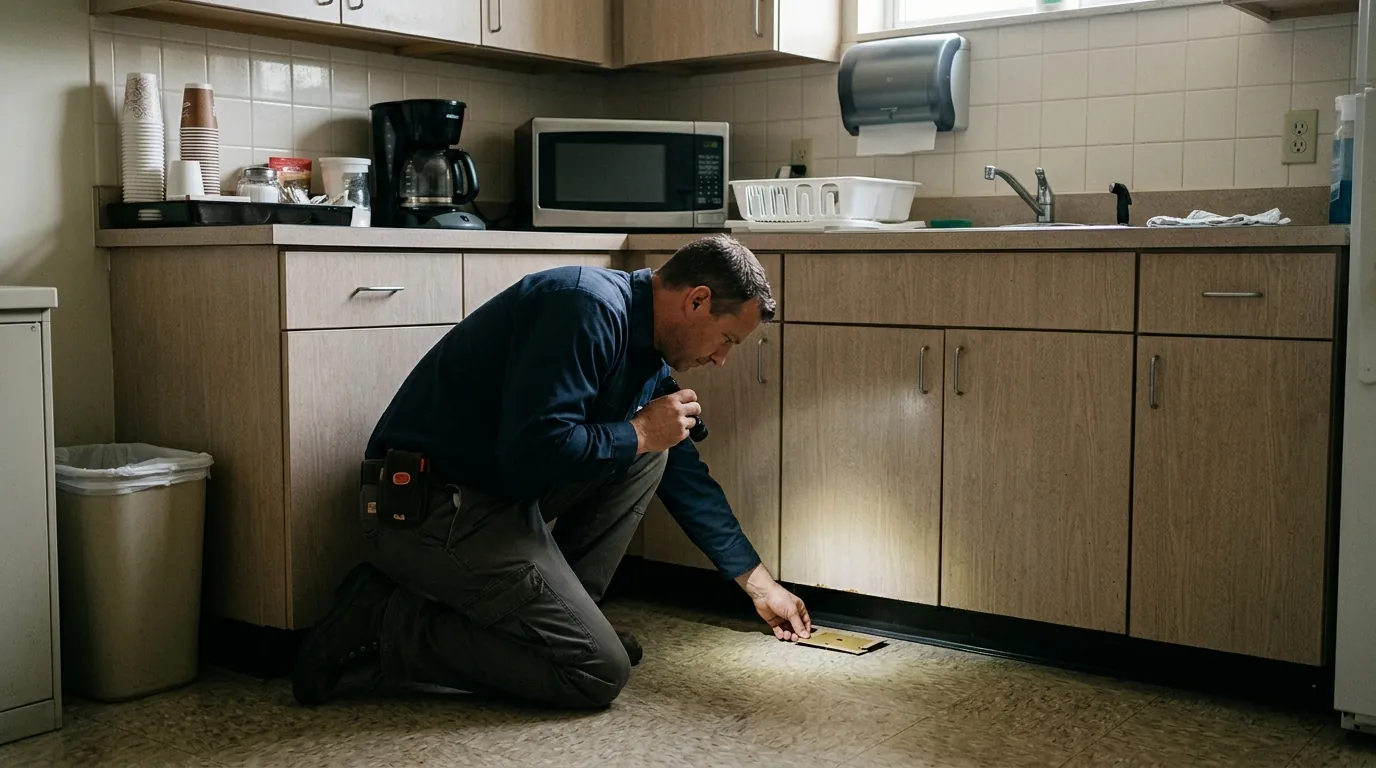
In offices, the pests start where people eat: break rooms, kitchenettes, desk drawers with snacks and the trash room. Ants trail to coffee stations, roaches move along plumbing between suites, and small flies breed in floor drains. Medical and dental suites also need careful product choices around patient rooms and sterile areas.
We service before opening or after hours, focus on the break room, restrooms and plumbing walls, and use baits and monitors over sprays in occupied spaces. In multi-tenant buildings we tell the property manager when a pattern points to a neighboring suite.
Warehouses, workshops and loading docks
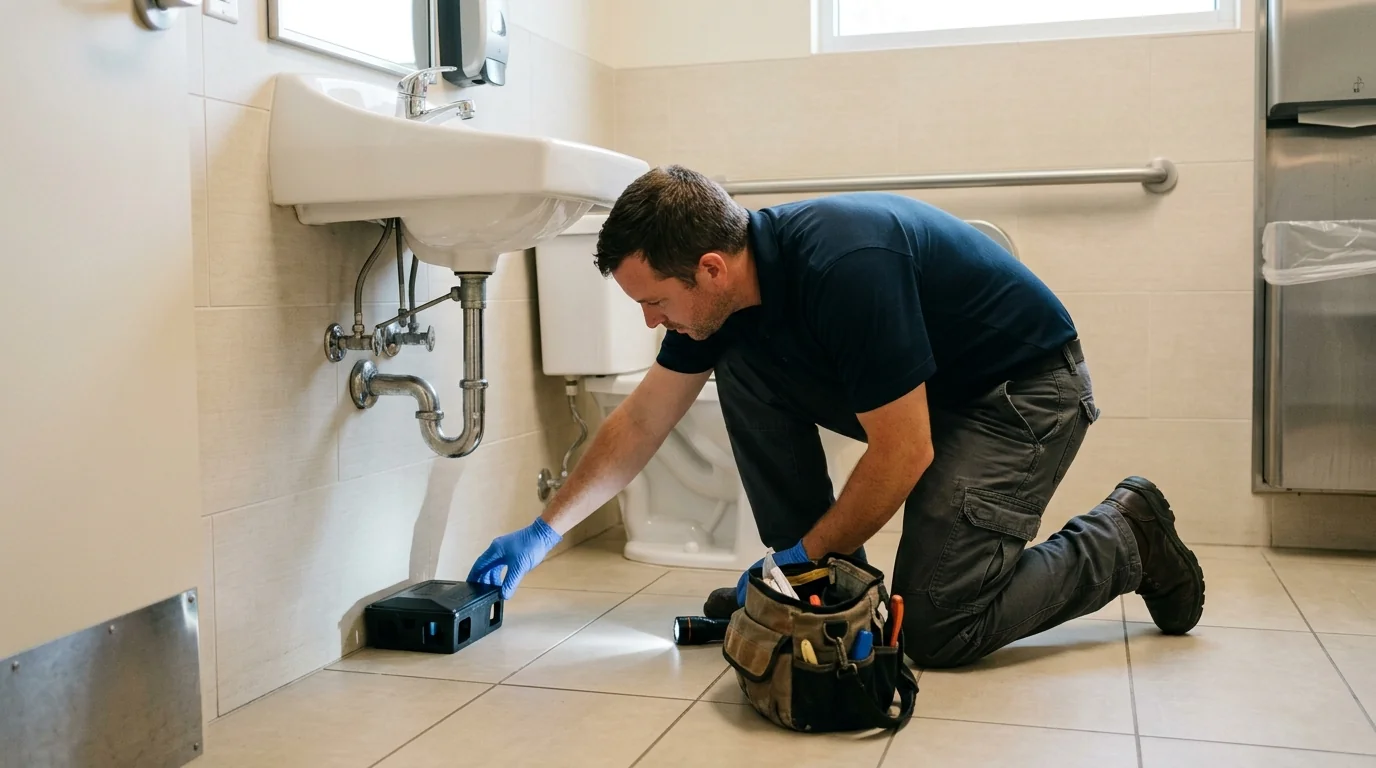
Warehouses and shops let pests in through dock doors left open, pallets and cardboard, and gaps under roll-up doors. Rodents follow stored goods and nest in quiet corners, while palmetto bugs and crickets move in from the outside edge, and stored product pests can show up in anything organic.
We set exterior rodent bait stations along the building, interior traps along walls and at docks, and inspect door seals and gaps. Every station is numbered and logged so you can see where activity is. We also point out pallet stacks against walls and doors that do not close tight.
Retail storefronts and customer areas
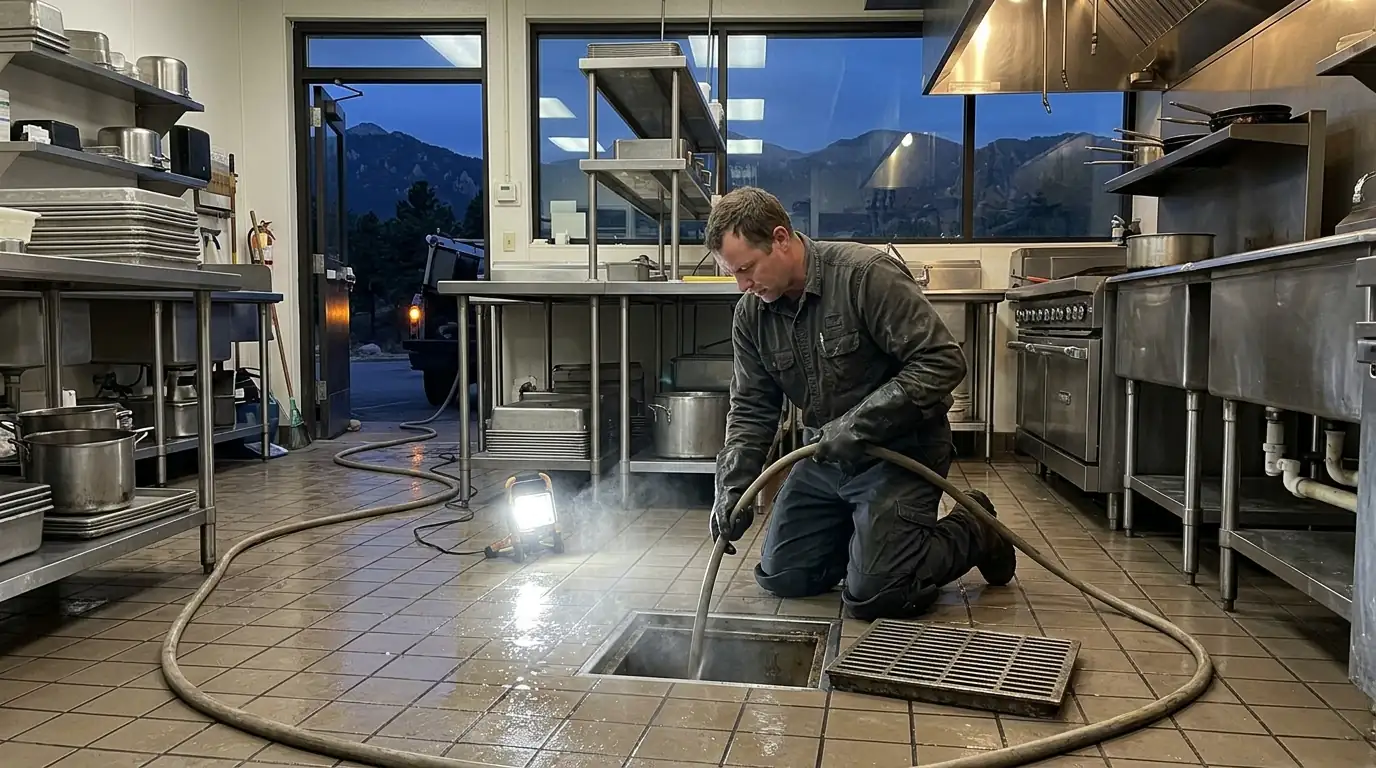
In retail, the sales floor has to look clean, so most of the work happens in the back: stockrooms, receiving doors, restrooms, break rooms and dumpster areas. Ants on a display, a roach near the register or webs on the front windows all get noticed by customers.
We treat the perimeter and entry, sweep webs from the storefront, monitor the stockroom and restrooms, and keep visible equipment out of the customer area where we can. Visits run before opening or after closing. Strip mall units share walls, so we note when a problem seems to come from next door.
What commercial service includes
Every commercial account, whatever the size, comes with these.
- A site survey of entry points, docks and break rooms
- A service schedule built around your hours
- Numbered monitors and bait stations where they fit
- A written log after every visit
- Notes on gaps, door seals and sanitation issues
- Phones answered 24/7 for problems between visits
Tampa weather and business pests
June to September is when Tampa gets most of its yearly rain, nearly all of it from daily afternoon thunderstorms. Flooded landscape beds and storm drains push palmetto bugs and ants toward buildings, and they find the gaps under dock doors and storefront entries. We tighten our exterior work going into those months, because a summer storm is often when a business sees its first roach inside. The drier months from November into May are the easiest time to seal gaps.
How commercial service starts
- 1
Site survey
We walk the building, inside and out, and note entry points and problem areas.
- 2
Service plan
You see the schedule, where monitors go and the cost before the first visit.
- 3
First service
The initial treatment and station setup are done around your business hours.
- 4
Regular visits
Each visit checks monitors and stations, treats as needed and is logged.
- 5
Reports and fixes
We flag trends and the structural or sanitation fixes that would help.
Product names you may hear on this job
- Advion
- Alpine
- Demand CS
- Vendetta
- Maxforce
- Gentrol
- Suspend
- Temprid
- Phantom