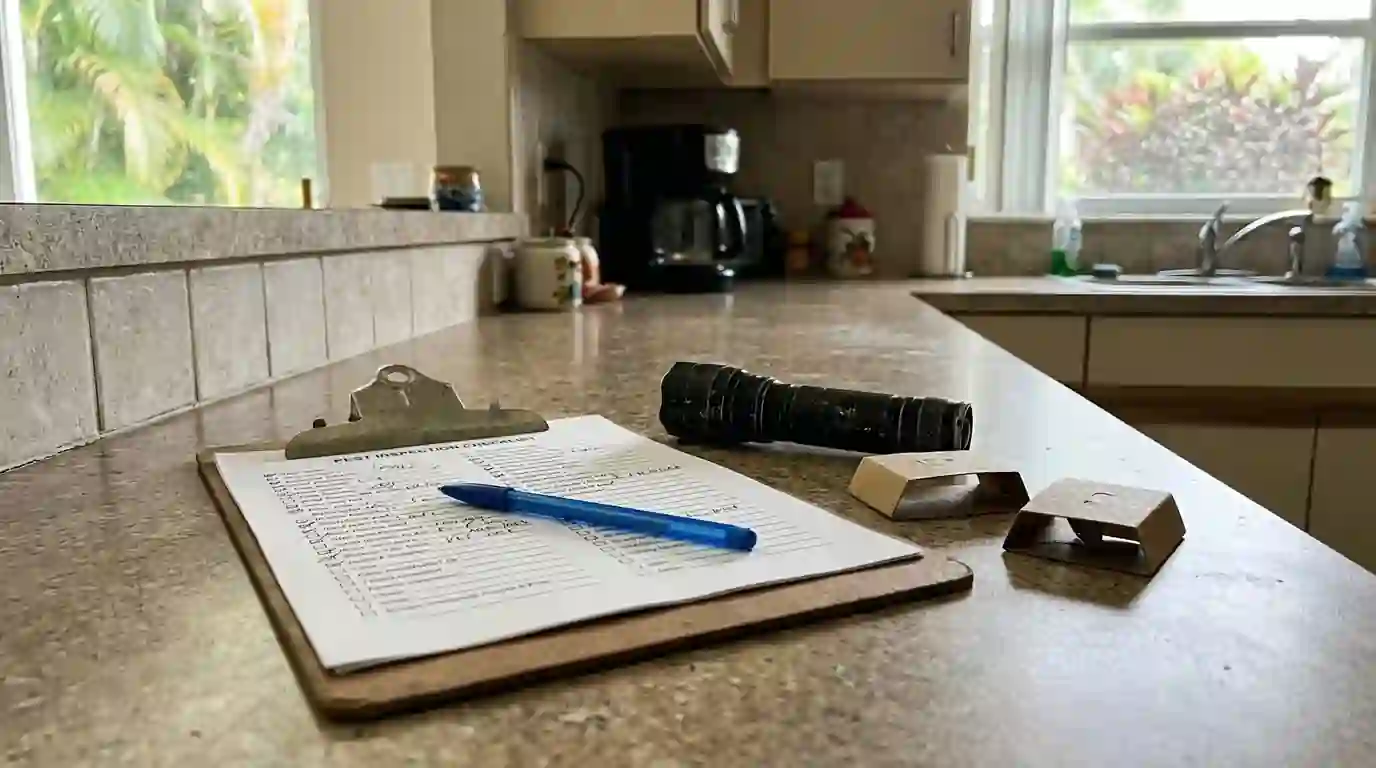
In Tampa, roof rats nest off the ground in attics, palm trees and shrubs, live in citrus trees and chew attic wiring. They fit through half-inch cracks, so trapping alone rarely ends the problem. Lasting control means sealing every gap with 26-gauge sheet metal or 19-gauge hardware cloth with openings no larger than a quarter inch, then cleaning the attic.
Why roof rats pick attics, palms and citrus trees
Roof rats are climbers. In Florida they nest off the ground, in attics, in the dense skirt of dead fronds on palm trees and in thick shrubs, and they move along fences, power lines and overhanging branches the way other rats use a ditch. The Tampa Bay Times has reported that roof rats are common across the Tampa area, and the yards here suit them: tall palms, mature oaks touching rooflines, and backyard citrus.
Citrus matters more than people expect. Roof rats live in citrus trees and gnaw the fruit, so a grapefruit or orange tree near the house is both a food source and a ladder. If a tree is loaded with fruit that has been hollowed out while it still hangs on the branch, rats have been feeding there.
From the trees, the attic is a short step. A palm frond brushing the eave, an oak limb over the roof or a vine on the wall gets them to the roofline. Once there, they look for the gaps that every house has somewhere.
Signs in the attic and around the yard
Sound is usually first. Roof rats are most active at night, so the scratching, running and gnawing noises come after dark, often right above a bedroom or along an exterior wall. Squirrels make noise in the attic too, but mostly during the day.
Droppings are the clearest sign. Roof rat droppings are about half an inch long with pointed ends, and they collect along the paths the rats use: on top of the wall plates, beside the attic hatch, along ductwork and near the eaves. Fresh ones are dark and soft; old ones are gray and crumble.
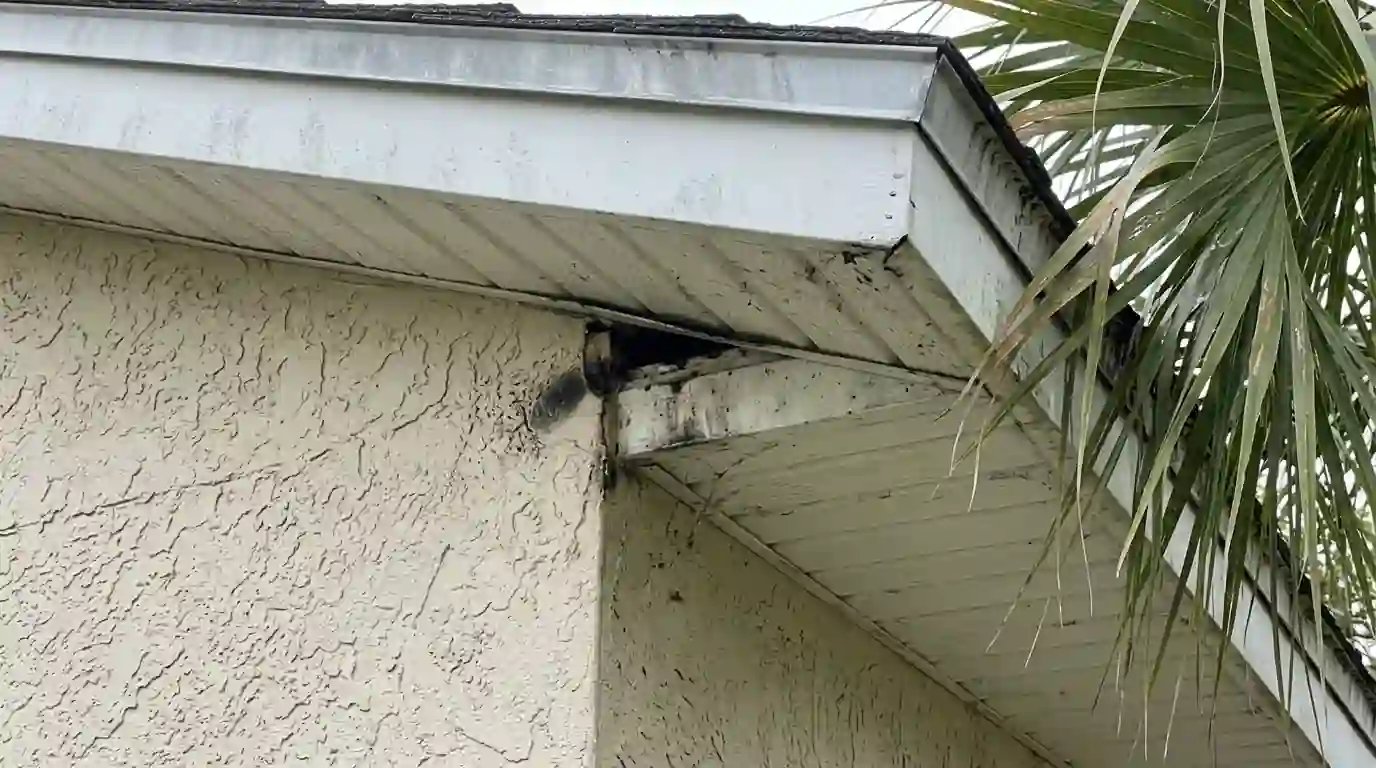
Look for grease marks too. Rats rub dark, oily smudges onto beams, pipes and the edges of the gaps they squeeze through, and a smudged hole at the soffit is often the main entry. Inside the attic you may see tunnels through the insulation, shredded duct wrap or chewed wire jackets. Outside, check for hollowed citrus, fruit rinds under the trees and small, smooth holes at the base of the roof.
Chewed wiring deserves attention. Roof rats chew attic wiring, and exposed copper inside a dusty attic is a fire risk. If you see chewed wire, have an electrician look at it.
Scratching in the ceiling tonight? Our phones are picked up around the clock.
Call (813) 471-5363Half-inch gaps: where rats get into a Tampa house
A rat can fit through a crack about half an inch wide, roughly the width of your thumb. That means the gaps worth sealing are small, and there are usually several. The common ones on Tampa homes are the soffit returns where the roofline changes direction, gaps where the fascia board meets the roof deck, loose or missing soffit vents, roof and gable vents with torn screens, and the space where a roof meets a lower roof or a chimney.
Lower on the house, check where pipes, cables, the air conditioner line set and the dryer vent pass through the wall, and look at garage door corners where the weather seal has worn. A gap under a garage door gives a rat a path into the house just as well as a hole at the roof.
Plastic, foam and steel wool alone do not hold. Rats chew through foam and plastic, and wool rusts in the humidity. Proper exclusion uses 26-gauge sheet metal or 19-gauge hardware cloth with openings no larger than a quarter inch, fastened over the gap and shaped to the roofline. Our rodent exclusion page covers how that work is done.
The order of the work: trap, seal, then clean
Sealing first sounds sensible, but it can trap rats inside the attic, where they chew new holes or die in the walls. The usual order is to set traps in the attic along the runways, find and close every entry point but one or two, keep trapping until the catches stop, then close the last openings. Trimming branches and palm fronds back from the roofline at the same time takes away the bridge.
We do not use loose poison in attics. A rat that eats it can die inside a wall or under the insulation, and the smell lasts for days. Traps let us count what is caught and confirm when the activity has stopped.
Once the rats are out, the attic usually needs cleanup. Droppings and urine soak into the insulation, and the odor attracts more rodents. Depending on how long the rats were there, the work ranges from removing droppings and sanitizing to replacing sections of insulation, which our attic cleanup page explains.
What rat removal, sealing and cleanup cost
Published Tampa estimates put a rat removal job at $441 to $1,716. Sealing entry points is often priced as its own project, with a general published figure of $550 to $1,642. Attic cleanup of droppings is usually figured per square foot, at $1.50 to $3, with sanitizing and deodorizing sometimes added on top.
The biggest variables are how many entry points the house has, how high and steep the roof is, how long the rats have been inside, and how much insulation is affected. A single-story ranch with three gaps at the soffits is a different job from a two-story house with a tile roof and rats in every attic space.
These are published planning figures, not our prices. After the inspection you hear the cost of each part, trapping, sealing and cleanup, before anything is booked.