In Tampa, the large roaches called palmetto bugs (American, Australian, brown and smokybrown, 1¼ to 2 inches) breed outdoors in mulch, palms, sewers and garages and wander inside. The small German cockroach is the one that settles and breeds indoors in kitchens and bathrooms. Palmetto bugs are kept out at the perimeter; German roaches are baited out from inside.
Size, color and where you spotted it
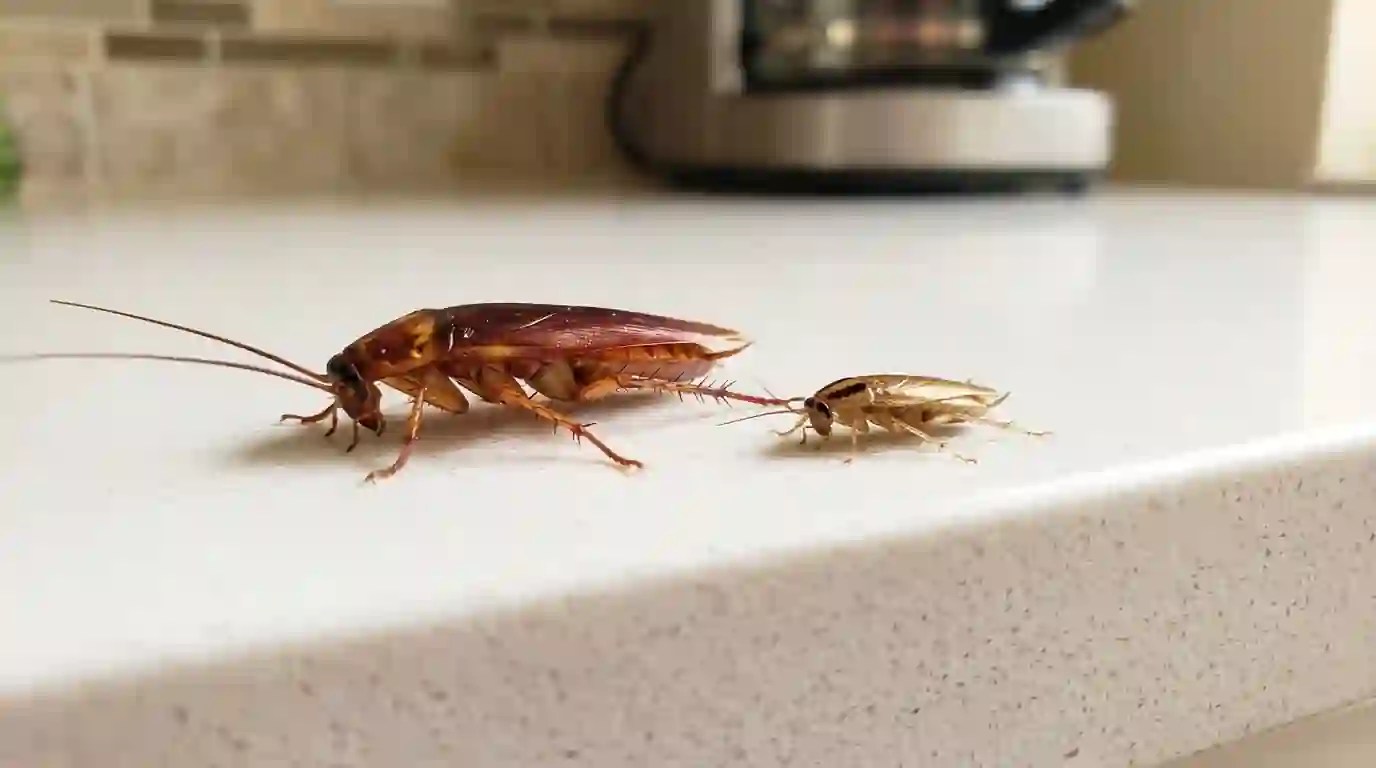
Florida has seven cockroaches that are common in homes, and they sort into two practical groups. The large ones, American, Australian, brown and smokybrown, run about 1¼ to 2 inches long. Floridians call all four palmetto bugs. They are reddish brown to almost black, and several of them fly, especially on warm, humid nights.
The German cockroach is much smaller, about half an inch to five-eighths as an adult, tan to light brown, with two dark stripes running lengthwise on the shield behind its head. It rarely flies. The young ones are smaller still, darker, and often the first thing people notice: tiny, fast roaches under a coffee maker or along a cabinet hinge.
Where you saw it matters as much as what it looked like. One big roach on the bathroom floor at night, or near the garage door after a storm, fits a wanderer from outside. Small roaches in the kitchen during the day, several sizes together, or dark specks like ground pepper in the corners of drawers and cabinet hinges point to a German roach population already breeding inside.
Outdoor wanderers: where palmetto bugs come from
Palmetto bugs breed outside. Mulch beds, pine straw, the boots of palm trunks, leaf litter, sewer lines, storm drains and cluttered garages give them the moisture and shelter they need. From there they wander. Heavy rain floods them out of the mulch and the sewers, and a door left open at night or a gap under the garage door lets them in.
Inside, most of them do not do well. Air-conditioned rooms are drier than they like, and they tend to end up in bathrooms, laundry rooms and garages, near water. Seeing one now and then is part of living in Tampa. Seeing several a week, or finding them in upstairs rooms, usually means an outdoor population right against the house or an open path such as a dry floor drain or a gap around a pipe.
Tampa does see a lot of them. In 2013 American Housing Survey data, Tampa ranked among the big U.S. cities with the most cockroach sightings, which fits a warm, wet climate that suits every outdoor roach on the list.
Small roaches in the kitchen in daylight? Call now, we answer 24/7.
Call (813) 471-5363Indoor breeders: why German roaches multiply so fast
German cockroaches do not live outdoors in Florida yards. They arrive in grocery bags, cardboard boxes, secondhand appliances and furniture, or through shared walls and plumbing from the unit next door, and they stay. Kitchens and bathrooms give them everything: warmth near motors, water at the sink, crumbs and grease, and tight cracks to hide in.
Their breeding is what makes them hard. A female carries her egg capsule, holding dozens of eggs, until it is nearly ready to hatch, so the eggs are protected from most of what you spray. In a warm kitchen the young mature quickly, so a few roaches in a cabinet can turn into hundreds over a season.
Many populations have also built up resistance to common sprays, and some avoid baits made with certain sugars. That is why a German roach problem treated with a store spray often seems to go away and then comes back: the spray kills the roaches it touches, scatters the rest deeper into the walls, and leaves the egg capsules alone.
Two different treatments, side by side
For palmetto bugs, the work happens mostly outside. We treat the foundation, the mulch beds, the base of palms, and the eaves and garage, with a granular bait in the beds where the roaches feed. Then we look at how they are getting in: door sweeps, garage door seals, weep holes, plumbing gaps under sinks and dry floor drains. Mulch pulled back a few inches from the foundation and palm boots kept trimmed take away the closest shelter. Read more on our palmetto bug control page.
For German roaches, the work happens inside, in the cracks they live in. We place gel bait in small dabs along hinges, behind appliances, under sinks and in the gaps around pipes, and we add an insect growth regulator so the young do not mature into breeders. We avoid spraying over bait placements, because a repellent spray keeps roaches away from the bait that would kill them. A follow-up visit is part of the plan, since eggs hatch after the first round. Details are on our German cockroach treatment page.
Mixing the two plans up is the most common mistake. An outdoor perimeter spray does little for German roaches inside a cabinet, and a kitchen full of gel bait does not stop palmetto bugs walking in under the garage door.
Apartments, condos and restaurant kitchens
Shared walls change the German roach picture. In apartments and condos, roaches move between units through plumbing chases and wall voids, so treating one unit while the neighbors are untouched often buys only a few quiet weeks. Treating the stack or the building together works better, and that is how we plan apartment and HOA programs.
Restaurant kitchens have the same problem in a more concentrated form: steady heat, water and food, plus deliveries arriving in cardboard. Baiting has to fit around cleaning schedules, so placements go where mops and degreasers will not wash them away, and the kitchen staff hear which spots to leave alone. Our restaurant pest control page covers how those visits are scheduled.
Published cockroach treatment prices
Florida figures for general pest service that covers roaches, ants and spiders run $100 to $300 one-time; $400 to $800 annual. National figures for cockroach extermination put a treatment at $100 to $600, and that source does not break out a separate German roach price. A palmetto bug problem usually fits inside a regular general pest visit. A German roach population in a kitchen takes more time inside and a follow-up visit, which moves it toward the upper end.
These ranges come from published cost guides, not from us. You hear the price for your home after we know which roach it is and how far it has spread.