Asian subterranean termites were confirmed established in South Tampa by UF/IFAS in March 2023, the northernmost known infestation of this tropical species in Florida. Researchers think it began 7 to 10 years before the confirmation. The species builds large colonies, swarms around sunset on warm March evenings, and can hollow out large, healthy trees as well as damage homes.
How a tropical termite turned up in South Tampa
The Asian subterranean termite is a tropical species that had been known in Florida mostly in the far south of the state. In March 2023, UF/IFAS confirmed that it is established in South Tampa. It is the northernmost known infestation of the species in Florida.
The find did not come from a survey. Hillsborough pest control operators collected termites on jobs and sent samples to the UF termite identification service, and the lab confirmed the species. Based on what they saw, researchers think the infestation began some 7 to 10 years before it was confirmed. In other words, these colonies were growing for years before anyone put a name on them.
That timeline is the main point for owners. A termite that spreads quietly for a decade is not going to announce itself with one swarm. It shows up as damage found during a renovation, or a tree that turns out to be hollow.
Why this species worries researchers
Florida has about 20 established termite species, more than any other state, and most homeowners never need to know which one they have. The Asian subterranean termite is different. It belongs to the same genus as the Formosan termite and behaves much like it, with very large colonies that work through wood faster than the native eastern subterranean termite.
Like other subterranean termites, it needs moisture. Colonies usually connect to the soil and travel through mud tubes. Where steady moisture is available, such as a leaking roof, a wet wall or a hollow tree, colonies can also live above ground without that soil connection, which makes them harder to find.
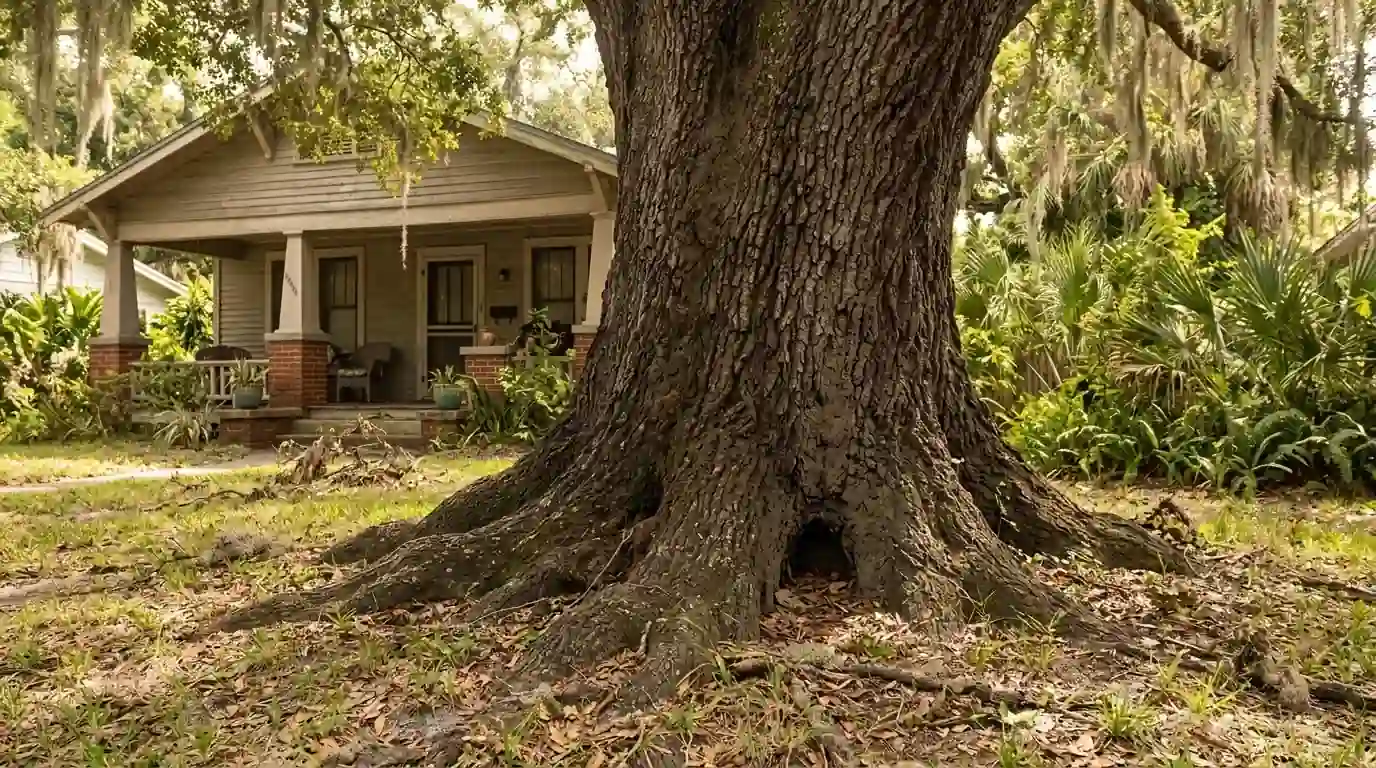
UF/IFAS researchers have also warned that colonies hollow out large, healthy trees. That is unusual for a termite and it matters in a part of town where mature shade trees are a big part of the streetscape.
Seeing this at your place? We answer the phone around the clock.
Call (813) 471-5363Old houses and big trees: the South Tampa mix
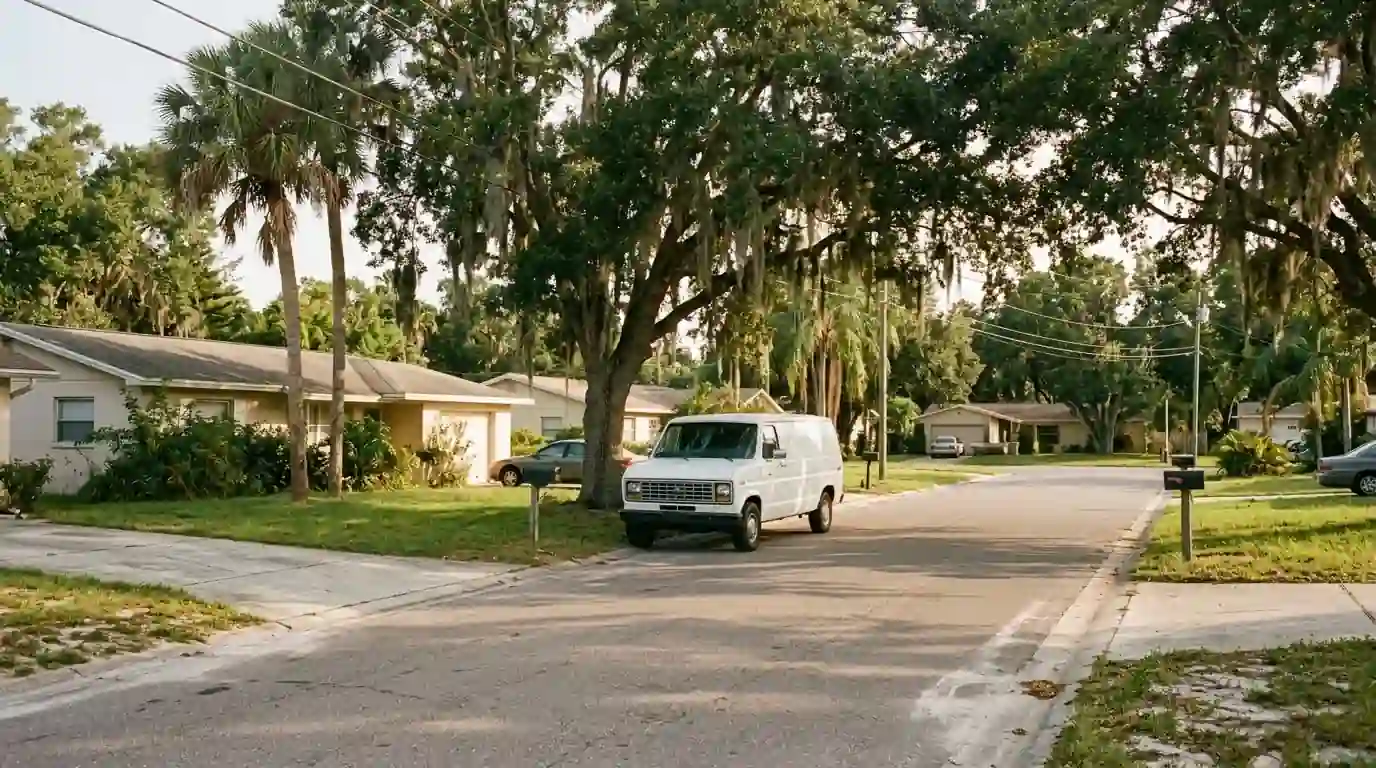
South Tampa has some of the oldest housing in the city. Hyde Park grew in the 1880s after Henry B. Plant bridged the Hillsborough River at Lafayette Street, and its first house went up in 1882. The neighborhood is still full of historic homes and bungalows with wood porches, raised floors and original framing.
Palma Ceia is a little younger, with a median year built of 1973. It also has a settled ownership pattern. About 80.1% of its homes are owner-occupied, in a neighborhood of about 5,749 people.
Put those together and you get houses that have stood for decades, owners who plan to stay, and big trees close to the foundations. That is the setting where a slow, quiet termite does the most damage before it is noticed. Long ownership is also an advantage, because owners who stay put tend to keep up with inspections.
What South Tampa owners should check
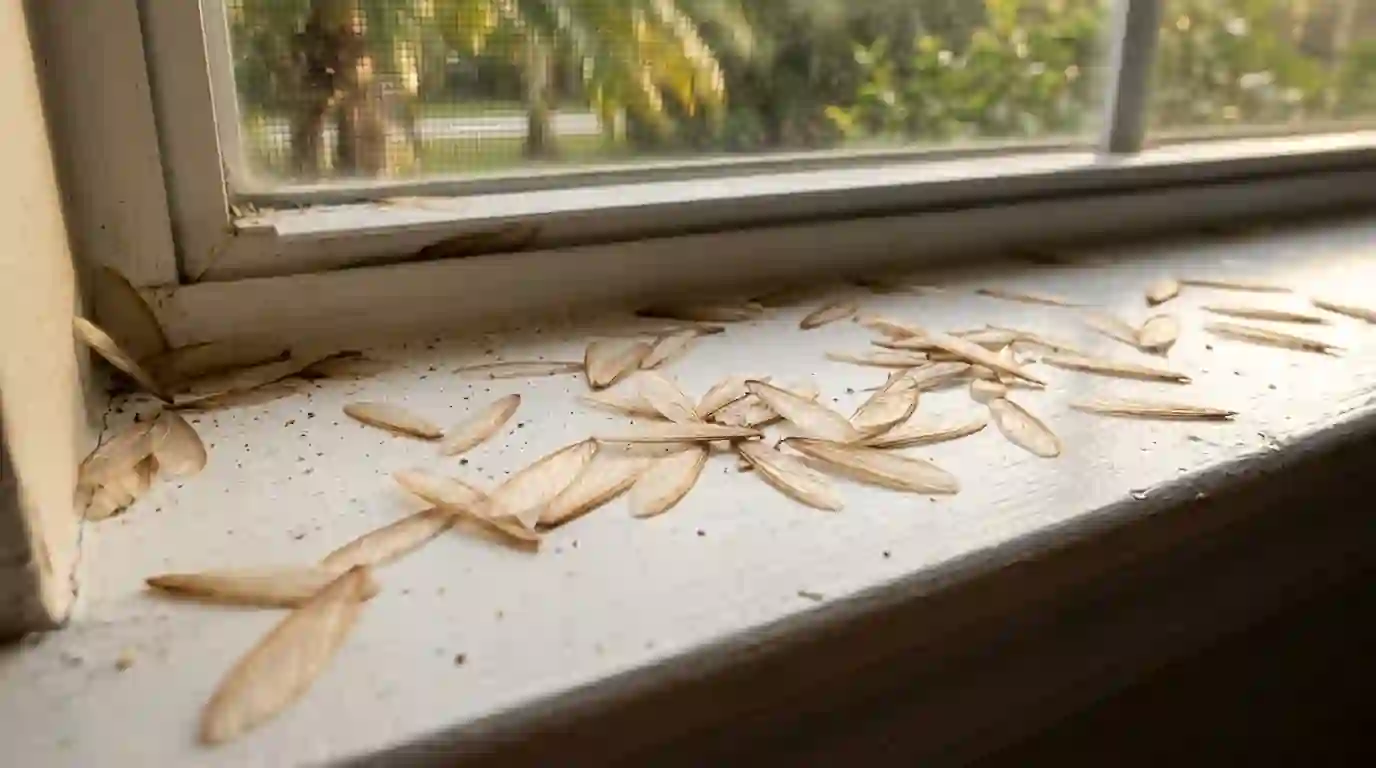
Start with March evenings. Asian subterranean termites swarm in March around sunset on warm days, earlier than Formosans, which start in late April. Swarmers fly toward lights, so check windowsills, light fixtures and the floor near glass doors the next morning. Piles of shed wings are the sign to look for.
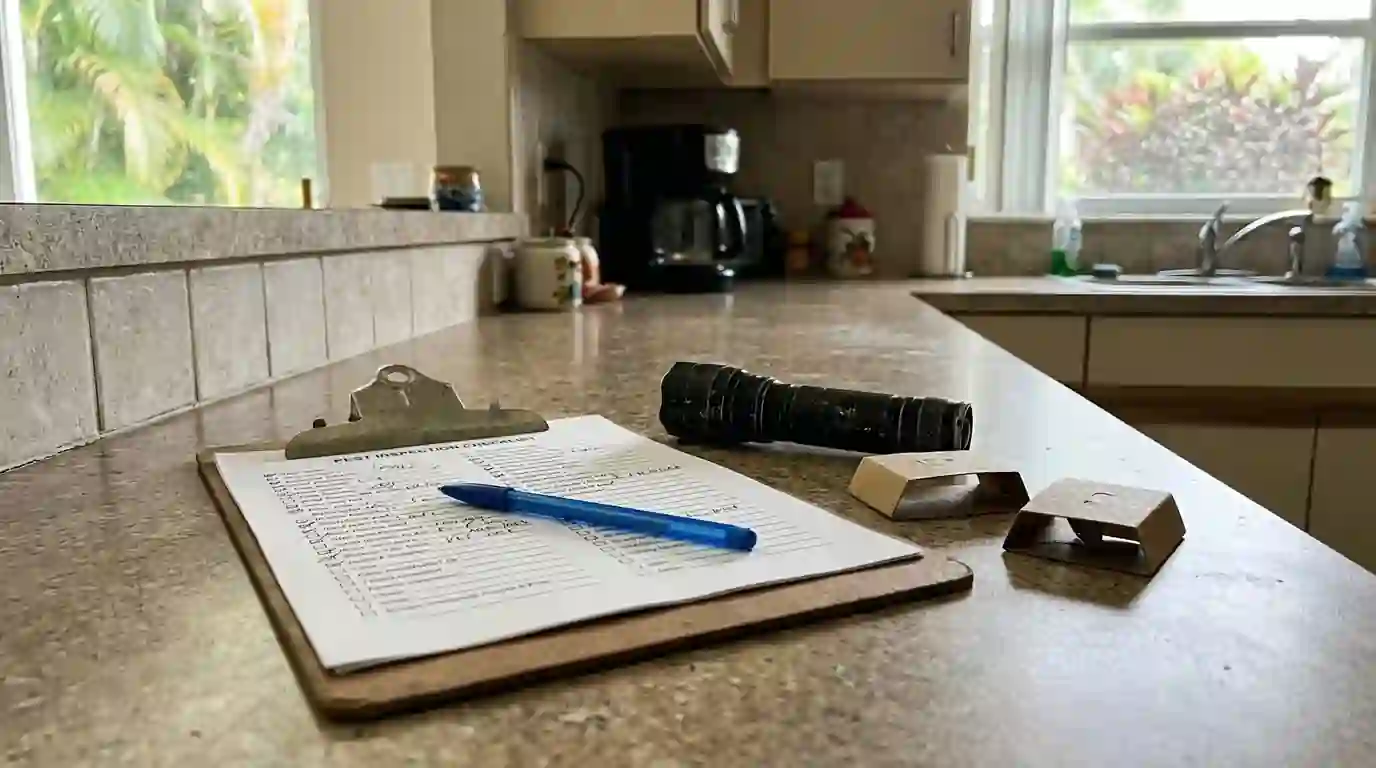
Walk the foundation a few times a year with a flashlight. Look for pencil-width mud tubes running up the stem wall, piers, plumbing lines or the inside of the garage. On a raised-floor house, look under the porch and at the sill where the floor framing sits on the piers.
Then look at the trees. Signs of trouble include mud packed into bark cracks or wounds, soft or hollow-sounding spots near the base, and termites or soil-like nest material where a limb has broken off. A hollow tree near the house is a termite question and a safety question, so an arborist should judge whether it can stay.
Finally, keep the wood dry. Fix roof and plumbing leaks quickly, keep gutters draining away from the house, and keep mulch and soil from piling against the siding.
How these colonies are treated, and what it costs
Asian subterranean termites are handled much like other subterranean termites. A liquid termiticide applied in the soil around the foundation treats termites passing through it. Bait stations installed around the house are fed on by foraging workers, who carry the bait back to the colony. Many homes get one or both, and older houses with additions, porches and slab joints often need extra attention at those seams.
Termites in a tree are a separate job. Some products are labeled for treating tree cavities, and the method depends on the tree and the label.
Published Florida figures put a one-time subterranean termite treatment at $1,500 to $3,500, with yearly monitoring charged separately. Liquid perimeter treatments are priced by the foot of foundation, and published figures run $4 to $14.50 per linear ft; $400 to $1,600 for 100 lf up to $1,600 to $6,400 for 400 lf. Your price depends on the length of the foundation, the type of construction and what the inspection finds. See subterranean termite treatment for how the work runs.