Termite swarm season in Tampa runs mostly from January through June, depending on the species. Eastern subterranean termites fly on warm afternoons from January into April, Asian subterranean termites swarm in March around sunset, drywood termites fly March to June, and Formosans start in late April and peak in May. Swarmers inside the house mean an inspection, not panic.
Why termites swarm, and what a swarm tells you
A swarm is how a mature termite colony starts new ones. Once a year, it sends out winged males and females, called alates or swarmers. They fly a short distance, drop their wings, pair off and try to start a colony of their own. Most of them die within hours.
The swarm itself does little harm. What it tells you matters more. A colony big enough to swarm has been feeding for a while, usually years. Swarmers outdoors near a stump or a woodpile can be a colony in the yard. Swarmers coming out inside the house, from a wall, a baseboard or a window frame, mean a colony is living in or under the structure.
Florida has about 20 established termite species, more than any other state. Activity is easiest to see from March to June, though the exact timing depends on which species you have.
Which Tampa termites fly when
Eastern subterranean termites are the native species found statewide. Their flights run from early January into April, on warm, sunny, calm early afternoons that often follow rain. A daytime swarm in late winter is usually this one. Colonies of 100,000 to 1 million build mud tubes up foundation walls and forage up to 150 feet.
Asian subterranean termites swarm in March, around sunset on warm days. Our guide to Asian subterranean termites covers where they have turned up locally.
Drywood termites fly from March to June, mostly April to June. They live entirely inside dry wood, with no soil contact, and they leave small piles of six-sided pellets pushed out of tiny kick-out holes. Those pellets can turn up any month, around cabinets, windowsills and wood furniture.
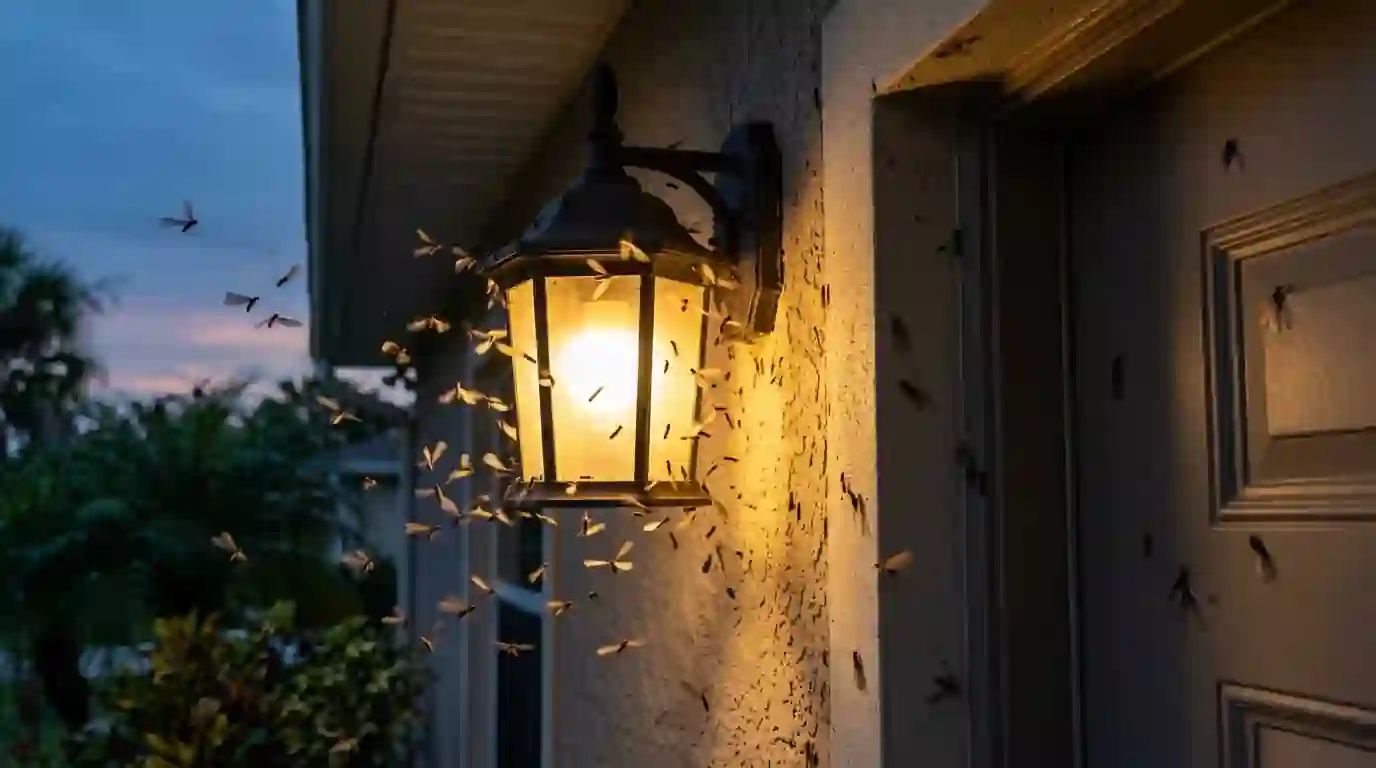
Formosan subterranean termites swarm from early April to late June, peaking in May, just after sunset. They fly toward lights, so a big swarm around a porch light or a streetlight on a warm May evening is often Formosan. Colonies fill wall voids with carton nest material and can hollow out living trees.
Seeing this at your place? We answer the phone around the clock.
Call (813) 471-5363Termite or flying ant? Four quick checks
Winged ants swarm in spring too, and they get mistaken for termites all the time. You do not need a microscope to tell them apart. Look at a few swarmers, or the bodies left on the sill, and check four things.
Waist. Termites have a thick waist, so the body looks like one straight piece. Ants have a pinched waist, so the body looks like separate segments.
Antennae. Termite antennae are straight, like a string of tiny beads. Ant antennae bend at an elbow.
Wings. Termites have four wings of equal size, longer than the body, and they break off easily. Ants have a larger front pair and a smaller back pair.
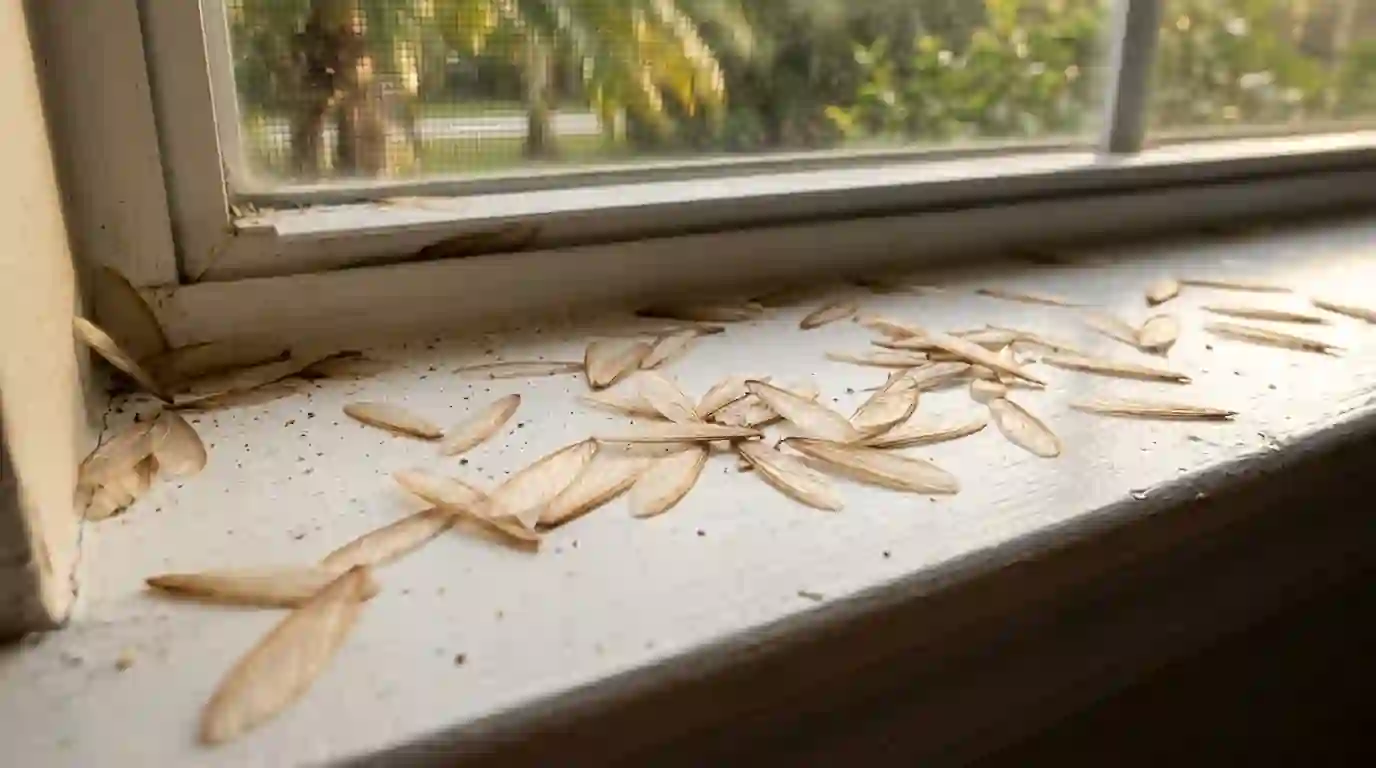
What is left behind. Termite swarms leave piles of shed wings on sills and floors. Ants keep their wings longer, so you find whole winged bodies rather than loose wings.
Swarmers inside the house: the first hour
Do not spray the swarm with a household can and call it done. The swarmers are already dying, and killing them does nothing to the colony that sent them. Worse, it destroys the evidence you need to identify the species.
Instead, collect a sample. Scoop or vacuum up a few swarmers and some loose wings and seal them in a zip bag or small jar. Note the date, the time of day and the room where they came out. An afternoon swarm in February points one way, and a swarm at the light on a May evening points another.
Then look for where they came from. Swarmers usually emerge from a crack in a wall, a baseboard joint, a window frame, a door frame or a light fixture. Mark the spot with tape. Close the doors to that room, turn off lights near it at night, and clean up the rest of the wings once you have your sample.
Finally, book an inspection. A swarm indoors is not an emergency in the sense that the house will fail this week, but it is the clearest sign you will get that a colony is close.
What an inspection after a swarm looks for, and what it costs
The inspector identifies the species from your sample and then follows the evidence. For subterranean termites, that means mud tubes on the foundation, in the garage, under a raised floor and around plumbing. For drywood termites, it means pellets, kick-out holes and damaged trim. The species and the spread decide the treatment: soil treatment or bait for subterranean termites, a spot treatment or tenting for drywood.
A termite inspection in Tampa averages about $132, according to one published local figure. National figures for a termite or wood-destroying insect inspection run $100 to $290. Those are planning numbers, not our quote. You hear the price before we come out, and you hear what the inspection found before any treatment is priced. See termite inspection for what the visit covers.