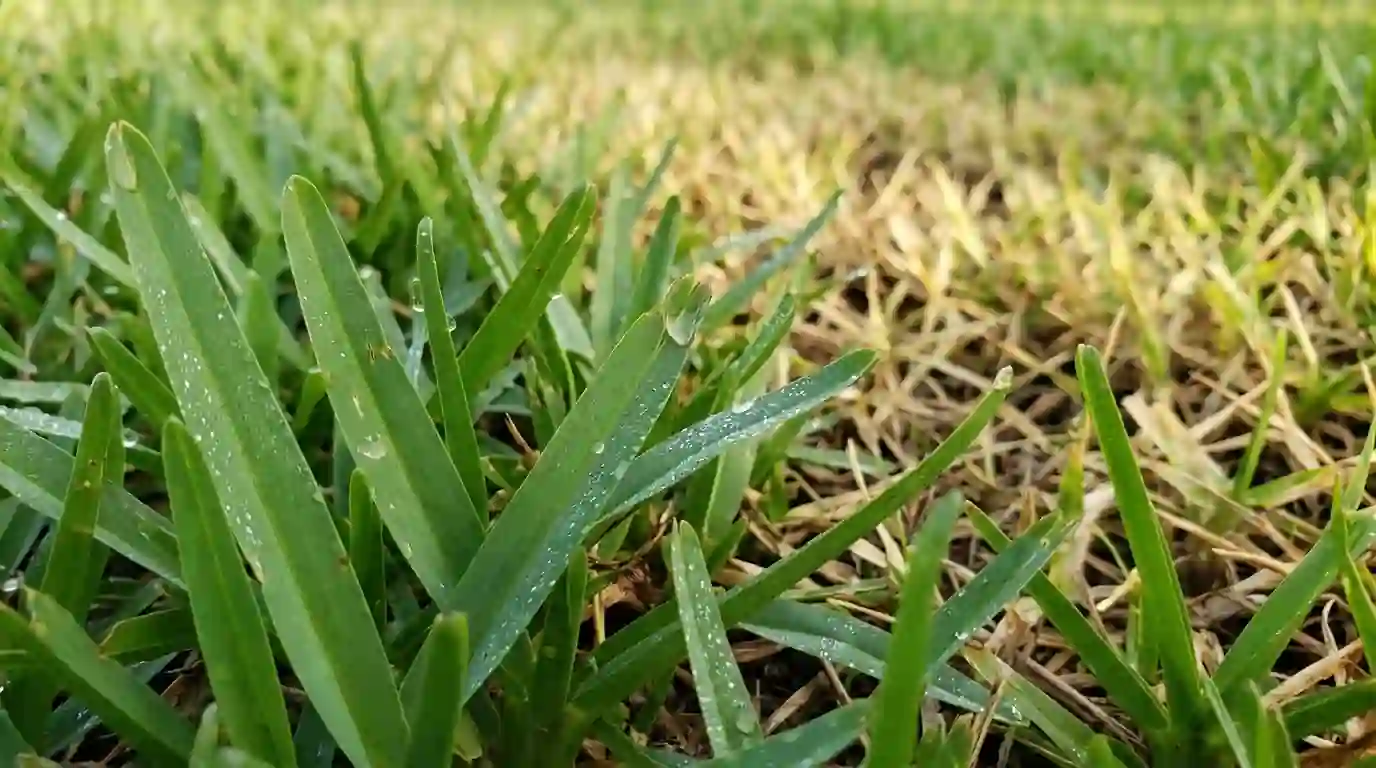
Chinch bugs in a Tampa St. Augustine lawn show up as roughly circular yellow patches that start in sunny, dry spots along driveways, sidewalks and high sandy ground. Unlike a dry spot, the patch keeps spreading after you water, and the small black bugs sit at the edge where yellow grass meets green. Infestations peak in early July, and the bugs stay active all winter.
Chinch bugs, a dry spot or fungus: reading a yellow patch
Three things turn St. Augustine yellow in a Tampa summer, and they are easy to confuse from the porch. Drought stress, chinch bugs and fungus can all start as a pale spot that fades to straw. The shape of the patch, its edge and how it reacts to water tell them apart.
Drought follows the sprinklers. Look for patches that line up with a clogged head or a corner the spray never reaches. The blades fold in half lengthwise, and footprints stay pressed into the grass for a while. Water deeply and a dry spot greens up within days.
Chinch damage ignores the sprinkler pattern, and watering does not fix it. The patch grows outward in a rough circle, the center dies and browns, and the border is a ring of yellowing blades where the bugs are feeding now. Large patch fungus shows up mostly in the cooler, wetter months, and its blades pull loose from rotted runners at the base. Sod webworms leave ragged, chewed blades rather than yellow ones.
Where the first patch starts, and why sandy ground matters
Chinch bugs go for the hottest, driest turf first. On most lots that means the strip beside the driveway, the edge along the sidewalk, the slope by the street and any high spot with sandy soil. Concrete holds heat, the grass beside it dries out first, and stressed St. Augustine is where an infestation takes hold.
Soil adds to the swing. Myakka fine sand, Florida's state soil since 1989, covers more than 1.5 million acres of pine flatwoods. It drains poorly over a high water table, so it stays wet through the June to September rains and turns droughty the rest of the year. Lawns on flatwoods sand like that can go from soggy to parched in a few weeks. The parched weeks are when chinch bugs gain ground.
Seeing this at your place? We answer the phone around the clock.
Call (813) 471-5363Finding the bugs: the edge check and the can test
Adult southern chinch bugs are smaller than a grain of rice, black with white wings folded flat across the back. The young are reddish orange with a pale band across the body. They hide in the thatch at the soil line, not up on the blades, which is why most people never see one.
Kneel at the border where yellow grass meets green, not in the dead center, where the bugs have already moved on. Part the grass with your fingers and watch the soil surface for a minute. On a hot afternoon you may see them scatter.
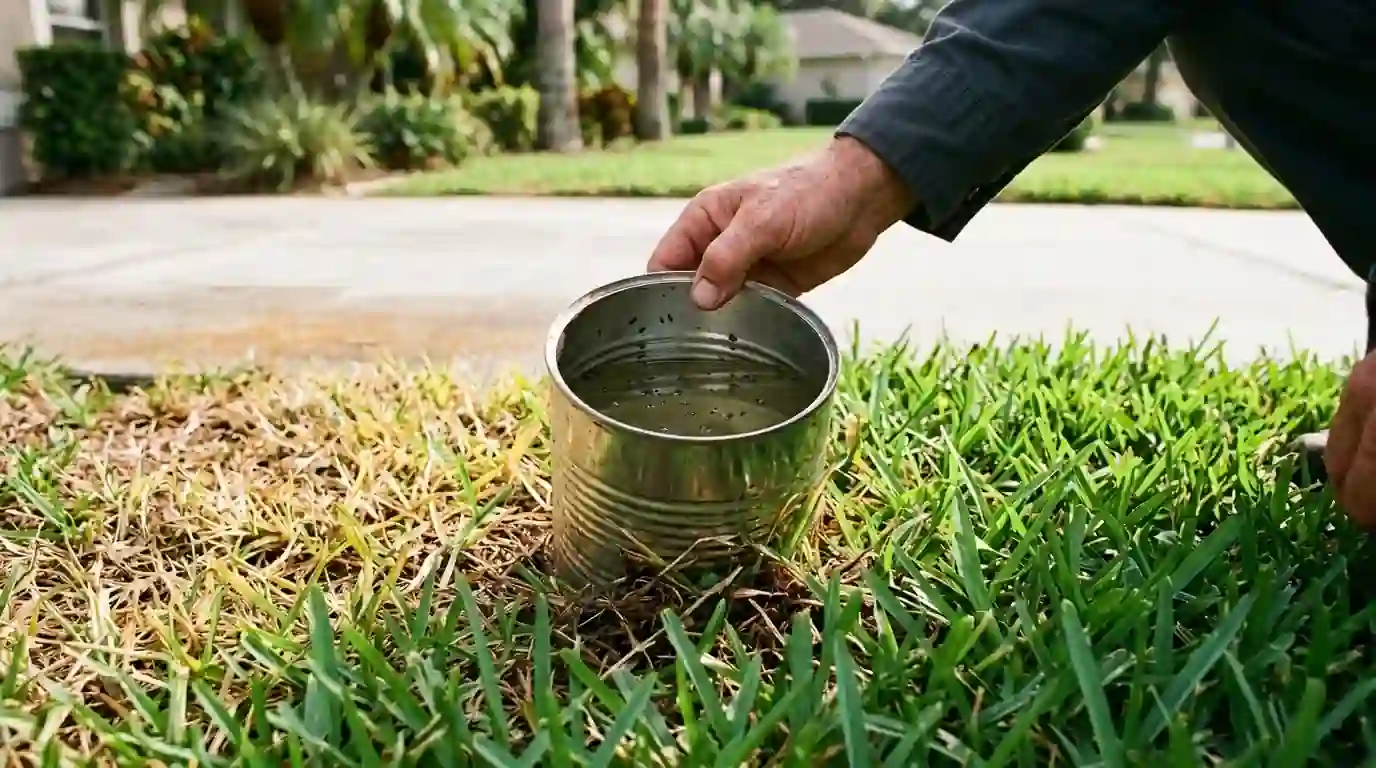
For a surer check, cut both ends off a large metal can, twist one end a couple of inches into the turf at the patch edge, and fill it with water. Keep it topped up for several minutes. Chinch bugs float to the surface if they are there. Test two or three spots, because one empty can does not clear a lawn.
Why some chinch bugs survive the spray
Chinch bugs have a long record of beating whatever is used against them. Floratam St. Augustine was released in 1973 as a resistant grass, and that resistance broke down within about 12 years. Some populations today also resist insecticides that once worked well, after the same product class was used on them season after season.
A patch that comes back two weeks after a store-bought granule is not always bad luck. We confirm live bugs before treating, rotate between product classes that work in different ways, and check the lawn again afterward to see whether the numbers actually dropped. Treating the active patches and a buffer around them, rather than blanketing the yard every time, also slows resistance.
July peaks, summer rain and the fertilizer blackout
Southern chinch bug numbers peak in early July in Florida, and the bugs keep feeding through the winter instead of shutting down. Tampa's weather normals explain part of it. July and August average highs near 91°F with lows around 77°F, so the turf beside concrete bakes even in the rainy months.
Rain does not fully protect a lawn. Tampa averages 49.48 inches a year, and August is the wettest month at just over 9 inches. Still, a week without storms on sandy soil is enough to stress the sunny edges.
The city's fertilizer rule adds a timing wrinkle. Tampa bans fertilizer from June 1 to September 30, right across the chinch bug peak. That works in your favor, since lush, heavily fed St. Augustine tends to draw more chinch bugs. Feed in spring and fall, mow high, water deeply and less often, and save insect treatment for confirmed bugs. Our guide to Tampa's summer fertilizer ban covers what you can still do in those months.
What chinch bug treatment costs in Florida
Published Florida figures put lawn insect work, chinch bugs included, at $150 to $400 one-time; $500 to $1,000 annual. National figures for lawn insect treatment run $0.34 to $0.44 per square foot, with a minimum lawn of about 2,500 square feet.
Those are planning ranges, not quotes. The size of the lawn, how far the damage has spread and whether the bugs already shrugged off one treatment all move the price. Dead turf in the center of a patch will not come back from any treatment, so plan for plugs or sod in the worst spots once the bugs are under control. See chinch bug control for how a treatment and the follow-up checks run.