Tampa bans fertilizer application from June 1 to September 30, so lawn feeding happens in spring and again after the ban lifts. Through the summer you can still mow high, water only when the grass needs it, spot-treat weeds and treat insects. Chinch bugs peak in early July, and sod webworms and armyworms are active through those months.
What the June 1 to September 30 rule means for your yard
Tampa bans fertilizer application from June 1 to September 30. In practice that sets the calendar for any lawn program inside the city: the turf is fed in spring before the ban starts and again in fall once it ends, and nothing goes down in between. Weed and feed products contain fertilizer, so they wait too.
The timing lines up with the weather. Tampa's rainy season runs from late May through October, with afternoon thunderstorms almost every day, and about two-thirds of the year's rain falls from June to September. Fertilizer spread on soaked ground in those months is easily carried off the lawn by the next storm.
If you live outside the city, check your own city or county rule before assuming the same dates apply. A lawn service working across several jurisdictions should know which rule covers your address.
Feeding before and after the blackout
Since summer feeding is off the table, the spring application matters more. A lawn that goes into June well fed and growing actively handles insect pressure and heat better than one that starts the summer thin. That means planning the last spring feeding before June 1, not scrambling in the final week of May.
Fall is the second window. Once October arrives, the turf can be fed again to help it recover from summer stress before growth slows in the cooler months. Easing back in with a moderate rate is better than making up for lost time with a heavy dose, which pushes soft growth that disease and caterpillars like. Our lawn fertilization page explains how spring and fall feedings are scheduled around the rule.
There is a pest reason for restraint too. Fall armyworms hit new sod that was heavily fertilized in late summer the hardest, so lush, freshly fed grass is not always a healthy lawn.
Yellow patches spreading this summer? Call, we answer 24/7.
Call (813) 471-5363The pests that peak while you cannot feed
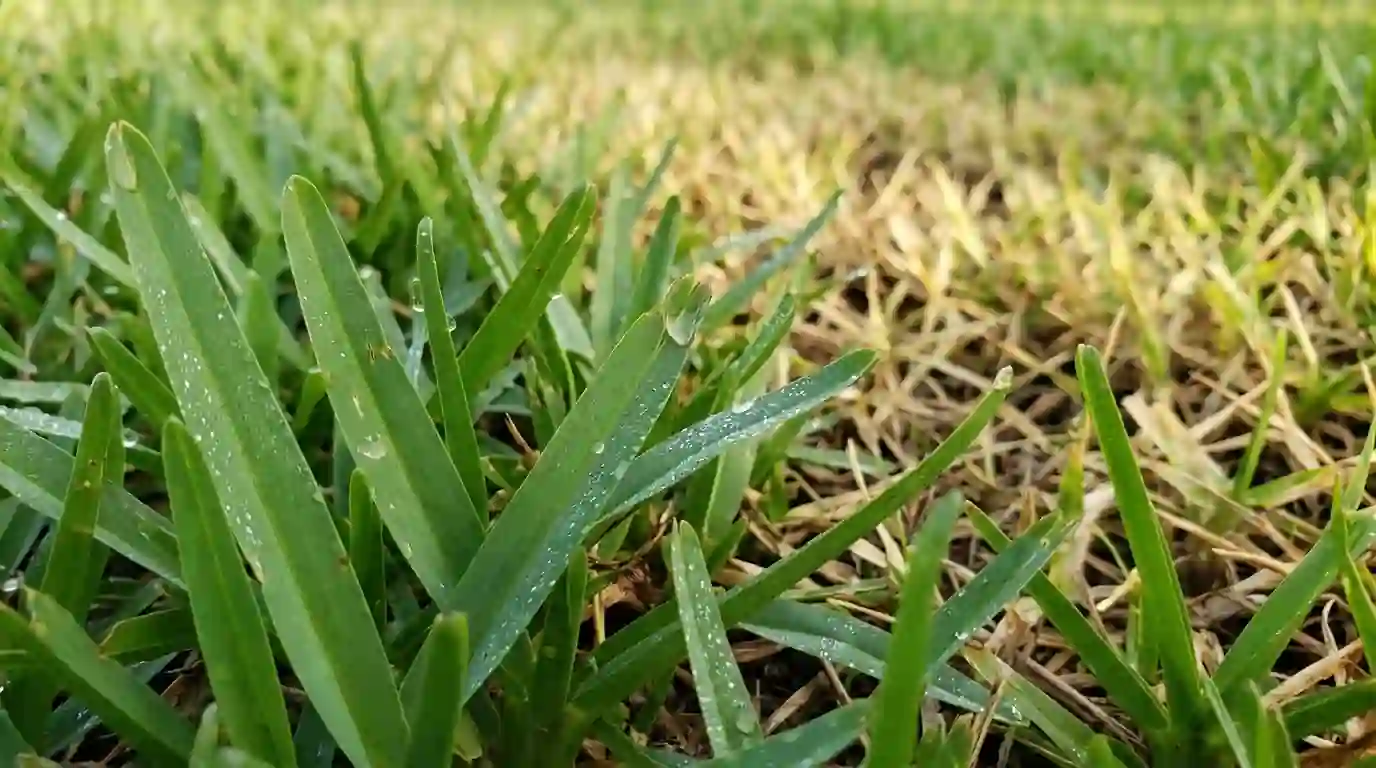
Chinch bugs are the big one for St. Augustine lawns. Southern chinch bug damage shows up as roughly circular yellowing patches that start in water-stressed, full-sun spots along lawn edges, driveways and sidewalks, and on high, dry, sandy soil. Infestations peak in early July, right in the middle of the ban. Some populations resist insecticides, and even Floratam, once bred to resist them, lost that edge within about 12 years of its 1973 release. Our chinch bug control page covers how those populations are handled.
Tropical sod webworms work St. Augustine, bermuda and zoysia lawns from spring through fall. The grayish-green caterpillars feed at night and hide by day, so you see the damage before you see them: ragged, chewed blades, then thinning turf, then brown patches. Small moths flying up from the grass at dusk are a clue.
Fall armyworms feed in early morning and late evening and leave bare patches spread over a wide area, sometimes seemingly overnight. They show up in both spring and fall. A tablespoon of dish soap in a gallon of water, poured over a four-by-four-foot patch at the edge of the damage, brings these caterpillars to the surface where you can see them.
Insect treatment is not fertilizer, so it continues through the summer. The trick is confirming which pest you have before anything is applied, because chinch bugs, caterpillars and drought stress can look alike from the street.
Soggy in summer, dry in spring: the sand under the grass
Many Florida lawns sit on sandy flatwoods soils like Myakka fine sand, the state soil since 1989, which covers more than 1.5 million acres of pine flatwoods. It drains poorly and has a high water table, so it stays wet through the June to September rainy season and turns droughty the rest of the year. Underneath sits an organic-rich layer that slows water moving down.
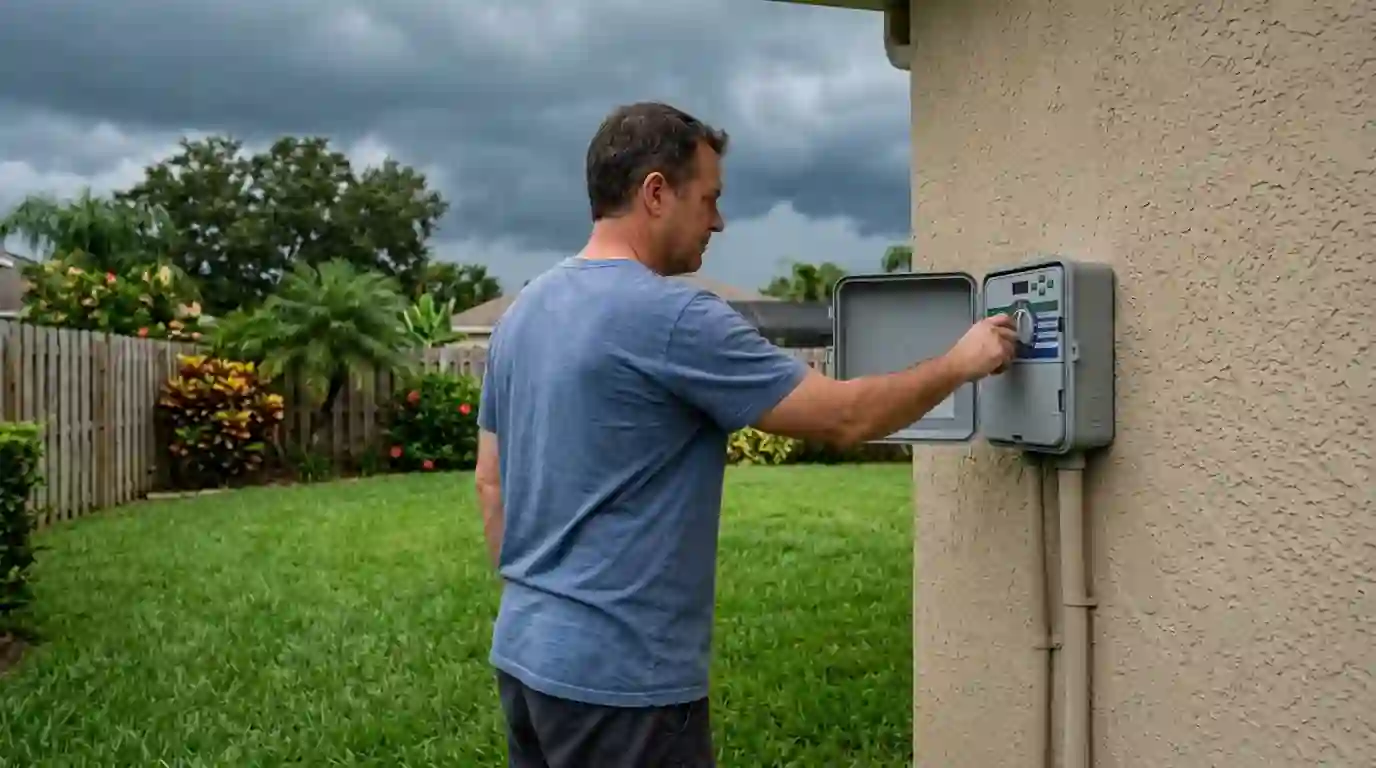
That swing explains a lot of summer lawn trouble. With the ground already wet, an irrigation timer still running three days a week keeps roots waterlogged and the blades damp, which favors fungal disease. Gray leaf spot, for one, shows up on St. Augustine in hot, humid weather, and soft growth from heavy feeding makes it worse. Turn the timer off or down once the daily storms start, and water only when the grass shows it needs it: blades folding lengthwise, a bluish-gray tint, or footprints that stay pressed in.
In the dry months the same soil swings the other way. Sandy, high spots dry out first, and those are the exact places chinch bugs start, so a sprinkler head that misses a sunny corner deserves a fix before summer.
A summer checklist for St. Augustine lawns
Mow high and keep the blade sharp. Taller St. Augustine shades its own roots and the soil, and a clean cut heals faster than a torn one. Leave the clippings on the lawn unless they clump.
Walk the edges once a week from June on. Look along the driveway, the sidewalk and any sunny strip by the street for yellowing patches that do not green up after a good rain. Part the grass at the edge of a patch, where yellow meets green, and look for small black-and-white chinch bugs near the soil.
Handle weeds by spot treatment. Many lawn herbicides carry label warnings about high heat, so broad summer spraying on St. Augustine is risky. Sedges thrive in wet summer soil and are worth spot-treating while they are young. Our lawn weed control page covers what works in which season.
Watch for disease after long wet spells. Brown spots with darker borders on the blades, or patches that thin in a spreading ring, are worth a closer look before they spread. Our lawn disease treatment page has more on how those are confirmed.
What a Tampa lawn treatment costs
One published Tampa figure puts the average lawn treatment at $77, and the source does not say whether that is per application or for a longer plan. Treat it as a rough marker, not a quote.
Lawn size, the pest or disease involved, and whether it is a single treatment or a year-round program are the main things that move the price. A lawn program in the city also has to be planned around the summer rule, so ask how feeding, weed control and insect checks are spread through the year. You hear the price after we look at the lawn, before any treatment goes down.